The Copper Colossus: 15 Fascinating Facts About the Statue of Liberty
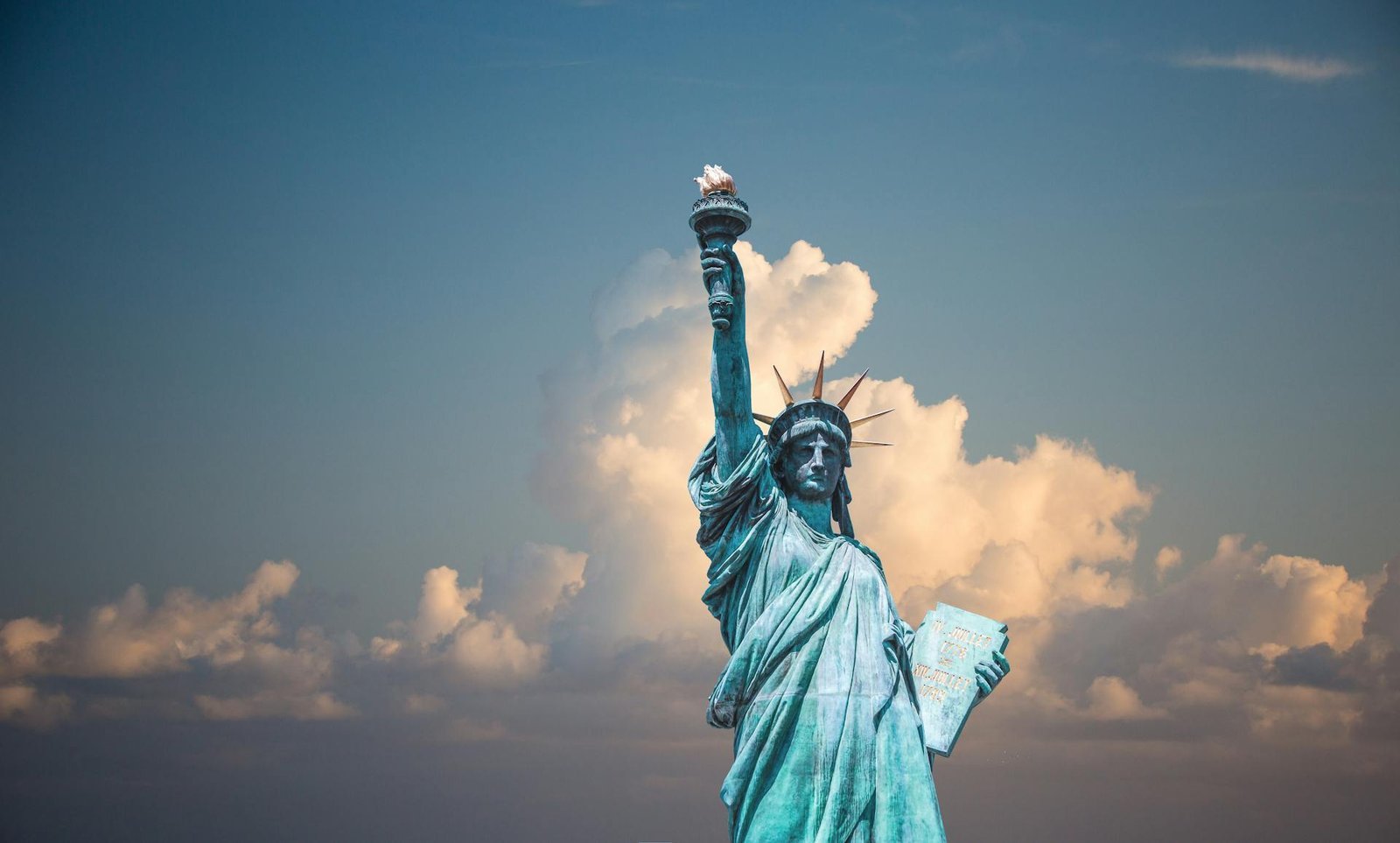
Dedicated in 1886 as a gift of friendship from the people of France to the United States, the Statue of Liberty stands as one of the world's most recognizable symbols of freedom and democracy. Beyond her iconic green silhouette in New York Harbor lies a fascinating history filled with engineering brilliance, wartime sabotage, public crowdfunding, and forgotten political protests. From Gustave Eiffel's hidden structural framework to Thomas Edison's bizarre talking statue proposal, Lady Liberty's story is far richer than her postcard image suggests. Here are 15 fascinating facts about America's premier copper monument.
1. She Was Originally a Shiny Copper Orange
The Statue of Liberty was not always her familiar seafoam green. When France delivered the monument to New York City in 1885, her exterior consisted of 31 tons of raw copper sheeting, giving her the bright, metallic finish of a newly minted penny. Over the course of her first three decades in New York Harbor, exposure to rainwater, sea spray, and air pollution caused the metal to oxidize. This chemical process formed a thin protective skin called a verdigris patina. By 1920, the copper had entirely turned green, shielding the underlying structure from weather damage and corrosion.
2. The Torch Has Been Closed to the Public Since a WWI Sabotage
Visitors once could climb a narrow ladder inside the statue's right arm to enjoy a panoramic view from the torch balcony. However, access was permanently revoked on July 30, 1916, following the Black Tom explosion in nearby Jersey City. German secret agents detonated a railway munitions depot loaded with two million tons of armaments meant for Allied forces in Europe. The blast sent shrapnel ripping through the monument, causing structural damage to Lady Liberty's arm and torch ladder. For over a century, safety concerns have kept the torch restricted strictly to official maintenance staff.
3. Gustave Eiffel Engineered Her Hidden Flexible Framework
Before French civil engineer Gustave Eiffel built his iconic tower in Paris, he solved a monumental engineering puzzle for the Statue of Liberty. Sculptor Frédéric-Auguste Bartholdi originally envisioned a heavy masonry interior, but Eiffel recognized that stone would be far too heavy and rigid. Instead, Eiffel designed an ingenious iron truss tower with a central pylon and a flexible internal armature. This skeletal design allowed the heavy copper skin to float freely on springs, accommodating thermal expansion in summer heat without cracking the delicate exterior sheets.
4. Her Broken Shackles Celebrate the End of American Slavery
Positioned at Lady Liberty's feet are broken shackles and chains, a detail often overlooked by visitors viewing the monument from ground level. French political thinker and abolitionist Édouard René de Laboulaye originally proposed the statue project in 1865 to celebrate the Union victory in the Civil War and the abolition of chattel slavery. Sculptor Bartholdi incorporated the shattered bonds to symbolize emancipation and the end of institutional servitude in the United States. While early design sketches showed the figure actively holding broken chains, they were eventually placed unobtrusively around her feet to avoid offending political sensibilities of the era.
5. The Crown Spikes Represent the Seven Seas and Continents
Lady Liberty wears a majestic crown featuring seven radiating spikes that project outward like a halo. These rays were specifically designed to symbolize the seven continents of the world and the seven classic seas of antiquity. Bartholdi chose this iconography to emphasize that the message of liberty was universal, extending far beyond the borders of the United States. The crown also features 25 small windows that represent gemstones found on Earth and the rays of heaven shining down upon the world.
6. Her Stern Face Was Likely Modeled on the Sculptor's Mother
Art historians have long debated the inspiration behind Lady Liberty's famously severe facial features. The most widely accepted tradition holds that Bartholdi modeled her stoic gaze after his mother, Charlotte Beysser Bartholdi. However, alternative theories suggest a more complex family origin. Some historians contend that Bartholdi used his mentally ill brother Jean-Charles's facial structure while visiting him in an asylum, blending his brother's solemn features with his mother's imposing demeanor to craft an enduring symbol of quiet strength.
7. She Is Struck by Lightning Hundreds of Times Each Year
Standing over 300 feet tall on an isolated island in the middle of a harbor, the copper colossus acts as a massive natural lightning rod. Atmospheric scientists estimate that the statue absorbs approximately 600 lightning strikes annually during severe storms. Because her heavy copper skin is grounded directly into her solid granite and concrete pedestal, electrical charges pass safely through the internal iron framework into the earth without causing structural damage. Photographers routinely brave fierce Atlantic storms off Manhattan to capture dramatic images of bolts striking her torch.
8. Her Entire Body Is Designed to Sway in Strong Winds
To survive the ferocious ocean gales that sweep through New York Harbor, Lady Liberty was built with extraordinary structural flexibility. In high winds exceeding 50 miles per hour, the main body of the statue can sway up to three inches in any direction. Furthermore, her elevated arm and torch can sway up to six inches without suffering structural damage. Eiffel's flexible skeleton absorbs the dynamic energy of wind forces, preventing the thin copper skin from buckling or tearing away from its support framework during hurricanes.
9. Joseph Pulitzer Saved the Project via Mass Crowdfunding
Although the French populace funded the statue itself, the United States was responsible for constructing the massive granite pedestal. By 1885, construction stalled completely due to a lack of public funds, and the project faced total collapse. Step in newspaper publisher Joseph Pulitzer, who launched a sensational fundraising campaign in his paper, The World. Pulitzer promised to print the name of every donor on the front page, regardless of how small the contribution. Over 120,000 ordinary citizens responded with pennies, nickels, and dimes, raising over $100,000 in five months to complete the pedestal.
10. She Was a Disastrous, Dimly Lit Official Lighthouse
From 1886 to 1902, the Statue of Liberty was officially designated as an operational lighthouse under the jurisdiction of the U.S. Lighthouse Board. President Grover Cleveland placed her under federal maritime control, hoping her electric torch could guide merchant vessels entering New York Harbor. However, the early electric arc lights installed inside the torch generated a faint, pinpoint light that was barely visible from two miles away at sea. After 16 frustrating years of poor performance and high operating costs, she was decommissioned as an aid to navigation and transferred to the War Department.
11. Her Feet Measure 25 Feet in Length
The scale of Lady Liberty is enormous when broken down into individual physical dimensions. If she were a living human woman, she would wear an unthinkable shoe size of 879. Her feet measure 25 feet long, making her foot nearly as long as a city bus. The statue stands 151 feet tall from her toes to the top of her torch, but when combined with her massive stone pedestal and foundation, her total height reaches 305 feet and 1 inch above harbor level.
12. She Arrived in America Packed Across 214 Wooden Crates
Transporting the giant sculpture across the Atlantic Ocean required an extraordinary logistical effort. After being fully assembled and displayed in Paris, the statue was dismantled into 350 individual copper pieces and carefully categorized. Workers packed the metal skin and internal iron framework into 214 heavy wooden crates aboard the French steam frigate Isère. The vessel nearly sank during a violent Atlantic storm before arriving at Bedloe's Island in June 1885, where American crews spent over a year reassembling the complex metal puzzle.
13. Thomas Edison Proposed Making the Statue Speak
In 1887, legendary inventor Thomas Edison publicly unveiled his newly improved phonograph technology and proposed an extraordinary addition to Lady Liberty. Edison envisioned building a giant sound-reproducing machine inside the statue's hollow interior, allowing her to deliver amplified speeches across the harbor. He suggested she could announce ship arrivals or broadcast political messages directly to Manhattan and Brooklyn. The project was ultimately abandoned after engineers realized the sound would be wildly distorted by ocean breezes and likely sound terrifying to incoming travelers.
14. Her Original Leaking Torch Was Replaced in 1984
The iconic torch held aloft today is not the original piece crafted in France. During the 1916 restoration, window panes were cut directly into the original copper torch to illuminate it from within, but this modification allowed rainwater to seep deep inside the arm, causing severe structural corrosion over the decades. During a massive centennial restoration in 1984, the damaged original torch was carefully removed and placed in the museum at her base. Craftsmen created an exact replica of Bartholdi's original design, covering the new torch skin in shimmering 24-karat gold leaf that reflects sunlight during the day.
15. Suffragettes Protested Her Unveiling for Ignoring Female Rights
When the Statue of Liberty was officially inaugurated on October 28, 1886, women were excluded from the main dedication ceremony on Bedloe's Island, save for a few dignitaries' wives. In response, members of the New York State Woman Suffrage Association, led by activist Lillie Devereux Blake, chartered a separate steamboat to circle the island. Speaking through megaphones over the thunderous applause of the male crowd, the suffragettes called out the hypocrisy of representing liberty as a majestic woman in a country where American women were still denied the right to vote.
Sources & References
This AI-assisted post was rigorously curated and fact-checked for accuracy by:
 Martin Roháček
How fun was this article? 🤔
Tap a star to rate it
🧠 Quiz: How closely were you paying attention?
10 questions — all answers are in the article above!
Enjoyed these facts? There's more! 💌
Fresh fun facts in your inbox. No spam, ever.