
15 Surprising Facts About the 1980 Mount St. Helens Eruption
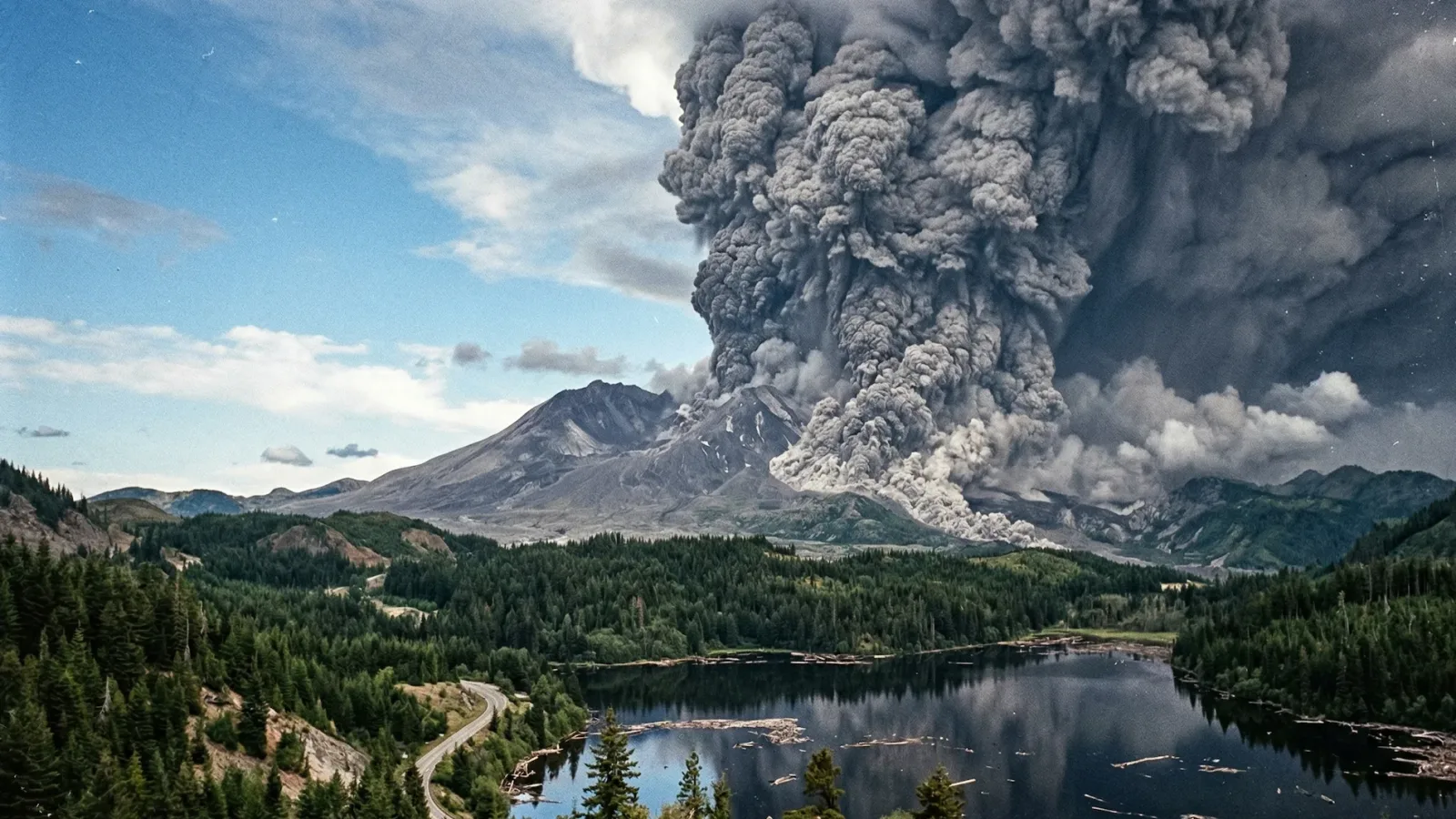
On the morning of May 18, 1980, the serene landscape of Washington State was shattered by an apocalyptic event that would forever change the science of volcanology. Mount St. Helens didn’t just erupt; it literally blew its top, unleashing a force of nature so devastating it eclipsed human comprehension. From a stubborn lodge owner who met a fiery end to ash that choked the globe, discover the gripping, awe-inspiring, and terrifying reality of America’s most famous volcanic disaster.
1. It Triggered the Largest Landslide in Recorded History
When a magnitude 5.1 earthquake struck directly beneath the mountain, it caused the entire north face of the volcano to collapse in a colossal avalanche. This catastrophic rockslide displaced roughly 0.67 cubic miles of material, roaring down the Toutle River Valley at speeds exceeding 150 miles per hour. The sheer volume of earth moved during this event remains the single largest terrestrial landslide ever documented by human beings.
2. The Lateral Blast Was Heard Hundreds of Miles Away
Unlike a traditional vertical eruption, the collapse of the mountain’s northern flank allowed a massive, superheated lateral blast to explode sideways. This catastrophic shockwave breached the sound barrier, unleashing a deafening roar that was clearly heard by people as far away as British Columbia and Montana. Curiously, because of the way the acoustic waves bounced off the atmosphere, many people living much closer to the volcano in the “quiet zone” heard nothing but a low rumble.
3. A Stubborn Lodge Owner Famously Refused to Evacuate
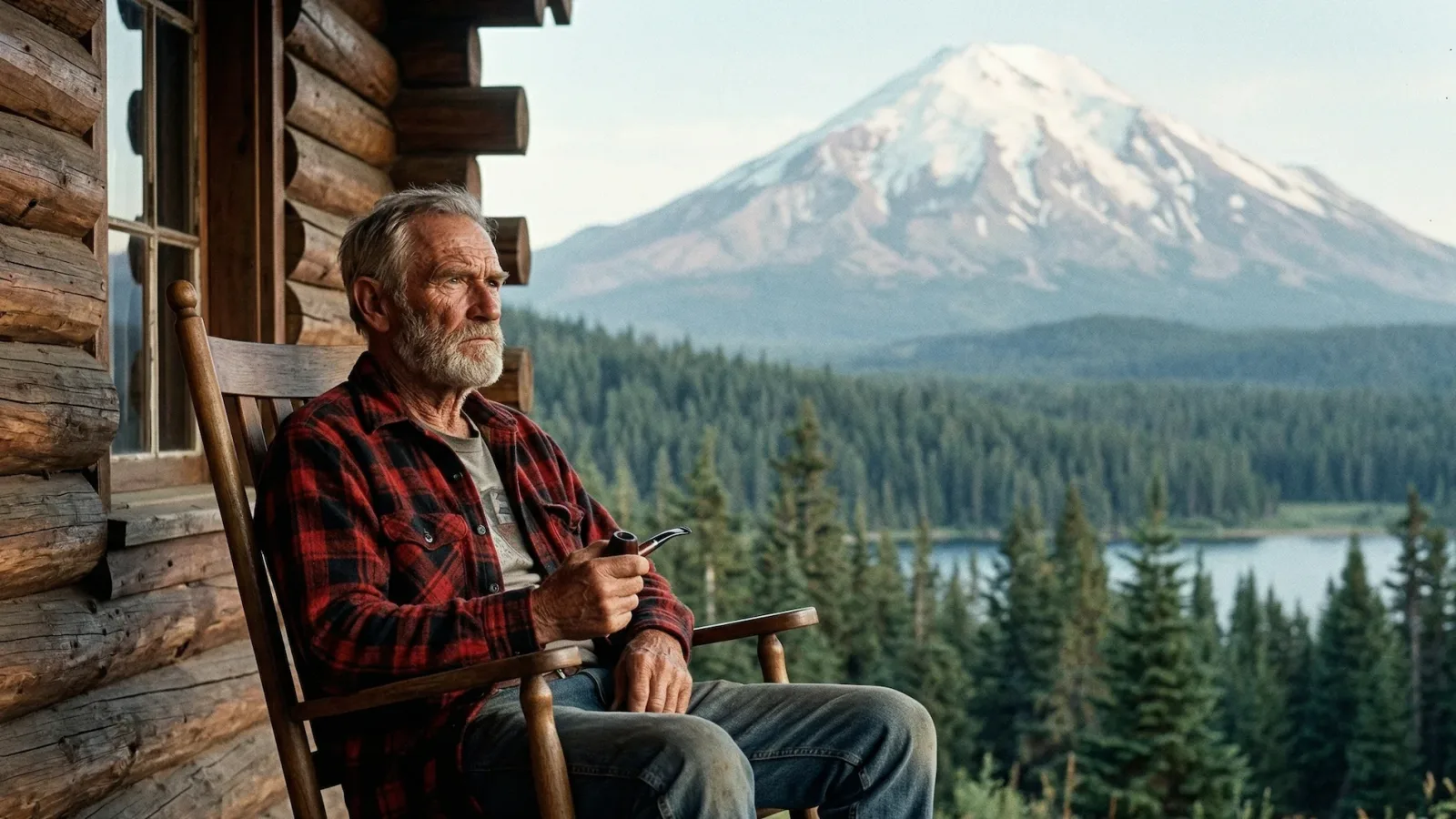
Harry R. Truman, the cantankerous 83-year-old caretaker of the Mount St. Helens Lodge at Spirit Lake, became a folk hero when he blatantly ignored mandatory evacuation orders. Claiming the mountain would never hurt him and that he was an indelible part of the landscape, Truman chose to stay behind with his beloved 16 rescue cats. Tragically, both he and his lodge were buried under hundreds of feet of boiling mud, ash, and volcanic debris, cementing his status as a legendary, if ill-fated, mountain man.
4. The Volcanic Ash Cloud Circled the Earth in Just 15 Days
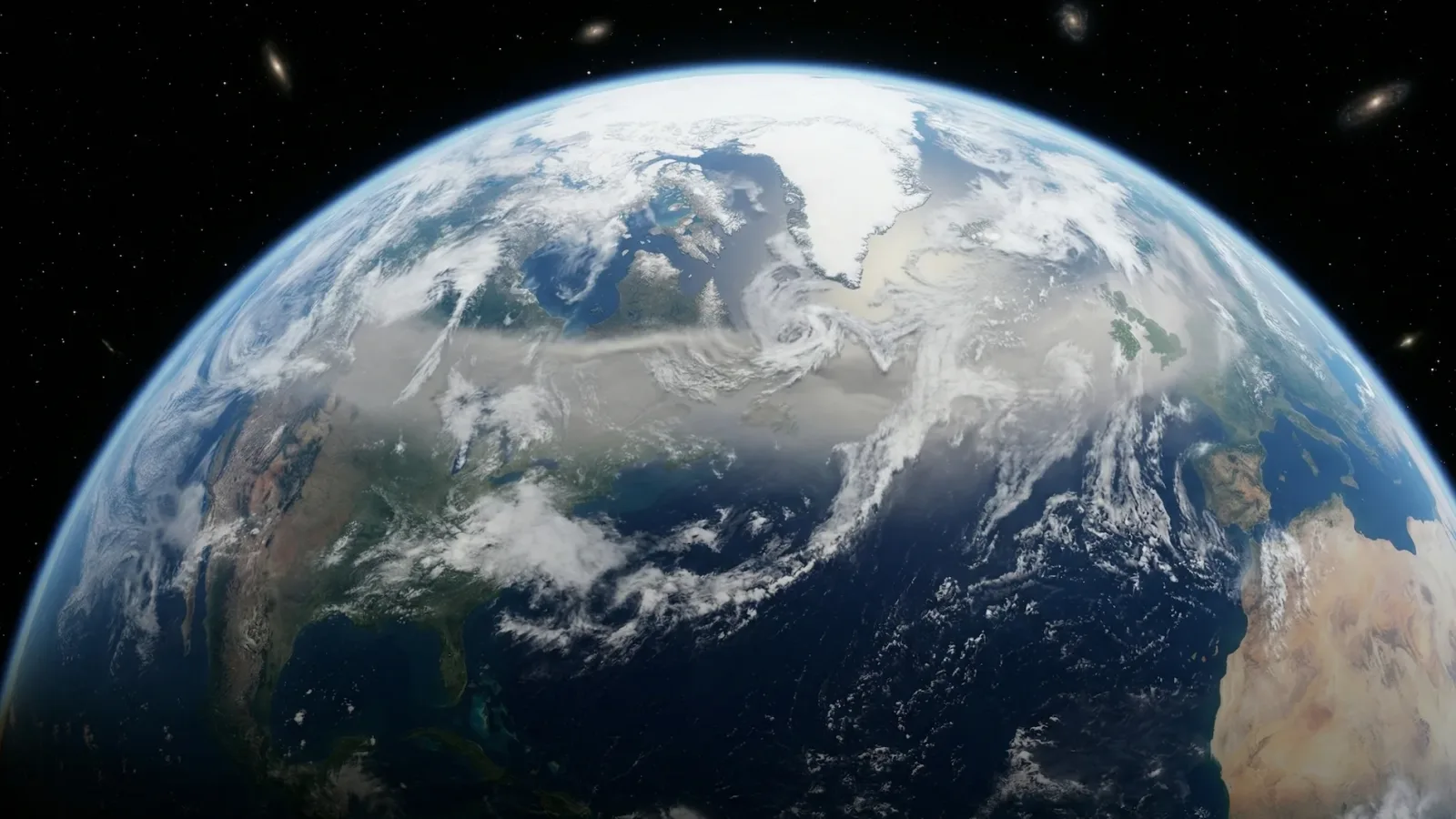
Within mere minutes of the eruption, a towering plume of pulverized rock and volcanic ash shot an astonishing 15 miles into the stratosphere. Caught in high-altitude jet streams, this dense, suffocating cloud of particulate matter raced eastward, plunging entire cities like Spokane into pitch-black darkness by mid-day. The ash was so abundant and moved so swiftly that it completed a full lap around the globe in a mere 15 days, leaving a thin dusting of Washington State on every continent.
5. The Eruption Flattened 150 Square Miles of Dense Forest
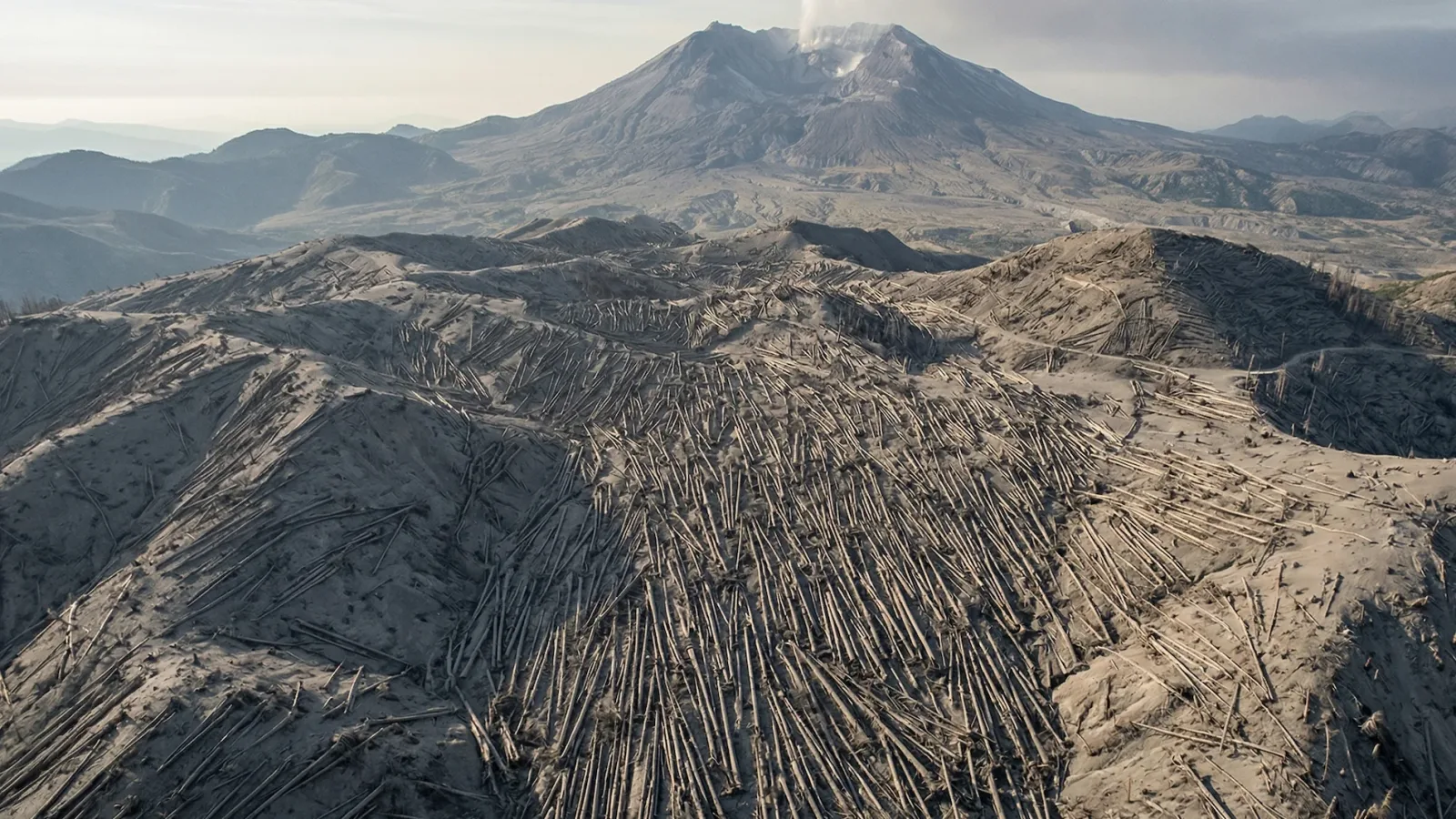
The sheer kinetic energy of the lateral blast acted like a gargantuan scythe, instantly mowing down centuries-old, massive Douglas fir trees as if they were fragile matchsticks. Across an area of roughly 150 square miles, the superheated blast wave snapped millions of trees right at their bases, stripping them of bark and laying them perfectly flat in the direction of the blast. Today, haunting photographs of this “blowdown zone” remain some of the most striking visual evidence of the volcano’s terrifying power.
6. It Shaved Over 1,300 Feet Off the Mountain’s Summit
Before the fateful morning of May 18, Mount St. Helens was widely renowned for its symmetrical, snow-capped peak, earning it the nickname “the Mount Fuji of America.” The eruption utterly obliterated this picturesque cone, violently removing 1,314 feet of rock and ice in a matter of seconds. In its place, a massive, horseshoe-shaped crater was left behind, permanently transforming the skyline of the Cascade Range and reducing the mountain’s elevation to 8,363 feet.
7. The Blast Released 24 Megatons of Thermal Energy
To comprehend the raw, destructive force of the eruption, scientists often compare its energy output to humanity’s most devastating weapons. The Mount St. Helens explosion released roughly 24 megatons of thermal energy, making it an astonishing 1,600 times more powerful than the atomic bomb dropped on Hiroshima. This incomprehensible release of heat instantly vaporized glaciers, boiling the resulting meltwater to create deadly, fast-moving mudflows called lahars.
8. Plagues of Insects Followed the Destruction
In the eerie, gray aftermath of the eruption, the devastated ecosystem experienced a bizarre and unsettling phenomenon: massive population explosions of opportunistic insects. With their natural predators—like birds and amphibians—wiped out by the blast, surviving insects like blowflies and yellow jackets multiplied exponentially, feasting on the decaying remains of wildlife. Rescuers and early researchers working in the “red zone” frequently reported being swarmed by thick, relentless clouds of these buzzing scavengers.
9. Over 7,000 Big Game Animals Perished Instantly
The blast zone was a thriving habitat for a diverse array of North American wildlife, much of which stood absolutely no chance of survival. Biologists estimate that the eruption instantly killed over 7,000 elk, deer, and black bears, alongside countless smaller mammals, birds, and millions of fish in the boiling rivers. Surprisingly, some burrowing animals like pocket gophers survived the initial inferno underground, later playing a crucial role in churning the soil and helping plant life return.
10. Volcanic Lightning Struck Through the Ash Plume
As the immense column of ash violently churned its way into the stratosphere, the intense friction between billions of jagged pumice particles generated massive amounts of static electricity. This electrical charge resulted in spectacular, terrifying displays of volcanic lightning arcing through the pitch-black cloud, creating an apocalyptic visual against the daytime sky. These violent electrical storms actively caused numerous forest fires in the areas immediately surrounding the blast zone, further compounding the fiery destruction.
11. The Eruption Melted Glaciers, Creating Deadly Mudflows
The sudden, intense heat of the lateral blast instantly melted the extensive glaciers and snowpacks that covered the higher elevations of Mount St. Helens. This massive volume of meltwater mixed with the newly deposited volcanic ash and pulverized rock, churning into thick, fast-moving rivers of concrete-like mud known as lahars. These devastating mudflows tore down the mountain’s river valleys, destroying over 200 homes, 27 bridges, and sweeping away heavy logging machinery as if they were children’s toys.
12. Ash Fell Like Snow in Neighboring States
For communities downwind of the eruption, the aftermath felt less like a fiery disaster and more like a bizarre, suffocating winter storm. In cities across eastern Washington, Idaho, and Montana, thick layers of gray, abrasive volcanic ash rained from the sky, burying streets, clogging vehicle engines, and collapsing roofs under its immense weight. People were forced to wear surgical masks to protect their lungs, and local governments had to deploy snowplows in the middle of May to clear the hazardous gray sludge.
13. A Geologist’s Final Words Captured the Moment of Collapse
David A. Johnston, a 30-year-old volcanologist with the United States Geological Survey, was stationed at an observation post six miles away when the eruption began. As the mountain’s north face bulged and finally gave way, Johnston grabbed his radio and urgently transmitted his now-famous last words: “Vancouver! Vancouver! This is it!” Seconds later, the lateral blast completely engulfed his camp, and Johnston tragically became one of the 57 victims whose lives were claimed by the volcano that day.
14. Nature Rebounded Much Faster Than Scientists Predicted
In the immediate aftermath, ecologists grimly predicted that the sterile, moon-like landscape left behind by the eruption would remain barren for decades, if not centuries. However, the sheer resilience of nature astonished researchers, as pioneer plants like fireweed began pushing through the ash mere months after the disaster. Today, the blast zone is a vibrant, thriving laboratory of ecological succession, proving that even the most catastrophic destruction is merely a reset button for a determined natural world.
15. The Volcano Remains Highly Active and Monitored Today
Despite the catastrophic pressure release in 1980, Mount St. Helens is far from a dormant geological relic; it remains the most active volcano in the contiguous United States. It has experienced periods of significant dome-building and minor eruptions as recently as 2004 to 2008, serving as a constant reminder of the volatile tectonic forces sleeping below. Thanks to the hard lessons learned in 1980, it is now one of the most closely monitored volcanoes on the planet, heavily rigged with GPS and seismic sensors to warn us of its next awakening.
Sources & References
This AI-assisted post was rigorously curated and fact-checked for accuracy by:
 Martin Roháček
How fun was this article? 🤔
Tap a star to rate it
🧠 Quiz: How closely were you paying attention?
10 questions — all answers are in the article above!
Enjoyed these facts? There's more! 💌
Fresh fun facts in your inbox. No spam, ever.