The Mediterranean Jewel: 15 Fascinating Facts About Antalya
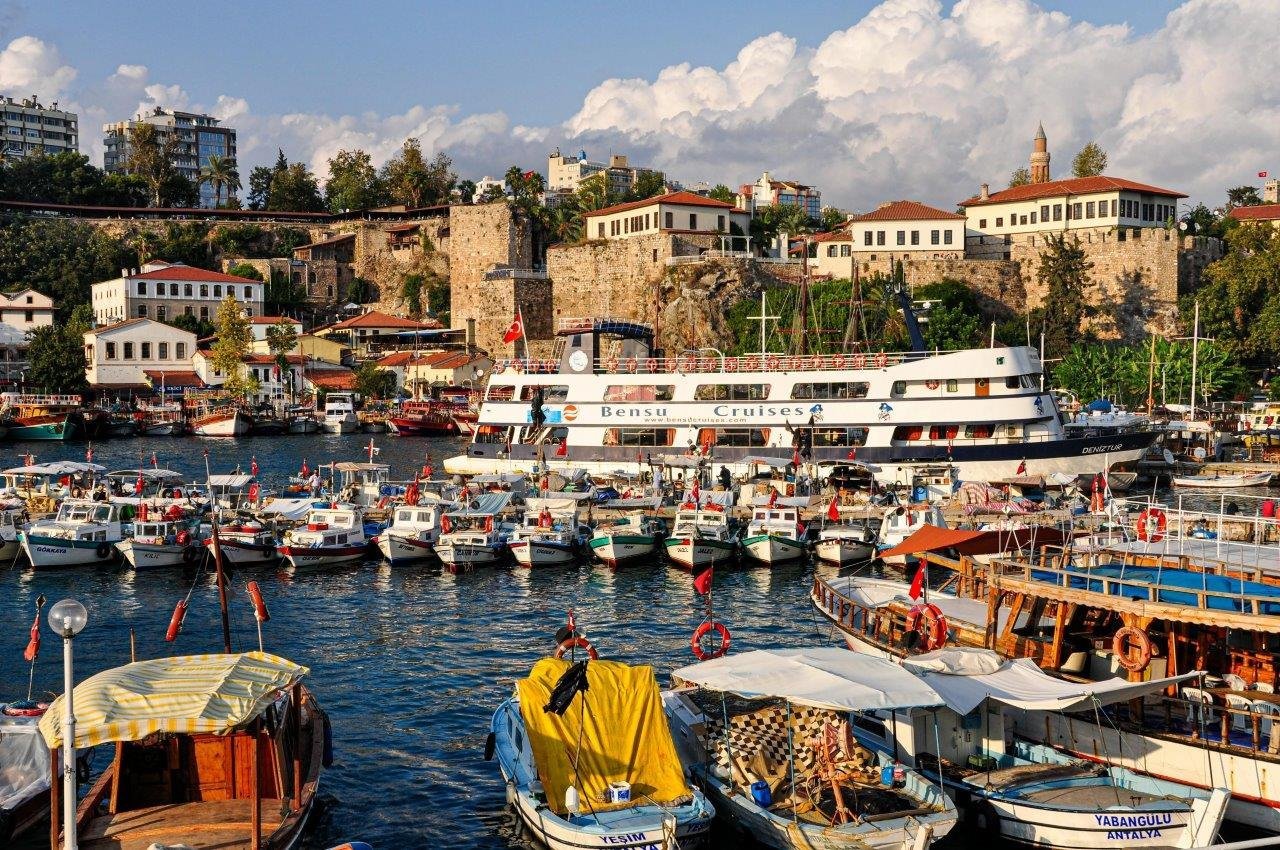
Antalya sits along Turkey's stunning Mediterranean coastline, framed by the dramatically towering Taurus Mountains. Founded in the second century BC, this ancient port city seamlessly weaves thousands of years of Greco-Roman and Ottoman history into a bustling modern resort destination. From the world's best-preserved Roman amphitheater to vibrant citrus orchards and protected loggerhead sea turtle nesting grounds, Antalya offers far more than traditional beach escapes. Discover fifteen extraordinary facts about the jewel of the Turkish Riviera.
1. King Attalus II Founded the City as a "Heaven on Earth"
According to ancient historical accounts, King Attalus II of Pergamon ordered his soldiers to venture out and locate the most beautiful spot on Earth. After searching across the Mediterranean region, the men led the monarch to a lush coastal terrace tucked beneath the magnificent Taurus Mountains. Overwhelmed by the stunning panorama of turquoise water and soaring peaks, Attalus declared he had found earthly paradise and founded a port city around 150 BC. Named Attaleia in honor of its royal founder, the settlement grew into a pivotal maritime trading hub. Today, the modern city of Antalya still occupies this exact picturesque coastline, preserving its original founder's visionary legacy.
2. Emperor Hadrian’s Monumental Gate Has Stood for Nearly Two Millennia
In 130 AD, the Roman Emperor Hadrian visited Attaleia, prompting local builders to erect a grand triumphal archway built directly into the city walls to welcome him. Known as Üçkapılar or Hadrian's Gate, this magnificent marble monument features three ornate arches supported by intricate Corinthian columns. Surprisingly, the structure was built entirely without mortar, relying on precise stonemasonry and iron clamps to hold its heavy white marble blocks together. Because medieval city walls enclosed and protected the arch for centuries, it survived intact while much of the ancient city surrounding it crumbled. Today, pedestrians in the historic district can walk through the exact same archways that welcomed Roman royalty nearly two thousand years ago.
3. It Houses the World's Longest Tunnel Aquarium
Located near Konyaaltı Beach, the Antalya Aquarium is home to one of the most impressive aquatic exhibits anywhere on Earth. The facility's crown jewel is a massive underwater tunnel that stretches an extraordinary 131 meters (430 feet) in length and measures 3 meters in width. Visitors walking through the glass tube are surrounded by over five million liters of sea water containing thousands of marine species, including sharks and rays. The underwater scenery features life-sized sunken shipwrecks, a full-scale submarine replica, and intricate coral reefs created by world-renowned sculptors. It remains one of the most popular engineering marvels and family destinations in the entire Mediterranean region.
4. The Lower Düden Waterfall Plunges Directly Into the Mediterranean Sea
While most natural waterfalls empty into rivers, lakes, or tranquil basins, Antalya features a spectacular waterfall that tumbles over sea cliffs directly into the ocean waters below. The Lower Düden Waterfall originates from underground karst springs high up in the Taurus Mountains before winding through the city's suburban districts. When the river reaches the rocky coastline at Düden Park, it cascades down a dramatic 40-meter (130-foot) vertical drop into the open Mediterranean Sea. The mist generated by the falling water creates constant rainbows, drawing sightseers who view the spectacle from nearby coastal cliff parks or from excursion boats floating right beside the cascading foam. This natural spectacle highlights the unique geographical interface between mountain streams and the Mediterranean coastline.
5. Termessos Was One of the Only Cities Alexander the Great Couldn't Conquer
High in the rugged peaks of the Güllük Mountain National Park near Antalya lie the spectacular stone ruins of Termessos. Built by the Pisidians at an elevation of over 1,000 meters above sea level, this ancient stronghold possessed unmatched natural defenses. In 333 BC, the legendary conqueror Alexander the Great marched toward Termessos, but after observing its formidable cliffside walls and impregnable mountain pass, he decided against laying siege to it. Alexander famously likened the city to an eagle's nest and chose to spare his troops the heavy casualties required to breach it. Today, adventurous visitors can hike through wild forests to view an ancient amphitheater perched dramatically on the edge of a sheer cliff face.
6. Aspendos Boasts the Best-Preserved Roman Theatre on the Planet
Located roughly 40 kilometers east of central Antalya, the ancient city of Aspendos features an exceptionally well-preserved Roman amphitheater. Built during the reign of Emperor Marcus Aurelius by the local architect Zenon, the grand theatre seated up to 12,000 spectators. Thanks to its incredibly sound structural design and centuries of continuous maintenance—including use as a caravanserai by Seljuk sultans—the auditorium remains almost entirely intact today. The theatre's acoustic design is so precise that a coin dropped at center stage can easily be heard from the topmost row of stone benches. To this day, the ancient venue hosts international opera and ballet festivals, allowing modern audiences to experience performances in an 1,800-year-old venue.
7. Antalya Welcomes Over 16 Million International Tourists Annually
While global travel destinations like Paris, London, and Dubai regularly top tourism headlines, Antalya has quietly become one of the most visited cities in the world. In 2023, the region recorded an astonishing milestone by welcoming more than 16.5 million international visitors through its major international airport. This massive inflow positioned Antalya as the fourth most visited city globally, eclipsing major European capitals and famous resort hubs. Travelers flock to the region for its reliable year-round sunshine, luxury coastal resorts, rich archaeological heritage, and affordable hospitality. The region's tourism infrastructure can seamlessly process tens of thousands of arrivals daily during peak summer months.
8. The Local Specialty Piyaz Features a Secret Tahini Dressing
While standard Turkish piyaz is a simple salad of boiled navy beans, red onions, and parsley tossed in olive oil, Antalya serves a famous regional variant that is completely unique. Antalya Piyazı converts the dish into a rich main meal by dressing the cooked white beans with a warm, creamy sauce made from roasted sesame tahini, crushed garlic, lemon juice, and vinegar. The salad is traditionally served lukewarm, topped with hard-boiled egg slices, diced tomatoes, and a generous sprinkle of red pepper flakes and sumac. This distinct culinary creation has been granted official Geographical Indication status to preserve its historical recipe. Local restaurants called piyazcı have specialized in serving this signature Mediterranean comfort food for generations.
9. The Region's Beaches Are Vital Nesting Havens for Endangered Sea Turtles
The pristine sandy stretches surrounding Antalya are not just popular with sunbathing tourists; they are critical sanctuaries for endangered wildlife. Beaches such as Çıralı, Belek, and Patara serve as essential nesting grounds for the loggerhead sea turtle (Caretta caretta). Every year between May and September, female turtles return to the exact beaches where they hatched decades earlier to lay hundreds of eggs beneath the sand. To safeguard these vulnerable marine creatures, local conservation teams and volunteers strictly enforce light restrictions and beach access bans at night. Thanks to these dedicated protection efforts, thousands of newly hatched baby turtles successfully scuttle into the Mediterranean each summer season.
10. The Real Saint Nicholas Was Born and Served Nearby
The real historical figure who inspired the worldwide legend of Santa Claus lived his entire life in the immediate vicinity of Antalya. Saint Nicholas was born around 270 AD in Patara, an ancient Lycian port city located in western Antalya province. He later became the Bishop of Myra (modern-day Demre), where he gained renown for his secret gift-giving, protection of children, and defense of falsely accused prisoners. The 5th-century Church of Saint Nicholas in Demre still stands today, featuring gorgeous Byzantine wall frescoes and stone sarcophagi. Pilgrims and tourists from across the globe visit the ancient sanctuary to honor the compassionate bishop whose legacy evolved into Father Christmas.
11. Kaleiçi Merges Five Distinct Civilizations Into One District
Antalya’s historic core, known as Kaleiçi (meaning "Inside the Citadel"), offers a living architectural lesson spanning over two millennia. Enclosed within ancient stone fortifications, the quarter contains preserved structures built by Hellenistic, Roman, Byzantine, Seljuk, and Ottoman rulers. Narrow cobblestone streets wind past 19th-century timber-framed Ottoman mansions that have been converted into boutique hotels and artisan shops. Standing beside these traditional homes are 13th-century Seljuk minarets, such as the famous Yivli Minare with its fluted blue tiles, and Roman stone watchtowers overlooking the ancient harbor. This seamless blend of diverse historical influences creates one of the most charming historic districts in the Mediterranean region.
12. It Marks the Starting Point of the Famous Lycian Way Trail
Outdoor enthusiasts from around the globe travel to Antalya to tackle one of the world's most scenic long-distance trekking routes: the Lycian Way. Stretching over 540 kilometers along the mountainous coastline between Fethiye and Antalya, this marked trail connects dozens of ancient Lycian city-states. Hikers traverse coastal pine forests, dramatic cliff edges, secluded Mediterranean coves, and rugged mountain passes while passing Roman aqueducts and rock-cut tombs. The trail was surveyed and established in 1999 by British amateur historian Kate Clow, marking Turkey's first-ever official long-distance foot path. It consistently ranks among the top coastal hiking destinations globally.
13. Antalya Is the Citrus Capital of Turkey
Beyond its ancient monuments and sun-drenched beaches, Antalya is widely recognized as the citrus heartland of Turkey. Thanks to its fertile coastal plains and sunny Mediterranean climate, the region produces vast quantities of oranges, lemons, grapefruits, mandarins, and bergamots. Orange trees line many of the city's central boulevards, filling the air with fragrant orange blossoms during the spring months. The local food culture heavily incorporates citrus fruits, producing famous regional preserves such as bitter orange jam and aromatic bergamot jam. In fact, the orange is so central to local identity that the city's prestigious annual film festival is named the Antalya Golden Orange Film Festival.
14. A Sunken Ancient City Lies Just Off the Coast of Kekova
Just off the coast of the Antalya province lies the uninhabited island of Kekova, where underwater ruins reveal a dramatic natural catastrophe. In the 2nd century AD, a powerful earthquake struck the region, fracturing the land and causing half of the ancient Lycian city of Simena to plunge into the turquoise Mediterranean waters. Today, boat travelers can peer into crystal-clear waters to see submerged stone staircases, ancient house walls, public buildings, and broken amphorae resting on the sea floor. Although swimming directly over the sunken ruins is restricted to prevent damage to antiquities, sea kayaking and glass-bottom boat tours offer stunning views of this partially submerged ancient world. The site remains one of the Mediterranean's most mesmerizing combinations of history and marine landscape.
15. Antalya Museum Was Created to Prevent Antiquities Looting
The renowned Antalya Archaeological Museum boasts one of the world's finest collections of classical marble sculpture, but its origins stem from a heroic preservation effort. Following World War I, during the foreign occupation of southern Anatolia, an Italian army officer began collecting local antiquities to ship back to Europe. In response, local high school teacher Süleyman Fikri Erten appointed himself voluntary antiquities conservator and established a museum in 1922 to safeguard the region's heritage from being looted. Today, the expansive museum features 13 exhibition halls housing thousands of priceless artifacts, including the world-famous "Weary Herakles" marble statue that was triumphantly repatriated to Turkey after decades abroad. It stands as a powerful tribute to local cultural preservation and world-class archaeological heritage.
Sources & References
This AI-assisted post was rigorously curated and fact-checked for accuracy by:
 Martin Roháček
How fun was this article? 🤔
Tap a star to rate it
🧠 Quiz: How closely were you paying attention?
10 questions — all answers are in the article above!
Enjoyed these facts? There's more! 💌
Fresh fun facts in your inbox. No spam, ever.