The Enchanting Island: 15 Fascinating Facts About Bali
Bali is world-renowned for its emerald rice terraces, pristine beaches, and vibrant cultural traditions, but this famous Indonesian province holds far deeper secrets. From an island-wide day of absolute silence that even grounds international flights to ancient ecological farming systems and thousands of sacred temples, Bali's true identity extends well beyond standard resort stereotypes. Discover 15 fascinating facts about Bali's unique Hindu heritage, rich history, volcanic landscapes, and incredible wildlife.
1. Balinese Hinduism Is a Unique Spiritual Enclave
While Indonesia possesses the largest Muslim population of any country on Earth, Bali stands out as a vibrant enclave where over 87% of residents practice Balinese Hinduism. This faith is distinct from Indian Hinduism, as it uniquely weaves together orthodox Hindu precepts, ancient Javanese traditions, and indigenous animism. Known locally as Agama Hindu Dharma, this rich spiritual system places profound emphasis on maintaining cosmic balance between gods, humans, and nature. Throughout the island, everyday actions are treated as sacred duties designed to keep visible and invisible realms in perfect harmony. Consequently, visitors encounter a deeply spiritual environment that is utterly unique to this single island.
2. Most Balinese People Share One of Just Four Names
Navigating social interactions in Bali can feel surprisingly repetitive because the vast majority of locals share one of only four primary first names. Parents traditionally name their children according to birth order: Wayan for the firstborn, Made for the second, Nyoman for the third, and Ketut for the fourth. If a family has a fifth child, the naming cycle simply resets back to Wayan with an added qualifier. This naming system applies to both men and women, with gender indicated by pre-pended honorific titles like "I" for males and "Ni" for females. As a result, you will encounter countless people sharing these four names across every village and town on the island.
3. The Entire Island Shuts Down for a Day of Absolute Silence
Once a year, Bali experiences an extraordinary event known as Nyepi, the Hindu Day of Silence that marks the Balinese Saka New Year. For a full 24 hours starting at dawn, strict local laws enforce a complete standstill across the entire island, prohibiting all traffic, physical work, entertainment, and public lighting. Even Bali’s busy Ngurah Rai International Airport completely halts all domestic and international flights, making it the only commercial airport in the world to close for a religious observance. Local village security guards known as Pecangak patrol empty streets to ensure total compliance with the quiet rules. The spiritual motivation behind Nyepi is to trick evil spirits into believing the island has been abandoned so they will depart for another year.
4. Ancient Subak Irrigation Is a UNESCO-Recognized Marvel
Long before modern agricultural technology existed, Balinese farmers developed Subak, a cooperative water-management system that has sustained rice terraces for over 1,000 years. Centered around water temples, this complex engineering network distributes mountain spring water through canals and tunnels to ensure every farmer receives an equitable share. Subak is rooted in the philosophical principle of Tri Hita Karana, which preaches harmony between God, humanity, and the natural environment. Recognizing its historical, cultural, and ecological significance, UNESCO designated the Subak cultural landscape as a World Heritage Site in 2012. Today, these emerald-green rice terraces remain both a living agricultural system and one of the island's most iconic landscapes.
5. The Monumental GWK Statue Towers Higher Than Lady Liberty
Soaring above the Bukit Peninsula, the colossal Garuda Wisnu Kencana (GWK) monument stands as one of the tallest statues on Earth. Reaching a height of 122 meters (400 feet), this magnificent copper and brass structure surpasses the height of New York's Statue of Liberty including its pedestal. Designed by renowned Balinese sculptor Nyoman Nuarta, the monument depicts the Hindu god Vishnu riding his mythical avian mount, Garuda. The ambitious project faced decades of political, financial, and engineering challenges, taking nearly 28 years from its initial concept to its grand opening in 2018. Today, it serves as a proud symbol of Indonesian artistic engineering and cultural identity.
6. Bali's Historic Capital Was Singaraja, Not Denpasar
While modern travelers immediately associate Bali's urban hub with Denpasar, the island's historic capital was actually Singaraja on the northern coast. Singaraja served as the central administrative hub during Dutch colonial rule and retained its capital status through Indonesia’s early independence era. It was not until 1958 that the provincial capital was officially relocated south to Denpasar to facilitate economic growth and accommodate the burgeoning international tourism industry. Remnants of Singaraja's grand past still survive today in its wide boulevards, historic harbor warehouses, and distinct royal palaces. Relocating the capital dramatically reshaped Bali's economic landscape, turning the south into a global travel hub while preserving the north's quieter rhythm.
7. The Province of Bali Is Actually an Archipelago of Four Islands
Many visitors assume Bali is a single solitary landmass, but the province actually consists of a main island alongside a small cluster of neighboring islands. Off the southeastern coast lie Nusa Penida, Nusa Lembongan, and Nusa Ceningan, which are all administratively part of Bali province. These smaller islands feature dramatic limestone cliffs, serene turquoise lagoons, and world-class diving sites famous for sightings of majestic manta rays and ocean sunfish. Accessing them requires only a short speedboat ride from mainland ports like Sanur or Padangbai. Exploring these offshore gems reveals a more rugged, tranquil side of Balinese island life away from the main island's commercial centers.
8. Trained Ducks Serve as Eco-Friendly Paddy Controllers
In Bali's agricultural heartland, farmers rely on an ancient and eco-friendly form of pest management involving thousands of highly disciplined ducks. Every morning, duck herders lead massive flocks into flooded paddies where the birds forage for insects, snails, and weeds that would otherwise damage growing rice crops. As the ducks march through the fields, their droppings act as a natural, nutrient-rich fertilizer for the soil. Remarkably, herders guide hundreds of ducks at a time using nothing more than a simple tall pole topped with a small flag or cloth. The ducks recognize their specific flock flag and follow their owner home at dusk without a single bird wandering off.
9. Bali Is Home to More Than 20,000 Sacred Temples
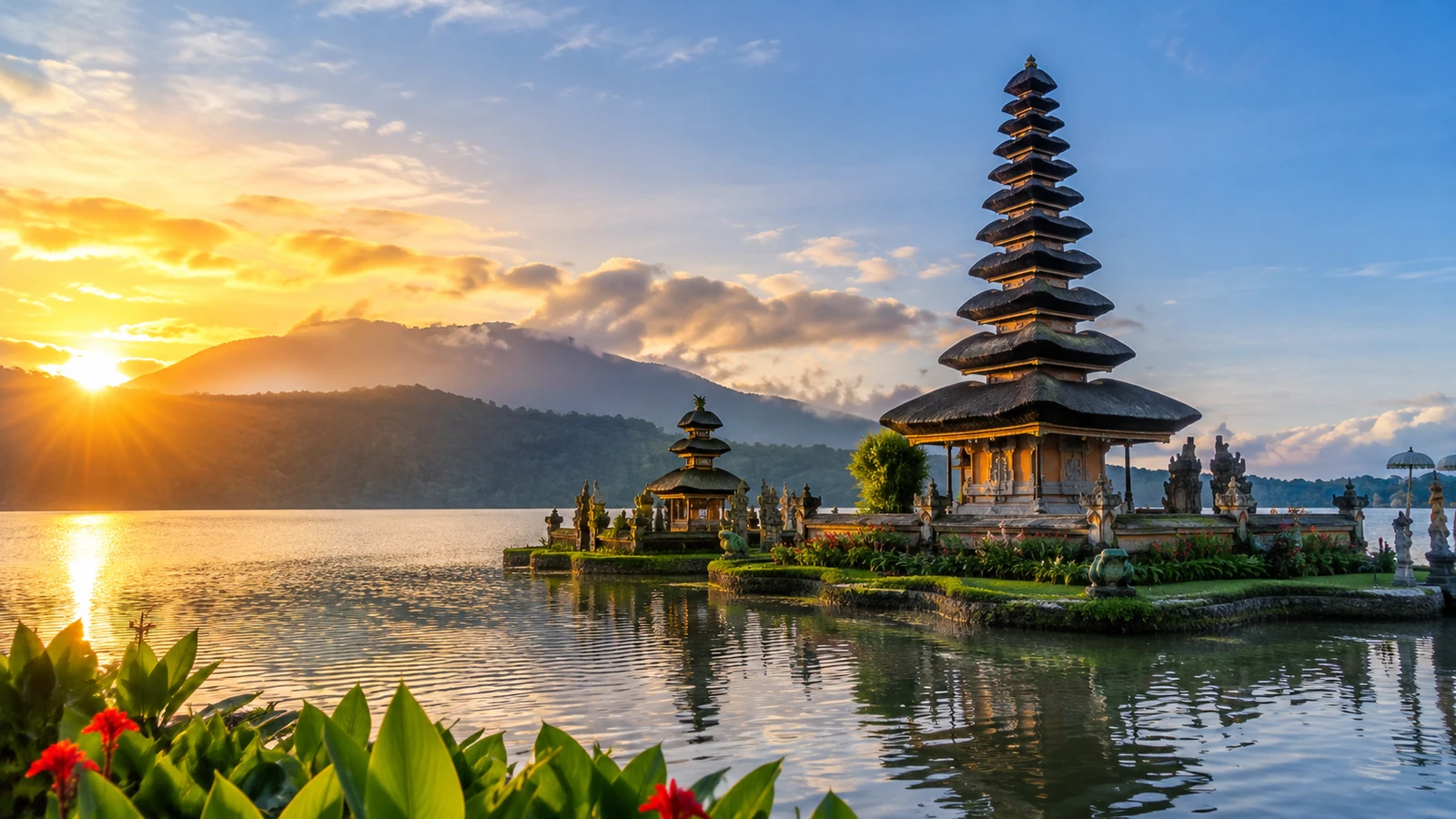
Bali is often nicknamed "The Island of a Thousand Temples," but that label is a severe understatement given that the island houses over 20,000 individual sanctuaries. Religious tradition dictates that every traditional village must maintain at least three essential public temples known as the Kahyangan Tiga. These include a temple dedicated to the village founders, a central temple for community worship, and a temple near the burial grounds. In addition to public village shrines, almost every Balinese home features a private family temple compound. From tiny roadside shrines to massive sea temples perched on dramatic ocean cliffs, sacred architecture defines the physical landscape of the island.
10. Daily Woven Offerings Blanket the Island's Streets
Walking down any sidewalk, shop entrance, or beach path in Bali, you will inevitably spot delicate palm-leaf trays filled with colorful flowers, rice, and burning incense. Known as Canang Sari, these small daily offerings are meticulously crafted by Balinese women every morning as a gesture of gratitude to the gods and spirits. The elements within each basket carry specific symbolic meanings, with distinct flower colors placed in precise cardinal directions to honor different Hindu deities. Because these sacred gifts are placed directly on the ground to appease lower spirits, pedestrians must take care not to step on them. The gentle aroma of burning incense from Canang Sari creates the signature fragrance that lingers across the entire island.
11. Active Volcanoes Dominantly Shape Geography and Sacred Life
The geographical spine of Bali is shaped by a chain of dramatic active volcanoes that dominate both its physical landscape and its spiritual worldview. Mount Batur stands at 1,717 meters (5,633 feet) above sea level and features a vast volcanic caldera with an active double crater that remains a popular spot for sunrise trekking. Looming even higher is Mount Agung, the sacred peak that reaches over 3,000 meters (9,842 feet) and represents the spiritual center of the universe in Balinese cosmology. Local inhabitants believe these majestic peaks serve as the earthly homes of deities and ancestral spirits. Major eruptions from both volcanoes over the past century have repeatedly reshaped the surrounding terrain while replenishing the soil with rich mineral ash.
12. Volcanic Eruptions Created Striking Jet-Black Coastlines
While southern Bali is famous for its bright white sand beaches, the northern and eastern shores feature striking coastlines covered in pitch-black volcanic sand. Areas such as Lovina, Amed, and Tulamben owe their distinctive dark shorelines to crushed basalt and volcanic ash deposited by centuries of eruptions from Mount Agung. The jet-black sand creates a dramatic visual contrast against the deep blue ocean water and lush green hillsides. Because volcanic sand is rich in heavy minerals, it absorbs heat rapidly in the midday sun, creating a unique coastal environment. These darker shores are also gateway spots to vibrant calm reefs and world-famous coastal shipwreck dive sites.
13. Bali Lies Within the Epicenter of Global Marine Biodiversity
Bali sits at the heart of the Coral Triangle, a marine region recognized by oceanographers as the global epicenter of marine biodiversity. The nutrient-rich currents flowing between the Indian Ocean and the Pacific Ocean nourish extraordinary underwater ecosystems surrounding the island. These waters house more than 2,000 species of reef fish and hundreds of hard and soft coral species, rivaling the diversity of the Great Barrier Reef. Divers and snorkelers off Bali's coast regularly encounter green sea turtles, reef sharks, giant manta rays, and rare macro organisms. Protecting these precious marine habitats has become a vital priority for local conservationists and eco-tourism initiatives.
14. Ubud's Sacred Monkey Forest Hosts a Primate Economy
In the cultural heartland of Ubud lies the Sacred Monkey Forest Sanctuary, a verdant nature reserve inhabited by over 1,200 long-tailed macaques. Far from being simple wildlife, these primates are considered sacred guardians of the three ancient Hindu temples hidden deep within the forest canopy. The monkeys have developed a notorious reputation among international visitors for their clever and mischievous behavior. Researchers have observed that these macaques engage in a form of bartering, stealing non-edible tourist items like sunglasses, hats, or cameras and holding them hostage until offered food in exchange. This sophisticated understanding of trade highlights the remarkable adaptability and intelligence of the forest's monkey troops.
15. The Infamous Kopi Luwak Coffee Originated Here
Bali is one of the primary birthplaces of Kopi Luwak, famously recognized as one of the most expensive and unique coffees in the world. The production process relies on the Asian palm civet, a small cat-like mammal that eats the ripest coffee cherries available. As the cherries pass through the civet's digestive tract, natural enzymes ferment the beans and break down their bitter proteins without digesting the inner bean itself. Once excreted and collected, the beans are thoroughly washed, dried, and roasted to produce an unusually smooth, low-acidity coffee. Fetching prices up to $600 per pound on the global market, Kopi Luwak remains a coveted luxury item, though ethical buyers now seek out certified wild-sourced varieties.
Sources & References
This AI-assisted post was rigorously curated and fact-checked for accuracy by:
 Martin Roháček
How fun was this article? 🤔
Tap a star to rate it
🧠 Quiz: How closely were you paying attention?
10 questions — all answers are in the article above!
Enjoyed these facts? There's more! 💌
Fresh fun facts in your inbox. No spam, ever.