The Frozen Precision: 15 Fascinating Facts About Biathlon
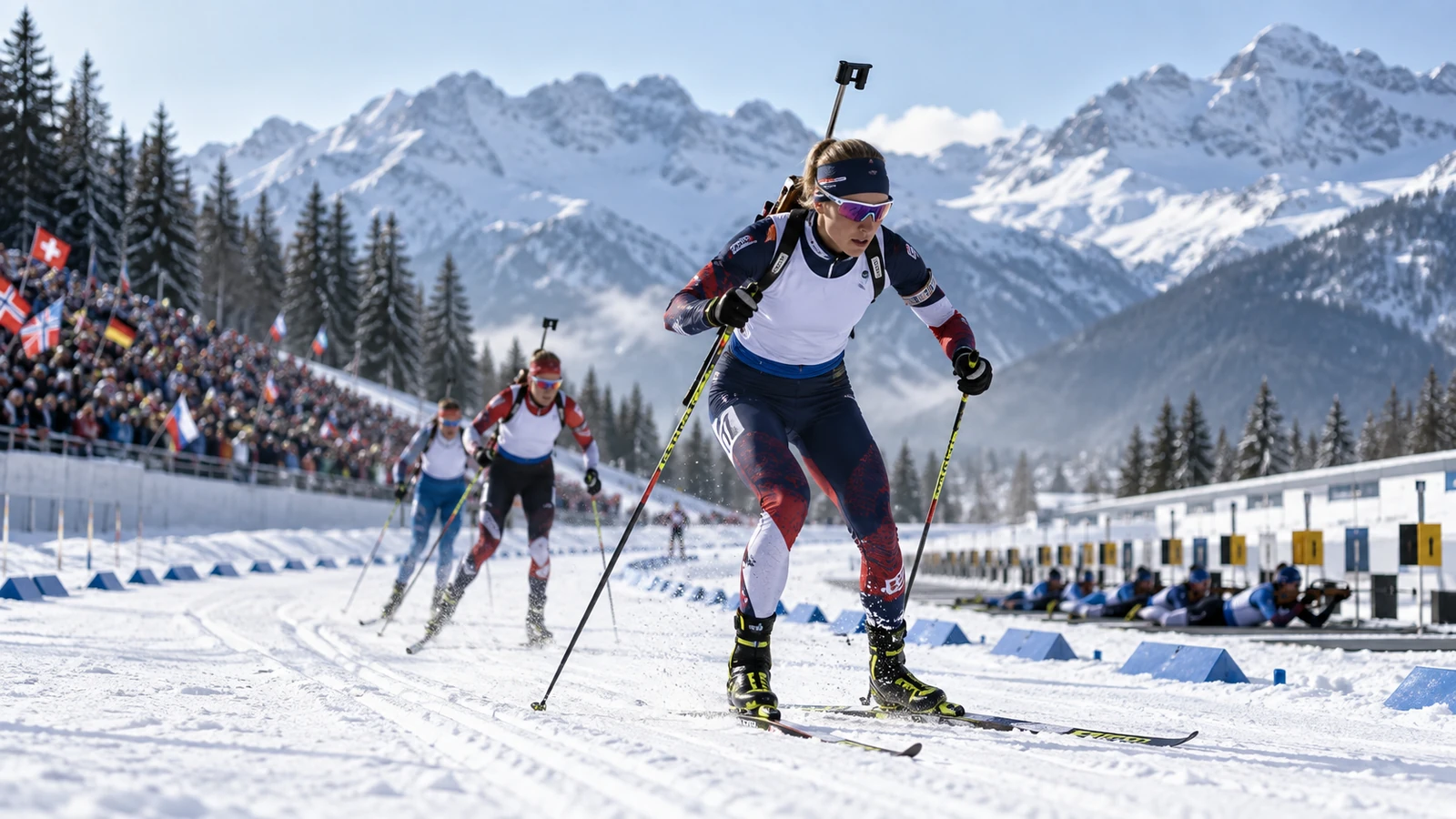
Combining the physical exhaustion of cross-country skiing with the surgical calmness of rifle marksmanship, biathlon stands out as one of the most demanding winter sports in existence. Originating thousands of years ago as a hunter's survival tactic in Scandinavia, it evolved through military training into a marquee discipline at the Winter Olympics. Today's biathletes must control heart rates exceeding 180 beats per minute to hit targets as small as a golf ball from 50 meters away. From bullet testing in sub-zero freezers to heart-stopping relay reloads, here are 15 fascinating facts about the ultimate test of cold-weather speed and accuracy.
1. Ancient Scandinavian Survival Roots
Rock carvings discovered in Rødøy, Norway, dating back roughly 4,000 years depict early hunters on primitive skis stalking wild game, proving that ski marksmanship originated as an ancient survival technique. By the 18th century, Scandinavian militaries formalized these practical winter skills into organized exercises to train border patrols. The first recorded military ski race was held among Norwegian border guards in 1767, featuring target shooting while navigating snowy terrain. This long-standing military tradition directly laid the groundwork for modern winter sports by pairing cross-country endurance with defensive marksmanship. Today, while high-tech race suits have replaced heavy army coats, the core dynamic of ski-and-shoot performance remains identical.
2. Olympic Evolution from Military Patrol
Biathlon made its original Olympic debut at the inaugural 1924 Winter Games in Chamonix under the name "Military Patrol." In this early team event, four-man army squads skied long distances in winter uniforms carrying heavy military packs and full-bore service rifles. After appearing as a demonstration sport in several subsequent Games, Military Patrol was dropped and later reinvented as a modern civilian sport called biathlon, debuting officially at the 1960 Winter Olympics in Squaw Valley, California. The initial 1960 event featured only a single 20-kilometer race for men with four shooting stops using high-powered centerfire rifles. Over subsequent decades, the sport expanded into multiple sprint, pursuit, and mass-start formats using lighter rimfire rifles.
3. Golf Balls vs. Grapefruits at 50 Meters
Biathletes engage target walls set at a standardized distance of 50 meters, which is roughly equivalent to the length of an Olympic swimming pool. However, the size of the open target aperture changes dramatically depending on whether the athlete is lying down or standing up. In the prone position, shooters target a tiny opening measuring just 45 millimeters (1.8 inches) in diameter, which is roughly the size of a standard golf ball. When shooting from the standing position, the target opening widens to 115 millimeters (4.5 inches), approximately the size of a grapefruit. Hitting these small black targets requires extraordinary precision, as even a millimeter of barrel wobble sends the bullet far off target.
4. Timing Trigger Pulls Between Heartbeats
Skiing into the range at full speed drives an athlete's heart rate up to 180 beats per minute or higher, creating intense body tremors. Because a hammering pulse causes the rifle barrel to bounce rhythmically with every beat, elite shooters must time their trigger pulls to the fraction of a second between heartbeats. Biathletes practice deep breathing techniques religiously on their approach to hyper-oxygenate their blood before exhaling partially to hold still. Taking a breath at the wrong moment or firing mid-pulse can cause the bullet to miss the target face completely. Mastering this extreme cardiovascular control under high-pressure conditions separates world-class biathletes from average competitors.
5. Penalty Loops vs. Direct Time Penalties
The penalty for missing a target depends entirely on the race format, creating distinct tactical strategies for each event. In Sprint, Pursuit, Mass Start, and Relay events, every missed shot forces the competitor to ski an immediate 150-meter penalty loop. This extra lap takes roughly 20 to 25 seconds to complete, burning precious cardiovascular energy and slowing down overall lap time. Conversely, the traditional Individual race imposes a harsh one-minute time penalty directly onto the skier's clock for every miss without a penalty loop. Because recovering a full minute through raw skiing speed is nearly impossible, marksmanship precision becomes paramount in the Individual format.
6. The High-Stakes Chaos of Relay Spare Bullets
In Olympic relay events, athletes shoot twice—once prone and once standing—and receive three extra spare rounds per shooting stage if they miss any of their primary five targets. However, unlike the main five-round magazines, these three spare bullets cannot be pre-loaded into a clip; athletes must manually push them into the chamber one by one. Handling tiny cartridges with frozen, shaking fingers under extreme race stress frequently results in fumbled drops and costly delays. If an athlete still leaves targets standing after using all three spare rounds, they must ski a 150-meter penalty loop for each remaining miss. This rule creates wild momentum shifts, as leading teams can lose substantial leads in seconds.
7. Sub-Zero Freezer Ammunition Testing
Biathlon rifles fire specialized .22 caliber rimfire ammunition, but standard commercial bullets perform unpredictably in harsh winter cold. Freezing temperatures alter gunpowder burn rates, stiffen lubricants, and contract brass casings, causing unexpected velocity shifts and misfires. To maintain consistent ballistics down to minus 20 degrees Celsius (-4 degrees Fahrenheit), top national teams purchase huge batches of specialized cold-weather ammunition from boutique manufacturers. These ammunition lots are rigorously tested in specialized cold-chamber freezers to match specific rifle barrels. Elite athletes even bring custom-matched ammo lots to major competitions to ensure absolute trajectory stability in arctic conditions.
8. Strict Rifle Regulations and Weight Limits
Biathletes carry their firearms on their backs for the entire course length using a custom-padded back harness. Rules established by the International Biathlon Union mandate that the rifle must weigh at least 3.5 kilograms (7.7 pounds) without ammunition attached. Carrying nearly eight pounds while sprinting up steep mountain inclines adds significant physical strain to an athlete's back, shoulders, and core muscles. To optimize ergonomics, rifle stocks are custom-carved from hardwood or lightweight carbon fiber to match the physical proportions of individual shooters. Furthermore, strict safety protocols dictate that rifles must remain unloaded and harness-slung vertically while skiing.
9. Battling Snow-Clogged Aperture Sights
Biathlon rifles rely on non-magnified iron sights consisting of a rear aperture called a diopter and a front globe sight. Because rifles remain slung open to the elements on an athlete's back, fresh snowfall or trail debris from a fall can easily plug the tiny diopter opening. If snow clogs the rear sight, the biathlete cannot see the targets at all and must frantically blow into the diopter or brush it clear before taking aim. To prevent this catastrophe, biathletes use spring-loaded flip caps to shield their sights while skiing, opening them only upon reaching the firing mat. However, unexpected crashes in soft snow can still pack mechanisms and cost precious seconds.
10. Reading Wind Flags and Making Sight Clicks
Wind is the primary environmental hazard on the biathlon range, easily drifting lightweight .22 caliber bullets several inches off course over a 50-meter trajectory. To help shooters gauge wind velocity and direction, small red wind flags are placed at regular intervals along the firing line. Before pulling the trigger, biathletes quickly evaluate flag motion and compensate by mechanically adjusting their rifle sights. Turning small control knobs on the sight—known as making "clicks"—shifts the sight alignment to compensate for windage. Making accurate click adjustments while gasping for air requires rapid mental math and calm tactical decision-making.
11. The Belated Debut of Women's Olympic Events
Although women competed in international biathlon competitions throughout the 1980s, the International Olympic Committee did not officially add women's biathlon to the Winter Olympic program until the 1992 Games in Albertville, France. The initial women's Olympic debut included the 7.5 km sprint, 15 km individual, and 3x7.5 km relay events. Since its inclusion, women's biathlon has experienced massive growth, frequently drawing television viewership ratings equal to or higher than men's events across main European markets. Female biathletes shoot at identical target sizes and distance standards using identical rifle specifications, competing over slightly scaled skiing course lengths.
12. Ole Einar Bjørndalen: The King of Biathlon
Norwegian biathlon icon Ole Einar Bjørndalen is widely celebrated as the greatest athlete in the history of the sport, earning the nickname "The King of Biathlon." Over an astonishing career that spanned six consecutive Winter Olympics from 1994 to 2014, Bjørndalen accumulated 13 Olympic medals, including eight golds. In addition to his Olympic triumphs, he captured 45 World Championship medals and recorded 95 individual World Cup victories, setting records unmatched in winter sports history. Bjørndalen was renowned for his relentless physical condition, innovative gear experimentation, and ability to win world-class titles well into his 40s.
13. Self-Indicating Mechanical Hit Targets
Modern biathlon ranges utilize iconic self-indicating target units that provide instant visual feedback to shooters, spectators, and broadcast crews. When a bullet hits the black steel face plate with sufficient impact force, the vibration triggers a mechanical sensor or solenoid that flips a white cover plate over the target opening. In early biathlon competitions, human target markers stationed in protective trenches had to manually check paper targets or raise flags after every round. Today's high-tech target systems operate with remarkable reliability, withstanding sub-zero temperatures and thousands of bullet strikes throughout a competitive season.
14. The Calculated Heart Rate Drop
Top biathletes spend hundreds of hours training their cardiovascular systems to rapidly shed heart rate beats upon entering the shooting range. During the final 100 meters of a ski loop, athletes deliberately alter their stride rhythm, gliding longer on their skis while taking slow, deep abdominal breaths. This calculated deceleration allows their pulse to drop by 10 to 20 beats per minute during the brief seconds spent unstrapping the rifle and settling onto the shooting mat. Successfully lowering heart rate before taking the first shot improves stability and drastically reduces muscle twitching during high-pressure shooting stages.
15. The Ski-Shooting Dynamic Paradox
What makes biathlon one of the most intriguing sports in the world is its fundamental physiological paradox. Cross-country skiing requires maximum aerobic output, explosive leg power, and high lactic acid tolerance, driving the human body to physical exhaustion. Conversely, target marksmanship demands absolute stillness, fine motor coordination, low muscle tension, and complete mental calm. Forcing the body to switch instantly from intense physical exertion to surgical precision within a matter of seconds creates a unique athletic challenge. It is this extreme contrast between wild speed and quiet composure that makes biathlon a captivating winter sport.
Sources & References
This AI-assisted post was rigorously curated and fact-checked for accuracy by:
 Martin Roháček
How fun was this article? 🤔
Tap a star to rate it
🧠 Quiz: How closely were you paying attention?
10 questions — all answers are in the article above!
Enjoyed these facts? There's more! 💌
Fresh fun facts in your inbox. No spam, ever.