
The High-Velocity Winter Sport: 15 Fascinating Facts About Bobsleigh
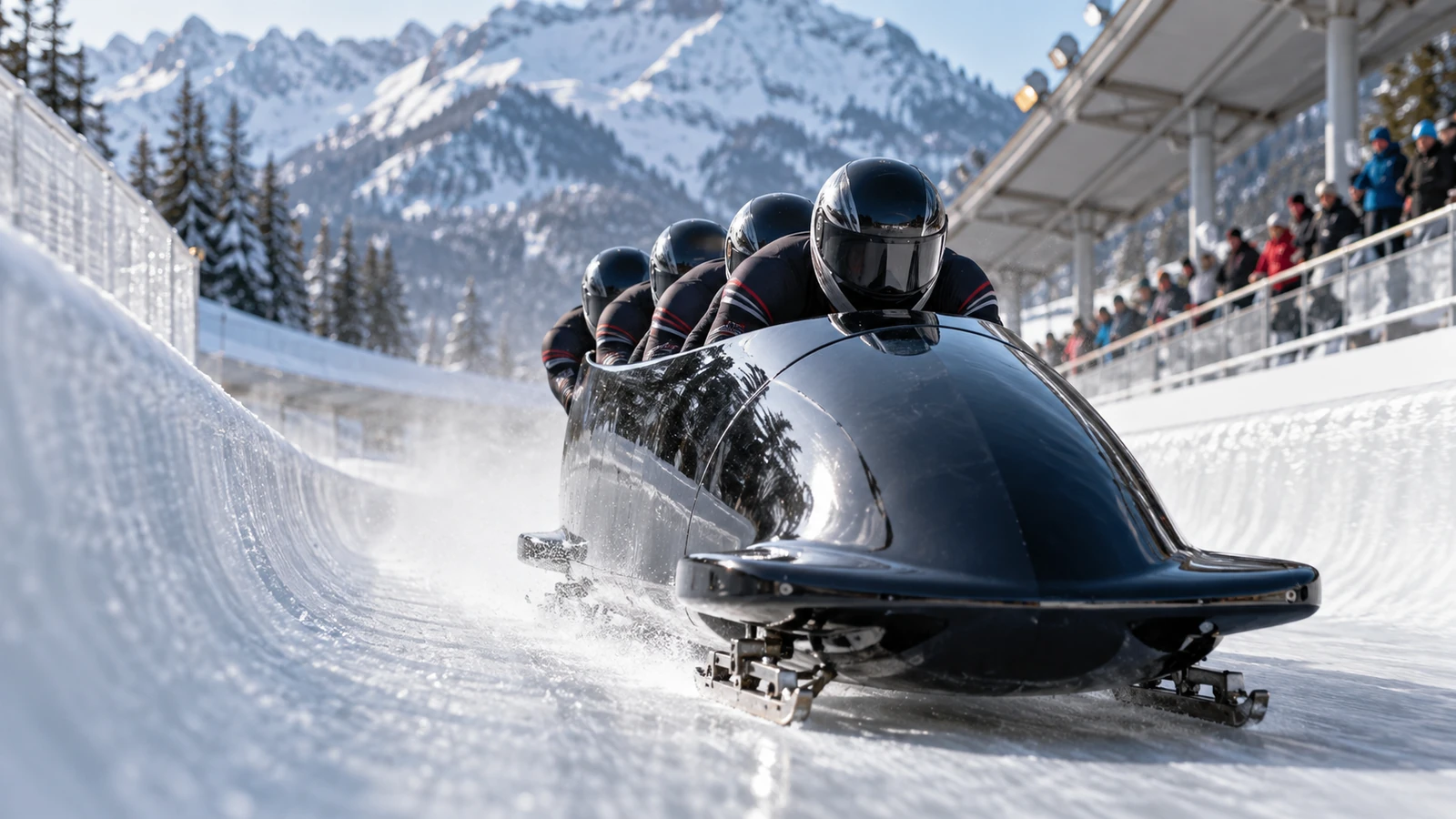
Bobsleigh is one of the most thrilling and technologically demanding winter sports in the world, combining explosive human athleticism with cutting-edge aerodynamic engineering. From head-bobbing origins on Swiss slopes to high-tech carbon fiber sleds reaching speeds over 90 miles per hour, the sport demands extreme physical resilience from its competitors. Athletes routinely endure gravitational forces rivaling fighter jets while steering down narrow icy chutes by sheer memory and instinct. Here are 15 fascinating facts about the high-speed world of bobsleigh.
1. The Sport's Name Comes from an Outdated Technique
The name "bobsleigh" comes from an early driving technique that modern sports science has actually proven to be counterproductive. In the late 19th century, original crew members would bob their heads and upper bodies back and forth in unison down straight sections of track in an effort to push the sled forward. Athletes believed this rhythmic motion generated extra momentum to increase their overall velocity. Modern aerodynamic testing eventually revealed that keeping the crew completely still inside the shell reduces drag and keeps the sled far faster. While the head-bobbing practice was abandoned and even banned in modern racing rules, the iconic name stuck forever.
2. Sliders Wear Shoes Covered in Hundreds of Metal Spikes
Getting traction on sheer, mirror-smooth ice while sprinting at top speed requires specialized athletic footwear. Bobsleigh competitors wear high-performance shoes fitted with specialized "brush spikes" across the soles. Each shoe features hundreds of tiny, needle-like steel pins designed to bite into the frozen surface like coarse sandpaper during the explosive push start. Regulations strictly govern the length and diameter of these miniature spikes to prevent competitors from chewing up the ice surface for subsequent teams. Without these specialized spikes, pushers would slip instantly on the slick surface, making a fast start virtually impossible.
3. The Brakeman Never Touches the Brakes During the Race
Despite holding one of the most vital roles on the team, the brakeman never touches the brakes during an actual race run. Engaging the braking mechanism while gliding at full speed would instantly destroy the sled's carefully managed aerodynamics and drastically reduce velocity. Worse still, dropping the brakes mid-race could lock up the rear runners and cause the heavy vehicle to crash violently into the ice wall. As a result, the brakeman only pulls the dual lever after crossing the finish line, which drops sharp steel teeth into the ice to bring the sled to a safe halt in the deceleration zone.
4. Steering Is Controlled by D-Rings, Not a Steering Wheel
Unlike automobiles or go-karts, a bobsled is not controlled with a conventional steering wheel. Instead, the pilot controls the front runners using a simple pulley system operated by two D-shaped rings attached to ropes or cords. Pulling the right ring pivots the front runners to turn right, while pulling the left ring turns the vehicle to the left. Because the sled travels at immense speeds, steering movements must be microscopic adjustments of just a few millimeters. Oversteering by even a tiny fraction can cause the runners to dig into the ice, destroying momentum or flipping the sled over entirely.
5. Modern Bobsleds Are High-Tech Machines Built Like Formula One Cars
A top-tier Olympic bobsled is a high-tech machine engineered with the precision and financial backing of a racing supercar. Modern competitive sleds are crafted from lightweight carbon fiber, fiberglass, and specialized steel alloys, often costing over $50,000 to $100,000 for a complete unit. The runners alone are custom milled from high-grade steel and can cost thousands of dollars per set. National federations work alongside Formula One engineers and aerospace designers to craft sleek aerodynamic profiles. Teams treat their technological innovations with extreme secrecy, often wrapping their sleds in tarps to hide runner designs from competitors.
6. The 1988 Jamaican Bobsled Crash Played Out Differently in Real Life
The famous 1988 Jamaican bobsled team crash at the Calgary Winter Olympics inspired the hit movie Cool Runnings, but the dramatic ending played out differently in reality. In the film, the four crew members dramatically pick up their heavy sled and carry it across the finish line on their shoulders to applause. In reality, after their sled flipped on its side during turn 8, the athletes got out and walked alongside it while track officials pushed the damaged sled across the finish line. The crowd gave them a warm standing ovation as they walked off, capping one of the most inspiring moments in Olympic history.
7. Pilots Must Drive Entirely by Memory and Muscle Reflex
At speeds exceeding 85 miles per hour (135 km/h), bobsleigh pilots cannot rely on standard visual reaction times to navigate the course. Human reaction speed is simply too slow to process concrete curve walls rushing past at high velocity. Instead, drivers must memorize every single turn, rise, drop, and bump in the track through intense visualization exercises before ever stepping into the sled. Pilots navigate the course through muscle memory and physical feel, anticipating gravitational pressure against their bodies to make precise steering inputs a fraction of a second in advance.
8. Athletes Endure Gravitational Forces Rivaling Fighter Pilots
Riding in a high-speed bobsled exposes crew members to intense gravitational forces that match or exceed those felt by fighter pilots during combat maneuvers. As the sled sweeps through steep, high-banked curves like the famous 360-degree "Kreisel" turns, athletes experience accelerations of up to 5G. This force multiplies their effective body weight fivefold, driving their heads down toward their chests and knees. Navigating these g-forces requires immense neck and core strength just to remain upright, as the brutal pressure makes breathing and maintaining stability a physical struggle.
9. Underweight Sleds Are Loaded with Heavy Metal Plates
In bobsleigh racing, total mass translates directly into speed because gravity fuels acceleration down the icy concrete chute. To prevent teams from having an unfair physical advantage, the International Bobsleigh and Skeleton Federation enforces strict maximum weight limits for the combined sled and crew. If a team's combined weight falls short of the allowable maximum, regulations permit them to bolt heavy metal plates directly into the sled frame. This ensures every team can enter the track at the highest legally permissible weight to maximize their potential momentum.
10. "Sled Head" Is a Recognized Neurological Condition
Repeated exposure to the harsh conditions of bobsleigh racing can result in a unique neurological issue known among sliders as "sled head." As the steel runners chatter across uneven ice at extreme velocities, intense micro-vibrations rattle the athletes' bodies and send subtle shocks through their skulls. Over time, these cumulative vibrations cause symptoms identical to mild concussions, including persistent headaches, brain fog, fatigue, and memory difficulty. Sports medicine specialists now actively monitor sliding athletes to minimize long-term cognitive wear caused by these micro-traumas.
11. The Opening Push Phase Determines the Entire Race
The opening 50-meter push phase of a bobsleigh race is so critical that it frequently determines the winner of the entire event. Physics dictates that speed gained at the top of the course compounds continuously through gravitational acceleration all the way to the bottom. A lead of just one-tenth of a second built during the initial sprint phase often translates into a three-tenths of a second advantage at the finish line. Because of this mathematical compounding, top bobsleigh teams actively recruit track-and-field sprinters and elite power athletes to serve as explosive pushers.
12. There Are Fewer Than Twenty Certified Tracks Worldwide
Despite the popularity of the sport during the Winter Olympic Games, there are fewer than twenty certified competition tracks operating in the world today. Constructing a modern bobsleigh track requires massive capital investments, often exceeding $100 million, alongside miles of reinforced concrete walls and complex ammonia refrigeration systems. Maintaining these tracks requires immense energy and round-the-clock maintenance throughout the winter season. Because so few facilities exist worldwide, athlete development requires extensive international travel, and many competing nations must train on foreign tracks.
13. Monobob Standardizes Equipment for Fair Competition
To broaden participation and level the competitive playing field, women compete in an individual event known as the Monobob. In traditional multi-person events, rich nations with multi-million-dollar engineering budgets often hold a massive advantage in sled design technology. Monobob solves this disparity by requiring every driver to compete using identical, standardized sleds provided by a single manufacturer. This format ensures that victories are determined strictly by individual athletic power during the push start and superior driving skills along the track line.
14. Track Maintenance Is Performed by Specialists Called "Spidermen"
Maintaining the glass-smooth surface of a bobsleigh track is a dangerous art performed by specialized ice technicians often called "spidermen." Because high-speed sleds cut deep grooves into the ice, track crews must manually groom and repair the surface between racing sessions. Wearing spiked crampons, these technicians scale the near-vertical concrete curves of the track while suspended from safety ropes. They spray fine water mists and scrape the frozen walls by hand with specialized blades to eliminate every rut, bump, and dangerous imperfection.
15. The Four-Man Bobsleigh Is the Speed King of the Track
The four-man bobsleigh event is widely considered the premier showcase of sliding sports due to its blistering speed and intensity. With four athletes crammed into the chassis, the significantly higher total mass generates far greater momentum and kinetic energy than two-man or monobob sleds. As a result, four-man sleds achieve the highest top speeds on any given track, often exceeding 90 miles per hour (145 km/h). Coordinating four explosive athletes into a seamless push and instant load requires flawless teamwork, making it the ultimate discipline in winter sliding sports.
Sources & References
This AI-assisted post was rigorously curated and fact-checked for accuracy by:
 Martin Roháček
How fun was this article? 🤔
Tap a star to rate it
🧠 Quiz: How closely were you paying attention?
10 questions — all answers are in the article above!
Enjoyed these facts? There's more! 💌
Fresh fun facts in your inbox. No spam, ever.