1. They Are Our Closest Relatives
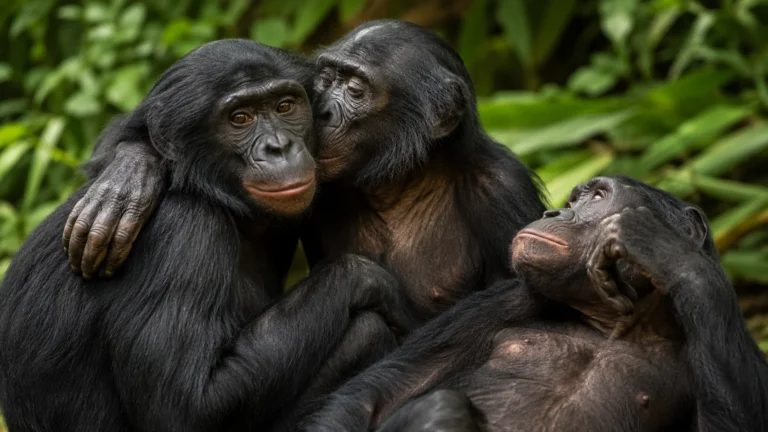
If you trace the genetic code of humans back through time, you will find that bonobos and chimpanzees are our closest living animal relatives. We share approximately 98.7% of our DNA with the bonobo. This incredibly close genetic link explains why they display so many familiar behaviors, such as showing deep empathy, reading facial expressions, and using physical touch to comfort one another when they are feeling stressed.
2. They Live in Only One Country
Unlike many other African animals that roam across several different nations, wild bonobos are entirely restricted to just one country on Earth. They live exclusively in the deep, tropical rainforests of the Democratic Republic of the Congo. Their entire habitat is naturally fenced in by the massive Congo River and its connected waterways, which acts as a permanent boundary because bonobos are naturally very poor swimmers and cannot cross the deep water.
3. Females Lead Their Societies
In many primate groups, the biggest and strongest males naturally take charge and lead the community. Bonobos operate entirely differently by running a matriarchal, or female-led, society. The adult females in a bonobo community form very tight, lifelong alliances with one another. By sticking together and supporting each other, these bonded females easily maintain order, guide the group to food, and prevent any single male from becoming too aggressive or dominant.
4. They Have Distinct Hairstyles
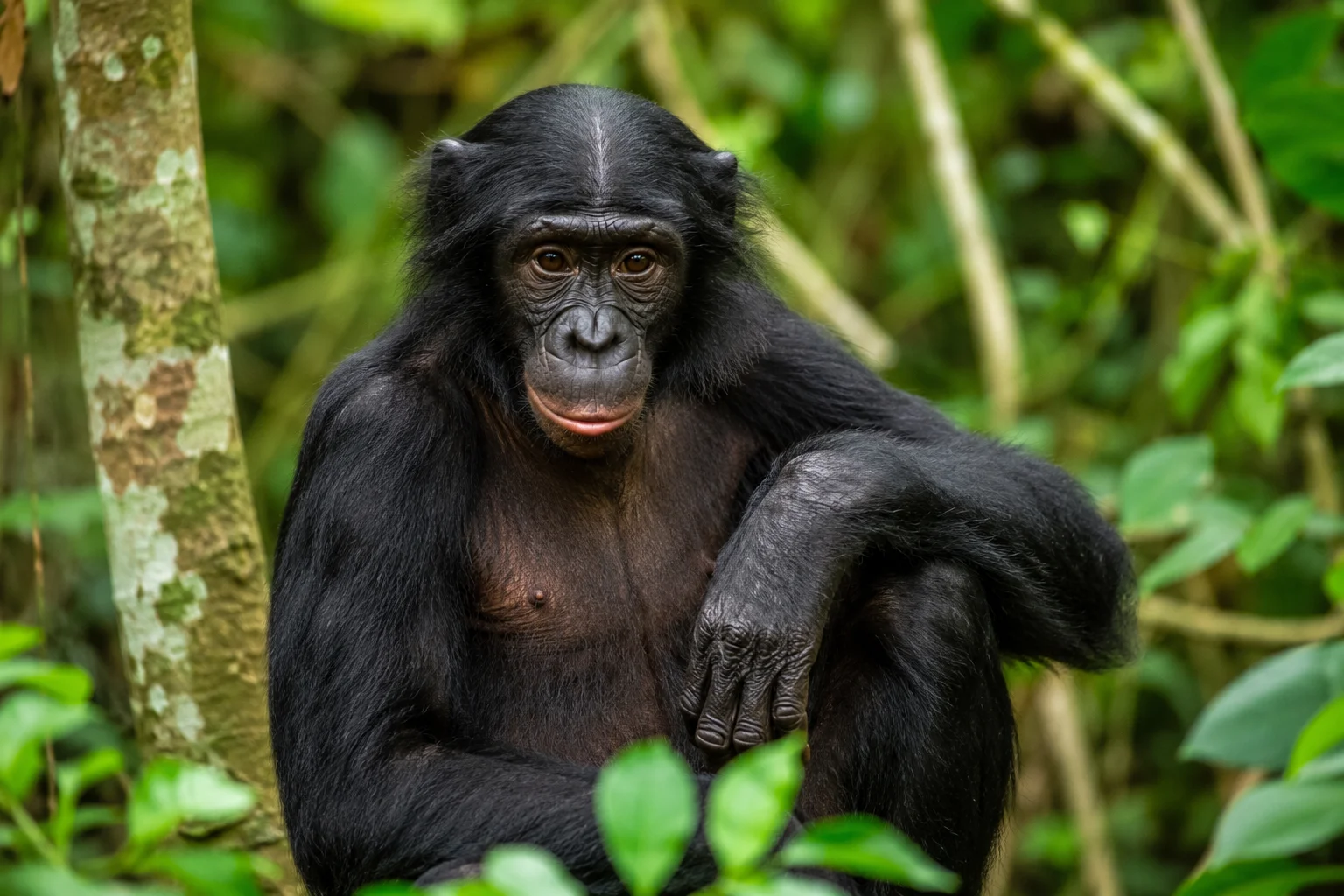
While they might look similar to chimpanzees at a quick glance, bonobos have several unique physical features that make them easy to identify. One of their most famous traits is the hair on top of their heads, which naturally grows with a neat, distinct part straight down the middle. They also have completely dark faces from birth, bright pink lips, and a slimmer, more graceful body shape compared to their heavier ape cousins.
5. They Prefer Peace Over War
When two separate groups of chimpanzees meet in the wild, the encounter often ends in violent conflict or a battle over territory. Bonobos, on the other hand, are famous for their remarkable peacefulness. When two different bonobo groups cross paths in the forest, they usually choose to mingle calmly. They are known to share their food, groom one another, and even play with the members of the unfamiliar group instead of fighting them.
6. They Use Hugs to Solve Problems
Conflict happens in any social group, but bonobos have developed a highly unique way of handling arguments. Instead of using physical violence or loud threats to settle a dispute over food or resting spots, they use affection. They rely on hugs, gentle grooming, and physical intimacy to calm everyone down and relieve tension. This biological focus on affection acts as a social glue that keeps the entire community peaceful and united.
7. They Readily Share With Strangers
In the animal kingdom, sharing a hard-earned meal with a complete stranger is incredibly rare. However, researchers have conducted experiments showing that a bonobo will happily give up a portion of its own food to a bonobo it has never met before. In fact, they often prefer to open a door to let a stranger share their meal rather than eating entirely alone, proving they place a very high value on making new friends and expanding their social network.
8. They Sound Like Birds
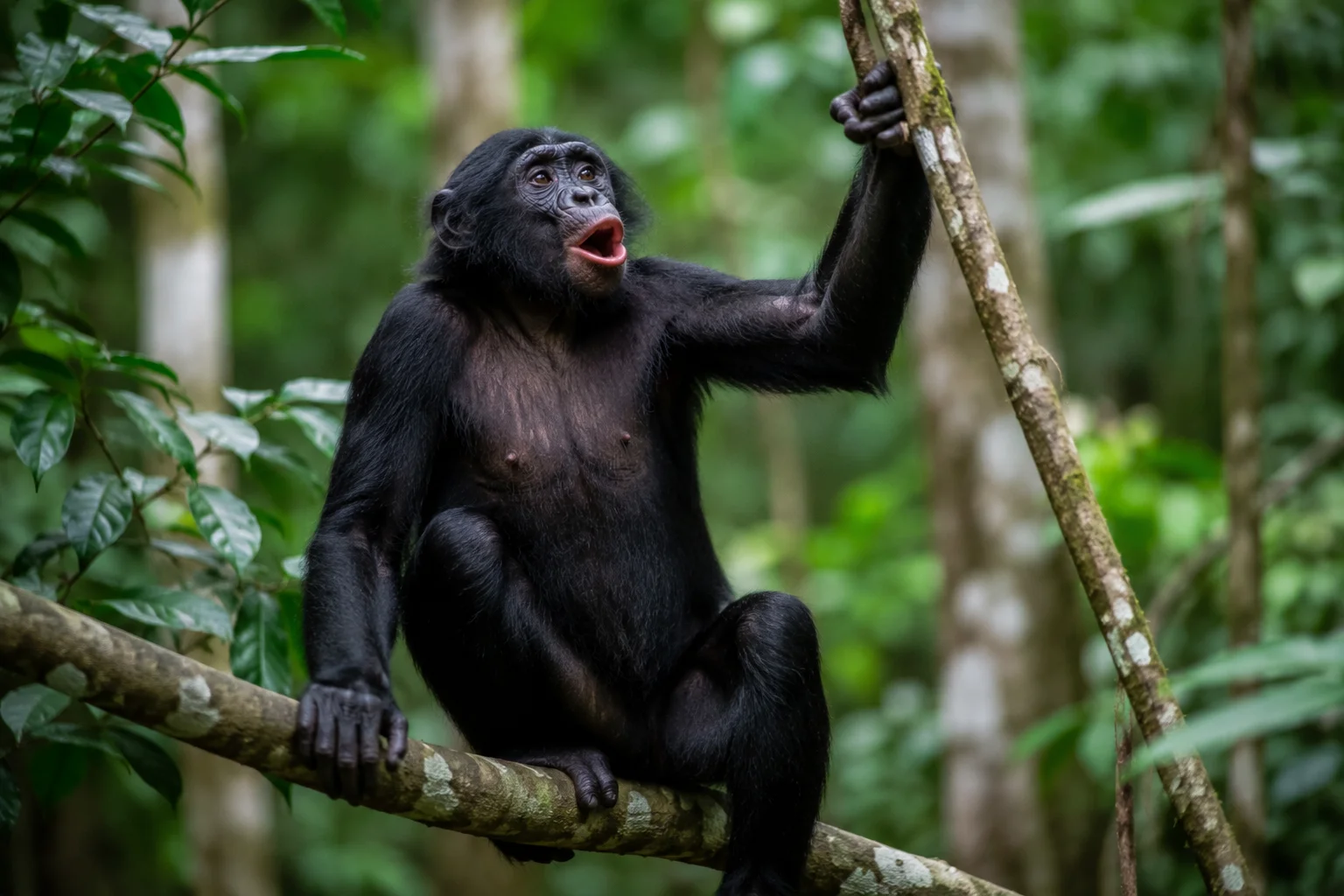
Because they are large apes, you might expect bonobos to make deep, booming noises or loud, heavy hoots in the jungle. Surprisingly, their voices are actually quite high-pitched and melodic. When they communicate with each other through the thick forest canopy, they use a complex series of sharp peeps, bright squeaks, and soft yelps. To an untrained ear, a group of chatting bonobos can easily sound like a flock of tropical birds.
9. They Walk Easily on Two Legs
All great apes have the ability to stand up on their hind legs for short periods, but bonobos are particularly good at it. Because their legs are slightly longer and their bodies are slimmer, they can walk bipedally (on two feet) much more comfortably than chimpanzees or gorillas. They frequently stand completely upright to carry heavy bundles of fruit in their arms, or to wade safely through shallow swamp waters while searching for tasty aquatic plants.
10. They Build New Beds Every Night
Bonobos are highly active during the day, but they need a safe, comfortable place to sleep when the sun goes down. Every single evening, each adult bonobo climbs high into the forest canopy to build a brand-new sleeping nest. They carefully bend, fold, and weave living branches and thick leaves together to create a sturdy, mattress-like platform. This keeps them safely out of reach of ground-dwelling predators like leopards while they rest.
11. They Play Throughout Their Whole Lives
For many animals, playing games is a behavior reserved strictly for babies and juveniles learning how to survive. Bonobos completely ignore this rule. Adults will continue to play games, tickle each other, and chase one another through the trees well into their old age. Scientists believe this lifelong dedication to playful behavior helps them continuously reduce daily stress and strengthens the emotional bonds between members of the troop.
12. Mothers Are Highly Involved
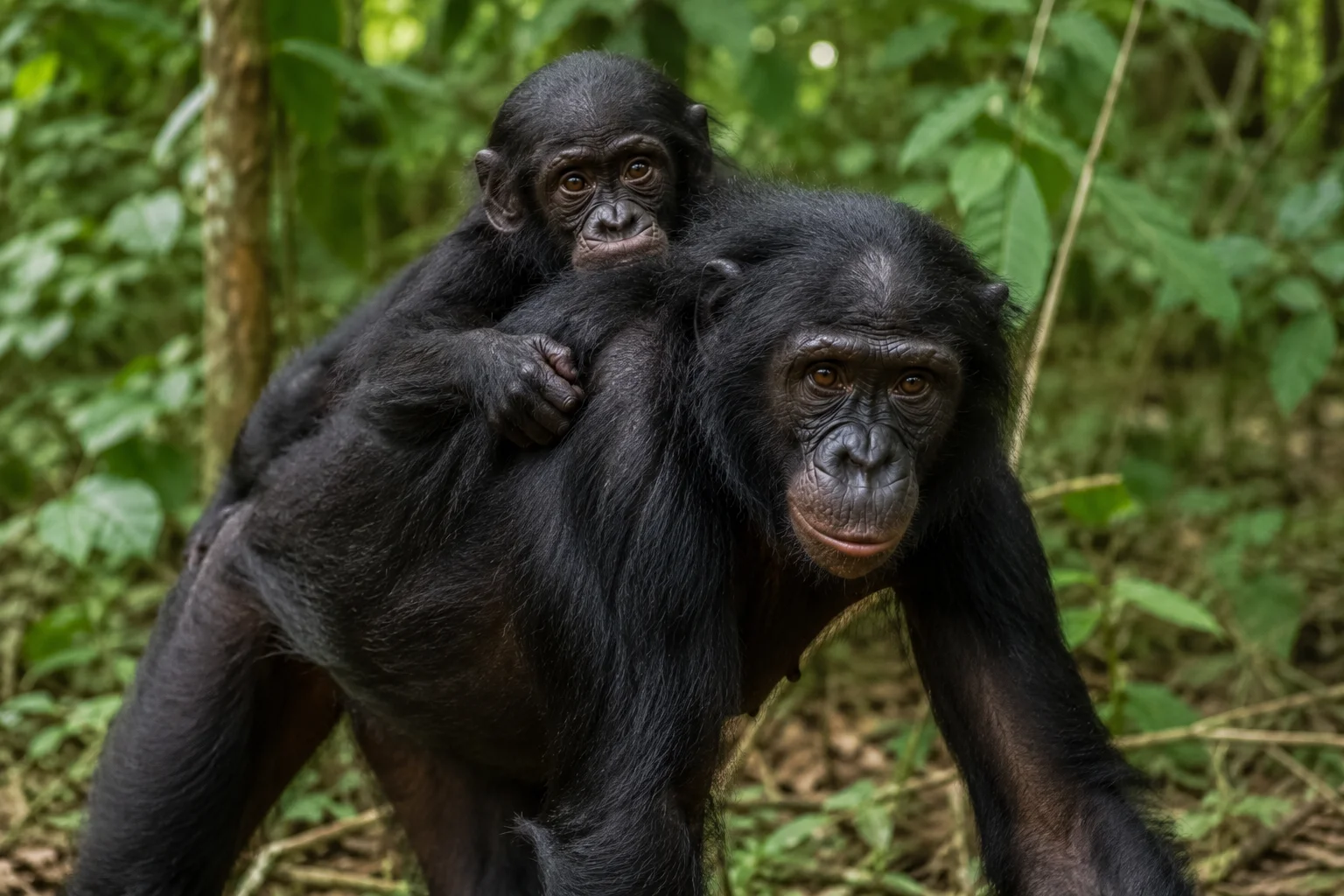
A bonobo mother is incredibly dedicated to her offspring and spends years carefully raising them. A baby bonobo will stay very close to its mother, riding on her back or stomach, for the first four to five years of its life. Even after a male bonobo grows into a fully independent adult, he will continue to rely on his mother for social support. A mother will actively help her grown sons find mates and defend them during minor troop disagreements.
13. They Are Language Experts
While wild bonobos communicate using natural sounds and gestures, those living in research centers have shown an incredible capacity for understanding human language. A famous bonobo named Kanzi learned to communicate with researchers by pointing to hundreds of different geometric symbols on a special keyboard. He also demonstrated the ability to understand complex, spoken English sentences, proving just how advanced their cognitive abilities truly are.
14. They Keep Their Forests Healthy
Bonobos play a crucial role in maintaining the health of the Congo rainforest. Because the vast majority of their diet consists of wild fruits, they naturally swallow thousands of fruit seeds every day. As they travel miles through the jungle, they leave these seeds behind in their droppings. This makes them essential “seed dispersers,” helping to constantly plant new fruit trees and keep the forest ecosystem diverse and thriving for all the other animals.
15. They Need Our Protection
Despite their peaceful nature, bonobos are currently listed as an endangered species. Because they live in only one specific region of the world, they are highly vulnerable to habitat loss caused by logging and farming. They also face serious threats from poachers who hunt them for the illegal bushmeat trade. Conservation groups are working hard to protect their forest homes and support the local communities living nearby to ensure these amazing apes survive.