The Vibrant Giant: 15 Fascinating Facts About Brazil
Covering half of South America, Brazil is a nation of staggering geographical scale, rich cultural synthesis, and ecological wonder. From the sprawling depths of the Amazon basin to the electric rhythms of Rio de Janeiro’s Carnival, this South American giant defies simple categorization. It boasts the world’s largest coffee output, a unique Portuguese-speaking heritage, and an astonishing wealth of wildlife found nowhere else on Earth. Dive into 15 fascinating facts that reveal the true scope, history, and extraordinary natural features of this captivating country.
1. The Only Portuguese-Speaking Nation in the Americas
While almost all of South America speaks Spanish, Brazil stands out as the continent’s sole Portuguese-speaking nation. This linguistic distinction dates back to the 1494 Treaty of Tordesillas, which divided newly discovered lands between Spain and Portugal before Europeans even realized how large South America was. As a result, Portuguese colonizers claimed the eastern bulge of the continent, embedding their language and cultural roots deep into the region's identity. Today, Brazilian Portuguese has evolved its own unique pronunciation, slang, and melodic rhythm that differs noticeably from European Portuguese. With over 210 million speakers, Brazil contains the vast majority of the world's total Portuguese-speaking population.
2. A Continent-Sized Giant Touching Nearly Every Neighbor
Covering approximately 8.5 million square kilometers, Brazil is the fifth-largest country in the world by both area and population. Because of its expansive geographical footprint, it shares land borders with ten different nations, touching nearly every single country in South America. The only two South American nations that do not share a border with Brazil are Chile and Ecuador. This massive boundary spans over 16,000 kilometers of diverse terrain, including dense rainforests, vast wetlands, and winding rivers. Navigating and securing such an immense border presents a colossal geographical challenge for the country's defense and environmental agencies.
3. Home to the Largest Japanese Community Outside Japan
São Paulo is home to the world's largest population of ethnic Japanese individuals outside of Japan itself. Japanese immigration to Brazil began in 1908 when the ship Kasato Maru arrived with hundreds of farm laborers seeking work on expanding coffee plantations. Today, over 1.5 million people of Japanese descent reside in Brazil, with a heavy concentration in São Paulo's bustling Liberdade district. Visitors to Liberdade are greeted by red torii arches, traditional lantern streetlights, and authentic Asian markets that honor this historic cultural blend. This unique migration history has profoundly influenced Brazilian cuisine, arts, and agricultural techniques over the past century.
4. The Soapstone Secrets of Christ the Redeemer
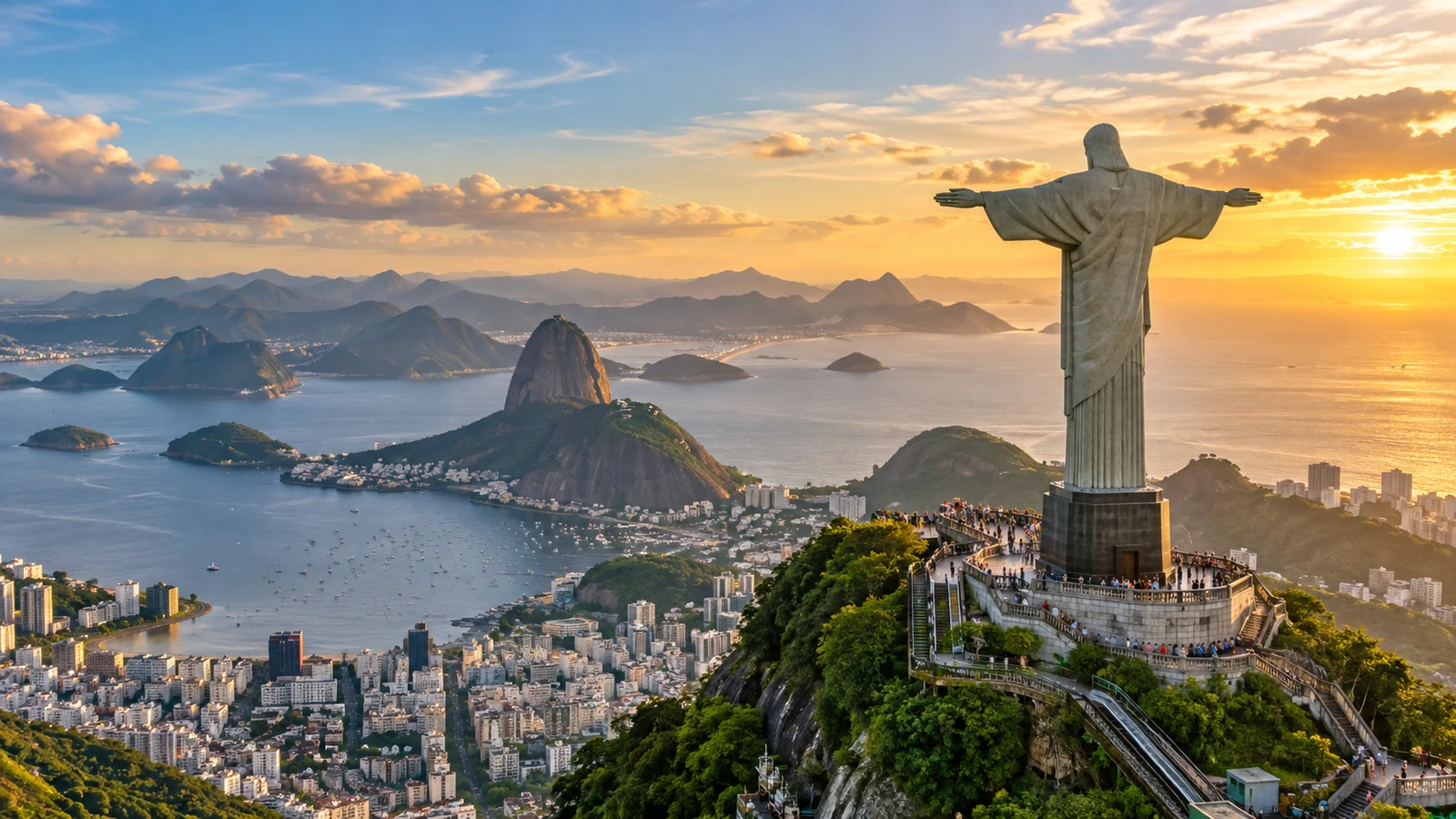
Perched atop Mount Corcovado overlooking Rio de Janeiro, the iconic 98-foot-tall Christ the Redeemer statue is one of the New Seven Wonders of the World. Completed in 1931, the colossal Art Deco monument is made of reinforced concrete outer-cased in millions of triangular soapstone tiles. Sculptor Heitor da Silva Costa chose soapstone because of its extraordinary ability to withstand extreme weather conditions and thermal changes. Because frequent lightning strikes continually damage the structure, teams of specialized abseiling stonemasons regularly conduct dangerous restoration projects high above the city. In fact, during a severe storm in 2014, a lightning strike chipped off part of the statue's right thumb, prompting an extensive repair operation.
5. Fueling the Planet as the Coffee Capital for 150 Years
Brazil has been the undisputed global leader in coffee production for more than 150 consecutive years. The country produces roughly one-third of all the world's coffee beans, supplying global markets with both Arabica and Robusta varieties. The coffee boom began in the 19th century and played a pivotal role in constructing Brazil's modern railroad networks and economic infrastructure. Today, expansive coffee plantations cover thousands of square miles across southeastern states like Minas Gerais and São Paulo. Millions of local workers depend on the industry, making coffee both a primary driver of rural livelihoods and a cornerstone of Brazilian daily culture.
6. Snake Island Is Off-Limits to Almost All Humans
Located about 90 miles off the coast of São Paulo sits Ilha da Queimada Grande, widely known as "Snake Island." The island is the exclusive sanctuary of the golden lancehead viper, one of the most venomous snakes on Earth whose hemotoxic venom can melt human flesh. Biologists estimate that there are between 2,000 and 4,000 of these deadly pit vipers living on the tiny 106-acre island. To protect both human lives and the critically endangered snakes, the Brazilian Navy strictly forbids public access to the island. Only select scientific researchers with official permits and trained medical personnel are permitted to set foot on its treacherous terrain.
7. The Amazon River Pours a Staggering Volume into the Sea
While debate continues over whether the Nile or the Amazon is technically longer, the Amazon River is the unquestioned king when it comes to sheer water volume. It discharges more water into the ocean than the next seven largest rivers in the world combined. Every single second, the Amazon pours roughly 200,000 cubic meters of freshwater into the Atlantic Ocean, enough to fill over 3,000 Olympic-sized swimming pools. This colossal surge dilutes the salinity of the ocean for over 100 miles offshore from the river's massive mouth. During the rainy season, the river expands dramatically, flooding surrounding rainforests and transforming entire landscapes into aquatic habitats.
8. The Planet's Most Successful FIFA World Cup Nation
Football is practically a religion in Brazil, and the national team's record on the global stage remains unmatched. Brazil is the only country to have qualified for every single FIFA World Cup tournament since the competition's inception in 1930. Furthermore, the Seleção holds the record for the most World Cup titles in history, taking home the coveted trophy five times in 1958, 1962, 1970, 1994, and 2002. Legendary players like Pelé, Garrincha, Ronaldo, and Ronaldinho helped establish Brazil's signature playstyle known as joga bonito ("the beautiful game"). Whenever the national team plays during a World Cup match, schools, banks, and businesses across the nation shut down so citizens can watch together.
9. A Hidden Underground River Flows Beneath the Amazon
Deep underneath the Amazon basin lies a massive underground waterway known as the Hamza river system. Discovered by Brazilian scientists in 2011, this subterranean flow runs roughly four kilometers beneath the surface of the earth. Named after research leader Valiya Hamza, the groundwater flow moves in the same direction as the Amazon River and spans a similar distance of about 6,000 kilometers. However, unlike its surface counterpart, the Hamza is significantly wider—spanning up to 400 kilometers in width—and moves at an extremely slow crawl of mere millimeters per day. This discovery revealed that the Amazon basin's hydrologic system is far more complex and three-dimensional than previously imagined.
10. Brasília Was Built from Scratch in Just 41 Months
In the late 1950s, Brazil decided to move its capital inland from Rio de Janeiro to stimulate economic growth in the country's central interior. Under President Juscelino Kubitschek, urban planner Lúcio Costa and famed modernist architect Oscar Niemeyer designed Brasília from scratch. Remarkably, workers constructed the entire planned city in just 41 months, officially inaugurating it as the national capital in April 1960. When viewed from above, the city layout famously resembles the shape of an airplane or a soaring bird, with government sectors organized along its fuselage. UNESCO designated Brasília a World Heritage Site in 1987 due to its sweeping modernist architecture and visionary urban master planning.
11. The Ultimate Sanctuary of Earth's Biodiversity
Brazil contains approximately 60 percent of the Amazon Rainforest, making it the primary custodian of the most biodiverse ecosystem on Earth. Scientists estimate that one out of every ten known biological species on the planet resides within the forests and rivers of Brazil. The nation hosts over 40,000 plant species, 1,800 bird species, and thousands of unique mammals, amphibians, and freshwater fish. Iconic creatures like the jaguar, the pink river dolphin, the capybara, and the giant river otter thrive within these vast natural habitats. Protecting these ecosystems remains a critical international priority for climate stability and global conservation efforts.
12. Rio's Carnival Is the Largest Party on the Planet
Every year before the Christian season of Lent, Rio de Janeiro hosts the world's largest street festival, drawing over two million revelers per day. The centerpiece of the celebration is the fierce competition between elite samba schools at the purpose-built Sambadrome arena. Dancers spend an entire year crafting intricate costumes, massive decorated floats, and original samba songs to perform before thousands of spectators and judges. Beyond the formal parades, hundreds of informal neighborhood street parties called blocos take over the city streets with live brass bands and percussion ensembles. The festival generates hundreds of millions of dollars for the local economy while celebrating Brazil's deep African and European cultural heritage.
13. It Houses More Uncontacted Tribes Than Anywhere Else
Deep within the dense wilderness of the Amazon basin live dozens of indigenous communities that have chosen to maintain complete isolation from modern civilization. Brazil is home to more confirmed uncontacted indigenous tribes than any other nation on Earth, with government estimates identifying over 100 isolated groups. The federal indigenous rights agency, FUNAI, maintains a strict "no contact" policy to protect these communities from external exploitation and deadly foreign diseases. Instead, officials use aerial surveillance and satellite imagery to monitor their territories and prevent illegal logging, mining, and encroachment. Preserving these sovereign groups guarantees the survival of ancient languages, knowledge systems, and cultural traditions unaffected by globalization.
14. Feijoada: A National Dish Rooted in Rich Tradition
The undisputed culinary symbol of Brazil is feijoada, a rich, slow-cooked stew made from black beans and various cuts of pork and beef. Traditionally served in heavy clay pots, the dish is accompanied by white rice, sautéed collard greens, toasted cassava flour (farofa), and orange slices. While popular legend claims feijoada was created by enslaved Africans using leftover scraps from plantation owners, culinary historians note its roots also draw from traditional Portuguese bean stews. Today, Brazilian families and restaurants traditionally serve this feast on Wednesday and Saturday afternoons as a long, social meal. Feijoada represents a harmonious blend of African, European, and Indigenous culinary influences that define modern Brazilian culture.
15. The Pantanal Holds the World's Highest Concentration of Wildlife
While the Amazon Rainforest gets most of the international spotlight, Brazil is also home to the Pantanal, the world's largest tropical wetland area. Spanning over 42 million acres across central-western Brazil, this vast biome floods seasonally, creating a nutrient-rich sanctuary for thousands of animal species. Unlike the dense forest canopy of the Amazon, the Pantanal's open, prairie-like marshlands offer far superior visibility for wildlife viewing. It boasts the highest density of wild jaguars anywhere in the world, along with massive populations of caimans, giant anteaters, and hyacinth macaws. Eco-tourists and naturalists consider the region one of the absolute premier destinations on Earth for observing pristine South American wildlife.
Sources & References
This AI-assisted post was rigorously curated and fact-checked for accuracy by:
 Martin Roháček
How fun was this article? 🤔
Tap a star to rate it
🧠 Quiz: How closely were you paying attention?
10 questions — all answers are in the article above!
Enjoyed these facts? There's more! 💌
Fresh fun facts in your inbox. No spam, ever.