The Uncompromising Troubadour: 15 Fascinating Facts About Bruce Cockburn
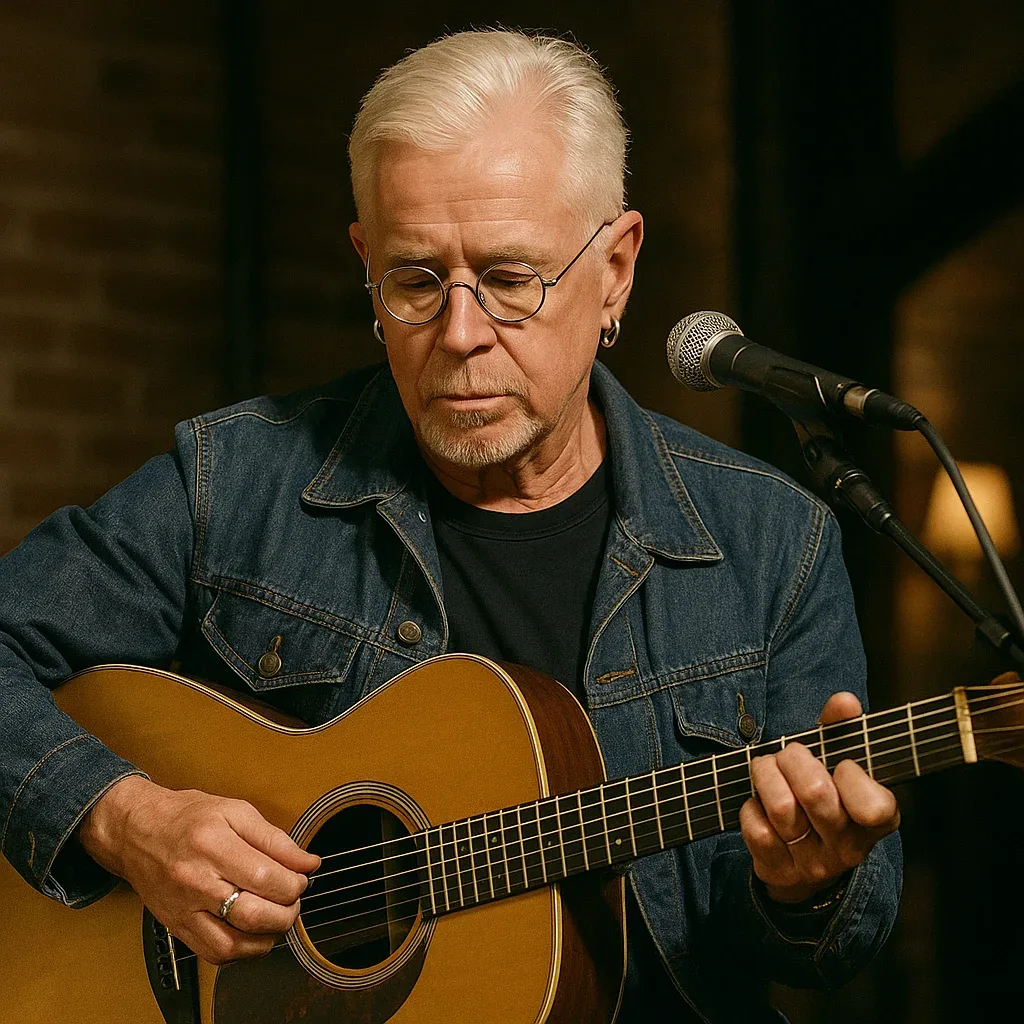
Bruce Cockburn stands as one of Canada's most celebrated and politically engaged singer-songwriters, blending folk, rock, jazz, and world rhythms over a career spanning six decades. From finding his first instrument in a dusty attic to writing fiercely passionate anthems after visiting war-torn refugee camps, his life is a study in musical curiosity and social conscience. With dozens of acclaimed albums and international honors, Cockburn has earned a lasting reputation as a master craftsman of song. Here are 15 fascinating facts about the life, music, and legacy of Bruce Cockburn.
1. An Attic Discovery and Gold Stars
Before Bruce Cockburn became a revered songwriter, his musical journey began with an unexpected discovery in a family home. As a child growing up in Ottawa, he found an old, forgotten acoustic guitar tucked away in his grandmother's attic. Fascinated by the instrument, he immediately claimed it and decorated its body with sticky gold star stickers to give it a personal touch. He spent countless hours in his bedroom learning to play along with popular hits playing on the radio. That humble, sticker-covered instrument sparked a lifelong passion for stringed instruments and creative expression within Canadian music.
2. A Night in a Paris Jail
During a youthful backpacking trek across Europe in the late 1960s, Cockburn attempted to fund his travels through street performance. While busking on a street corner in Paris without a legal municipal permit, he was promptly arrested by local police. He spent an entire night locked in a French jail cell before being released with a stern warning. Rather than discouraging him, the experience added a rugged sense of real-world experience to his budding persona as a traveling troubadour. The incident remains one of his favorite lighthearted memories from his early nomadic days.
3. Berklee Dropout to Band Leader
Cockburn was accepted into the prestigious Berklee College of Music in Boston during the mid-1960s to study composition and jazz theory. Though he excelled academically, he grew restless after three semesters of formal classroom instruction. Believing that real musical growth required practical experience on stage, he dropped out of school and returned to Canada. He soon joined local psychedelic and folk-rock bands like Children and 3's A Crowd, immediately putting his education into real-world practice. Dropping out proved to be the catalyst that launched his professional career in the vibrant Canadian music scene.
4. The Influence of Beat Poets and Jazz
While Cockburn is often categorized as a folk artist, his foundational musical style owes a major debt to jazz giants and literary icons. In his formative years, he listened obsessively to avant-garde jazz artists like Ornette Coleman, John Coltrane, and Miles Davis. Concurrently, he devoured the works of Beat Generation writers, particularly Jack Kerouac and Allen Ginsberg, who inspired his poetic approach to lyrics. This unique combination gave his songwriting an unconventional rhythmic flow and a vivid, stream-of-consciousness literary quality. These early artistic influences set him apart from traditional folk artists right from the start.
5. Encouragement from Poet Bill Hawkins
In the mid-1960s Ottawa coffeehouse scene, Cockburn crossed paths with local poet, songwriter, and broadcaster Bill Hawkins. Hawkins recognized Cockburn's raw guitar talent early on and urged him to stop merely arranging other people's songs and write his own material. Cockburn took this advice to heart, collaborating on several early projects before crafting his own distinct poetic voice. Cockburn has frequently credited Hawkins as the crucial mentor who gave him the confidence to become a primary lyricist. That early push transformed Cockburn from a skilled backing instrumentalist into a prolific, singular songwriter.
6. Co-Founding True North Records
In 1969, Cockburn partnered with music manager Bernie Finkelstein to launch an independent Canadian record label named True North Records. The label's very first release was Cockburn's self-titled debut album in 1970, which established both his solo career and the label's reputation. True North went on to become one of the longest-running and most successful independent music labels in Canadian history, signing dozens of acclaimed artists over the decades. By co-founding the label, Cockburn secured creative freedom for his own work while building a crucial platform for Canadian roots music.
7. Refugee Camps and Rocket Launchers
In 1983, Cockburn traveled to southern Mexico with the humanitarian organization Oxfam to visit Guatemalan refugee camps near the border. Deeply affected by the horrific conditions and tales of army helicopters strafing innocent civilians, he felt an overwhelming mixture of sorrow and rage. Upon returning to his hotel room, he poured his intense emotions into "If I Had a Rocket Launcher," one of his most powerful and controversial songs. The track became an unexpected international hit, establishing Cockburn as a fearless, politically outspoken global voice. His eyewitness experience transformed his artistic career into a lifelong commitment to international human rights activism.
8. Mastering Complex Fingerstyle Guitar
Beyond his lyrical talent, Cockburn is widely recognized by music critics as one of the most technically accomplished guitarists in popular music. His unique playing style combines fingerpicking folk techniques with complex jazz chords, altered tunings, and percussive dynamic strikes. Rather than relying on a traditional backing rhythm section, his solo guitar work often carries both melody and complex polyrhythms simultaneously. Guitarists around the world frequently study his recorded output to analyze his intricate hand positions and lightning-fast right-hand movement. His instrumental virtuosity elevates his performances, making his solo acoustic concerts sound as full as an entire band.
9. Order of Canada and Highest Honors
Cockburn's immense contributions to Canadian culture and global humanitarian causes have earned him the country's highest civilian honors. In 1982, he was appointed a Member of the Order of Canada, and he was later promoted to the rank of Officer in 2002. He was inducted into the Canadian Music Hall of Fame in 1995 and received a star on Canada's Walk of Fame in 2001. Additionally, he has received more than a dozen Juno Awards and numerous honorary doctorate degrees from universities across North America. These accolades celebrate both his artistic excellence and his relentless dedication to political advocacy and social justice.
10. The Dream Behind Lion Anthems
One of Cockburn's most enduring hit singles in the United States was the upbeat 1979 song "Wondering Where the Lions Are," which reached the Top 20 on the Billboard Hot 100. The inspiration for the song came directly from a vivid dream Cockburn experienced during a period of geopolitical tension. In the dream, he saw lions walking casually across his front lawn while nuclear war seemed imminent in the background. The song's cheerful, reggae-infused groove juxtaposed with existential lyrics captured the anxieties and hopes of the era perfectly. It remains his highest-charting pop single in North America to date.
11. Memoir and Written Legacy
In 2014, Cockburn published his comprehensive autobiography, Rumours of Glory, named after one of his popular songs. The book candidly details his personal spiritual journey, his musical evolution, and his eye-opening travels to conflict zones across Central America, Africa, and the Middle East. Published alongside a companion nine-disc box set spanning his career, the memoir received widespread praise from literary and music critics alike. Writing the book allowed Cockburn to reflect on five decades of songwriting and political activism in his own evocative prose. It stands as a vital historical document for fans of Canadian music and political history.
12. A Prolific Catalog of Gold and Platinum
Over the course of a career spanning more than 50 years, Cockburn has written over 350 songs and released more than 30 full-length albums. His impressive commercial success includes 22 albums certified gold or platinum in Canada, a remarkable feat for an uncompromising folk singer. His songs have been covered by an incredible array of international artists, including Jimmy Buffett, Chet Atkins, Jerry Garcia, and Anne Murray. His peers often refer to him as "The Canadian Songwriter's Songwriter" due to his immaculate craft and poetic precision. This massive body of work solidifies his status as a titan of modern North American music.
13. Preferring Intimate Venues Over Arenas
Despite his widespread popularity and ability to fill large venues, Cockburn has consistently favored performing in small, intimate theaters and listening rooms. He believes that the subtle nuances of his intricate guitar picking and introspective lyricism are easily lost in massive sports arenas. Playing intimate venues allows him to maintain a direct emotional connection with his audience, fostering a shared atmosphere of storytelling. This deliberate choice underscores his commitment to musical integrity over maximum commercial profit. Even at the height of his radio fame, he prioritized sonic intimacy and audience engagement over arena scale.
14. Integrating World Rhythms and Styles
Beginning in the early 1980s, Cockburn expanded his musical palette well beyond Western folk and rock traditions. Inspired by his extensive global travels, he began incorporating Latin American percussion, African pop guitar styles, and reggae rhythms into his music. Albums like Stealing Fire and World of Wonders feature rich, multicultural textures that set them apart from standard singer-songwriter releases of the period. This cross-cultural exploration wasn't just decorative; it mirrored his growing commitment to global political issues and international solidarity. His willingness to evolve musically kept his sound fresh and innovative across multiple decades.
15. Environmentalism and Spiritual Exploration
Throughout his long career, Cockburn's lyrics have remained deeply anchored in themes of personal spirituality and environmental stewardship. Raised in a non-religious household, he developed a profound personal faith in the 1970s that frequently informs his poetic worldview. Simultaneously, his songs have passionately decried environmental destruction, rainforest deforestation, and climate inaction long before these topics became mainstream media subjects. By weaving together ecological urgency and spiritual contemplation, Cockburn created a songbook that challenges listeners to care for both the planet and their fellow human beings. His holistic worldview remains the driving force behind his lifelong creative output.
Sources & References
This AI-assisted post was rigorously curated and fact-checked for accuracy by:
 Martin Roháček
How fun was this article? 🤔
Tap a star to rate it
🧠 Quiz: How closely were you paying attention?
10 questions — all answers are in the article above!
Enjoyed these facts? There's more! 💌
Fresh fun facts in your inbox. No spam, ever.