The Vertical City: 15 Fascinating Facts About Burj Khalifa
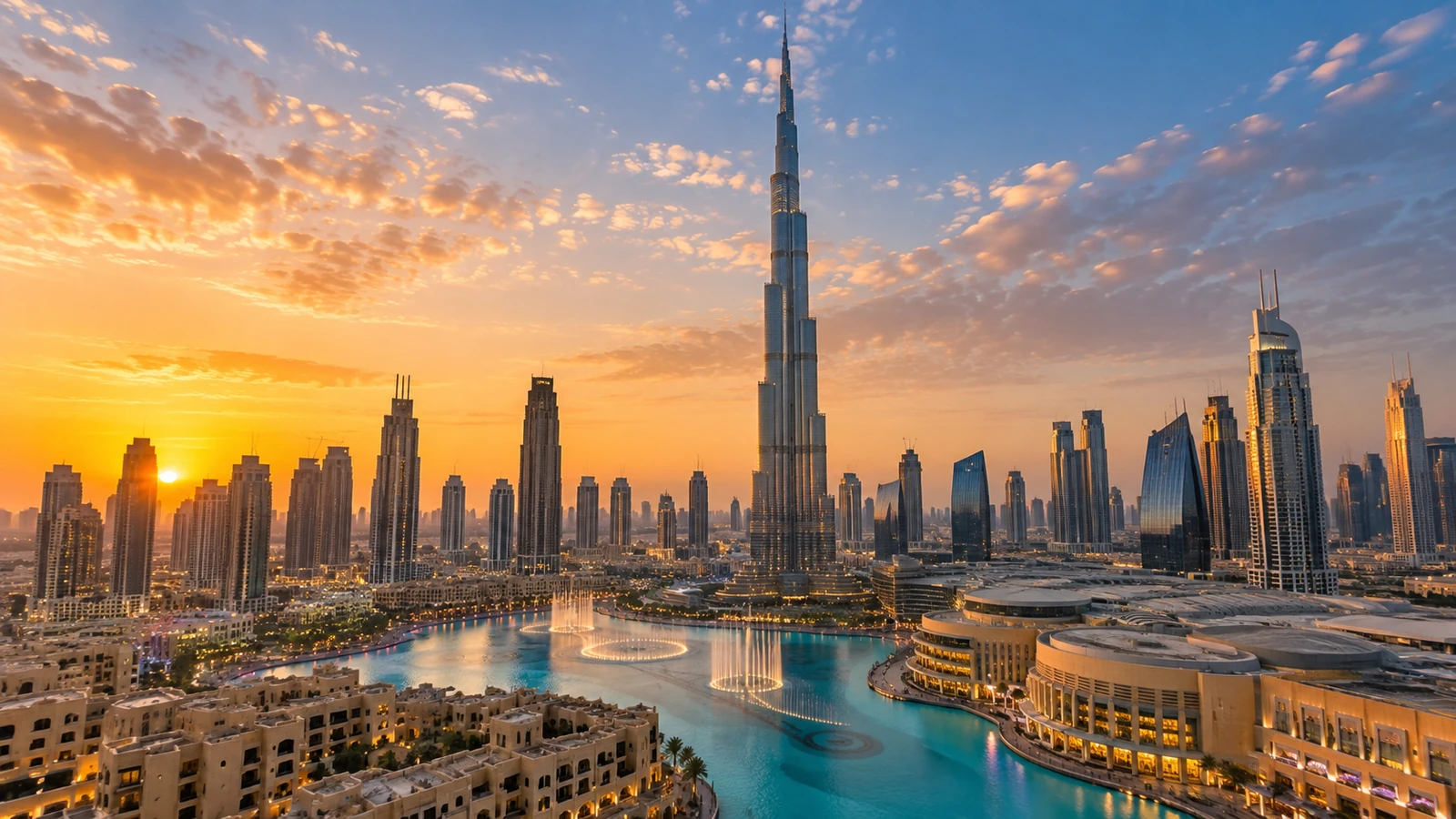
Piercing the sky at a record-breaking height of 828 meters, the Burj Khalifa in Dubai represents the pinnacle of modern architectural achievement. Beyond its awe-inspiring height, this iconic skyscraper boasts intricate botanical design roots, astonishing environmental engineering, and mind-bending physics that affect everything from timekeeping to ambient room temperature. From double sunsets to millions of gallons of harvested condensation water, the world's tallest building holds secrets that extend far past its famous observation decks. Here are 15 captivating facts about the engineering marvel that redefined modern megastructures.
1. It Dwarfs Other Global Landmarks
Reaching a dizzying height of 828 meters (2,716.5 feet), the Burj Khalifa is three times taller than the Eiffel Tower and nearly twice as tall as the Empire State Building. Unveiled in 2010, it easily claimed the title of the world's tallest structure from Taiwan's Taipei 101. Its telescopic spire alone measures over 200 meters, making the spire itself taller than many conventional city skyscrapers. To construct this colossal crowning piece, engineers had to assemble it inside the building and raise it using heavy hydraulic jacks. This immense altitude ensures that the mega-structure dominates the Dubai skyline from virtually every vantage point in the emirate.
2. The Design Is Based on a Desert Flower
The structural footprint of the tower takes direct inspiration from nature, specifically a regional desert flower called the Hymenocallis, or spider lily. Architect Adrian Smith designed a Y-shaped geometry with three wings radiating outward from a central core, echoing the flower's delicate geometry. This design is far more than an artistic choice, as it provides optimal structural stability and maximizes residential window views of the Arabian Gulf. Additionally, the stepped layout decreases wind vortices as strong gusts move around the building, preventing destructive sway at upper levels.
3. You Can Watch the Sunset Twice in One Evening
Because of the building's extreme vertical scale, observers can experience the sunset twice within a matter of minutes. A person standing on the ground level can watch the sun dip below the horizon, then immediately ride the high-speed elevator to the top observation deck to witness the sun set a second time. The curvature and rotational physics of the Earth create a noticeable time gap between ground level and the upper balconies. This visual anomaly strikingly demonstrates just how far into the atmosphere the skyscraper reaches.
4. High-Floor Residents Fast Longer During Ramadan
The tower's extraordinary height directly alters daily religious practices for Muslim residents living on the upper floors. Islamic scholars issued a formal ruling stating that individuals residing above the 80th floor must wait an extra two minutes to break their fast during Ramadan, while those above the 150th floor must wait three full minutes. Because of high elevation, the sun remains visible to occupants near the top long after it has set for people on the street. Consequently, evening call-to-prayer times and fasting schedules are stratified by altitude.
5. Cleaning the Windows Takes Up to Four Months
Washing the exterior of the Burj Khalifa is a monumental maintenance challenge requiring a dedicated team of 36 extreme window cleaners. The structure features more than 24,000 individual glass panels covering a vast surface area exposed to desert sandstorms and heat. Specialized high-tech cradles descend along tracks built into the exterior walls to allow workers access to every angle. By the time the brave crew finishes wiping down the entire glass facade, three to four months have passed, meaning they must immediately restart the process from the beginning.
6. Its Concrete Foundation Weighs as Much as 100,000 Elephants
Anchoring the world's tallest building in loose desert sand required unprecedented civil engineering and massive material quantities. Construction crews poured over 330,000 cubic meters of high-density concrete, a payload equivalent to the weight of 100,000 adult elephants. To maintain structural integrity during extreme desert temperatures, workers pumped concrete mixes upwards almost exclusively at night while mixing in ice. The entire weight rests on a solid reinforced concrete mat secured by 192 deep foundation piles driven 50 meters into the earth.
7. It Collects 15 Million Gallons of Condensation Annually
Located in a hot and humid coastal environment, the Burj Khalifa features an advanced condensation collection system built into its climate control setup. As the skyscraper's colossal cooling apparatus chills warm, humid air from outdoors, it generates immense volumes of moisture. Instead of letting this resource go to waste, engineers direct the runoff into a subterranean storage basin, capturing up to 15 million gallons of water every year. This recycled water is used entirely to irrigate the lush parkland and botanical gardens that surround the tower's base.
8. The Summit Is Significantly Cooler Than the Ground
Atmospheric conditions at the tip of the Burj Khalifa are noticeably different from the weather on the street below. Due to natural atmospheric lapse rates, the ambient temperature at the top of the tower is roughly 6 to 15 degrees Celsius cooler than at ground level. Visitors stepping onto the upper outdoor observation decks often encounter chilly winds that necessitate a light jacket, even during intense summer days. Wind speeds at the peak can also reach upwards of 150 kilometers per hour during atmospheric turbulence.
9. It Holds the Record for the Highest Occupied Floor
Among its dozens of global world records, the Burj Khalifa holds the official distinction for having the highest occupied floor on the planet. People actively live, work, and dine at extreme altitudes, with usable interior space extending up to 585 meters above the ground. Standing inside these sky-high levels, residents often find themselves looking down onto cloud layers during humid morning hours. Living in these upper apartments provides a unique lifestyle suspended high above the bustling city.
10. Giorgio Armani Personally Designed Its Luxury Hotel
The lower levels of the skyscraper house the Armani Hotel Dubai, the world's flagship hotel property created by fashion designer Giorgio Armani. The minimalist interior design features curved walls, Japanese tatami mats, fine fabrics, and muted beige and charcoal palettes reflecting Armani's signature style. Curiously, the hotel intentionally omits a conventional reception desk to make guests feel as though they are entering a welcoming private residence. Every guest is paired with a dedicated personal lifestyle manager to oversee their requirements throughout their stay.
11. Its Spire Is Visible From 95 Kilometers Away
The gleaming stainless-steel and aluminum tip of the tower functions as a brilliant beacon across the United Arab Emirates. On a clear day, observers can spot the top of the Burj Khalifa from up to 95 kilometers (59 miles) away across the open desert. This long-distance visibility means that travelers approaching Dubai by highway or airplane spot the spire long before seeing the rest of the urban landscape. The spire also houses vital telecommunications equipment and aviation warning lights.
12. Its Elevators Travel at High Speeds
Moving thousands of daily visitors throughout the tall structure required one of the world's most sophisticated vertical transit networks. The double-deck elevators inside the Burj Khalifa travel at speeds of up to 10 meters per second (36 km/h or 22 mph), carrying guests to observation levels in under a minute. They rank among the fastest double-deck elevator cars currently operating worldwide. To ensure passenger comfort during rapid altitude changes, the elevator cabins are equipped with custom pressurization systems and aerodynamic soundproofing.
13. It Houses Over 1,000 Commissioned Artworks
The interior spaces of the Burj Khalifa function as a sprawling gallery featuring more than 1,000 individual art pieces curated from Middle Eastern and international artists. The artworks were tailored to celebrate themes of global harmony and regional heritage. One prominent sculpture installed in the main residential lobby features 85 brass cymbals suspended from delicate rods that ring softly when struck by falling water droplets. This emphasis on public art turns the building's interior into a dynamic cultural landmark.
14. It Was Renamed Right Before Opening
Throughout its multi-year construction phase, the project was known internationally as the Burj Dubai. However, during the official grand opening ceremony in January 2010, the building was unexpectedly renamed the Burj Khalifa. This sudden name change was made to honor Sheikh Khalifa bin Zayed Al Nahyan, the ruler of Abu Dhabi and President of the UAE. Sheikh Khalifa had provided critical financial bailouts to Dubai to assist the emirate during the peak of the 2009 global financial crisis.
15. Its Exterior Cladding Weighs as Much as Five A380 Jets
The outer shell of the Burj Khalifa is a masterpiece of engineering designed to withstand extreme desert radiation and high wind loads. The curtain wall incorporates over 103,000 square meters of high-performance glass panels framed by custom aluminum and stainless-steel fins. The total mass of aluminum utilized in the exterior building envelope is equal to the weight of five giant Airbus A380 superjumbo airliners. These reflective metal elements help deflect radiant solar heat, significantly reducing the energy needed to cool the tower's interior.
Sources & References
This AI-assisted post was rigorously curated and fact-checked for accuracy by:
 Martin Roháček
How fun was this article? 🤔
Tap a star to rate it
🧠 Quiz: How closely were you paying attention?
10 questions — all answers are in the article above!
Enjoyed these facts? There's more! 💌
Fresh fun facts in your inbox. No spam, ever.