The Stadium Visionaries: 15 Fascinating Facts About Coldplay
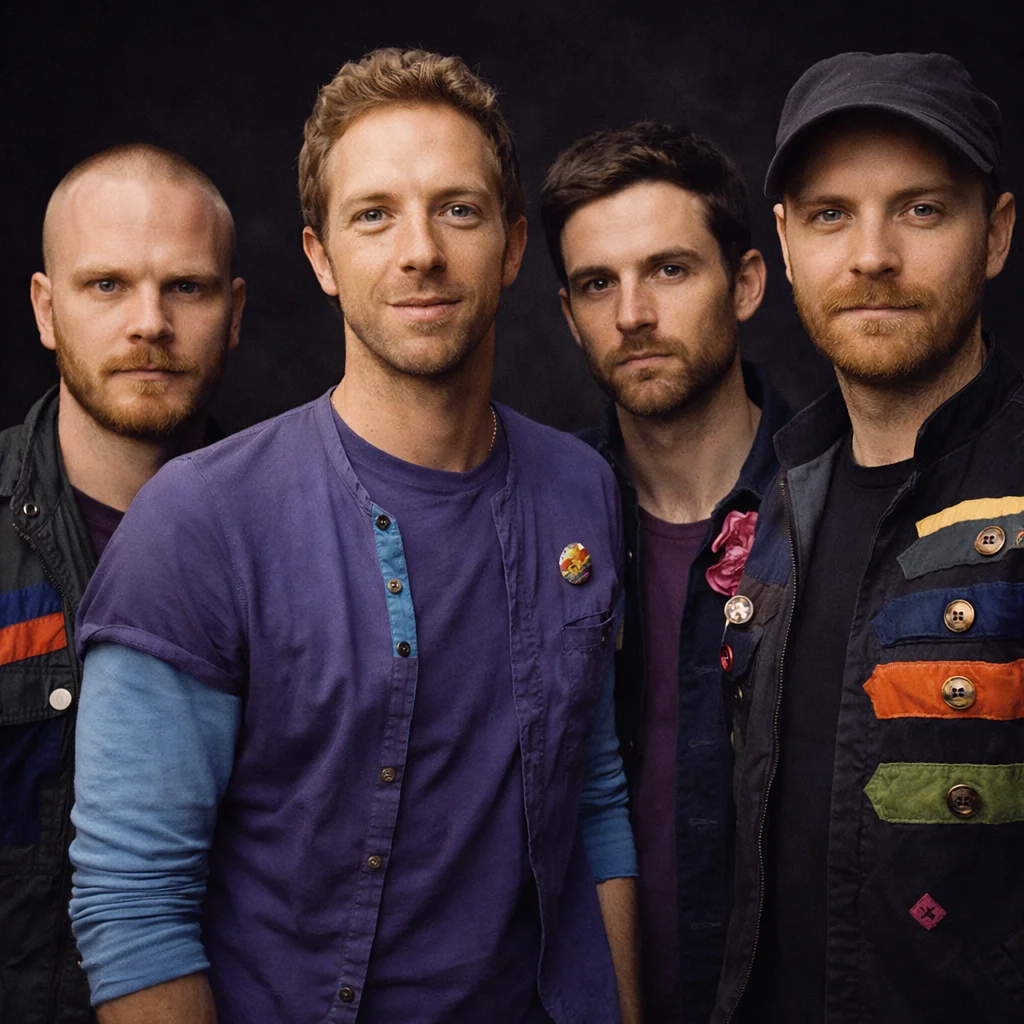
Formed at University College London in 1996, Coldplay evolved from a humble college act into one of the biggest stadium bands in history. Along the way, the British quartet established a reputation for creative innovation, strict band democracy, and staggering global hit singles. From hidden telegraph codes on album sleeves to eco-friendly kinetic concert floors, their journey is packed with remarkable stories. Here are 15 fascinating facts about Coldplay that showcase the secret history behind their iconic sound.
1. They Originally Formed Under the Name Pectoralz
Before becoming one of the biggest stadium rock acts in history, Coldplay had far humbler beginnings at University College London in 1996. Chris Martin and Jonny Buckland first formed a duo called Pectoralz after meeting during their freshers week. After bassist Guy Berryman joined the lineup, they changed their name to Starfish while gigging around local Camden venues. They eventually adopted the name Coldplay in 1998, inheriting it from a fellow student band who had decided the moniker was too depressing. The original name was inspired by a 1997 book of poetry titled Child's Reflections, Cold Play.
2. Will Champion Learned Drums from Scratch to Join
When multi-instrumentalist Will Champion joined the group in 1997, he possessed plenty of musical talent but zero experience playing percussion. He was primarily a guitarist and pianist who also played tin whistle, yet the fledgling group desperately needed a drummer. Determined to secure his place in the lineup, Champion bought a drum kit and mastered the instrument in a matter of days. His natural rhythm and quick adaptability allowed him to become the steady backbone of the group. Today, he also provides vital backing vocals and acoustic instrumentation during live sets.
3. The Band Operates as an Equal Democratic Partnership
Inspired by the egalitarian models of bands like U2 and R.E.M., Coldplay operates under a strict democratic ethos. All four official band members—Chris Martin, Jonny Buckland, Guy Berryman, and Will Champion—split all royalties, publishing rights, and concert earnings completely equally. Furthermore, their founding policy strictly prohibits any member from using hard drugs, with immediate dismissal as the penalty. This equal financial split has preserved harmony within the group for nearly three decades. It effectively eliminated the ego clashes and royalty disputes that famously break apart other legendary rock groups.
4. Chris Martin Learned Phonetic Reverse Singing for "The Scientist"
To produce the surreal visual aesthetic of the music video for "The Scientist," Chris Martin spent a month mastering the song's lyrics in reverse. Director Jamie Thraves filmed Martin walking backwards through various environments while lip-syncing to a reversed, accelerated audio track. When the captured video footage was reversed during editing, the surrounding world moved forward while Martin's vocal movements matched the studio track perfectly. The arduous process required learning complex phonetic pronunciations that sounded like complete gibberish out of context. The resulting music video became an instant classic, winning three MTV Video Music Awards in 2003.
5. The Album Cover for X&Y Features Encoded Baudot Code
The abstract geometric cover art for Coldplay's 2005 record X&Y carries a secret message designed using Baudot code. Baudot code is a historic 5-bit binary alphabet originally used in early teleprinter and telegraph communications. Designed by graphic studio Tappin Gofton, the arrangement of colorful blocks on the front sleeve translates directly to "X&Y" when decoded. However, due to a minor translation error during the design phase, the inner booklet art contained slight coding mistakes when spelling out track titles. Cryptography enthusiasts quickly spotted the hidden pattern, turning the album sleeve into a beloved pop-culture puzzle.
6. They Almost Omitted "Clocks" from Their Second Album
Coldplay nearly left their iconic Grammy-winning track "Clocks" off their acclaimed 2002 album A Rush of Blood to the Head. The song originated as a late piano arpeggio demo that the band recorded and initially intended to save for a future third album. However, when manager Phil Harvey listened to the unreleased tracks, he recognized the song's immense potential and insisted it be included immediately. The band decided to delay their album completion deadline to properly mix and record the track in full. "Clocks" went on to win Record of the Year at the 2004 Grammy Awards and remains a cornerstone of their catalog.
7. They Refuse to License Their Music for Commercials
Coldplay has consistently maintained a strict policy against selling their recorded songs for commercial product advertisements. Over their career, the band has rejected lucrative multi-million dollar sync offers from major global corporations such as Diet Coke, Gatorade, and Gap. Frontman Chris Martin has stated that allowing their music to push commercial products would taint the personal emotional resonance the songs hold for fans. While they frequently allow their songs to feature in film soundtracks and charitable campaigns, traditional commercial endorsements remain strictly off-limits. This principled stance has preserved the artistic integrity of their core catalog.
8. The Title "Yellow" Was Inspired by the Yellow Pages
Coldplay's international breakout hit "Yellow" owes its famous title to a completely spontaneous moment in the recording studio. While recording at Rockfield Studios in Wales, Chris Martin came up with the chord sequence and melody but lacked a key word for the chorus. Looking around the studio control room for immediate visual inspiration, his eyes landed on a nearby copy of the Yellow Pages telephone book. He substituted "yellow" into the draft lyric as a temporary placeholder while finishing the melody. The word fit the warm, glowing feel of the song so perfectly that he decided to keep it permanently.
9. Keane's Tim Rice-Oxley Turned Down an Offer to Join
Before achieving international fame, Chris Martin asked his close college friend Tim Rice-Oxley to join Coldplay as their permanent keyboard player. Both musicians were students at University College London at the time, frequently sharing creative ideas and songwriting techniques. However, Rice-Oxley declined the invitation because he was already fully dedicated to building his own band, Keane. Though Rice-Oxley chose a different path, both groups went on to become major chart-topping acts in the 2000s British rock scene. The two musicians remained great friends, with Keane even touring as a supporting act for Coldplay in later years.
10. Will Champion Cameoed in Game of Thrones' Red Wedding
Drummer Will Champion made a memorable cameo appearance on HBO's acclaimed fantasy series Game of Thrones. In the infamous Season 3 episode "The Rains of Castamere," Champion played a percussionist sitting in the musician gallery during the Red Wedding sequence. Clad in full medieval attire, his character beats a slow drum rhythm to herald the tragic downfall of the Stark family. His brief performance was filmed under strict secrecy in Northern Ireland to avoid spoiling the massive television event. Champion's appearance remains one of the most celebrated celebrity cameos in television history.
11. Phil Harvey Is Officially Listed as the Band's Fifth Member
While most major musical acts restrict official membership to performing onstage musicians, Coldplay officially recognizes creative director Phil Harvey as their fifth member. Harvey met Chris Martin while attending Sherborne School and served as the band's initial manager, financial investor, and strategist during their rise. After suffering severe burnout from managing the group's meteoric rise, he temporarily stepped away in 2001 before returning as creative director. He actively participates in band decision-making, visual design, and artistic strategy, and his photo is regularly featured in album liner notes. This unique recognition underlines the deep bond and trust shared within the Coldplay inner circle.
12. Their Tours Feature Kinetic Dance Floors to Generate Electricity
For their Music of the Spheres world tour, Coldplay pioneered groundbreaking stadium technology to drastically reduce environmental impact. The band installed kinetic floor tiles and electricity-generating static bicycles throughout venue concourses and standing areas. As fans danced, jumped, and pedaled during the performance, their physical movement was converted directly into usable electrical power. This kinetic energy, supplemented by solar power arrays and biofuel generators, powered the show's intricate lighting displays and audio equipment. The revolutionary initiative allowed the band to cut direct tour carbon emissions by over 50 percent.
13. Jonny Buckland Studied Mathematics and Astronomy at UCL
Lead guitarist Jonny Buckland brings an academic STEM background to Coldplay's stadium-filling soundscapes. While residing in Ramsay Hall at University College London—where he first met Chris Martin—Buckland earned a degree in Mathematics and Astronomy. His background in abstract logic and geometric relationships often influenced his meticulous approach to guitar delay settings, textures, and sonic layering. Despite the demands of touring local clubs and recording early EPs, Buckland remained committed to finishing his university education. He graduated with honors right as Coldplay signed their first major record deal with Parlophone.
14. "Fix You" Was Written to Comfort Gwyneth Paltrow
Coldplay's emotionally charged single "Fix You" was written by Chris Martin following a deeply painful personal tragedy. Martin wrote the song to comfort his then-wife, Oscar-winning actress Gwyneth Paltrow, after the sudden death of her father, Bruce Paltrow, in 2002. The song features an old Yamaha church organ that Bruce Paltrow had bought shortly before his death, which was sitting in the family home. Martin used this exact instrument to compose the melancholy opening chords that build into the song's uplifting climax. The anthem became a universal symbol of hope and solace for millions of listeners around the world.
15. Barack Obama Included Coldplay on His Official Playlists
Former United States President Barack Obama is one of Coldplay's most prominent public admirers. During his tenure in the White House, Obama featured tracks like "Viva La Vida" on his official summer playlists and mentioned that their music helped him unwind during high-stress periods. The admiration was so mutual that the band secured rare presidential clearance for their 2015 album A Head Full of Dreams. On the interlude track "Kaleidoscope," they sampled audio of Obama singing "Amazing Grace" at a memorial service. This historic sample underscored Coldplay's unique position as a band crossing cultural and political spheres.
Sources & References
This AI-assisted post was rigorously curated and fact-checked for accuracy by:
 Martin Roháček
How fun was this article? 🤔
Tap a star to rate it
🧠 Quiz: How closely were you paying attention?
10 questions — all answers are in the article above!
Enjoyed these facts? There's more! 💌
Fresh fun facts in your inbox. No spam, ever.