The Alternative Pioneers: 15 Fascinating Facts About R.E.M.
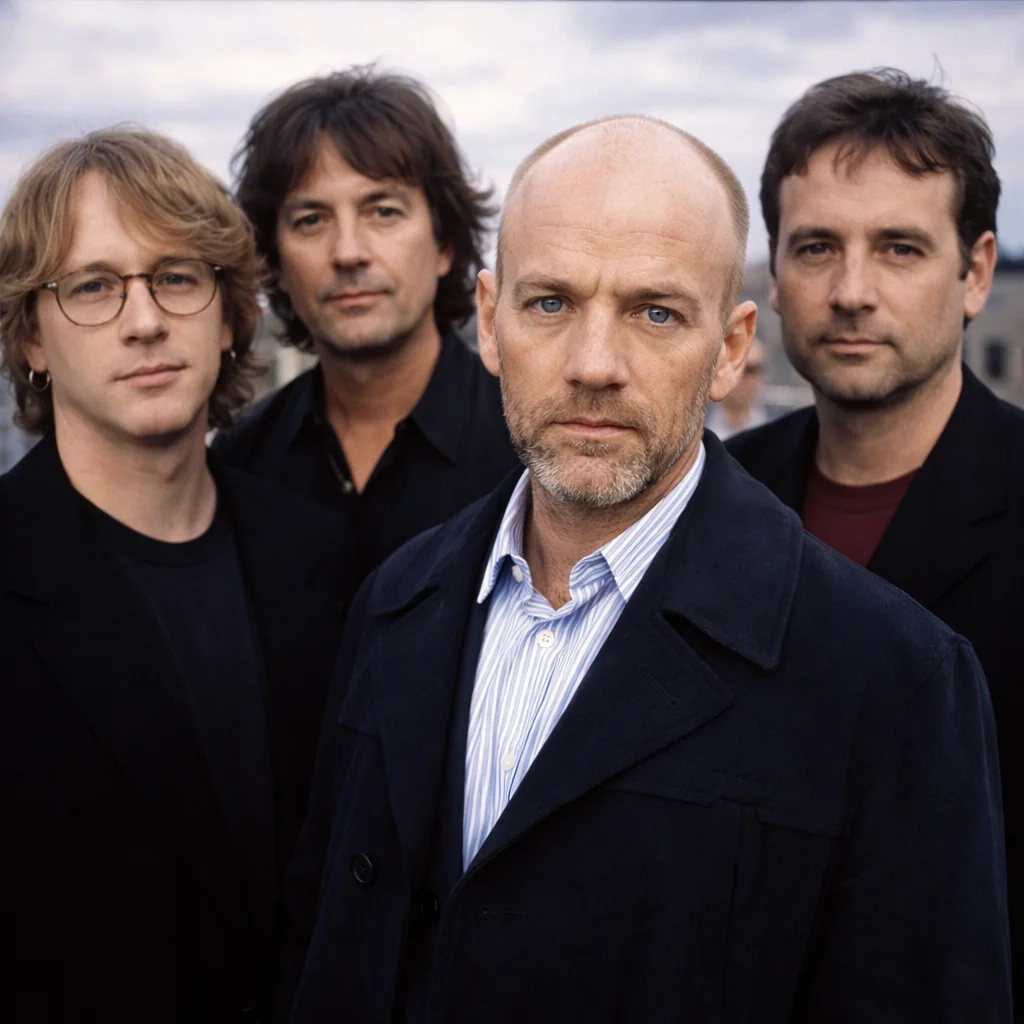
Emerging from the college town of Athens, Georgia, in 1980, R.E.M. transformed alternative rock from an underground subculture into a global stadium phenomenon. Led by Michael Stipe's enigmatic vocals and Peter Buck's signature arpeggiated guitar lines, the quartet conquered international charts without sacrificing their fiercely independent spirit. From record-breaking contracts to bizarre real-life assault inspirations, their three-decade journey remains one of the most compelling stories in modern music history. Here are 15 fascinating facts about R.E.M.
1. A Random Dictionary Search Created Their Name
Michael Stipe randomly flipped through a dictionary looking for a name after rejecting options like Cans of Pears and Twisted Kites. He landed on R.E.M., standing for Rapid Eye Movement, because he felt it sounded obscure and open to interpretation. The band initially formed in Athens, Georgia, in 1980 and needed a handle quickly for their early live shows. Despite its medical origin describing the dream-state stage of sleep, Stipe often downplayed any deep clinical meaning. The minimalist three-letter acronym ended up becoming one of the most recognizable names in alternative rock history.
2. "Losing My Religion" Was Born From Mandolin Practice
Peter Buck wrote R.E.M.'s biggest global hit while sitting on his couch watching television and learning to play the mandolin. Having just purchased the instrument, he was recording his rudimentary practice sessions to track his progress when he accidentally captured the central riff. The song's title is a Southern idiom meaning losing one's temper or civility, rather than a statement on theology. Despite lacking a traditional chorus and relying on an acoustic folk instrument, the track peaked at number four on the Billboard Hot 100 in 1991. It ultimately earned the band two Grammy Awards and cemented their transition from college radio favorites to global superstars.
3. They Deeply Resented Their Hit "Shiny Happy People"
Despite "Shiny Happy People" reaching the top ten in both the United States and the United Kingdom in 1991, the band came to despise the song. Featuring guest vocals from Kate Pierson of The B-52's, the track was meant as an ironic satire of Chinese government propaganda following the Tiananmen Square protests. However, its cheery melody and bright music video led the public to consume it as a sincere, sugary pop tune. Michael Stipe was so embarrassed by its perceived fluff that the group refused to play it live for decades. When R.E.M. assembled their 2003 retrospective album In Time, they intentionally left the massive commercial hit off the tracklist.
4. They Nearly Provided the Theme Song for "Friends"
Before "I'll Be There for You" by The Rembrandts became one of television history's most iconic theme songs, producers wanted R.E.M. for the job. TV executives initially approached the band to license "Shiny Happy People" as the opening theme for the sitcom's pilot episode. When R.E.M. declined the opportunity, show creators hired pop duo The Rembrandts to craft a new song that mimicked R.E.M.'s jangly guitar style. The resulting track went on to top international charts, while R.E.M. avoided having their brand permanently linked to a prime-time sitcom.
5. Michael Stipe Tried to Save Kurt Cobain's Life
Michael Stipe developed a deep friendship with Kurt Cobain during the height of the 1990s grunge movement. Concerned about Cobain's declining mental health and severe drug addiction in early 1994, Stipe attempted an intervention by organizing a collaborative music project. He sent a plane ticket and a car to pick Cobain up in Seattle, hoping to draw him out of his dangerous environment and get him back into a recording studio. Cobain declined to board the plane and tragically took his own life just weeks later in April 1994. R.E.M. later dedicated their 1994 album Monster to Cobain's memory.
6. Bill Berry Survived an On-Stage Brain Aneurysm to Become a Farmer
During a concert in Lausanne, Switzerland, in 1995, drummer Bill Berry collapsed on stage after suffering a ruptured brain aneurysm. Doctors performed emergency surgery, and Berry miraculously made a full recovery, returning to complete the tour and record the album New Adventures in Hi-Fi. However, the near-death experience fundamentally altered his perspective on life and his music career. In 1997, Berry amicably left R.E.M. to trade stadium rock for a quiet life operating a hay farm in Georgia. The remaining three members carried on with his full blessing, vowing never to replace him with an official full-time member.
7. "What's the Frequency, Kenneth?" Came From a Bizarre Real-Life Assault
The title and central line of R.E.M.'s 1994 hit single stemmed from an unsolved 1986 mugging in New York City. News anchor Dan Rather was unexpectedly tackled and beaten on the street by an unknown assailant who repeatedly shouted, "Kenneth, what is the frequency?" The bizarre incident baffled the media and became a surreal piece of American pop culture lore. Michael Stipe was fascinated by the attack and wrote the guitar-heavy rock track as a commentary on media distortion and generational disconnect. Decades later, the attacker was identified as a mentally ill man named William Tager, who believed television networks were beaming signals into his head.
8. Michael Stipe Intentionally Mumbled Lyrics Early On
During R.E.M.'s formative years on independent label I.R.S. Records, Michael Stipe made a deliberate artistic choice to mumble his vocals. He actively refused to print lyric sheets in album liners, treating his voice as an atmospheric instrument equal to the guitar or bass rather than a narrative device. This vocal stylistic choice created an enigmatic sound on early records like Murmur and Reckoning, sparking endless debates among fans deciphering the cryptic words. It was not until the release of 1986's Lifes Rich Pageant that Stipe began singing higher in the mix and articulating his poetry clearly.
9. They Signed the Most Lucrative Record Deal in History at the Time
In 1996, after existing contract negotiations ended, Warner Bros. Records signed R.E.M. to a historic five-album contract extension worth an estimated $80 million. At the time, this massive payout stood as the largest recording contract in music history, eclipsing previous record deals set by Michael Jackson and Madonna. Music industry insiders were shocked by the figure, especially since alternative rock was undergoing commercial shifts. Though the financial pressure was immense, the deal secured the band absolute creative freedom for the rest of their recording career.
10. "Automatic for the People" Was Named After a Local Soul Food Spot
The title of R.E.M.'s landmark 1992 album, Automatic for the People, pays homage to a beloved local restaurant in Athens, Georgia. Owner Weaver D operated Weaver D's Delicious Fine Foods, a soul food eatery where he used the catchphrase "Automatic for the people" to guarantee fast service to hungry customers. The band members were regular diners and decided to immortalize the phrase on their album cover as a nod to their hometown roots. The album's massive critical success turned Weaver D into an overnight local celebrity and brought international visitors to his small restaurant.
11. "Everybody Hurts" Was Written as an Anti-Suicide Anthem for Youth
R.E.M. wrote their poignant 1993 ballad "Everybody Hurts" with a clear emotional goal: to reach teenagers struggling with depression and suicidal thoughts. Unlike Michael Stipe's early cryptic songwriting, the lyricist chose plain, simple language so that the empathetic message would not be misunderstood by anyone in distress. Drummer Bill Berry composed the primary chord progression for the song, which features lush orchestral arrangements by former Led Zeppelin bassist John Paul Jones. The track became a world-renowned anthem of hope and has been extensively used by mental health organizations around the globe.
12. They Disbanded Peacefully Without Lawsuits or Drama
In September 2011, R.E.M. announced on their official website that they were "calling it a day" as a band after 31 years together. Unlike many iconic rock groups whose breakups were plagued by bitter legal battles and personal animosity, R.E.M.'s split was completely mutual and harmonious. The band members realized that their creative journey had reached its natural end and preferred to step away while their friendship remained intact. To this day, the four original members remain close friends and have repeatedly turned down lucrative offers for reunion tours.
13. The Band Formed After Two Members Met in a Record Store
The origin story of R.E.M. began in late 1978 at Wuxtry Records, an independent record store in Athens, Georgia. Guitarist Peter Buck worked as a clerk at the shop, while University of Georgia student Michael Stipe was a frequent customer who spent hours browsing through vinyl bins. The two bonded over their shared fascination with proto-punk, garage rock, and new wave music that was largely ignored by mainstream radio. They soon recruited bassist Mike Mills and drummer Bill Berry, playing their first gig at an abandoned church in April 1980 under the name Twisted Kites.
14. "Stand" Was Written as an Intentional Joke
The upbeat 1988 single "Stand" was conceived by the band as a tongue-in-cheek homage to 1960s bubblegum pop acts like The Banana Splits and The Archies. Michael Stipe set out to write deliberately ridiculous, overly literal lyrics instructing listeners to move in specific directions. The accompanying music video featured intentionally silly dance choreography and bright retro visuals to amplify the joke. Paradoxically, the sarcastic pop exercise became one of R.E.M.'s biggest hits, reaching number six on the Billboard Hot 100 chart.
15. Michael Stipe Is the Godfather of Frances Bean Cobain
Michael Stipe's bond with Kurt Cobain and Courtney Love was so strong that the couple named him the godfather of their daughter, Frances Bean Cobain. Actress Drew Barrymore was selected as her godmother, forming a unique Hollywood-rock royalty circle of guardians. Stipe took his parental responsibility seriously, stepping in to offer quiet support and guidance throughout Frances's childhood and adult life. Over the years, Stipe has frequently spoken about protecting her privacy and supporting her artistic endeavors away from the intense media spotlight.
Sources & References
This AI-assisted post was rigorously curated and fact-checked for accuracy by:
 Martin Roháček
How fun was this article? 🤔
Tap a star to rate it
🧠 Quiz: How closely were you paying attention?
10 questions — all answers are in the article above!
Enjoyed these facts? There's more! 💌
Fresh fun facts in your inbox. No spam, ever.