The Unexpected Republic: 15 Fascinating Facts About the United States
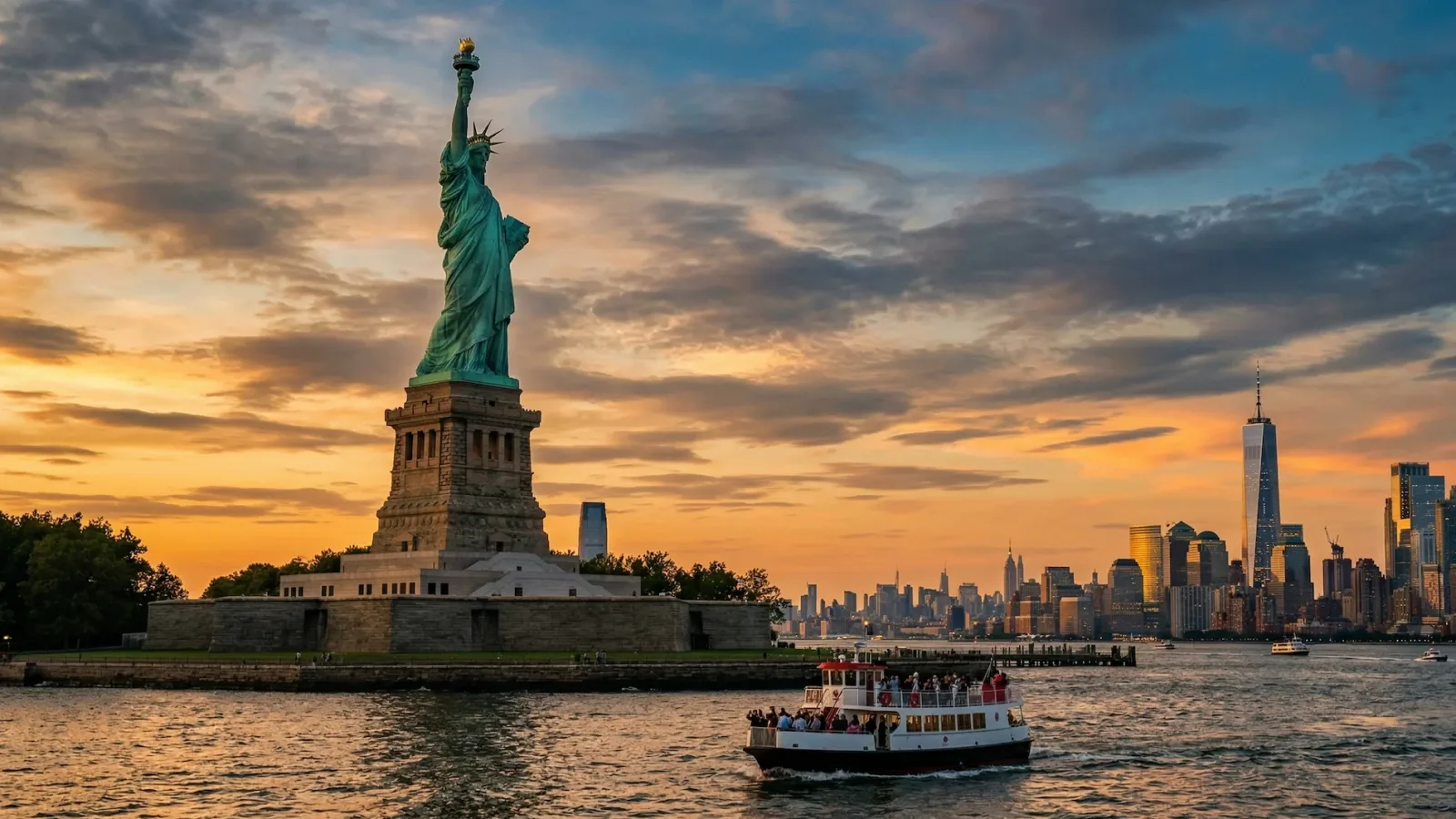
Behind the familiar symbols and textbook history of the United States lies a landscape of remarkable anomalies, surprising engineering feats, and curious cultural quirks. From subterranean cheese reserves hidden in Midwestern caves to an Alaskan municipality contained entirely within a single high-rise, the nation is full of unexpected oddities. The world's largest library, a continuous fifty-year underground coal fire, and space travel enabled by bra makers all form part of this rich story. Explore fifteen remarkable truths that showcase the stranger side of American history and geography.
1. An Entire Alaskan Town Lives Under One Roof
Nestled along Prince William Sound, the remote Alaskan community of Whittier is home to roughly three hundred residents, almost all of whom live inside a single fourteen-story building. Known as Begich Towers, this former Cold War military barracks houses not just apartment units, but also the town's post office, grocery store, police department, and health clinic under one roof. Residents can run errands, send mail, and visit the doctor without ever stepping outside into the harsh subarctic winters. Access to the town itself is equally unusual, as visitors must travel through a single-lane tunnel shared with railroad traffic that operates on a strict schedule. This extreme architectural consolidation makes Whittier one of the most uniquely self-contained municipalities on Earth.
2. The Federal Government Hides a Massive Underground Cheese Reserve
Deep beneath the rolling hills of Missouri, the United States government maintains a staggering strategic reserve of cheese stored in climate-controlled limestone caves. During the mid-twentieth century, agricultural price-support programs led the federal government to purchase billions of pounds of surplus milk and dairy products to stabilize the farming economy. To prevent the massive excess from spoiling, milk was processed into hard cheeses and processed blocks before being transported to vast subterranean storage facilities. At its peak, the government held over 1.2 billion pounds of cheese in these underground vaults, creating a unique economic safety net that persists in altered forms today. Although the government distributed much of the reserve through assistance programs, millions of pounds remain stored deep beneath the surface.
3. The Fifty-Star Flag Was Designed by a High School Student Who Got a B-Minus
In 1958, seventeen-year-old high school student Robert G. Heft from Lancaster, Ohio, was assigned a history project to create a new American flag design. Anticipating that Alaska and Hawaii would soon be admitted to the Union as the 49th and 50th states, Heft spent hours cutting up a traditional 48-star flag and meticulously sewing fifty white stars onto a blue field. When he submitted the finished project, his teacher gave him a B-minus grade, deeming the design unoriginal and lacking proper composition. Undeterred, Heft sent his design to his local congressman and President Dwight D. Eisenhower, who eventually selected it out of thousands of proposals as the official national flag in 1960. Following the federal adoption of his flag, Heft’s teacher honorably upgraded his history grade to an A.
4. You Can Walk Across the Ocean Boundary Between the US and Russia
In the middle of the Bering Strait lie the Diomede Islands, two small landmasses separated by just two and a half miles of open water that marks the border between the United States and Russia. Little Diomede belongs to Alaska, while Big Diomede is Russian territory, and the International Date Line runs directly between them, creating a twenty-one-hour time difference despite their close proximity. During the coldest winter months, the sea channel between the islands freezes over into a solid bridge of sea ice. In theory, this temporary ice formation makes it geographically possible to walk straight from American soil into Russian territory on foot. Today, strict international laws and heavy military surveillance prevent travelers from making the frozen crossing.
5. Apollo Spacesuits Were Manufactured by an Undergarment Company
When NASA began searching for contractor designs for the Apollo moon suits, traditional aerospace companies submitted rigid, heavy armor proposals that severely restricted astronaut mobility. NASA ultimately awarded the landmark contract to the International Latex Corporation, better known to the public as the bra and girdle manufacturer Playtex. The company's skilled seamstresses possessed unmatched expertise in tailoring tight, multi-layered garments designed to stretch and hold pressure comfortably. Working with precision down to a fraction of a millimeter, these seamstresses hand-stitched every layer of advanced synthetic textiles, rubber, and aluminum mesh without using pins that could puncture the airtight fabric. Their craftsmanship enabled Neil Armstrong and Buzz Aldrin to walk on the lunar surface during the historic Apollo 11 mission.
6. Feral Chickens Enjoy Legal Protection in Key West
Visitors strolling through the historic streets and outdoor cafes of Key West, Florida, are guaranteed to encounter thousands of colorful chickens roaming freely. Known locally as "gypsy chickens," these birds trace their heritage back to the nineteenth century, when Cuban and Caribbean immigrants brought poultry to the island for backyard food production and cockfighting. When cockfighting was outlawed and supermarkets reduced the reliance on home livestock, many owners simply released their birds into the lush tropical neighborhoods. Today, the chickens are recognized as a vibrant part of the island’s local identity and are legally protected by municipal ordinances. While they occasionally cause noise complaints, residents generally embrace the feral flocks as beloved local icons.
 American Cities and Landmarks
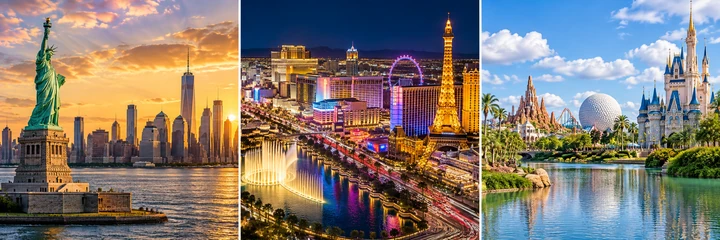
From sinking mega-cities and secret subterranean vaults to monumental feats of engineering that tamed the desert, discover the hidden histories and bizarre quirks behind America's most iconic landmarks and urban centers.
See All Facts
American Cities and Landmarks
From sinking mega-cities and secret subterranean vaults to monumental feats of engineering that tamed the desert, discover the hidden histories and bizarre quirks behind America's most iconic landmarks and urban centers.
See All Facts
7. The United States Has No Official Language at the Federal Level
Despite English being the dominant language used in government, legal proceedings, business, and national media, the United States has never officially declared a national language. The Founding Fathers intentionally omitted an official language from the Constitution, believing that mandating one would infringe upon personal liberty and disrespect the linguistic diversity of early immigrants. Over thirty states have individually passed legislation declaring English as their official state language, but federal statutes maintain language neutrality. Consequently, public services, election ballots, and government websites across the nation are regularly published in dozens of languages to accommodate residents. This policy reflects a long-standing tradition of political adaptability in a multiethnic republic.
8. An Alabama Town Built a Monument Honoring a Destructive Pest
In 1919, the citizens of Enterprise, Alabama, erected a grand classical monument topped with a bronze statue of an agricultural pest known as the boll weevil. A few years earlier, the voracious beetle had swept through the region, devastating the local economy by destroying virtually the entire cotton crop. Desperate for a solution, local farmers were forced to abandon their reliance on cotton and diversify into growing peanuts, sweet potatoes, and raising livestock. This agricultural shift proved vastly more profitable, rescuing the town from bankruptcy and sparking unprecedented regional prosperity. Grateful for the forced innovation, the residents built the world's only monument erected to honor a destructive insect.
9. Kentucky Holds Far More Barrels of Bourbon Than Human Residents
The state of Kentucky is globally recognized as the heartland of bourbon production, crafting over ninety percent of the world's supply. Federal regulations dictate that true bourbon must be aged in brand-new, charred oak barrels for at least two years, though premium varieties mature far longer. Because the aging process takes years to complete, vast quantities of spirits must be stored simultaneously across hundreds of tall wooden storage barns known as rickhouses. As a result, Kentucky contains over eleven million aging barrels of bourbon, easily surpassing the state's total human population of roughly 4.5 million citizens. This massive inventory represents billions of dollars in maturing inventory that matures quietly across the rolling countryside.
10. The Postal Service Delivers Mail to the Grand Canyon via Mule
Nestled deep inside the Grand Canyon lies Supai, a remote village that serves as the capital of the Havasupai Indian Reservation. Located eight miles below the canyon rim with no road access, it is considered one of the most isolated communities in the contiguous United States. To maintain postal service, the United States Postal Service utilizes a dedicated fleet of pack mules to transport letters, packages, food, and medicine down steep cliff paths. Each morning, haulers load hundreds of pounds of supplies onto mule trains for the treacherous three-hour descent into the canyon. This centuries-old transport system remains the most reliable way to connect the canyon community with the outside world.
11. An Underground Fire Has Been Burning Beneath a Pennsylvania Town Since 1962
In May 1962, a routine controlled burn at a landfill in Centralia, Pennsylvania, accidentally ignited an exposed seam of coal underground. The fire spread rapidly into an extensive labyrinth of abandoned anthracite coal mines beneath the borough, creating an unstoppable subterranean inferno. Over the following decades, dangerous carbon monoxide fumes seeped into homes, sinkholes swallowed roads, and the ground temperature soared, forcing the federal government to buy out property owners and condemn the town. Most of Centralia was demolished, leaving a ghost town where toxic smoke still vents through cracked asphalt. Experts estimate that the massive subterranean coal reserve contains enough fuel to keep the underground fire burning for another two centuries.
12. The Library of Congress Holds Over 800 Miles of Bookshelves
Situated across three massive buildings in Washington, D.C., the Library of Congress is officially recognized as the largest library in the world. Its collection contains more than 175 million items, including rare manuscripts, historic maps, sheet music, photographs, and books written in over 450 languages. To store this colossal repository of knowledge, the library maintains roughly 838 miles of physical shelving stretching across vast above-ground stacks and underground climate-controlled vaults. The library receives thousands of new items every single day through copyright deposits and international acquisitions. Its extensive collection grows so rapidly that officials continuously expand off-site storage complexes in surrounding states.
13. Lake Superior Contains Ten Percent of Earth's Surface Fresh Water
Bordering Ontario, Michigan, Minnesota, and Wisconsin, Lake Superior is the largest of the Great Lakes by surface area and volume. The lake is so vast and deep that it holds approximately ten percent of the world's total unfrozen surface fresh water. Its immense basin contains roughly three quadrillion gallons of water, enough to submerge the entire combined landmass of North and South America under a foot of liquid. The lake's surface area is comparable in size to the state of South Carolina, and its deepest point plunges over 1,300 feet below the surface. Because of its sheer thermal mass, Lake Superior heavily influences the climate and weather patterns of the surrounding Midwest.
14. The Washington Monument Is Capped with a Precious Aluminum Pyramid
When the construction of the Washington Monument was completed in 1884, stone carvers topped the obelisk with a nine-inch pyramid made of pure solid aluminum. At the time, aluminum was extremely difficult to extract from ore, making it an exotic and costly material that was more valuable than silver. The metal was selected by government engineers both for its striking luster and its ability to act as a durable lightning rod at the monument's summit. Prominent jewelers displayed the tiny aluminum pyramid in New York City prior to installation, where curious citizens paid to view the rare metal object. Today, advances in chemistry have made aluminum ubiquitous, but the historic apex remains perched atop the marble structure.
15. Desert Boulders Sail Across Death Valley on Thin Sheets of Ice
For decades, scientists were baffled by the mysterious movement of heavy boulders across Racetrack Playa, a dry lake bed in California's Death Valley National Park. These large stones leave long, winding tracks carved into the flat mud floor without any visible human or animal intervention. In 2014, researchers using time-lapse photography solved the mystery by capturing the rare phenomenon in action. During winter nights, brief rain showers form thin pools of water that freeze into expansive sheets of ice under freezing desert temperatures. As the morning sun melts the ice into floating panels, gentle winds push the ice sheets against the embedded rocks, gliding them silently across the slippery mud.
Sources & References
This AI-assisted post was rigorously curated and fact-checked for accuracy by:
 Martin Roháček
How fun was this article? 🤔
Tap a star to rate it
🧠 Quiz: How closely were you paying attention?
10 questions — all answers are in the article above!
Enjoyed these facts? There's more! 💌
Fresh fun facts in your inbox. No spam, ever.