Four Nations, One Kingdom: 15 Fascinating Facts About the United Kingdom
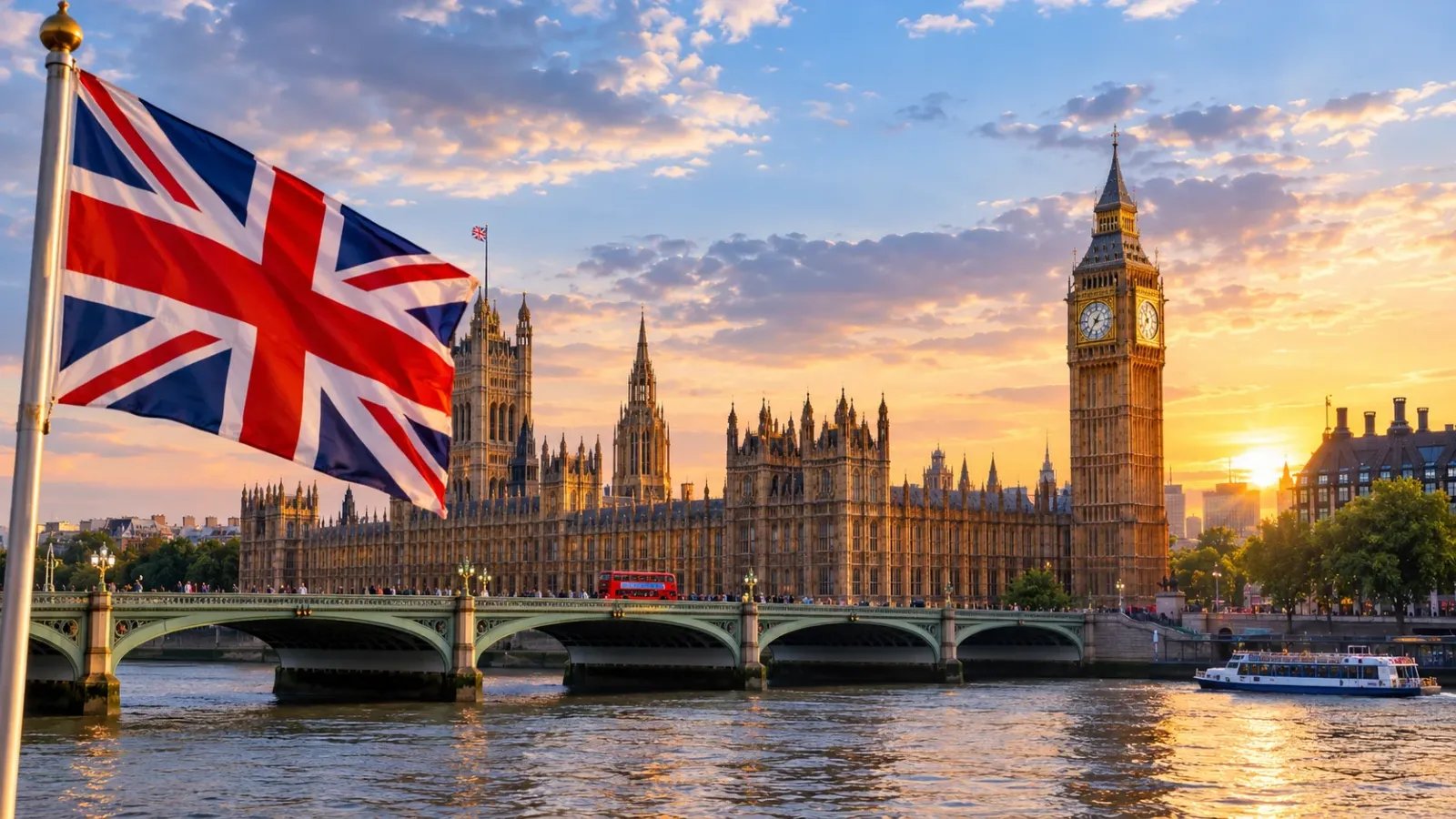
The United Kingdom packs castles, mountains, ancient monuments, and world-famous cities into a small island nation. With roughly 37 million international visits a year, it is one of Europe's most popular destinations. Discover 15 fascinating facts about England, Scotland, Wales, and Northern Ireland.
1. The United Kingdom is not the same as Great Britain.
The United Kingdom consists of four nations: England, Scotland, Wales, and Northern Ireland. Great Britain is the name of the island that contains England, Scotland, and Wales, while the British Isles also include Ireland, which is a separate country. The official name of the state is the United Kingdom of Great Britain and Northern Ireland.
2. It attracts about 37 million international visits a year.
According to VisitBritain, the UK received around 37 million international visits in 2023, with London the most visited city. Visitors come for history, music, theater, football, castles, and landscapes.
3. "Big Ben" is the name of a bell, not a tower.
Big Ben is the nickname of the great bell, weighing about 13.7 tonnes, in the clock tower of the Palace of Westminster in London. The bell first rang in 1859. The tower itself was officially renamed the Elizabeth Tower in 2012 in honor of Queen Elizabeth II's Diamond Jubilee.
4. London has the world's first underground railway.
The Metropolitan Railway, which opened on 10 January 1863, was the world's first underground passenger railway. It was the beginning of the London Underground, nicknamed the Tube, which today carries millions of passengers a day on its many lines.
5. Stonehenge stones came from far away.
Stonehenge in Wiltshire was built in stages starting around 3000 BCE. The smaller bluestones were brought from the Preseli Hills in Wales, about 240 kilometers away. A 2024 study showed that the Altar Stone came from northeastern Scotland, more than 700 kilometers away. How Neolithic people moved such heavy stones remains a subject of research.
6. Hadrian's Wall once marked the edge of the Roman Empire.
Construction of Hadrian's Wall began in 122 CE under Emperor Hadrian. It ran for about 73 miles (118 kilometers) across northern England, with forts, milecastles, and towers. Parts of it are still visible, and it is a UNESCO World Heritage Site and a popular hiking route.
7. The Giant's Causeway has about 40,000 stone columns.
On the coast of Northern Ireland, around 40,000 mostly hexagonal basalt columns formed about 60 million years ago when lava cooled and cracked. Legend says they were laid by the giant Finn McCool to reach Scotland. The site became a UNESCO World Heritage Site in 1986.
8. Bath's Roman spring still flows.
The hot spring at the heart of the Roman Baths in Bath delivers over a million liters of water a day at about 46 degrees Celsius. The Romans built a bath and temple complex around it in the 1st century CE. Today the well-preserved baths are one of England's most visited attractions.
9. Edinburgh hosts the world's largest arts festival.
The Edinburgh Festival Fringe, which began in 1947 when several uninvited theater groups performed alongside the official festival, has grown into the world's largest arts festival. Every August, thousands of performances fill venues across the Scottish capital.
10. Oxford is the oldest university in the English-speaking world.
There is evidence of teaching at Oxford from 1096, and the university grew rapidly after 1167, when English students were barred from attending the University of Paris. Cambridge was founded in the early 13th century by scholars who left Oxford. Both are major tourist attractions for their historic colleges.
11. Loch Ness holds more fresh water than all the lakes of England and Wales combined.
The deep Scottish loch, about 36 kilometers long, is famous for the legend of the Loch Ness Monster. Stories about a creature there go back to a medieval account of Saint Columba, but modern interest began with a reported sighting in 1933. Scientists have found no evidence of such an animal.
12. Wales has hundreds of castles.
Wales is said to have more than 600 castles, many of them built by Welsh princes or by English kings after Edward I's conquest in the 13th century. Several, including Caernarfon, Conwy, Beaumaris, and Harlech, form a UNESCO World Heritage Site.
13. Ben Nevis is the highest mountain in the UK.
Ben Nevis in the Scottish Highlands rises to 1,345 meters. The highest peaks of the other nations are Snowdon in Wales at 1,085 meters and Scafell Pike in England at 978 meters. Thousands of walkers climb Ben Nevis each year.
14. Afternoon tea became popular in the 1840s.
According to tradition, Anna Maria Russell, Duchess of Bedford, began taking tea and light snacks in the late afternoon in the 1840s to fill the long gap between lunch and a late dinner. She invited friends to join her, and the custom spread through high society. Today afternoon tea with scones, cream, and sandwiches is a tourist favorite.
15. Ravens are kept at the Tower of London.
At least six ravens are kept at the Tower of London, which has been a fortress, palace, prison, and home of the Crown Jewels. A legend says that if the ravens ever leave, the kingdom will fall. There is no evidence of the legend before the 19th century, but the birds are cared for by a Ravenmaster.
Sources & References
This AI-assisted post was rigorously curated and fact-checked for accuracy by:
 Martin Roháček
How fun was this article? 🤔
Tap a star to rate it
🧠 Quiz: How closely were you paying attention?
10 questions — all answers are in the article above!
Enjoyed these facts? There's more! 💌
Fresh fun facts in your inbox. No spam, ever.