The Monumental Mystery: 15 Fascinating Facts About Stonehenge
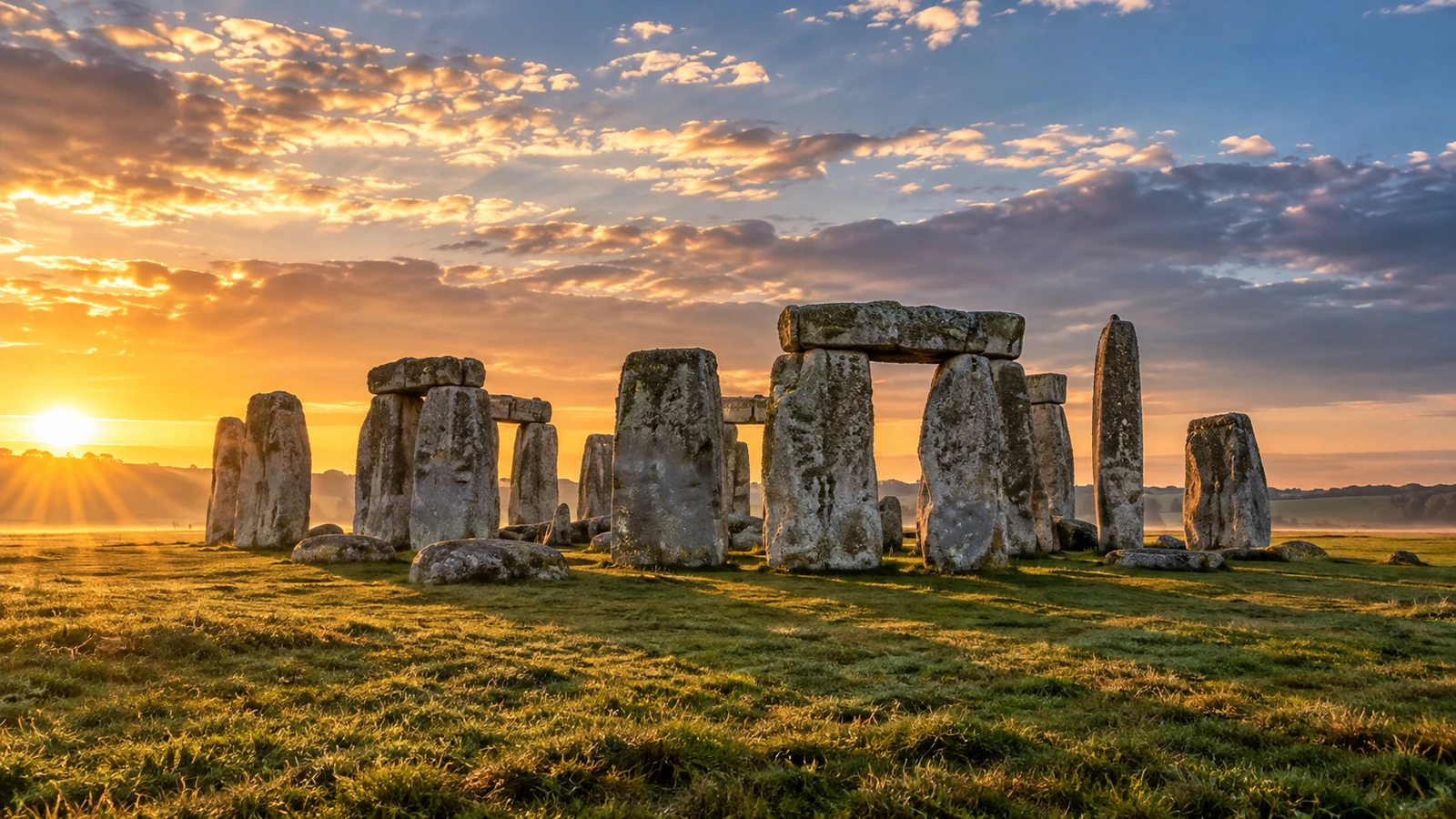
Standing resolutely on Salisbury Plain in Wiltshire, England, Stonehenge remains one of the most enigmatic architectural wonders of the ancient world. Built in multiple phases over thousands of years, this prehistoric monument continues to surprise archaeologists with fresh discoveries about its origins, alignment, and acoustic powers. From far-flung stones transported hundreds of miles to secret laser carvings and ancient Roman tourists, the site holds secrets far beyond its iconic stone arches. Here are 15 fascinating facts that illuminate the real story behind Britain's legendary stone circle.
1. Stonehenge Began as a Massive Prehistoric Cemetery
Long before the iconic sarsen arches dominated the Salisbury Plain, Stonehenge was constructed as a circular earthwork around 3000 BC. Early builders dug a deep ditch and bank system using antler picks to create a sacred enclosure measuring over three hundred feet across. Within this circular boundary, archaeologists have excavated the cremated remains of dozens of individuals, making it the largest known cemetery from early Neolithic Britain. Analysis of these remains reveals that high-status families were transported from distant regions to be interred at the site. Thus, the location held profound spiritual significance for centuries before any massive megaliths were hauled to the grounds.
2. Cecil Chubb Bought the Monument at Auction on a Whim
In 1915, a wealthy local barrister named Cecil Chubb attended an auction in Salisbury with instructions from his wife to purchase a set of dining room chairs. Instead, when Lot 15—the entire Stonehenge estate—came up for bid, Chubb impulsively purchased the ancient monument for £6,600. His wife was reportedly displeased with the purchase, as she had no desire to own a sprawling pile of prehistoric rocks. Recognizing the national importance of the monument, Chubb generously handed the site over to the British public three years later in 1918. In recognition of his philanthropic donation, he was created a baronet and earned the enduring gratitude of historic preservers worldwide.
3. The Smaller Bluestones Traveled Over 180 Miles from Wales
The smaller monoliths standing within the inner ring are known as bluestones, weighing up to four tons each. Geological tracing confirmed that these specific volcanic and igneous rocks originated in the Preseli Hills of Pembrokeshire, Wales. Moving dozens of these massive stones across more than 180 miles of rugged terrain presented an astonishing logistical feat for Neolithic crews. Transporting them required a combination of overland sledges, wooden rollers, and rafts navigated along coastal waterways. This extraordinary effort demonstrates that prehistoric British societies possessed incredible engineering capability and collaborative networks across vast distances.
4. Geochemical Testing Debunked the Glacial Transport Myth
For decades, a popular geological theory suggested that ancient glaciers carried the bluestones from Wales closer to Salisbury Plain, leaving them for humans to collect. However, recent geochemical analysis of over 500 zircon crystals extracted from the site finally put that debate to rest. Researchers found zero micro-geological evidence of glacial movement or ice-transported till in the region surrounding the monument. This conclusive finding confirms that human handiwork alone was responsible for quarrying and moving every single rock across hundreds of miles. The discovery underscores the tremendous human motivation and organized labor required to construct the sanctuary.
5. The Six-Ton Altar Stone Came All the Way from Scotland
The massive six-ton block lying at the heart of the stone circle, known as the Altar Stone, was long assumed to originate from Wales like the surrounding bluestones. In 2024, advanced isotopic analysis revealed that its chemical footprint matches rock formations from the Orcadian Basin in northern Scotland. This means the stone traveled over 460 miles to reach its final destination on Salisbury Plain. Scholars believe this incredible journey proves the existence of highly integrated trade routes and shared cultural traditions spanning the entire length of Great Britain. Transporting such a heavy block across maritime routes or overland paths remains one of antiquity's most impressive logistics achievements.
6. Ancient Builders Used Advanced Woodworking Joints on Stone
To secure the upper horizontal stones, known as lintels, to the vertical standing pillars, Neolithic craftsmen employed sophisticated joinery techniques typically reserved for woodworking. They carved protruding knobs called tenons onto the tops of upright stones, which fitted precisely into matching hollow sockets called mortises carved beneath the lintels. Additionally, the horizontal lintels were connected to each other using tongue-and-groove joints along their edges. This seamless interlocking design prevented the massive lintels from slipping off during heavy winds or seismic shifts. Because of this brilliant engineering, several lintels have remained balanced atop their pillars for over four thousand years without mortar.
 Ancient and Archaeological Sites
Humanity's impulse to build monumentally has left behind astonishing architectural legacies. From sky-high Incan citadels to sprawling Egyptian necropolises, these sites unite diverse cultures through their shared ambition to conquer geography and secure immortality. Discover the ingenious engineering and hidden histories behind the world's most incredible ancient archaeological wonders.
See All Facts
Ancient and Archaeological Sites
Humanity's impulse to build monumentally has left behind astonishing architectural legacies. From sky-high Incan citadels to sprawling Egyptian necropolises, these sites unite diverse cultures through their shared ambition to conquer geography and secure immortality. Discover the ingenious engineering and hidden histories behind the world's most incredible ancient archaeological wonders.
See All Facts
7. It Was Engineered as an Astronomical Solstice Calendar
Stonehenge was precisely engineered to align with the movements of the sun during key points of the celestial calendar. On the summer solstice, an observer standing inside the circle looking northeast through the entrance sees the sun rise directly over the distant Heel Stone. Conversely, on the winter solstice, the setting sun aligns perfectly between the great upright stones of the central Trilithon enclosure. Ancient agricultural communities used these exact solar alignments to mark the turning points of the year for farming and ritual gatherings. The remarkable accuracy of these sightlines demonstrates that the builders held sophisticated astronomical knowledge passed down across generations.
8. Some of the Bluestones Function as Musical Instruments
Certain bluestones integrated into the monument exhibit extraordinary acoustic properties that set them apart from ordinary rock. When struck with wooden mallets or small stones, these specific megaliths produce a clear metallic ringing sound similar to a bell or gong. Acoustic archaeologists refer to these sonorous rocks as lithophones and suggest that sound played a major role in ancient ceremonies. It is highly likely that Neolithic priests intentionally selected these stones in Wales due to their mysterious auditory qualities. The combination of resonant soundscapes and imposing visuals would have created a deeply immersive spiritual experience for visitors.
9. The Tallest Stones Extend Deep Underground for Stability
The magnificent sarsen stones that form the outer circle and central archways look imposing above ground, but their hidden foundations are equally impressive. To ensure structural stability, the ancient builders buried a substantial portion of each monolith deep beneath the surface. For example, the tallest standing stone extends over seven feet underground to counteract the immense weight leaning above. Workers dug precise, flat-backed sockets into the chalk bedrock before tilting the rocks upward using wooden levers and rope teams. This deep anchoring allowed the megaliths to withstand millennia of weathering, frost, and soil erosion without collapsing.
10. A Massive Ring of Underground Shafts Encircles Nearby Durrington Walls
In 2020, archaeologists using high-tech remote sensing discovered a massive ring of prehistoric shafts surrounding the nearby henge site of Durrington Walls. This enormous circular structure spans over two kilometers in diameter and consists of dozens of pits measuring up to five meters deep. Scholars believe these subterranean shafts were excavated over four thousand years ago to establish a sacred boundary around the entire complex. The discovery proves that the landscape surrounding Stonehenge was engineered on a scale far larger than previously imagined. It demonstrates that Neolithic planners organized the entire territory according to strict spiritual guidelines.
11. Romans Left Behind Hundreds of Coins and Artifacts as Ancient Tourists
While Stonehenge is associated with prehistoric Britain, it continued to hold immense fascination for people thousands of years later during the Roman occupation. Archaeologists excavating around the stones have uncovered roughly 1,500 Roman artifacts, including coins, bronze brooches, glass beads, and pottery fragments. Rather than destroying or ignoring the ancient monument, the Romans appear to have treated it as an enigmatic holy sanctuary or historic tourist site. Many of these items were deliberately deposited as offerings in ritual pits or left behind by curious travelers. These discoveries prove that Stonehenge has drawn inspired visitors across multiple distinct civilizations.
12. Laser Scans Revealed Hidden Bronze Age Weapons Carved into the Stones
Visitors admiring the sarsen stones with the naked eye miss subtle details that were only uncovered through high-definition 3D laser scanning in 2011. The scans revealed hundreds of faint carvings etched into the stone surfaces, including depictions of Early Bronze Age axes and daggers. These secret symbols were added to the upright pillars hundreds of years after the primary stone circle was completed. Archaeologists suspect the weapon carvings served as memorial symbols or markers of high-status warriors within the changing society. The discovery highlights how later generations continued to alter and add personal meaning to the ancient monoliths.
13. Tens of Thousands of Modern Visitors Still Gather for the Solstices
The tradition of gathering at the monument to celebrate the solar cycle remains vibrant in modern times. Every midsummer, up to 20,000 people from around the globe gather at Stonehenge to watch the sun rise on the summer solstice. Druids, pagans, tourists, and locals assemble together inside the stones during the one night of the year when managed access is permitted. As the golden light breaks over the horizon, crowds cheer and celebrate in a ritual continuity that mirrors prehistoric gatherings. This annual spectacle demonstrates humanity's enduring fascination with solar phenomena and ancient architecture.
14. The Name "Stonehenge" Refers to Hanging Stones or Gallows
The name "Stonehenge" has its roots in early medieval linguistics rather than prehistoric terminology. It derives from the Old English words stan, meaning stone, and hengen, which meant hanging or gallows. Twelfth-century Anglo-Saxon chroniclers coined the term because the horizontal lintels resting atop the vertical pillars resembled ancient wooden gallows. Another interpretation suggests the word referred to stones that appeared to float or hang suspended in mid-air. Over the centuries, this descriptive Old English nickname evolved into the iconic name recognized worldwide today.
15. Stonehenge Was Only the Centerpiece of a Vaster Sacred Landscape
Stonehenge was never built as an isolated monument standing alone in an empty field. Instead, it served as the central node of a vast and complex ceremonial landscape spanning miles across Salisbury Plain. Surrounding the main stone circle are hundreds of burial mounds, timber henges, ceremonial avenues, and ancient settlements like Durrington Walls. Scholars believe the entire complex functioned as an interconnected sacred territory where thousands of people gathered seasonally for grand festivals. Viewing the site within its broader landscape reveals that Neolithic Britain possessed a rich, highly organized society built on shared religious architecture.
Sources & References
This AI-assisted post was rigorously curated and fact-checked for accuracy by:
 Martin Roháček
How fun was this article? 🤔
Tap a star to rate it
🧠 Quiz: How closely were you paying attention?
10 questions — all answers are in the article above!
Enjoyed these facts? There's more! 💌
Fresh fun facts in your inbox. No spam, ever.