The Enigmatic Shapeshifter: 15 Fascinating Facts About Eels
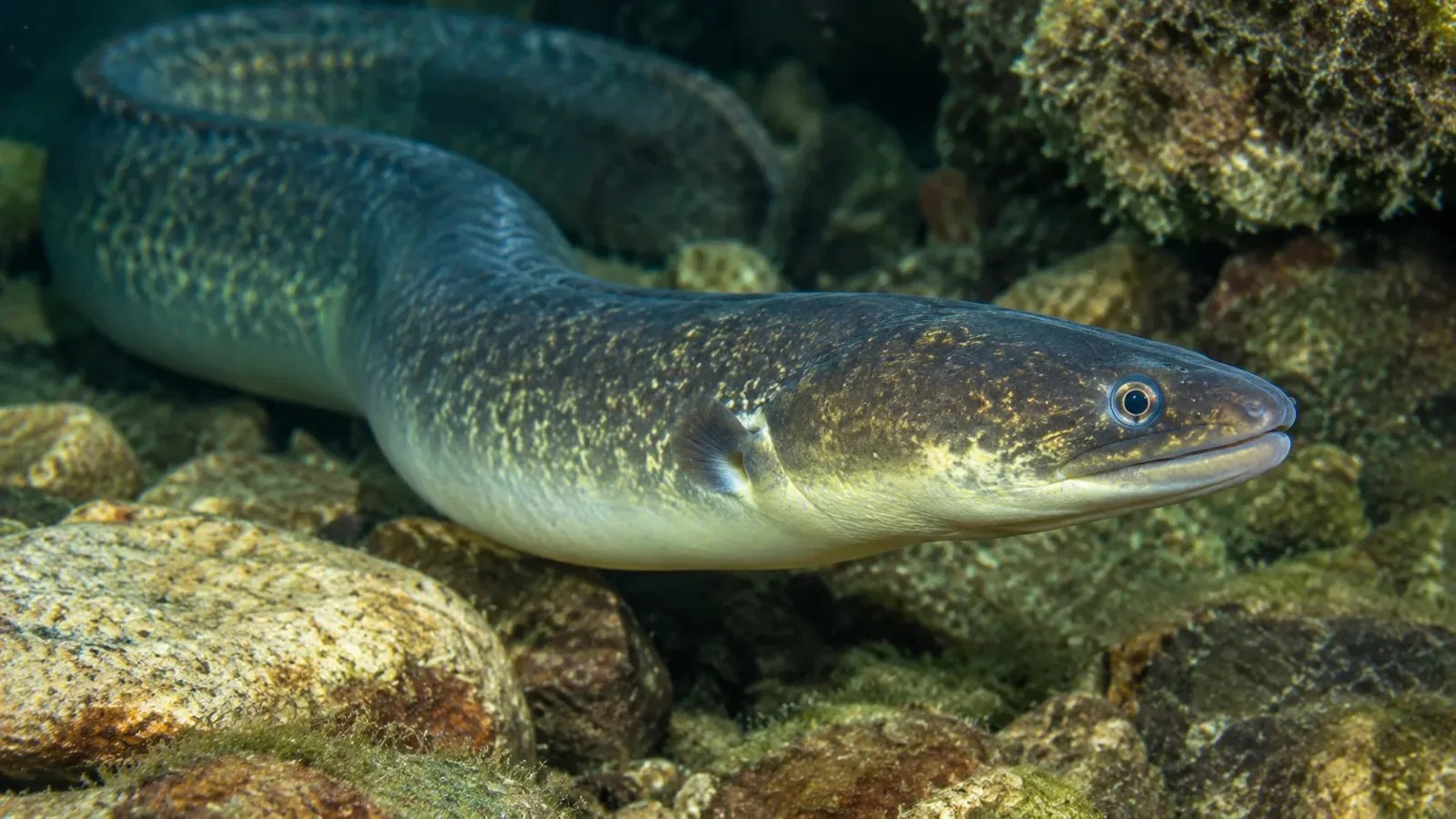
Forget the myth that eels are just creepy sea snakes; they are true fish with secrets that baffled Aristotle and Freud alike. Born in oceanic depths, they undergo radical physical transformations while traversing thousands of miles to freshwater rivers. Ready to uncover the bizarre biology and epic migrations of these slippery shape-shifters? Here are fifteen truths about the incredible eel.
1. No one has ever observed European or American eels mating in the wild.
Despite centuries of research, the exact spawning behavior of freshwater eels remains one of nature's greatest mysteries. Scientists know they migrate to the Sargasso Sea in the Atlantic Ocean to reproduce, based on the presence of microscopic eel larvae in the area. However, not a single adult eel has ever been caught or seen on camera actively reproducing or laying eggs in this region, making their reproduction entirely theoretical based on larval evidence.
2. Young Sigmund Freud spent four weeks dissecting hundreds of eels in a failed attempt to find their reproductive organs.
In 1876, long before he founded psychoanalysis, a teenage Freud was assigned by his university zoology professor to solve the eel problem. Aristotle had famously claimed eels spontaneously generated from mud, largely because nobody could find male eel sex organs. Freud spent a month in Trieste dissecting over four hundred eels, hoping to locate the elusive testes, but he ultimately failed, publishing his fruitless findings in his very first scientific paper.
3. Eels undergo four distinct, radical physical metamorphoses during their lifetime.
Rather than simply growing larger, an eel's life cycle is a series of extreme transformations. They begin as flat, transparent larvae called leptocephali drifting in the ocean. As they near coastal waters, they morph into glass eels, maintaining their transparency but gaining a cylindrical shape. Entering freshwater, they darken into elvers, and finally mature into yellow eels, a stage they can maintain for decades before a final, fatal transformation into silver eels for their breeding migration.
4. Electric eels are actually a type of knifefish and are not true eels at all.
Despite their common name and serpentine appearance, the electric eel belongs to the order Gymnotiformes, making them neotropical knifefish. True eels belong to the order Anguilliformes. This means an electric eel is more closely related to a catfish or a carp than it is to a moray or a European eel. Their eel-like body is an example of convergent evolution, where unrelated species develop similar traits to adapt to their environments.
5. During their final migration, silver eels undergo physical changes that actually dissolve their own stomachs.
When a freshwater eel reaches the end of its life, it begins a massive migration back to the ocean to spawn. To prepare for this arduous journey, the yellow eel transforms into a silver eel. Its eyes enlarge to see in the dark ocean depths, and its pectoral fins widen for better swimming. Most shockingly, its digestive system entirely dissolves to make room for growing gonads. The eel will never eat again, relying entirely on stored fat to power its final, one-way trip.
6. Moray eels possess a hidden second set of jaws in their throats reminiscent of science fiction monsters.
Unlike most fish that use suction to pull prey into their mouths, moray eels hunt in tight coral reef crevices where suction is impossible. To overcome this, they evolved pharyngeal jaws. After the eel's primary outer jaws grip a fish, this secondary set of jaws launches forward from the throat, bites down on the prey, and drags it backward into the esophagus. This raptorial mechanism is unique among vertebrates and closely mirrors the alien creature from the famous film franchise.
7. Eel blood is highly toxic to humans and other mammals, capable of causing severe muscle cramping and heart failure.
If you were to consume raw eel blood, you would be ingesting a potent neurotoxin called ichthyotoxin. In mammals, this toxin causes severe muscle cramps, significantly affects the heart's rhythm, and can even be lethal in surprisingly small doses. Fortunately, the protein-based toxin is completely neutralized by heat, which is why eel is always served cooked or smoked in culinary traditions, rendering it completely safe and delicious.
8. Some species of eels can travel across dry land to migrate between bodies of water.
When facing obstacles like dams or when their current habitat dries up, European and American eels possess the extraordinary ability to leave the water and slither across land. They wait for damp, rainy nights to prevent their skin from drying out, as they can absorb a significant portion of their required oxygen directly through their moist skin. This amphibious behavior allows them to bypass terrestrial barriers that would trap ordinary fish.
9. The European eel migration to the Sargasso Sea takes them on a staggering journey of over three thousand miles.
Adult European eels spend the majority of their lives in the freshwater rivers and lakes of Europe. When the time comes to spawn, they embark on one of the most grueling animal migrations on the planet. Leaving their European homes, they swim continuously for up to three hundred days across the Atlantic Ocean to reach the Sargasso Sea. Because their stomachs dissolve prior to the trip, they accomplish this incredible feat entirely on a single tank of stored body fat.
10. Glass eels are so prized in the culinary world that they are often worth more than their weight in gold.
The juvenile, transparent stage of the eel, known as the glass eel, is a massive delicacy in parts of Europe and Asia. Because eels cannot be successfully bred in captivity, every eel eaten in a restaurant must be caught in the wild. This high demand and limited supply have created a massive black market. In peak seasons, a single kilogram of glass eels can fetch thousands of dollars, far surpassing the market price of gold and leading to rampant poaching.
11. Eels have an exceptionally long lifespan, with one captive eel reportedly living for over a hundred and fifty years.
While wild eels typically live between ten and twenty years before migrating to spawn and die, their lifespan can extend drastically if they are prevented from making this journey. The most famous example is the Brantevik Eel, which was dropped into a Swedish well in 1859 to keep the water free of pests. Because it was trapped and could never undergo its final sexual maturation, it reportedly lived until 2014, making it at least 155 years old at the time of its death.
12. Eels lack pelvic fins, forcing them to swim by generating complex, continuous waves along their entire bodies.
Most fish use a combination of various fins to steer, stabilize, and propel themselves through the water. Eels, however, have lost their pelvic fins through evolution and possess a continuous dorsal, caudal, and anal fin fringe. To move, they use highly coordinated muscle contractions that send an undulating wave from their head to their tail. This anguilliform locomotion is incredibly energy-efficient, allowing them to swim backward and forward with equal ease in tight spaces.
13. Eels can absorb oxygen directly through their skin to survive in incredibly low-oxygen environments.
While eels possess gills like other fish, their gills are uniquely small and enclosed within a tiny pouch. To supplement their breathing, especially in stagnant, muddy waters where oxygen levels are dangerously low, eels utilize cutaneous respiration. Their skin is highly vascularized and lacks standard scales, allowing them to absorb up to half of their required oxygen directly from the water or damp air, a vital adaptation for their bottom-dwelling lifestyle.
14. Eels possess a magnetic compass in their heads that guides their massive oceanic migrations.
Navigating across thousands of miles of featureless ocean requires extraordinary biological technology. Scientists have discovered that European and American eels possess magnetite in their skulls, allowing them to sense the Earth's magnetic field. This internal compass, combined with an acute sense of smell and the ability to detect water temperature gradients, allows them to accurately pinpoint the Sargasso Sea after spending decades in distant freshwater rivers.
15. Ancient Romans kept moray eels as pets and occasionally used them as a gruesome form of execution.
In ancient Rome, moray eels were highly prized, often kept in elaborate, specialized coastal ponds called piscinae. Wealthy Romans would hand-feed their beloved eels and adorn them with jewelry. However, their aggressive reputation was also weaponized. The Roman aristocrat Vedius Pollio became notoriously famous for attempting to punish his clumsy slaves by throwing them into a pool of giant, hungry moray eels to be eaten alive, a practice that horrified even Emperor Augustus.
Sources & References
This AI-assisted post was rigorously curated and fact-checked for accuracy by:
 Martin Roháček
How fun was this article? 🤔
Tap a star to rate it
🧠 Quiz: How closely were you paying attention?
10 questions — all answers are in the article above!
Enjoyed these facts? There's more! 💌
Fresh fun facts in your inbox. No spam, ever.