The Alien Masterminds: 15 Fascinating Facts About Octopuses
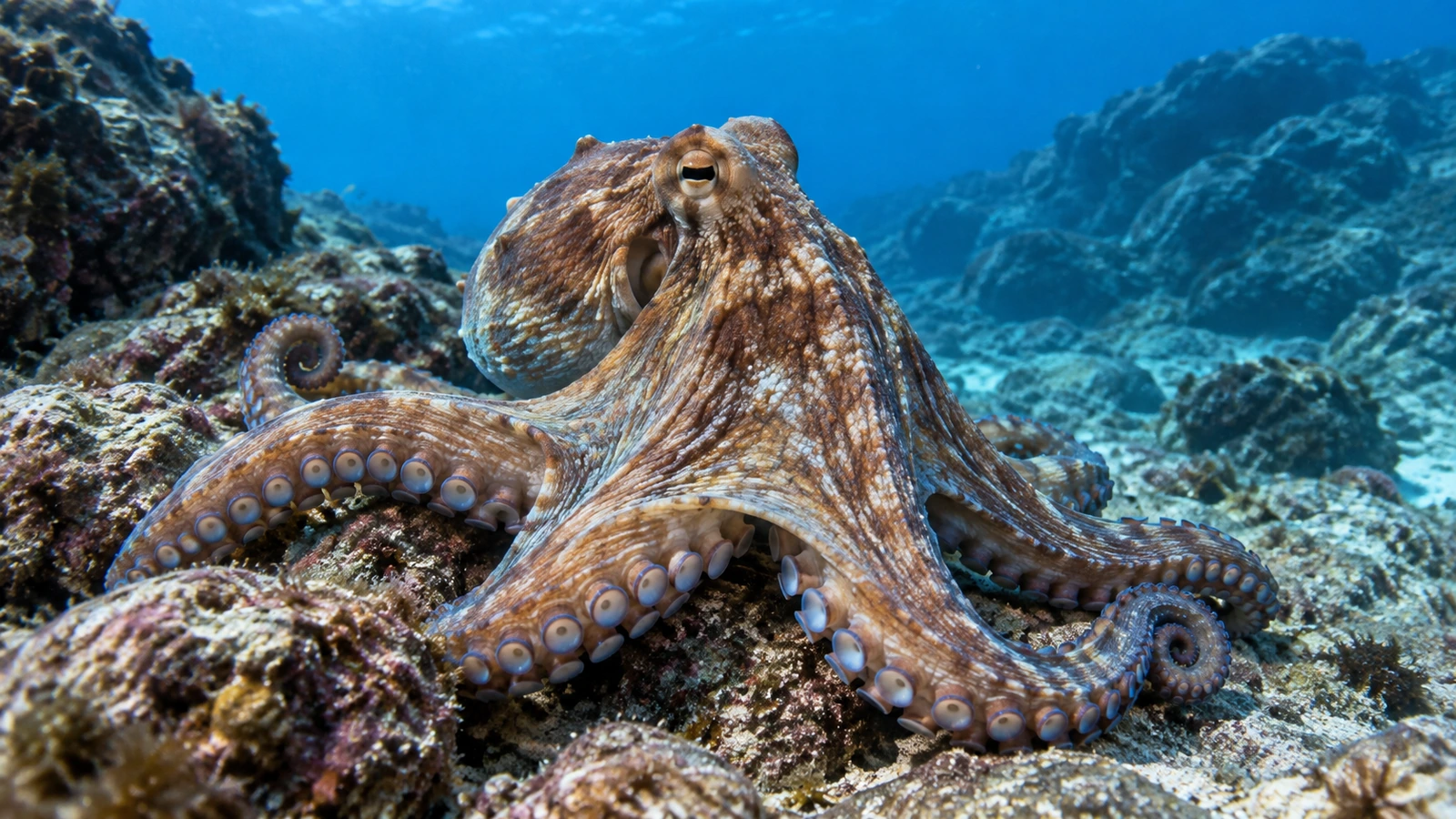
From three functional hearts and copper-infused blue blood to nine distinct brains working in tandem, octopuses are among the most extraordinary creatures on Earth. These soft-bodied marine animals have inhabited the world's oceans for over 300 million years, outlasting the dinosaurs while developing unmatched intelligence and camouflage abilities. Explore 15 mind-bending facts about octopus biology, behavior, and evolutionary secrets that prove reality is stranger than science fiction.
1. Three Hearts and a Pause for Swimming
Octopuses possess a remarkably unusual circulatory system featuring three distinct hearts working in unison. Two branchial hearts pump blood exclusively to the gills where it picks up fresh oxygen, while a single systemic heart circulates oxygenated blood throughout the rest of the body. Interestingly, when an octopus swims, the systemic heart temporarily stops beating entirely. Because swimming causes the animal to exhaust itself quickly by halting main blood flow, octopuses generally prefer crawling along the ocean floor over prolonged jet-propulsion swimming. This energetic restriction helps explain why these marine creatures rely so heavily on stealth and ambush rather than long chases.
2. Copper-Based Blue Blood
Instead of relying on iron-based hemoglobin like humans and other vertebrates, octopuses use a copper-rich protein called hemocyanin to carry oxygen through their bloodstream. This chemical reliance gives octopus blood a distinct dark blue color rather than red. Hemocyanin is extraordinarily efficient at transporting oxygen in extremely cold, low-oxygen ocean environments where iron-based systems struggle. However, it also makes octopuses highly sensitive to changes in water temperature and acidity, which can dramatically lower their blood's oxygen-binding efficiency.
3. A Distributed Network of Nine Brains
An octopus essentially operates with nine distinct nervous centers that manage its sophisticated movements and cognitive functions. While a central brain sits between its eyes wrapped around the esophagus, two-thirds of the creature's total neurons are located in the nerve cords of its eight arms. This decentralized nervous system allows each arm to process sensory information, touch, taste, and execute movements independently without waiting for direct instructions from the central brain. Even if an arm is severed, it can continue to react to stimuli and move on its own for a short period.
4. The Etymological Reality of Octopuses
The debate over the plural form of octopus is rooted in linguistic history rather than modern biology. The word originates from ancient Greek oktōpous, meaning eight-footed, which means applying the Latin plural suffix '-i' to make 'octopi' is etymologically incorrect. While 'octopuses' is the universally preferred standard in modern English, 'octopodes' is technically the original Greek plural form. Standard English dictionaries accept 'octopuses' as correct, while treating 'octopi' as a common misconception born from mistaking a Greek word for a Latin one.
5. Bending Through Impossible Gaps
Because octopuses are entirely soft-bodied invertebrates lacking any internal skeleton or external shell, their physical flexibility is virtually unmatched in the animal kingdom. The only rigid component in their entire body is a sharp, parrot-like beak made of chitin. As long as an opening is large enough for this beak to pass through, an octopus can squeeze its entire body through it. Massive specimens weighing tens of pounds have been recorded squeezing through narrow pipes and openings no larger than a coin.
6. Tool Use in Coconut Octopuses
The coconut octopus provides one of the most compelling examples of invertebrate tool use in the world. Found in the tropical waters of the western Pacific, this species routinely collects discarded coconut shell halves or clam shells from the ocean floor. It uses its suckers to clean out the shells, stacks them together, and carries them underneath its body as it walks along the seabed. When a predator approaches, the octopus quickly fits the two halves around itself like an armored suit, establishing an instant mobile shelter.
 Marine and Freshwater Animals
See All Facts
Marine and Freshwater Animals
See All Facts
7. Tasting the World by Touch
An octopus does not merely feel its surrounding environment through its limbs; it actively tastes everything it touches. Each suction cup on an octopus arm contains thousands of chemical receptors that function almost identically to human taste buds. When an octopus reaches into a murky rock crevice, it can immediately determine whether an object is edible without ever seeing it. This remarkable dual sensory capability allows them to forage efficiently along the ocean floor in pitch darkness.
8. Punching Fish Out of Spite
Marine biologists studying interspecies hunting behaviors have discovered that octopuses occasionally punch fish during joint hunting trips. Octopuses often team up with species like coral trout to flush prey out of reef crevices, sharing the benefits of a successful hunt. However, underwater footage has shown octopuses abruptly striking their fish partners with a swift arm movement. Researchers suspect this aggressive behavior serves to discipline uncooperative partners, control group dynamics, or simply stems from sheer frustration when a hunt fails.
9. The Lethal Venom of the Blue-Ringed Octopus
Despite measuring only a few inches in length—roughly the size of a golf ball—the blue-ringed octopus is considered one of the deadliest animals on Earth. Its bite delivers a potent neurotoxin called tetrodotoxin, which is produced by symbiotic bacteria living in its salivary glands. A single tiny octopus carries enough toxin to paralyze and kill up to 26 adult humans within minutes by causing total respiratory failure. To make matters worse, there is currently no known antivenom, meaning medical treatment relies entirely on artificial respiration until the toxin wears off.
10. Millisecond Color and Texture Changes
Octopuses are unparalleled masters of dynamic camouflage, capable of altering both their skin color and physical texture in under a second. This transformation is driven by specialized pigment-filled cells called chromatophores, under direct neural control. Beneath the chromatophores lie iridophores and leucophores, which reflect ambient light to create shimmering structural colors and whites. Furthermore, tiny muscles called papillae in the skin can contract to transform smooth skin into jagged bumps that perfectly mimic surrounding coral or granite rocks.
11. The Master Impersonations of the Mimic Octopus
Discovered off the coast of Indonesia in 1998, the mimic octopus takes adaptive camouflage to an extraordinary cognitive level. Rather than simply blending into the background, this species actively impersonates toxic or dangerous animals to deter specific predators. By changing its color pattern and contorting its arms, it can convincingly mimic lionfish, sea snakes, stingrays, and flatfish. Remarkably, the mimic octopus appears to select which creature to impersonate based on the specific predator currently threatening it.
12. Tragic Lifecycle and Semelparity
Most octopus species are semelparous, meaning they reproduce only once during their lifetime before dying. After laying tens of thousands of eggs, a female octopus devotes the remainder of her life exclusively to tending them, fanning them with oxygen-rich water and guarding them from predators. During this months-long incubation period, she completely stops eating, causing her body to consume its own tissues. Shortly after the eggs hatch into tiny floating larvae, the weakened mother dies, leaving her offspring to navigate the ocean completely on their own as immediate orphans.
13. Ancient Ocean Predators Older Than Dinosaurs
Octopuses possess a remarkably long evolutionary lineage that far predates the arrival of land-dwelling giants. Fossil evidence indicates that primitive cephalopods and early octopus ancestors were swimming in prehistoric seas over 300 million years ago. This means they were thriving during the Carboniferous period, roughly 70 million years before the earliest dinosaurs evolved. Over hundreds of millions of years, they discarded their heavy protective shells in favor of speed, agility, and unmatched intelligence.
14. Self-Cannibalization Under Stress
When octopuses are subjected to extreme stress, severe boredom, or sensory deprivation in poor captive environments, they can exhibit a disturbing condition known as autophagy. Affected individuals begin biting, chewing, and consuming their own arms, often causing fatal self-inflicted injuries. Biologists believe this self-destructive behavior is linked to neurological distress or viral infections affecting the nervous system. Proper environmental enrichment, such as puzzles and complex hiding spots, is crucial in captivity to keep their active minds occupied.
15. Blinding and Disorienting Ink Defensive Systems
When an octopus feels threatened by an approaching predator, it can release a dark cloud of ink from a specialized ink sac attached to its digestive tract. This ink is primarily composed of melanin—the same pigment that determines human hair and skin color—mixed with a thick mucus. The resulting cloud forms a dense visual decoy that retains the physical shape of the octopus, allowing the real animal to propel itself away unnoticed. Additionally, the ink contains compounds that dull a predator's sense of smell and taste, effectively blinding sharks and moray eels on multiple sensory fronts.
Sources & References
This AI-assisted post was rigorously curated and fact-checked for accuracy by:
 Martin Roháček
How fun was this article? 🤔
Tap a star to rate it
🧠 Quiz: How closely were you paying attention?
10 questions — all answers are in the article above!
Enjoyed these facts? There's more! 💌
Fresh fun facts in your inbox. No spam, ever.