1. They Are Literally “Eared Seals”
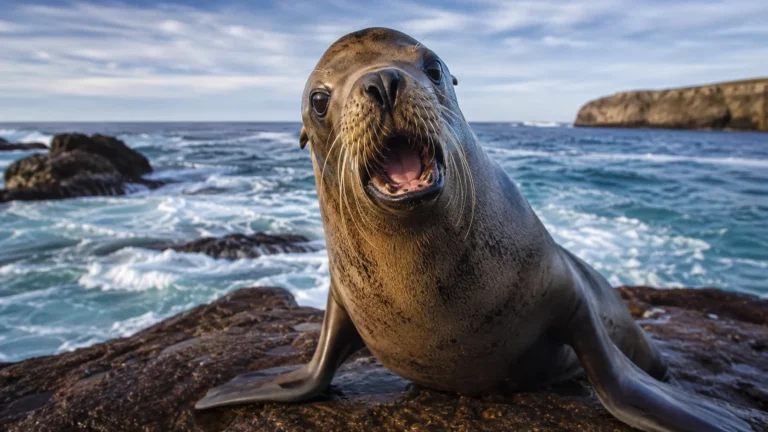
The easiest way to tell a sea lion apart from a standard seal is by looking at the side of its head. Sea lions belong to a family known scientifically as Otariidae, which translates to “eared seals.” Unlike true seals, which only have tiny holes on the sides of their heads, sea lions possess visible, external ear flaps that stick out from their sleek skulls.
2. They Can Gallop on Land
While true seals are famously clumsy out of the water, forced to belly-flop and drag themselves across the sand, sea lions are remarkably mobile on land. They possess a unique skeletal structure that allows them to rotate their large hind flippers forward beneath their bodies. This adaptation lets them support their own weight and literally walk, run, and even gallop across rocky shorelines at surprising speeds.
3. They Serve in the United States Navy
Sea lions are so intelligent and highly trainable that the U.S. Navy officially recruits them. The Navy Marine Mammal Program trains California sea lions to perform vital underwater military operations. Their incredible low-light vision and directional hearing make them the perfect operatives for locating and retrieving unarmed test ordnance from the ocean floor, as well as detecting unauthorized human divers approaching naval ships.
4. They Have Super-Sensory Whiskers
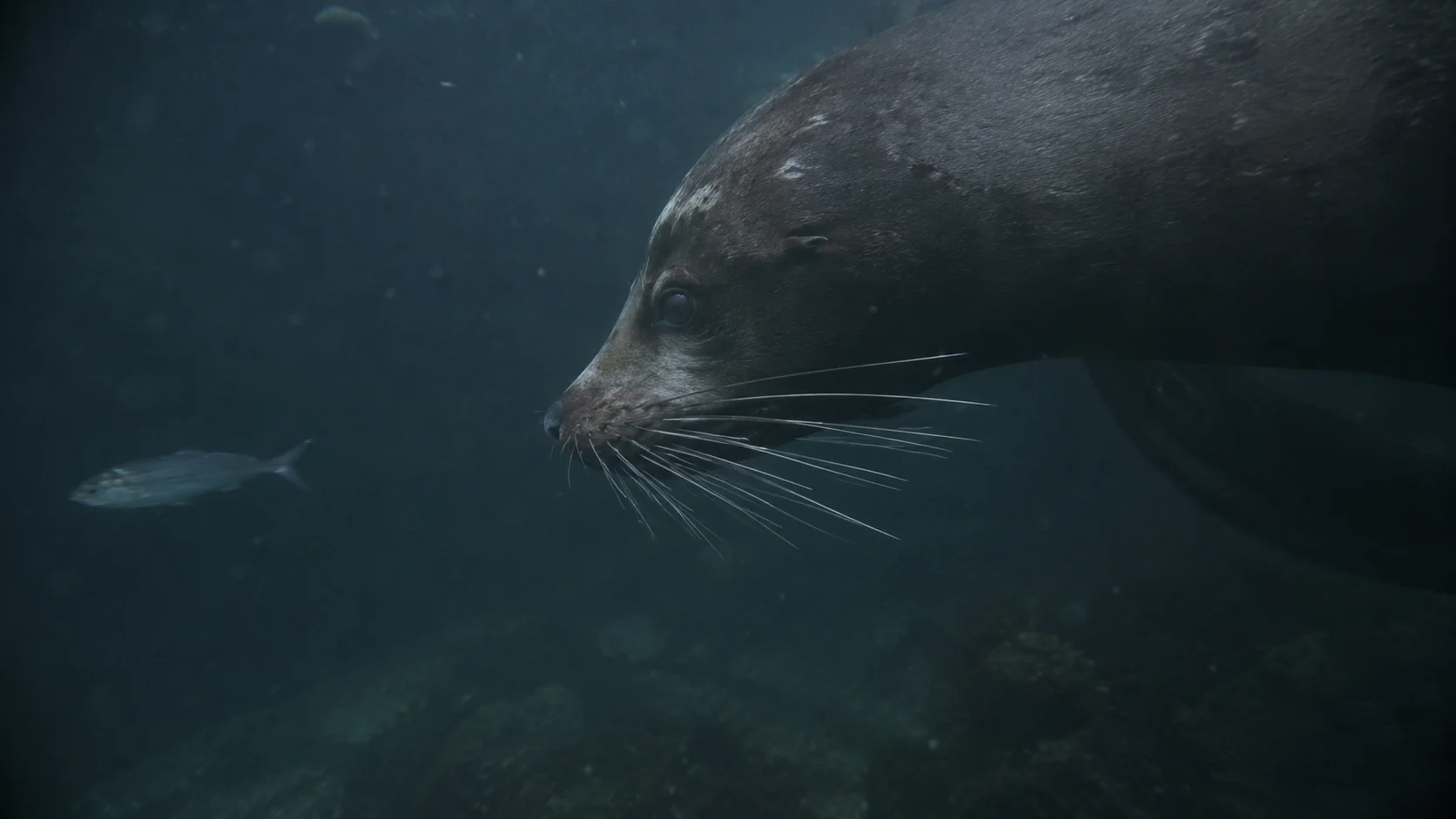
A sea lion’s whiskers, called vibrissae, are not just for show. These long, thick bristles are highly specialized sensory organs connected to an incredibly dense network of nerves. When a sea lion swims through murky, dark water, it uses its whiskers to detect the microscopic hydrodynamic trails and water pressure changes left behind by a swimming fish, allowing it to track prey completely blind.
5. They Swallow Rocks for Mysterious Reasons
Scientists frequently discover a bizarre dietary habit when studying sea lions: their stomachs are often filled with large, smooth stones known as gastroliths. While the exact reason remains slightly mysterious, marine biologists believe the stones serve two primary purposes: acting as internal ballast to help the animals dive deeper, and helping to crush and grind up sharp fish bones in their stomachs to aid digestion.
6. Their Heart Rates Plummet During Deep Dives
Sea lions are phenomenal freedivers, capable of reaching depths of over 900 feet and holding their breath for up to 20 minutes. To survive without oxygen for so long, they trigger a mammalian diving reflex. As they descend into the frigid depths, their heart rate drastically drops from a normal resting rate of about 90 beats per minute down to a mere 10 beats per minute, heavily conserving their body’s oxygen supply.
7. They Use Their Flippers Like Bird Wings
While most marine mammals like whales, dolphins, and true seals propel themselves through the water by undulating their bodies and using their powerful tail flukes, sea lions swim entirely differently. They rely on their massive, muscular front flippers to generate thrust. By sweeping these front flippers downward in a continuous flapping motion, they essentially “fly” underwater, using their hind flippers merely as rudders for steering.
8. They Practice “Rafting” to Cool Down
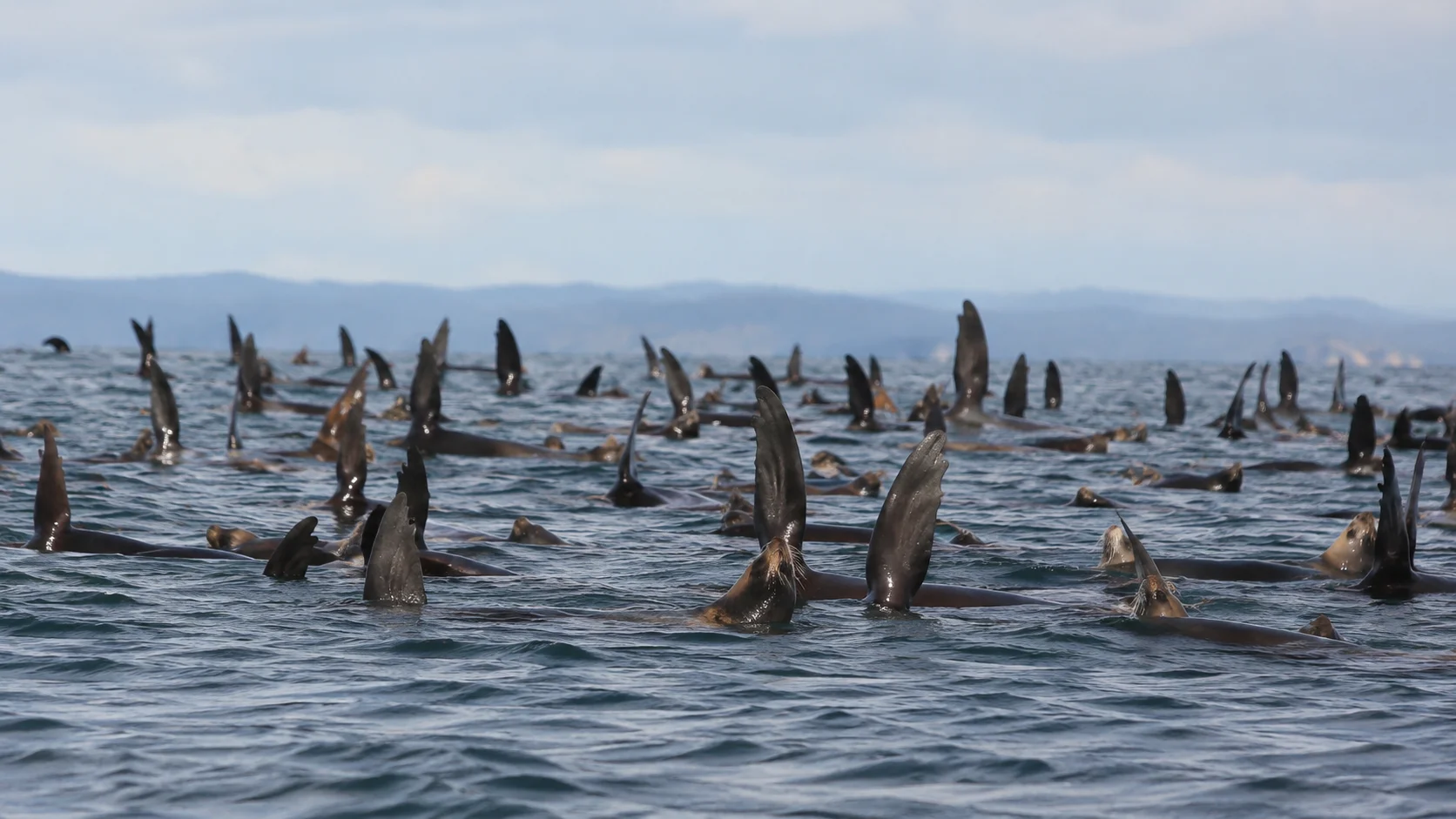
If you see a massive group of sea lions floating on the ocean’s surface with their flippers sticking straight up into the air, they are not waving at you. This behavior is called “rafting.” Because sea lions have a thick layer of insulating blubber, they can easily overheat. By raising their hairless, blood-vessel-rich flippers into the cool ocean breeze, they release excess body heat to regulate their temperature.
9. They Are Closely Related to Bears
Despite their sleek, dolphin-like lifestyle, sea lions are not closely related to cetaceans. Evolutionary biology reveals that sea lions, walruses, and seals belong to the suborder Pinnipedia, which translates to “fin-footed.” Millions of years ago, their ancient ancestors were terrestrial carnivores. Genetically, sea lions are actually far more closely related to modern-day bears and weasels than they are to whales.
10. They Drink Very Little Water
Despite spending almost their entire lives surrounded by vast oceans, sea lions rarely actually drink water. Consuming too much seawater would fatally dehydrate them due to the high salt content. Instead, they have evolved to extract almost all the fresh hydration their bodies need directly from the juices and moisture of the fish and squid they eat.
11. They Are Obsessed with Cuddling
Sea lions are highly social, deeply thigmotactic animals, meaning they absolutely love physical contact. Even when a massive sandy beach or wooden dock has plenty of wide-open space, a group of sea lions will actively choose to pile directly on top of one another. This massive, barking cuddle puddle helps them share body heat and creates a sense of safety within the colony.
12. They Took Over Pier 39 After an Earthquake
Following the devastating 1989 Loma Prieta earthquake in San Francisco, something highly unusual occurred at the famous Pier 39 marina. Flocks of California sea lions suddenly arrived and began hauling themselves onto the wooden docks. They found the protected bay safe from oceanic predators like great white sharks and completely took over. Today, they remain a massive, permanent tourist attraction, with the marina effectively surrendering the docks to the animals.
13. Pups Recognize Their Mother’s Specific Bark
A crowded sea lion breeding beach (a rookery) is a chaotic, deafening environment filled with thousands of barking, aggressive animals. When a mother returns from a hunting trip at sea, she must find her single pup among the massive crowd. She achieves this by emitting a highly distinct, personalized bark. The pup instantly recognizes its mother’s exact vocal frequency and calls back, allowing them to reunite in the chaos.
14. They Bodysurf Purely for Fun
Unlike many wild animals that reserve their precious energy strictly for survival, hunting, and mating, sea lions actively engage in play. They are frequently observed catching waves alongside human surfers, leaping out of the water (porpoising), and riding the crest of the surf onto the beach for absolutely no evolutionary reason other than the sheer fun and thrill of the activity.
15. The “Sea Wolf” Nickname
Early Spanish explorers who navigated the coastal waters of the Americas were deeply intimidated by the massive, barking colonies they encountered. Because of their loud, howling vocalizations, sharp canine teeth, and highly social pack behaviors, the explorers named the animals lobos marinos, which literally translates to “sea wolves,” a moniker that is still widely used in Spanish-speaking countries today.