1. They Are the Heaviest, Not the Longest
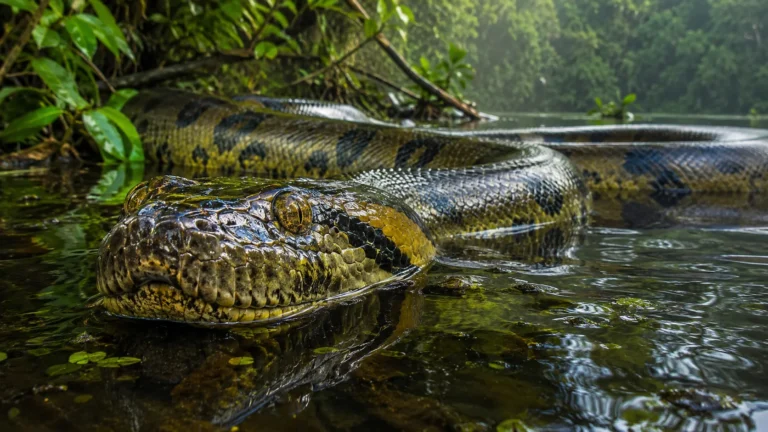
There is a massive biological distinction between the largest snake and the longest snake. While the reticulated python of Southeast Asia holds the global record for sheer length, the green anaconda is officially the heaviest and most massive snake on Earth. A fully grown female green anaconda can easily reach twenty feet in length, completely dwarf a python in sheer physical girth, and weigh a staggering five hundred and fifty pounds. Their bodies are incredibly dense and heavily muscled, built entirely for aquatic power rather than terrestrial speed.
2. Their Name Means “Good Swimmer”
Because anacondas are incredibly heavy and physically cumbersome on dry land, they spend the vast majority of their lives completely submerged in the murky, slow-moving rivers and swamps of South America. Their official scientific genus name, Eunectes, is a direct Greek translation meaning “good swimmer.” The water naturally supports their massive physical bulk, transforming a sluggish, awkward terrestrial reptile into a remarkably agile and terrifyingly silent aquatic predator.
3. They Do Not Actually Crush Bones
A massive cinematic myth insists that constrictor snakes violently squeeze their prey until all of their bones are audibly crushed into dust. In biological reality, anacondas utilize a much more silent and deadly method of execution. When they wrap their massive muscular coils around a target, they do not break bones; they exert immense, perfectly calculated pressure on the chest cavity. Every time the prey exhales, the snake squeezes tighter, ultimately causing cardiac arrest or fatal suffocation by physically preventing the lungs from expanding.
4. They Have Built-In Biological Snorkels
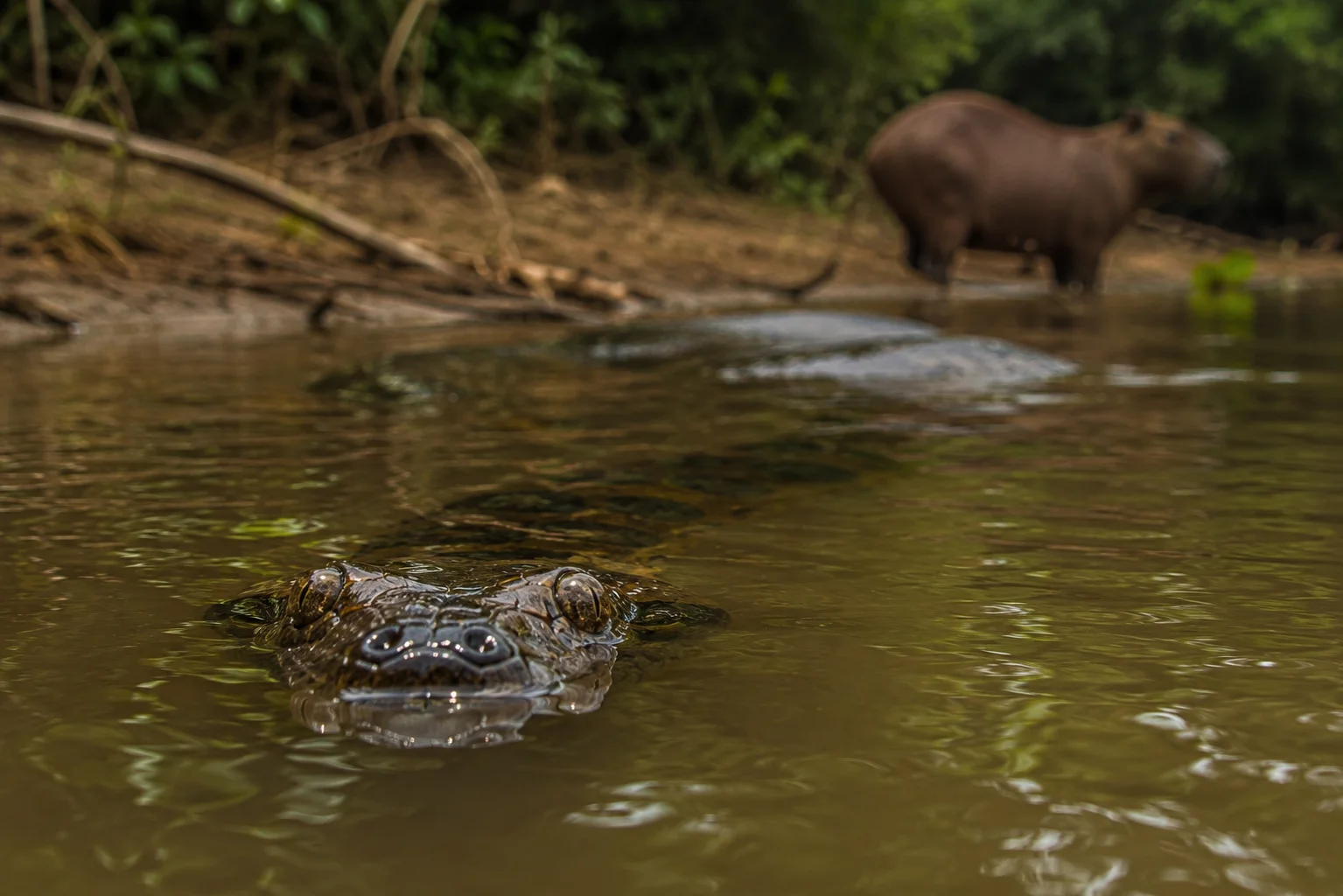
To effectively hunt in the shallow, muddy waters of the Amazon basin, anacondas have evolved a highly specialized facial anatomy. Unlike most terrestrial snakes, an anaconda’s eyes and nasal openings are positioned on the very top of its broad skull. This brilliant evolutionary adaptation allows the massive serpent to completely submerge its giant body underwater, leaving only its eyes and nostrils exposed above the surface. They can hide completely motionless for hours, waiting silently for a thirsty capybara to approach the riverbank.
5. The Bizarre Phenomenon of Mating Balls
During the dry season, female anacondas emit a powerful chemical scent trail known as a pheromone to attract potential mates. Because males are highly competitive and vastly outnumber the females, this leads to a deeply bizarre biological spectacle known as a breeding ball. Up to a dozen smaller males will locate a single massive female and completely wrap their bodies around her in a chaotic, writhing knot. This intense wrestling match can continuously last for up to four solid weeks as the males compete to successfully mate.
6. Females Frequently Eat the Males
The physical difference between the sexes in green anacondas is one of the most extreme cases of sexual dimorphism in the entire animal kingdom. The females are massively larger and significantly heavier than the males. Because a female must survive a brutal, seven-month gestation period where she largely cannot hunt, she requires massive amounts of immediate energy. Following a successful mating ball, it is highly common for the giant female to simply turn around, casually constrict, and eat one of her smaller male suitors to secure vital reproductive nutrients.
7. They Give Birth to Live Young
Unlike the vast majority of snakes that lay leathery eggs in hidden nests and abandon them, anacondas are strictly ovoviviparous. This means the eggs actually incubate and completely hatch safely inside the mother’s body. After a grueling gestation period, the mother gives birth to a massive litter of live, perfectly formed, and highly aggressive miniature snakes. A single female can unleash up to forty live neonates into the water at once, all of which must immediately swim away to fend for themselves.
8. Four Rows of Hooked Teeth
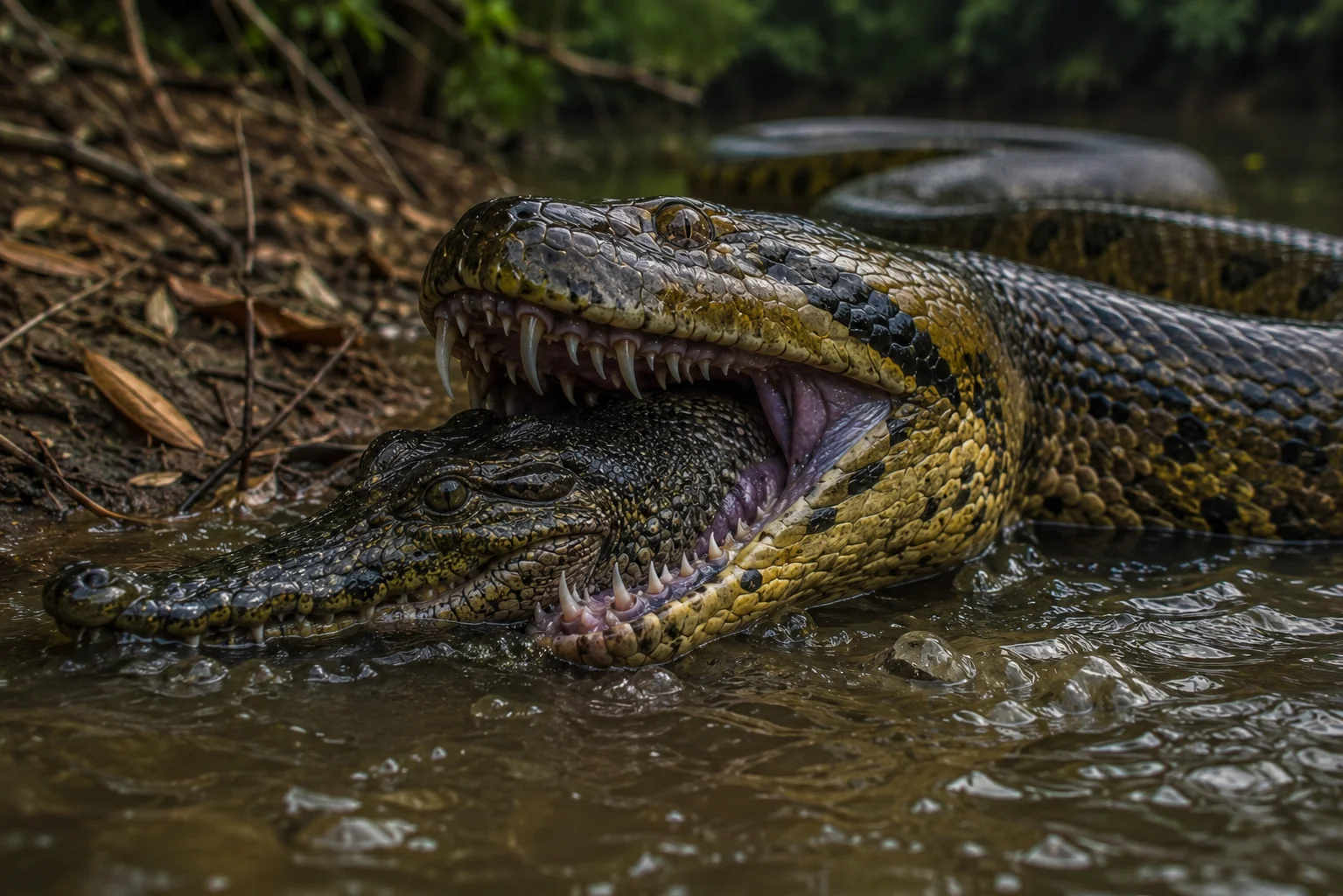
While they completely lack venom, getting bitten by an anaconda is a horrific, deeply painful experience. Their upper jaw is equipped with four distinct, independent rows of backward-facing teeth, while the bottom jaw features two rows. These incredibly sharp, recurved teeth function exactly like the massive barbs on a fishing hook. When the snake strikes and sinks its teeth into a struggling caiman, the backward angle completely prevents the slippery prey from pulling away, allowing the snake to pull it deeper into its throat.
9. They Do Not Dislocate Their Jaws
Another widespread myth claims that large snakes must physically break or dislocate their own jaws to swallow massive prey. An anaconda’s jaw is simply built differently than a mammalian skull. The two halves of their lower jaw are not fused together in the front by solid bone; they are connected by a highly elastic, stretchy ligament. This allows the left and right sides of the jaw to spread incredibly wide and move completely independently, essentially “walking” their mouth over a massive meal.
10. They Possess Tiny Vestigial Legs
Millions of years ago, the prehistoric ancestors of modern snakes were essentially four-legged lizards. The anaconda actually retains a highly visible, bizarre biological remnant of this ancient evolutionary past. If you examine the lower body of an anaconda near its tail, you will find two small, sharp claws completely protruding from the scales. These are known as cloacal spurs, and they are the tiny, external remnants of ancient hind legs. Males frequently use these scratchy spurs to stimulate the female during their chaotic mating balls.
11. Digestion Can Take Several Months
Because an anaconda survives entirely by swallowing massive prey entirely whole, their digestive process is incredibly extreme and highly energy-intensive. After successfully consuming a massive meal like a wild pig or a small deer, the snake will enter a deep state of metabolic rest. Their bodies rapidly ramp up stomach acid production and dramatically expand their internal organs to digest the rotting meat. Once a massive meal is fully digested, an adult anaconda might not need to eat another single bite of food for up to an entire year.
12. Tasting the Air
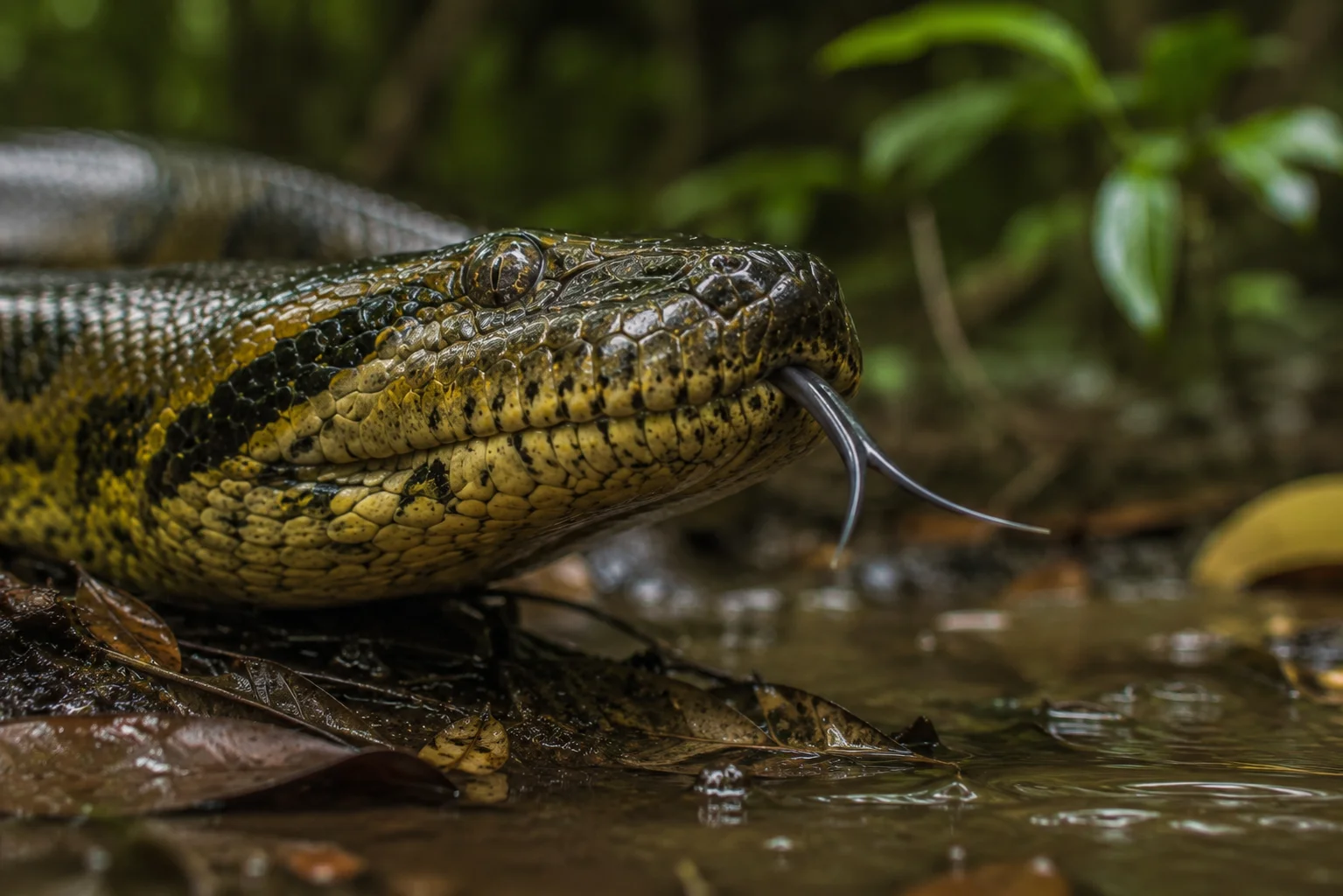
Like all snakes, anacondas possess terrible eyesight and lack external ears, meaning they rely almost entirely on a highly advanced chemical sense to hunt. When an anaconda rapidly flicks its dark, forked tongue into the air, it is actively collecting microscopic chemical particles left behind by passing animals. The tongue then directly inserts these tiny scent particles into a specialized sensory receptor on the roof of its mouth called the Jacobson’s organ, allowing the snake to literally “taste” the direction and distance of its prey.
13. They Are the True Apex Predators
While the Amazon rain forest is completely filled with deadly predators, the fully grown green anaconda sits entirely at the top of the complex aquatic food chain. Once they reach their maximum adult size, they have absolutely no natural biological predators. They are so massively powerful that they frequently hunt and consume other apex predators, including large crocodilian caimans and even fully grown jaguars that make the fatal mistake of swimming too close to the snake’s hidden ambush point.
14. They Outgrow Their Predators
While adult anacondas are invincible, the newly born neonates are incredibly vulnerable and completely lack parental protection. When they are born, they measure roughly two feet long and are frequently hunted by large birds of prey, caimans, and even larger snakes. To survive, they must completely rely on their natural green and black camouflage to hide in thick aquatic vegetation. They grow at an astonishing biological rate during their first few years, rapidly adding massive bulk until they are finally too large to be safely eaten by anything in the river.
15. A Brand New Species Was Just Discovered
For centuries, scientists believed there was only one species of green anaconda inhabiting the Amazon. In early 2024, a massive biological revelation completely shocked the zoological world. Genetic researchers collecting DNA samples discovered that the green anaconda is actually two completely distinct, separate species: the Southern green anaconda and the newly identified Northern green anaconda. Despite looking absolutely identical to the human eye, their genetic makeup differs by a staggering 5.5 percent—a massive evolutionary split that occurred nearly ten million years ago.
Sources and References