1. They Possess a Sophisticated Venom System
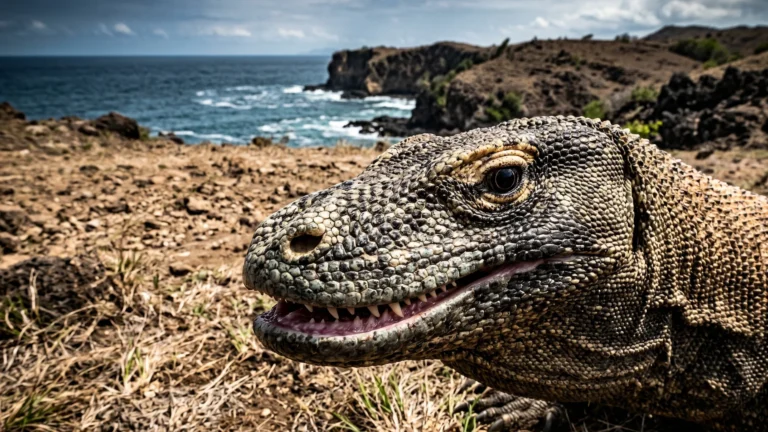
For decades, scientists believed that Komodo dragons killed their prey using a mouth full of incredibly dirty, bacteria-laden saliva that caused fatal infections. However, modern medical scans revealed that they actually possess highly sophisticated mandibular venom glands hidden in their lower jaws. When a dragon bites, it uses serrated teeth to tear the flesh while simultaneously pulling venom into the open wound. This toxic cocktail contains powerful anticoagulants that cause a rapid drop in blood pressure, sending the fleeing prey into a state of irreversible shock.
2. Females Can Give Birth Without Mating
In one of the most stunning biological survival strategies on the planet, female Komodo dragons do not actually need a male to reproduce. Through a highly rare genetic process known as parthenogenesis, an isolated female can fertilize her own eggs and create viable embryos all by herself. Because of their unique chromosomal makeup, this asexual reproductive method guarantees that every single hatchling will be a male. This extraordinary adaptation ensures that if a solitary female washes ashore on a deserted island, she can single-handedly start an entirely new colony.
3. Their Teeth Mirror Extinct Dinosaurs
Taking a look inside the mouth of a Komodo dragon is essentially like peering back in time to the Jurassic period. They possess sixty heavily serrated, backward-curving teeth that are constantly replaced throughout their lifetime whenever they break or fall out. Paleontologists classify these specific dental structures as ziphodont teeth, which are functionally identical to the teeth found in massive, extinct theropod dinosaurs like the Tyrannosaurus rex. This specialized shape allows them to effortlessly slice through thick hides and easily rip massive chunks of meat from their victims.
4. Their Blood Could Cure Superbug Infections
Because wild Komodo dragons constantly bite each other during territorial disputes without ever succumbing to massive bacterial infections, researchers suspected they possessed incredibly powerful immune systems. Scientists studying their blood recently discovered dozens of highly unique antimicrobial peptides that naturally eradicate dangerous pathogens. Laboratory tests revealed that a specific synthetic peptide derived from dragon blood, appropriately named DRGN-1, can successfully destroy antibiotic-resistant superbugs and dramatically accelerate wound healing. This reptilian biology could eventually provide a massive breakthrough for modern human medicine.

5. Babies Roll in Dung to Avoid Cannibalism
Life is incredibly brutal for a newly hatched Komodo dragon, primarily because adult dragons are ruthless cannibals that will happily eat their own young. To survive this terrifying gauntlet, baby dragons immediately scurry up the nearest trees and spend the first several years of their lives hiding in the elevated canopy. When they absolutely must descend to the ground to forage, clever juveniles deliberately roll around in the foul-smelling feces of other animals. This incredibly gross but highly effective camouflage makes them smell entirely unappetizing to hungry, roaming adults.
6. They Can Eat Eighty Percent of Their Body Weight
As opportunistic ambush predators, Komodo dragons never know exactly when they will secure their next major meal, so they are biologically designed to gorge themselves. Thanks to an incredibly flexible jaw structure and a massively expandable stomach, an adult dragon can consume up to eighty percent of its own body weight in a single sitting. They swallow smaller prey entirely whole, using their powerful neck muscles to quickly force the meal down their throats. Following a massive feast, they will simply lay motionless in the sun for days while their slow metabolism digests the enormous payload.
7. Fleeing Dragons Will Regurgitate Their Stomachs
Because they consume such incredibly massive, heavy meals, a freshly fed Komodo dragon becomes extremely sluggish and physically vulnerable to attacks from larger rivals. If a dragon feels directly threatened or needs to escape an immediate danger, it utilizes a highly bizarre and completely visceral defense mechanism. The lizard will rapidly vomit the entire contents of its stomach, instantly dropping a massive amount of body weight. This tactical regurgitation allows the frightened dragon to quickly regain its natural running speed and sprint away to safety.
8. They Have Built-In Biological Chainmail
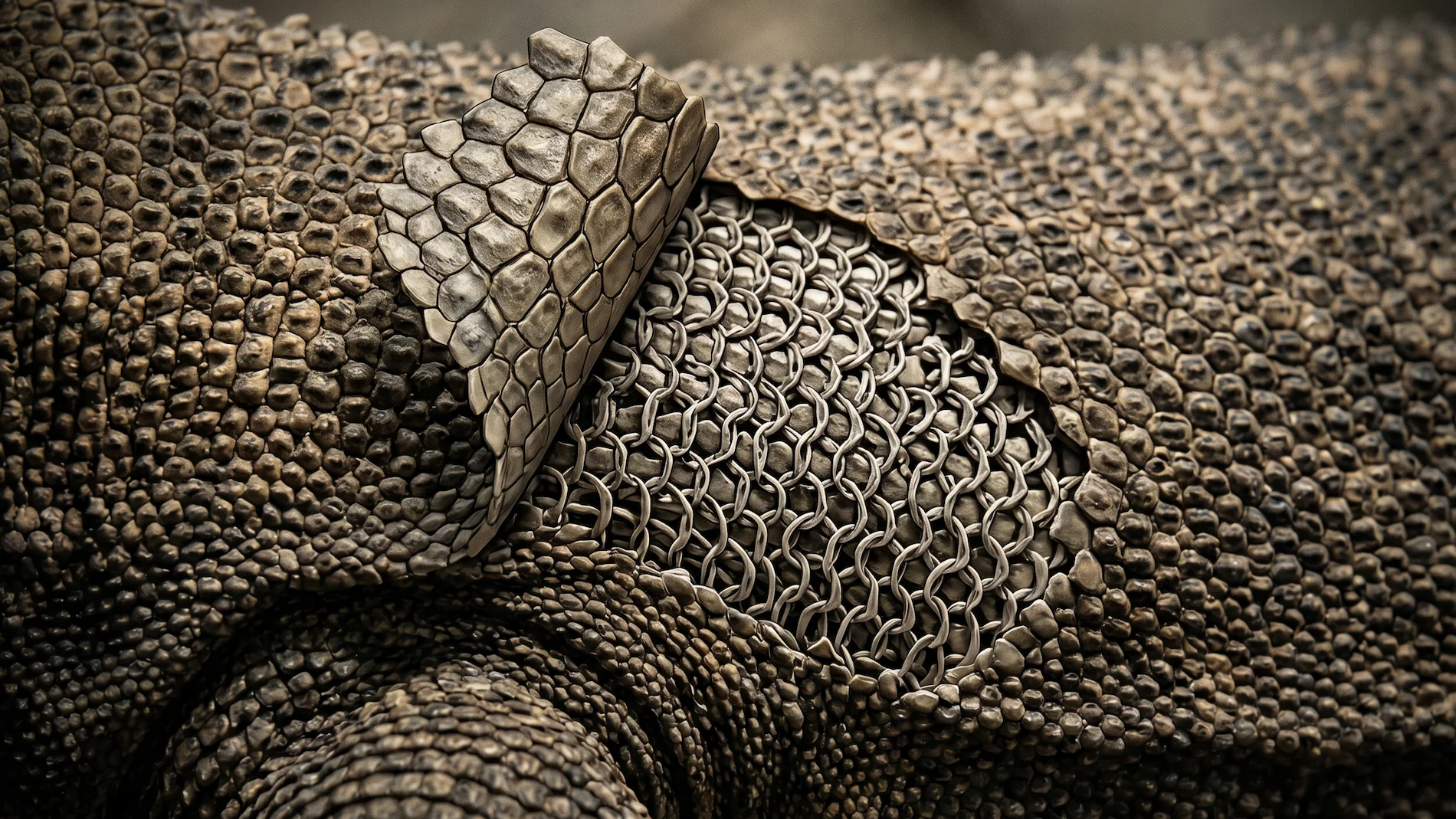
While their prehistoric appearance is visually intimidating, their thick, scaly skin actually contains a hidden, highly advanced layer of physical protection. As a Komodo dragon matures, tiny deposits of calcium develop directly underneath their tough outer scales, forming thousands of small, interlocking bony plates known as osteoderms. This rigid subcutaneous structure essentially functions exactly like a suit of medieval chainmail armor covering their entire body. This incredibly durable natural armor protects them from the razor-sharp claws and teeth of other rival dragons during violent mating disputes.
9. They Track Prey Using a Forked Tongue
Like many predatory reptiles, Komodo dragons do not rely on their nostrils to smell their surrounding environment. Instead, they constantly flick their long, yellow, forked tongues into the air to capture microscopic scent particles drifting on the wind. They pull the tongue back into their mouths and press it against the Jacobson’s organ located on the roof of their palate, which instantly analyzes the chemical signature. This highly sophisticated sensory equipment is so sensitive that a dragon can easily detect the smell of a rotting carcass from several miles away.
10. They Are Known to Rob Shallow Human Graves
The Komodo dragon’s incredible sense of smell and highly opportunistic scavenging habits have historically caused massive, gruesome problems for local island residents. Because dragons view any decomposing meat as a free, easy meal, they have been documented digging up shallow human graves to consume the recently deceased. To protect their loved ones from becoming a late-night snack for the massive reptiles, indigenous villagers learned to dig significantly deeper burial plots. They also adopted the permanent practice of piling heavy stones directly on top of the graves to block the digging dragons.
11. Their Bite Force is Surprisingly Weak
Given their massive size and deadly reputation, most people naturally assume that a Komodo dragon clamps down on its prey with the bone-crushing power of an alligator. Surprisingly, biomechanical studies reveal that their actual bite force is relatively weak compared to other large terrestrial predators. Instead of crushing, their skulls are engineered like a lightweight space frame, designed specifically to withstand immense pulling forces. The dragon bites down, locks its serrated teeth into the flesh, and uses its incredibly powerful neck and leg muscles to violently rip the meat backward.
12. They Possess a Hidden Third Eye
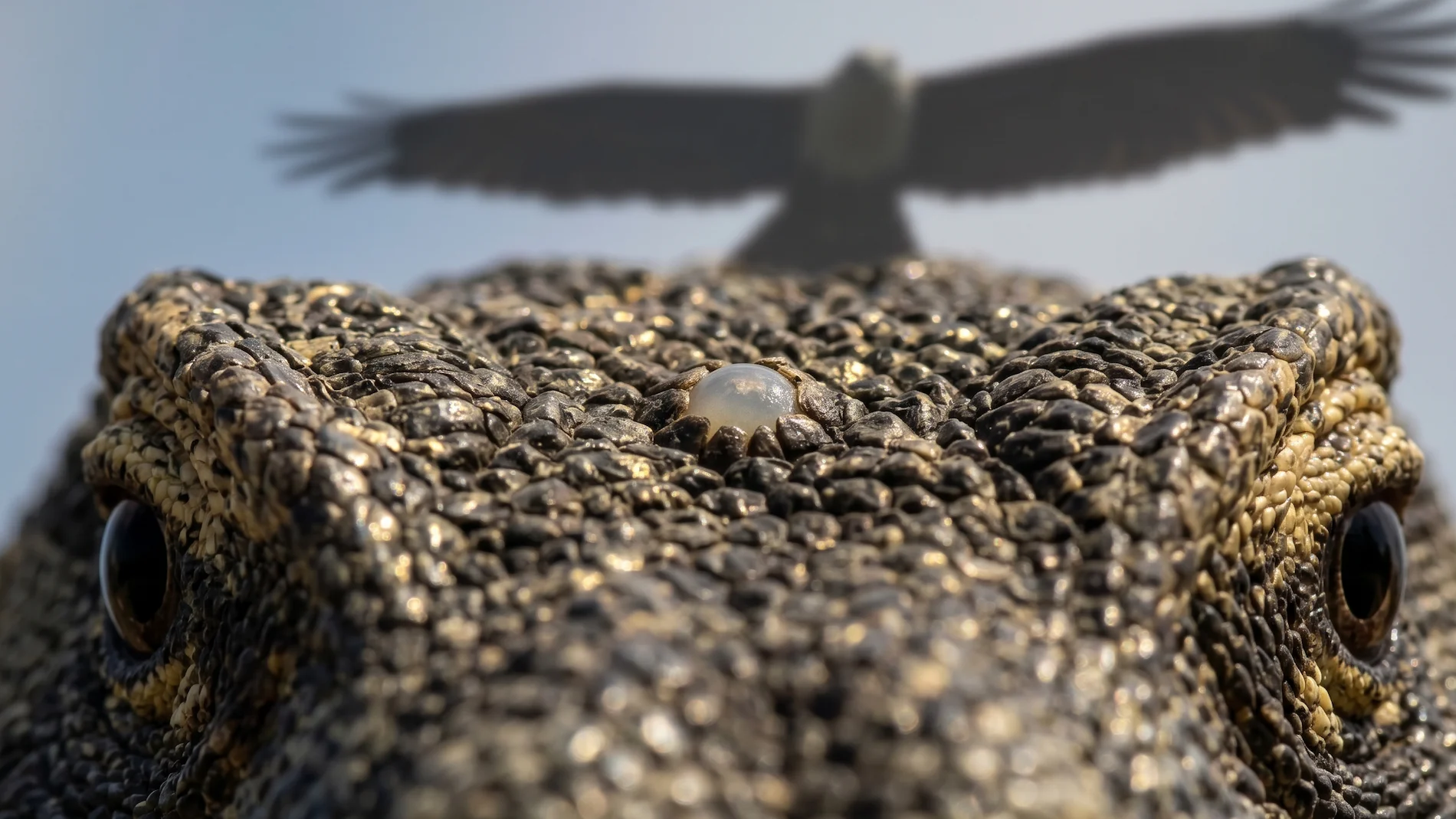
Looking closely at the very top of a Komodo dragon’s head reveals a small, strange pale spot located directly between its standard eyes. This peculiar mark is actually a highly specialized sensory organ known as a parietal eye, which connects directly to the brain. While it cannot form sharp, high-resolution images like a normal eye, it is extremely sensitive to changes in light and shadow. Scientists believe this hidden third eye helps the reptile regulate its biological circadian rhythm and easily spot the dark shadows of predatory birds flying overhead.
13. Their Ancestors Evolved in Australia
While they are exclusively found on a tiny cluster of Indonesian islands today, the evolutionary origin of the Komodo dragon actually begins on an entirely different continent. Modern genetic analysis and fossil records reveal that their giant monitor lizard ancestors initially evolved in Australia roughly forty million years ago. During an era when global sea levels were significantly lower, these massive reptiles managed to migrate across a series of temporary land bridges to reach the Indonesian archipelago. They eventually became entirely isolated on their current islands when the rising oceans permanently swallowed the connecting paths.
14. They Are Surprisingly Capable Endurance Swimmers
Despite their heavy, cumbersome bodies and rugged desert habitats, Komodo dragons are incredibly strong and fully capable aquatic navigators. They frequently plunge into the surrounding ocean currents to hunt for fish or cool down their massive bodies during the hottest hours of the day. More impressively, their powerful, muscular tails allow them to swim seamlessly between neighboring islands, covering distances of up to five hundred meters in open water. This vital swimming ability ensures they can actively seek out new mating partners and prevent their isolated island populations from becoming genetically stagnant.
15. Western Science Did Not Discover Them Until 1910
For centuries, European sailors returning from the East Indies shared terrifying, highly exaggerated rumors of massive land crocodiles roaming the remote islands. It was not until 1910 that a Dutch colonial lieutenant named Steyn van Hensbroek finally investigated the local legends and managed to capture a live specimen. He sent a photograph and the skin to a zoological museum in Java, officially proving to the skeptical scientific community that the mythical creatures were absolutely real. Just two years later, the massive lizard was formally described in academic literature and universally christened the Komodo dragon.
Sources and References