1. The Second Tallest Bird on the Planet
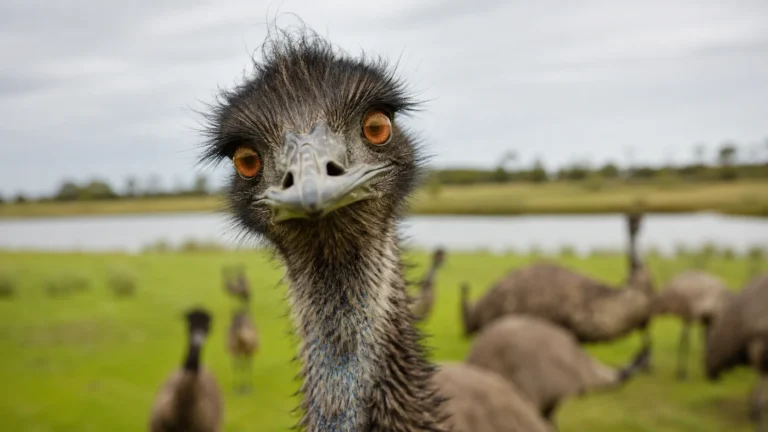
While they are frequently overshadowed by their African cousins, the ostrich, emus hold the absolute, undisputed title of the second tallest bird species in the world. A fully grown adult female can easily reach towering heights of over six feet and weigh up to one hundred and thirty pounds. Their massive, heavy bodies are completely grounded, as their tiny, highly vestigial wings are entirely useless for taking flight.
2. The Great Emu War of 1932
The emu is globally infamous for participating in, and ultimately winning, a literal war against the Australian military. In 1932, a massive population of twenty thousand migrating emus completely devastated the wheat crops of Western Australian farmers. The desperate government deployed royal artillery soldiers armed with heavy Lewis machine guns to eradicate the birds. The emus proved incredibly resilient, scattering rapidly in chaotic formations and easily outrunning the soldiers, ultimately forcing the deeply embarrassed military to completely completely surrender and withdraw.
3. They Physically Cannot Walk Backwards
A highly popular, widely circulated piece of trivia regarding the emu is entirely biologically true. Due to the highly specialized, complex structure of their knee and ankle joints, an emu physically cannot walk backward. This unique anatomical limitation is the exact reason the emu was chosen to stand alongside the kangaroo on the official Australian coat of arms, acting as a massive, symbolic representation of a nation completely dedicated to constantly moving forward.
4. Males Are Devoted Single Fathers
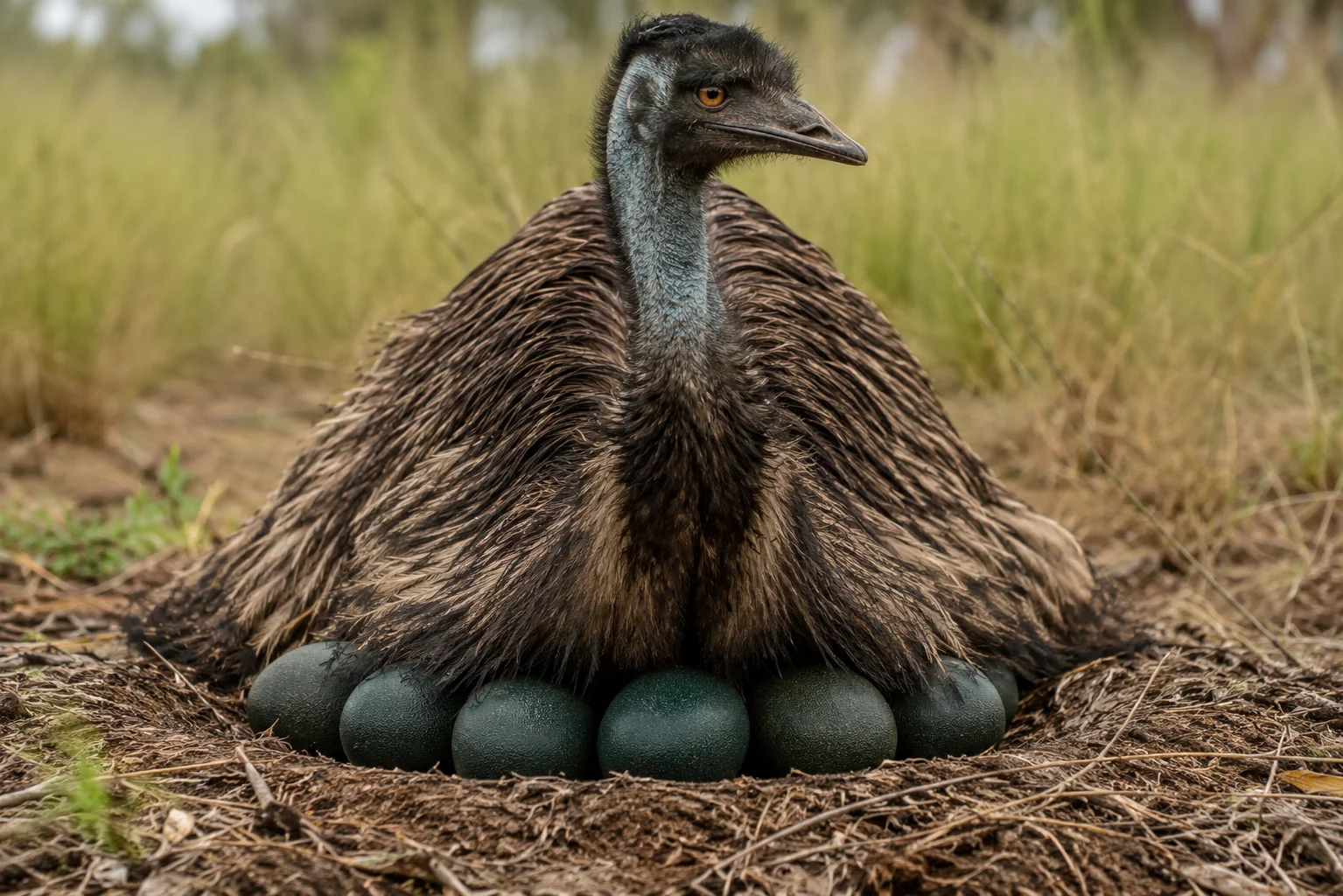
Much like their jungle-dwelling cassowary relatives, emus practice a highly unusual method of parenting where the male handles all of the incubation duties. After the nomadic female lays a clutch of eggs, she completely abandons the nest. The male then sits on the eggs for an astonishing fifty-six straight days. During this entire two-month period, he does not eat, drink, or leave the nest to defecate, frequently losing a massive third of his entire body weight to ensure his chicks hatch safely.
5. They Lay Giant Emerald Eggs
When an emu reproduces, it lays some of the most visually spectacular eggs in the animal kingdom. A single emu egg is absolutely massive, weighing roughly the same as twelve standard chicken eggs combined. What makes them truly breathtaking is their color. They are a deep, highly vibrant shade of dark emerald green that looks remarkably similar to the skin of a massive avocado, which acts as brilliant natural camouflage in the tall savanna grass.
6. Feathers With a Double Shaft
If you gently touch the plumage of an emu, it feels completely different from a normal bird. This is due to a highly unique biological adaptation. Instead of a single feather growing out of a follicle, an emu produces two completely separate feathers from a single, shared shaft. Furthermore, these feathers completely lack the tiny interlocking hooks that give flying birds their sleek appearance, resulting in a highly shaggy, hair-like coat that perfectly insulates them from the blistering desert sun.
7. Deep Booming Throat Pouches
Emus possess an incredibly bizarre acoustic ability that sounds completely completely alien. Below their windpipe, they have a highly specialized, inflatable cervical sac. When they close their beaks and force air into this massive throat pouch, they can produce a deep, rhythmic, pulsing boom that sounds exactly like a muffled bass drum. The frequency of this drumming is so incredibly low that it can easily be heard by other emus over a mile away across the open plains.
8. Uniquely Built Calf Muscles
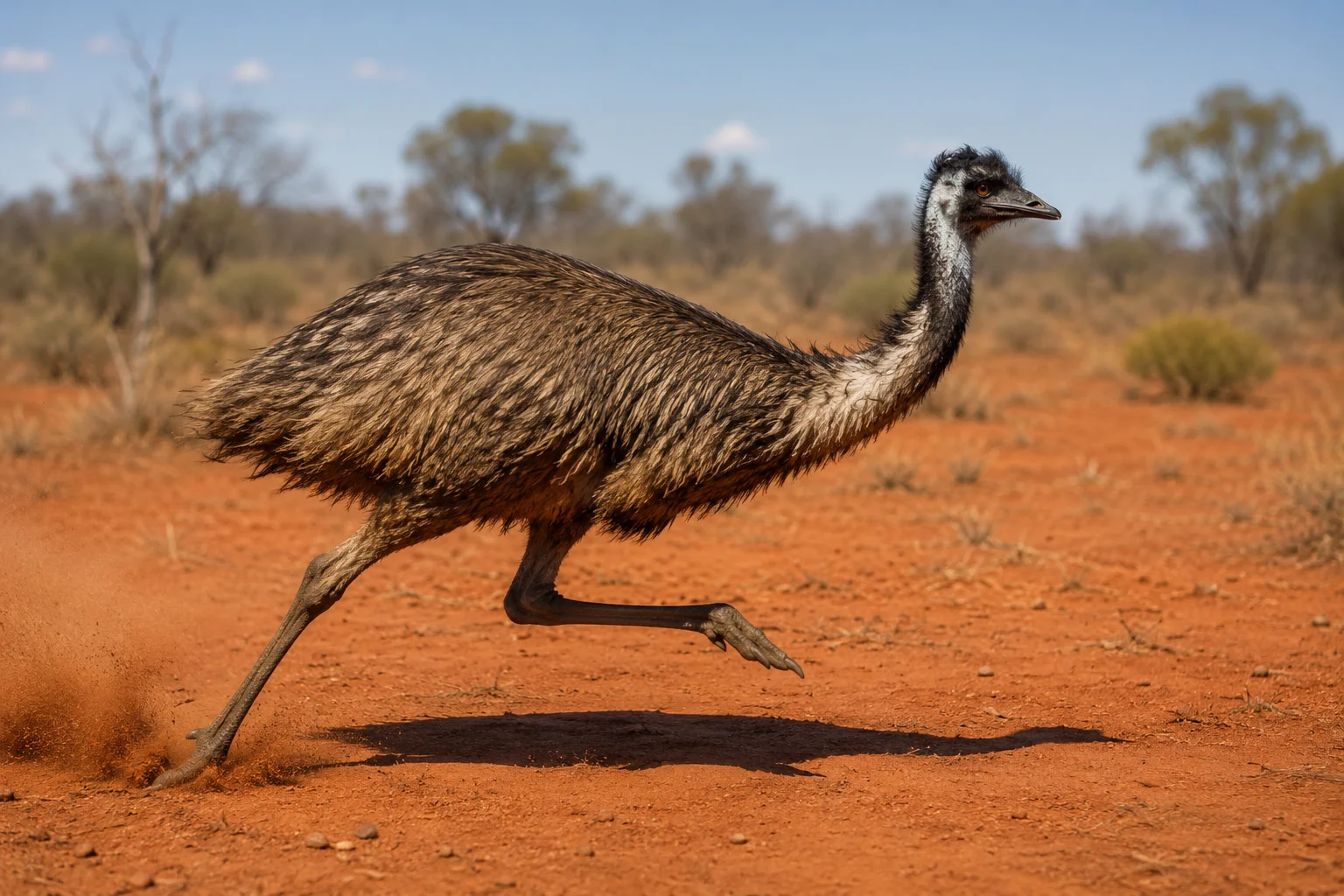
To survive the massive, open expanses of the Australian Outback, an emu must be able to outrun deadly predators and sudden bushfires. They are the only bird species on the planet to possess a highly specialized gastrocnemius muscle located in the back of their lower leg, functionally identical to a human calf muscle. This massive, densely packed muscle allows a frightened emu to explode into a blistering sprint, easily reaching top speeds of over thirty miles per hour.
9. Built-In Desert Goggles
Living in a deeply arid, heavily wind-swept environment means emus are constantly exposed to blinding dust storms and flying debris. To protect their incredibly large, highly observant eyes, they are equipped with a nictitating membrane. This is essentially a completely transparent, secondary eyelid that laterally wipes across their eyeball. This biological windshield wiper allows the emu to completely seal its eyes from blowing sand while still maintaining perfect vision.
10. They Are Surprisingly Strong Swimmers
Despite spending their entire lives walking across dry, baking deserts, emus are incredibly proficient and highly willing swimmers. When their massive nomadic migrations force them to cross wide, fast-moving rivers or flooded plains, they will not hesitate to completely submerge their heavy bodies. They use their massive, muscular legs to expertly paddle through deep water, keeping only their long necks and heads safely above the surface.
11. They Digest Food With Rocks
Because emus completely lack teeth, they cannot physically chew their highly varied diet of tough desert grasses, seeds, and insects. To successfully digest their meals, they actively consume massive amounts of small stones and heavy pebbles, biologically known as gastroliths. These stones permanently sit inside their muscular gizzard, aggressively grinding together like a biological mortar and pestle to pulverize the tough plant cellulose before it reaches their intestines.
12. Three Toes and a Lethal Kick
While an ostrich possesses only two toes on each foot, the emu is equipped with three heavily armored toes facing forward. Their legs are so overwhelmingly powerful that a single, forward-thrusting defensive kick can easily shatter the bones of a dingo or completely rip down heavy metal wire fencing. They use these massive legs and sharp claws as their primary biological weapon when cornered or actively defending their tiny chicks from feral predators.
13. Highly Nomadic Rain Chasers
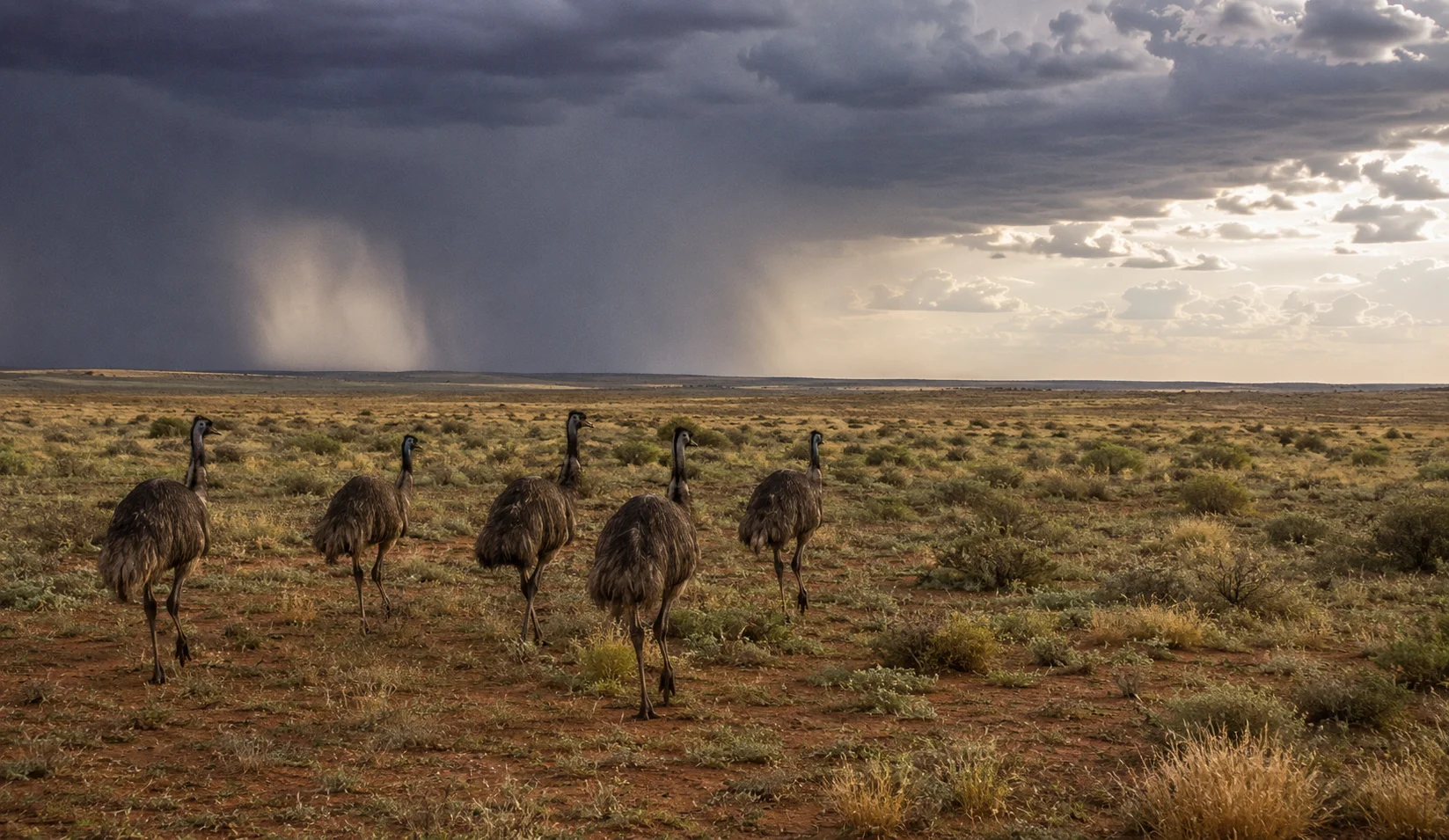
Emus are not highly territorial animals tied to a single specific location. They are highly driven, massive nomads that completely dictate their movements based on the harsh weather patterns of the Australian continent. They possess an incredibly acute, highly mysterious ability to detect heavy rainfall from hundreds of miles away, constantly traveling massive distances to intercept fresh storm clouds and graze on the highly nutritious, newly sprouted vegetation left in their wake.
14. They Sleep in Short Bursts
To survive in an environment loaded with stealthy predators, an emu cannot afford to enter a deep, highly vulnerable state of prolonged sleep. Instead of sleeping for eight solid hours, they take dozens of highly fragmented, short naps throughout the night. They will sit completely down on their ankles, tucking their heads down, but will violently wake up every few minutes to carefully scan the dark horizon for approaching threats before returning to sleep.
15. Emu Oil is an Ancient Remedy
For thousands of years, the Indigenous peoples of Australia highly revered the emu, heavily relying on it for sustenance and highly practical survival resources. One of the most historically significant products derived from the bird is its highly dense, incredibly rich subcutaneous fat. When rendered down, this fat produces emu oil, a deeply penetrating, highly moisturizing substance that Aboriginal tribes utilized for centuries to soothe aching joints and rapidly heal severe skin burns.