1. The Heavyweights of the Rodent World
If you think beavers are large, wait until you encounter a fully grown capybara. They are officially the absolute largest living rodents on the planet. A healthy adult can measure over four feet in length, stand two feet tall at the shoulder, and weigh an astonishing one hundred and seventy-five pounds. They are essentially the size of a large dog or a small wolf, completely dwarfing their closest living biological relatives, the domestic guinea pigs.
2. The Pope Officially Classified Them as Fish
During the eighteenth century, Spanish missionaries living in Venezuela and Colombia encountered a massive culinary problem during the holy season of Lent, when Catholics are strictly forbidden from eating meat. Because the capybara spends so much of its life swimming in the water and possesses webbed feet, local clergymen wrote to the Vatican requesting a special dietary exemption. The Pope officially agreed, completely sidestepping biology to declare the capybara a fish, allowing it to be widely eaten during Lent.
3. They Eat Their Own Feces for Breakfast
While they look incredibly cute, their morning routine is completely revolting to humans. Capybaras are autocoprophagous, meaning they actively and intentionally eat their own feces. Because their diet consists almost entirely of tough, highly fibrous grasses, their digestive tracts struggle to completely break down the plant cellulose on the first pass. By eating their morning droppings, which are packed with highly concentrated, nutrient-rich microbes, they effectively digest their food twice to extract the maximum amount of vitamins and protein.
4. They Are Known as “Nature’s Ottoman”
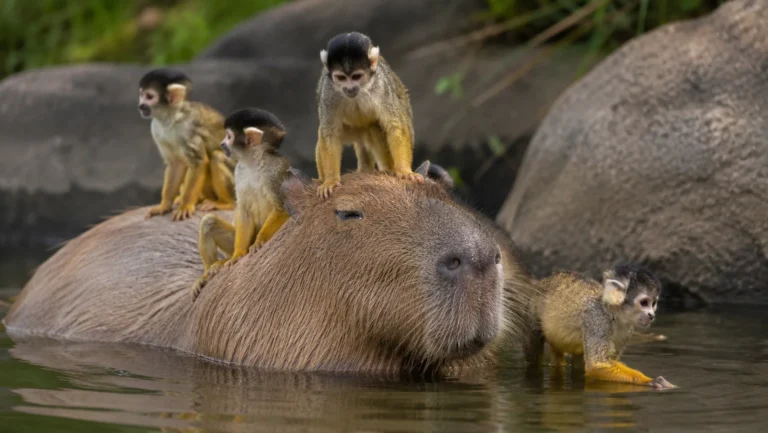
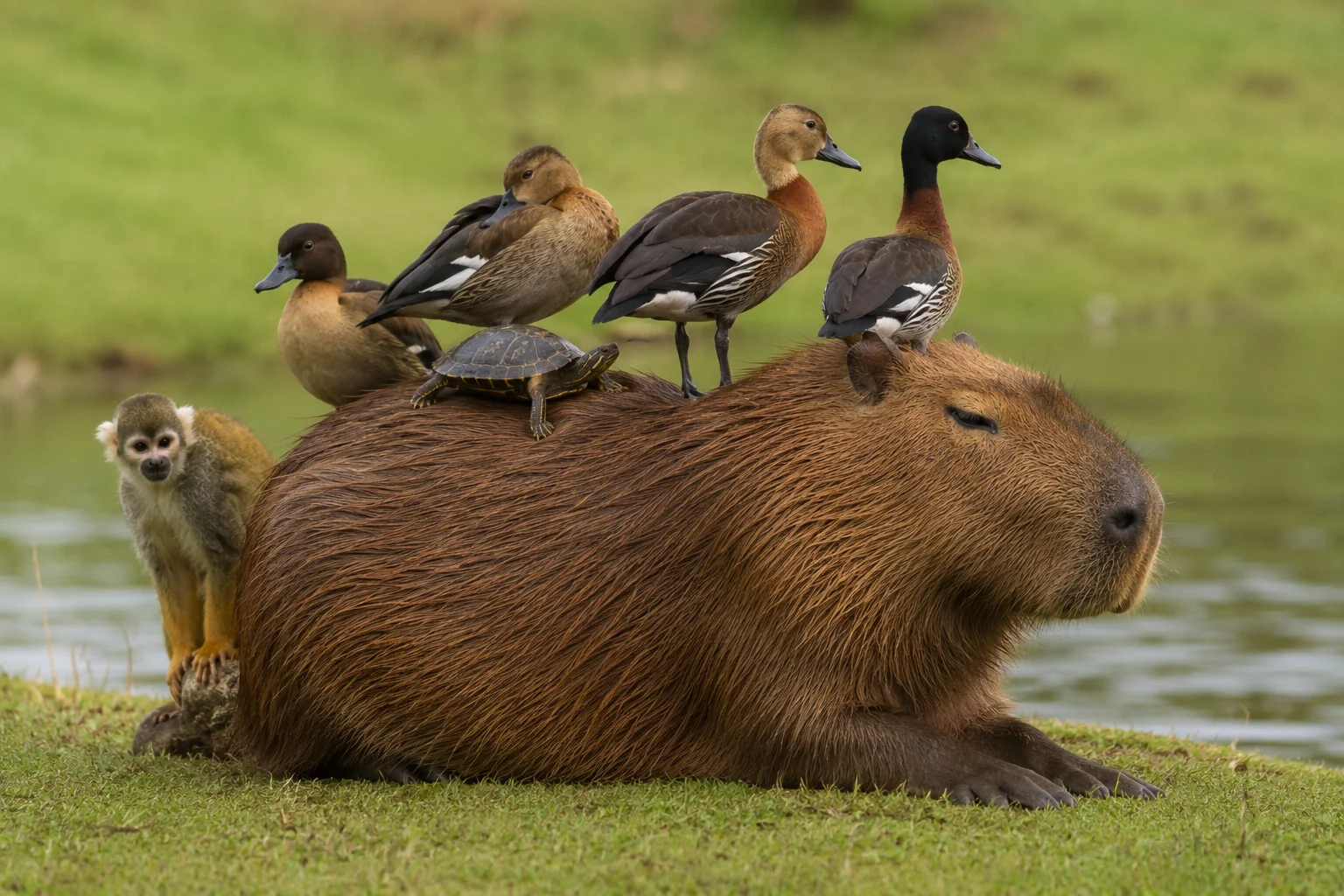
Capybaras are highly social, deeply relaxed animals that live in massive herds of up to one hundred individuals. Their incredibly calm, passive temperament extends far beyond their own species, earning them the hilarious internet nickname “nature’s ottoman.” In the wild, it is incredibly common to see a variety of other animals—including ducks, monkeys, and even small turtles—casually sitting, standing, or resting directly on top of a capybara’s back. The giant rodents simply do not care and happily provide free transportation.
5. Built-In Biological Snorkels
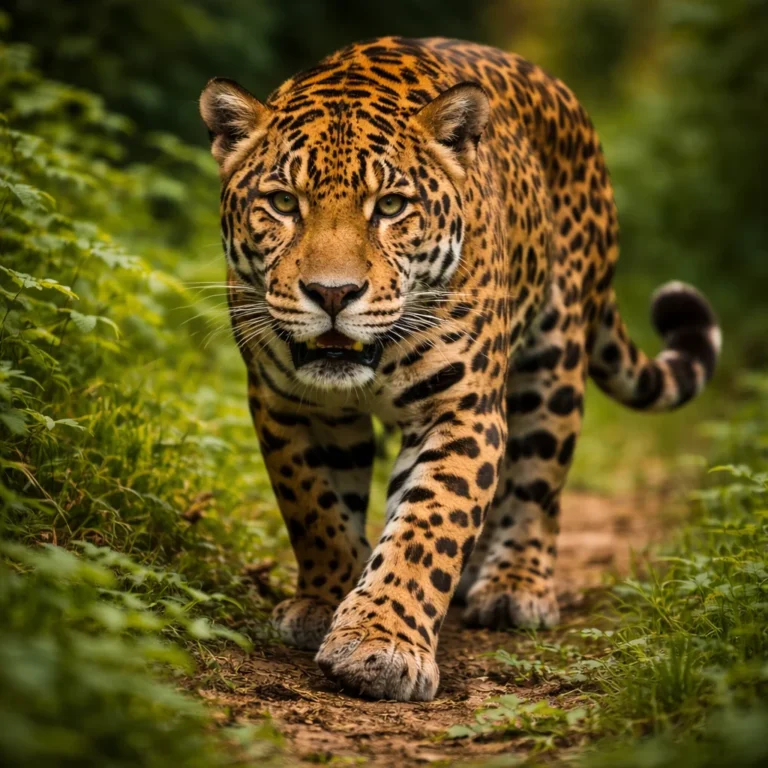
Because they spend the vast majority of their lives in the water hiding from massive terrestrial predators like jaguars and pumas, their facial anatomy is perfectly evolved for stealth. A capybara’s eyes, ears, and nostrils are perfectly aligned at the very top of its massive, wedge-shaped head. This brilliant biological adaptation allows them to submerge their entire bulky body safely underwater while keeping only their sensory organs completely exposed to breathe, look around, and listen for approaching danger.
6. They Can Sleep Entirely Underwater
Capybaras love the water so much that they do not even leave the river when it is time to take a nap. During the blistering heat of the South American afternoon, they will frequently fall completely asleep while almost entirely submerged in muddy shallows. Thanks to their specialized facial anatomy, they simply rest their chins near the surface, allowing their noses to remain barely above the waterline. They can comfortably snooze in the river for hours while remaining practically invisible to predators.
7. Their Teeth Never Stop Growing
Like all rodents, a capybara’s massive, chisel-like front incisors never actually stop growing throughout their entire lifetime. Because they can eat up to eight pounds of tough, abrasive grass every single day, their teeth would normally wear down to the gums. The continuous growth completely offsets this heavy dental wear. Furthermore, their jaw hinge is not perfectly perpendicular, meaning they cannot chew their food by grinding side-to-side like a cow; they must meticulously chew by grinding their jaws strictly back-and-forth.
8. Males Possess a Giant Snout Gland
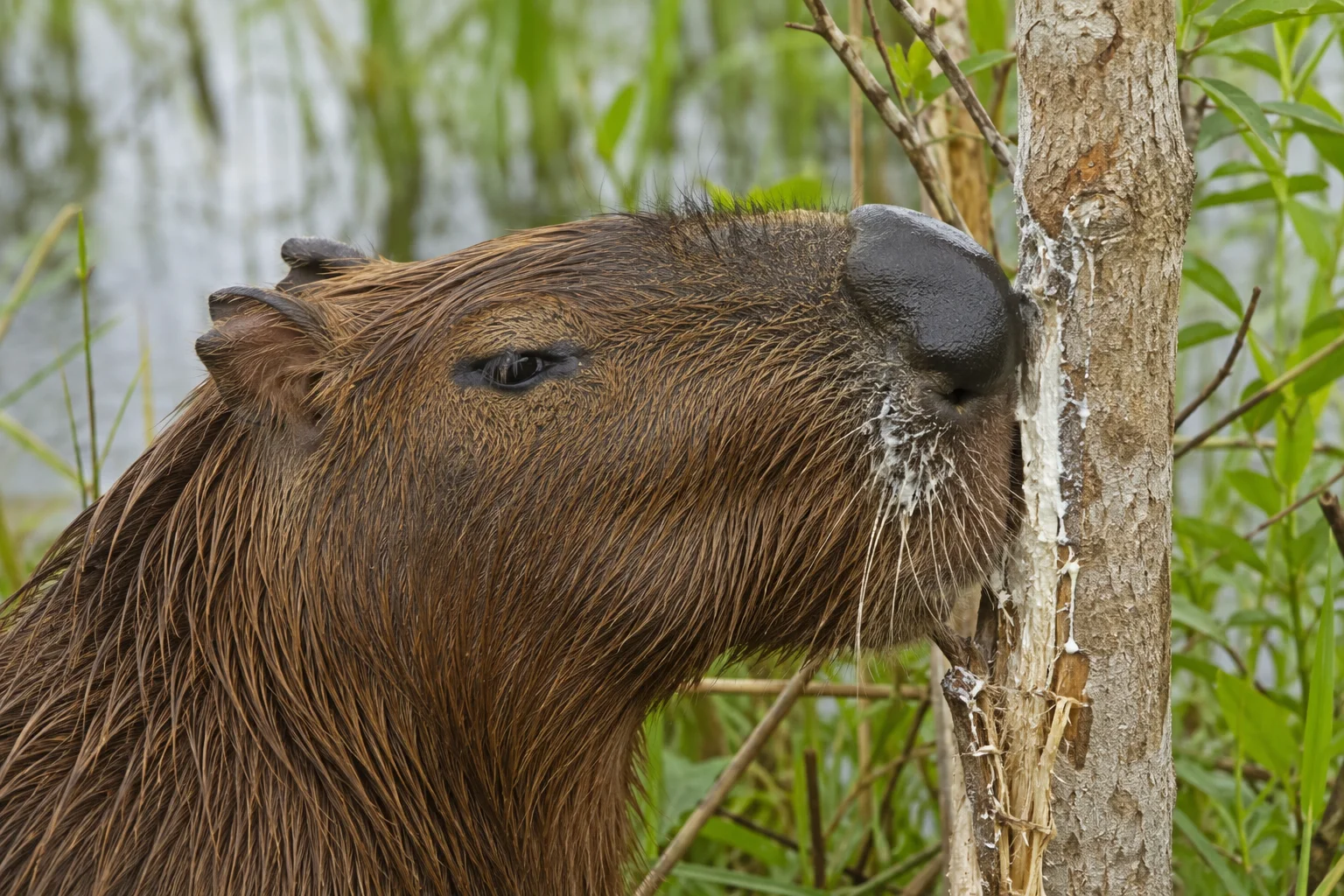
If you look closely at the face of a dominant male capybara, you will immediately notice a massive, dark, hairless bump resting directly on top of his snout. This specialized anatomical feature is a massive sebaceous scent gland known as a morrillo. The male uses this highly active gland to secrete a thick, sticky white fluid that smells strongly of pine. He will aggressively rub his morrillo all over surrounding bushes, tall grass, and trees to boldly mark his territory and attract nearby females.
9. They Are One of the Few Rodents That Sweat
Most standard rodents, like mice and rats, completely lack sweat glands and must rely entirely on panting or hiding in the shade to regulate their body temperature. The capybara is a bizarre biological exception to this rule. They actually possess highly active sweat glands distributed directly throughout the surface of their coarse, hairy skin. While wallowing in the water is their primary method for staying cool, this rare mammalian trait provides an extra layer of vital thermal regulation in the sweltering Amazonian heat.
10. They Bark, Purr, and Whistle
Despite maintaining a famously stoic, completely unreadable facial expression, capybaras are highly communicative and incredibly noisy animals. They possess a massive, complex vocabulary used to constantly coordinate with their large herds. When they are happy or being groomed, they emit a deep, rumbling purr. When a young pup is lost, it will whistle and squeal. Most surprisingly, when an adult capybara spots a stalking jaguar or an approaching anaconda, it will unleash a series of loud, sharp barks that sound exactly like a large domestic dog.
11. They Will Only Mate in the Water
The capybara’s absolute reliance on aquatic environments heavily dictates its entire reproductive cycle. They are completely incapable of mating on dry land and will exclusively breed in shallow water. This aquatic requirement actually provides the female capybaras with a massive amount of physical agency and control over the mating process. If a subordinate male attempts to court a female and she is not interested, she will simply dive underwater or aggressively swim away to easily end the interaction.
12. They Can Sprint Surprisingly Fast
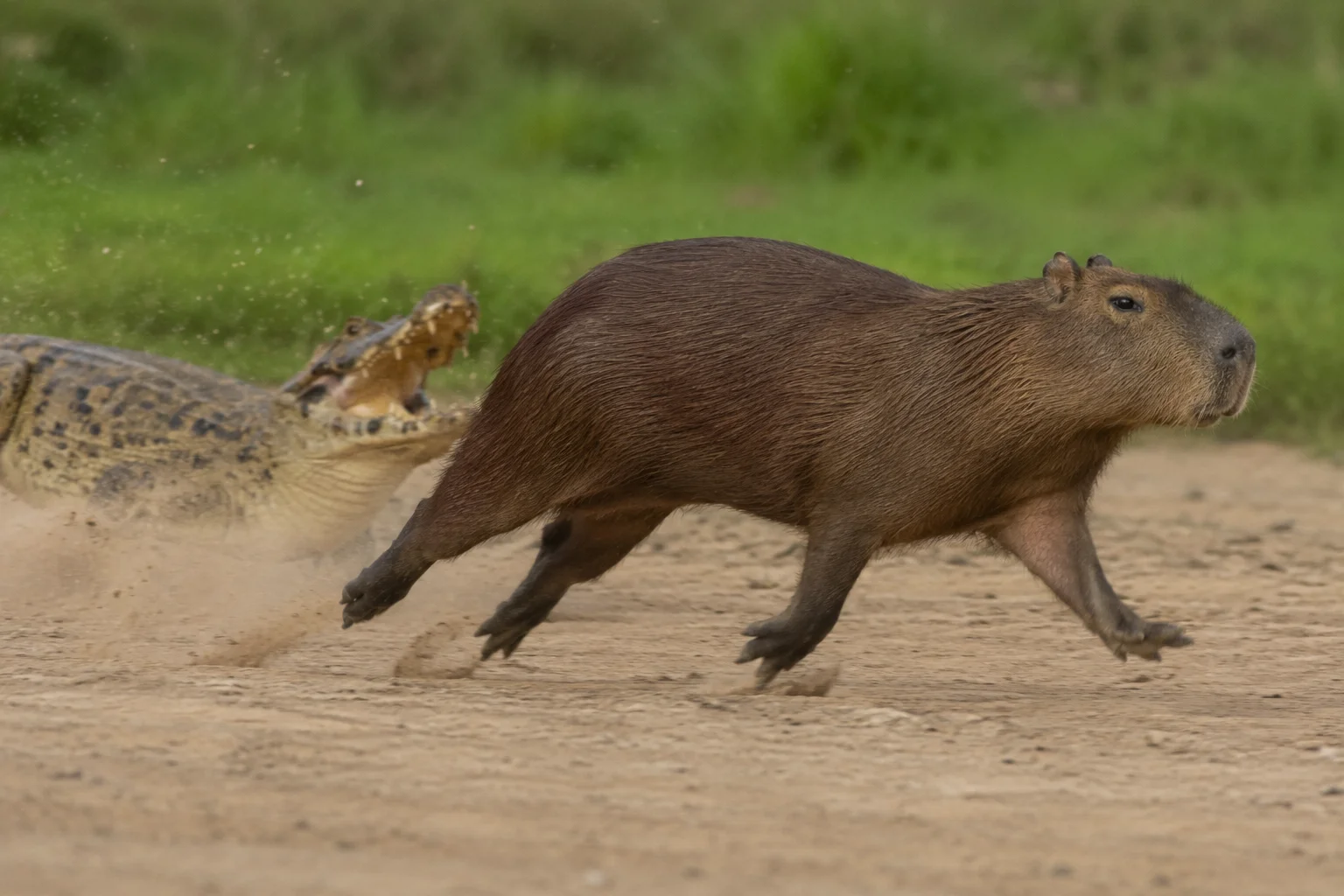
Looking at their heavy, barrel-shaped bodies and incredibly short, stubby legs, it is easy to assume that a capybara is highly sluggish and clumsy on dry land. This is a frequently fatal misconception for inexperienced predators. When terrified and forced to flee across an open savanna, a fully grown capybara can break into a remarkably fast gallop, easily reaching top sprinting speeds of up to twenty-two miles per hour (35 km/h).
13. They Have Partially Webbed Toes
To effortlessly navigate their swampy, riverine habitats, capybaras come fully equipped with built-in aquatic footwear. While they do not have massive flippers like a seal, the skin between their heavy toes is partially webbed. They feature four toes on their front feet and only three toes on their hind feet. This fleshy webbing acts like a set of biological paddles, allowing them to swim with incredible speed and providing vital traction so they do not sink deeply into the thick, muddy riverbanks.
14. Highly Selective Grassy Diets
Despite living in lush, incredibly dense tropical rainforests overflowing with thousands of different edible plants, capybaras are actually highly picky eaters. They are incredibly selective grazers, aggressively ignoring the vast majority of the foliage surrounding them. Biological studies have revealed that a staggering eighty percent of their daily diet consists of only five highly specific species of local grasses. They will completely strip the leaves off their favorite plants while leaving the neighboring weeds completely untouched.
15. They Hold Their Breath for Five Minutes
When a capybara’s impressive sprinting speed is not enough to escape a hungry predator on land, its ultimate defense mechanism is simply vanishing beneath the waves. A terrified capybara will launch itself into the nearest deep river and dive straight to the bottom. They possess an incredibly efficient respiratory system that allows them to comfortably hold their breath underwater for up to five solid minutes, allowing them to easily outwait a stalking puma or silently swim massive distances to emerge safely on the opposite riverbank.
Sources and References