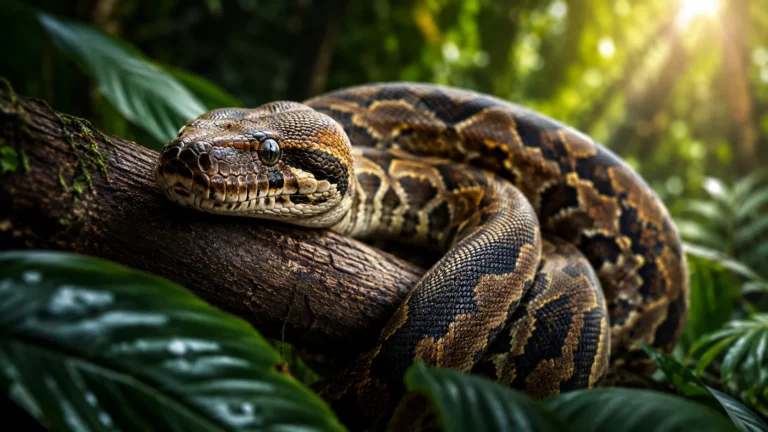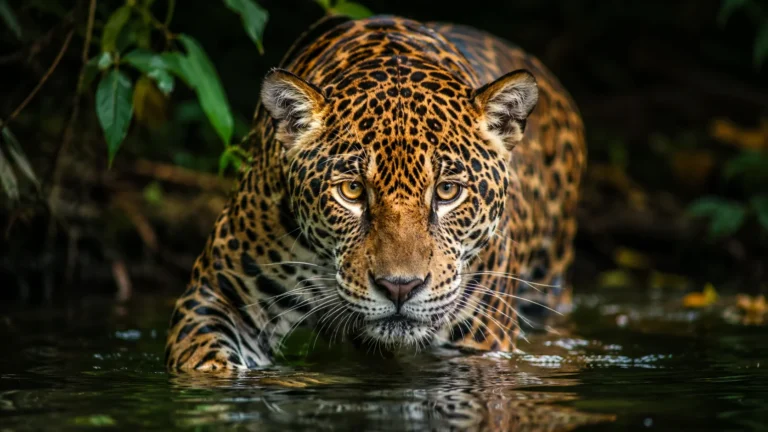
1. The Meaning Behind the Name
The word “jaguar” is derived from the Indigenous Tupi-Guarani word “yaguar.” This translates to a chillingly accurate description: “he who kills with one leap.” It perfectly captures the animal’s hunting style, relying on ambush, raw power, and an explosive surprise attack to take down its prey.
2. A Bite That Crushes Skulls
Pound for pound, jaguars have the strongest bite force of any big cat in the world. While lions and tigers typically kill their prey by going for the throat to suffocate them, the jaguar possesses jaws so incredibly powerful that it simply bites straight through the skull or the armored shells of turtles to deliver a fatal strike to the brain.
3. They Are Exceptional Swimmers
Unlike your average house cat or even most of their wild cousins, jaguars absolutely love the water. They are incredibly strong swimmers and frequently hunt in rivers and wetlands. They are perfectly adapted to semi-aquatic environments and will happily dive in to catch fish, turtles, and even massive caimans.
4. Black Panthers Are Actually Jaguars
There is no separate species of big cat known scientifically as a “black panther.” In the Americas, panthers are actually jaguars born with a genetic condition called melanism, which produces an excess of dark pigment. If you look closely at a black jaguar in the sunlight, you can still clearly see their distinct spotted patterns hiding beneath the dark fur.
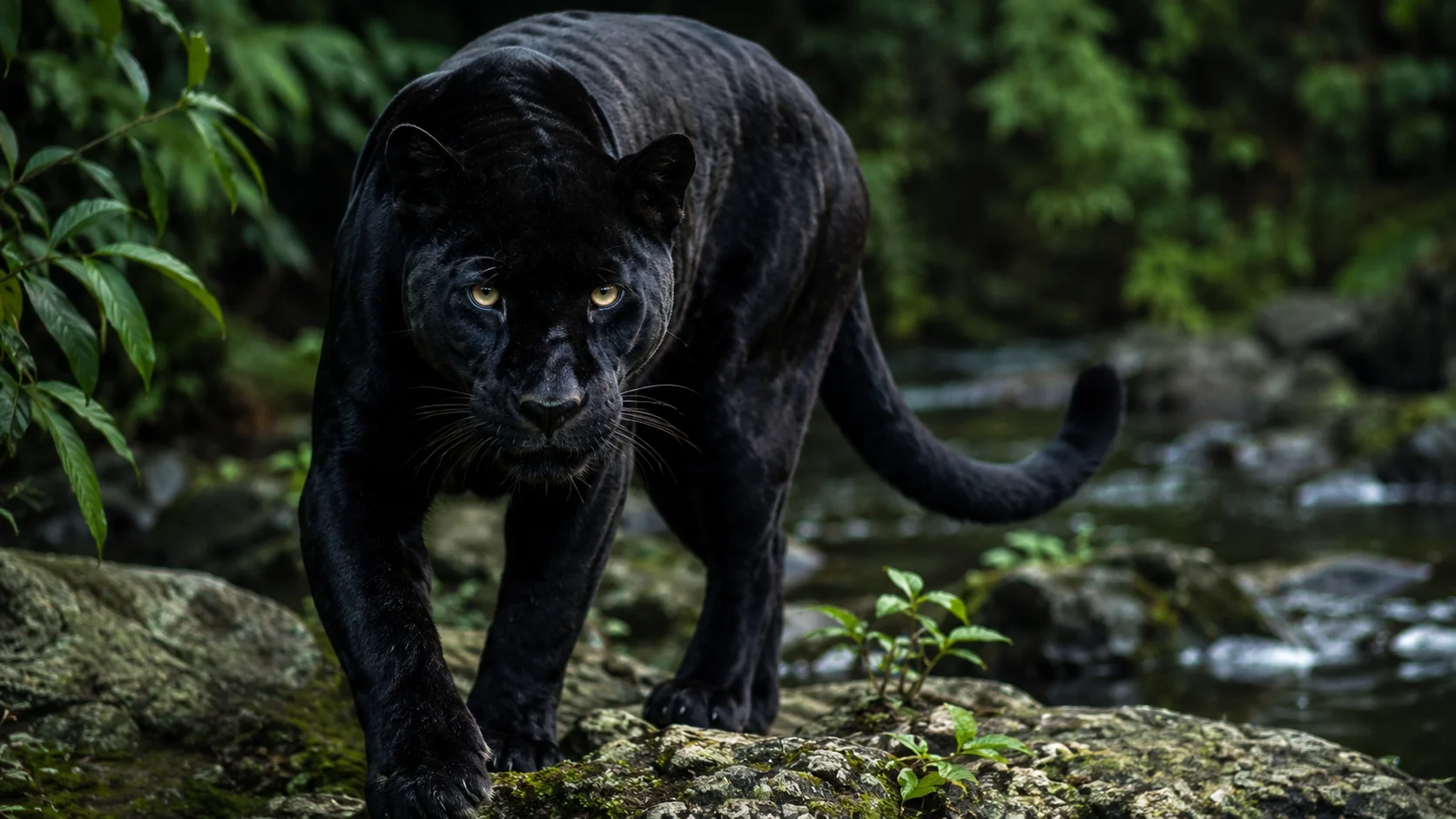
5. Spots Within Spots
It can be easy to confuse jaguars with leopards since both are large cats with spotted coats. However, you can tell them apart by looking closely at their rosettes (the rose-like markings). A jaguar’s rosettes are larger and feature small, distinct black dots right in the center of the rings, something leopards do not have.
6. A Diet of Over 80 Species
Jaguars are not picky eaters. As apex predators at the absolute top of their food chain, their diet is incredibly diverse, encompassing over 80 different species of animals. They will hunt everything from deer, capybaras, and tapirs to monkeys, birds, frogs, and massive anacondas.
7. They Sound Like Sawing Wood
While lions are famous for their deep, echoing roars, the vocalizations of a jaguar sound entirely different. When they call out to communicate or claim territory, they produce a series of harsh, grunting noises that are commonly described as sounding exactly like someone cutting wood with a handsaw.
8. Worshipped by Ancient Empires
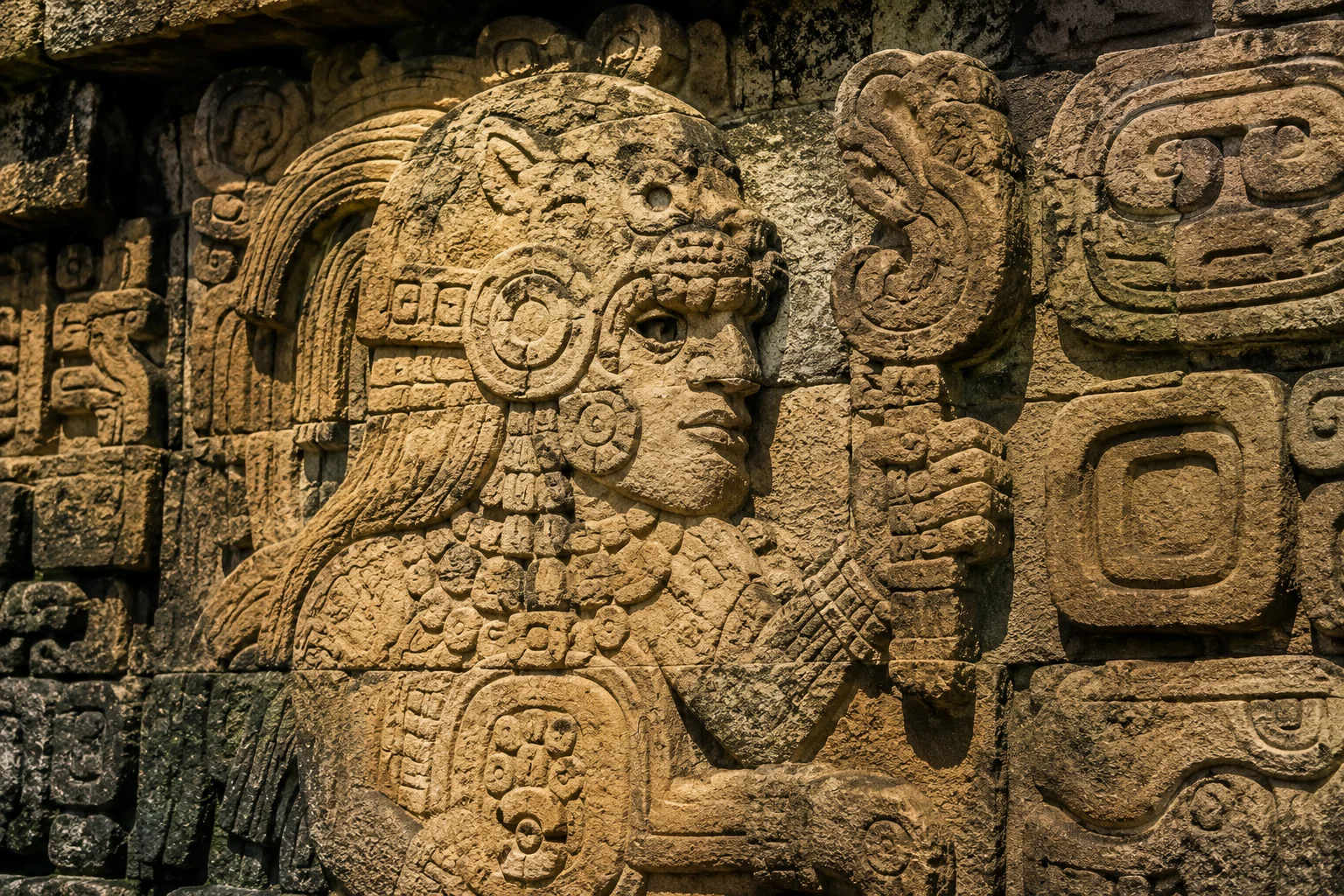
Throughout history, the jaguar held a profound spiritual significance for Indigenous cultures in the Americas. The Mayans, Aztecs, and Incas all worshipped the jaguar as a symbol of military power, royalty, and the underworld, frequently incorporating the animal’s likeness into their temples, art, and warriors’ armor.
9. A Highly Solitary Life
Except for a mother raising her cubs or a brief period of mating, jaguars are fiercely solitary creatures. They define and aggressively defend massive territories, marking their boundaries with scent, deep claw marks on trees, and vocalizations to ensure other jaguars know to stay far away.
10. Built for Power, Not Speed
Unlike the cheetah, which is built for high-speed chases across open plains, the jaguar is built like a heavily muscled wrestler. They have broad heads, compact bodies, and shorter, incredibly thick legs designed to navigate dense rainforest underbrush, climb trees with heavy prey in their jaws, and grapple in the water.
11. Excellent Night Vision
Like many felines, jaguars are primarily crepuscular and nocturnal, meaning they are most active during the twilight hours and at night. Their eyes are equipped with a specialized reflective layer called the tapetum lucidum, which bounces light back through the retina and allows them to see with incredible clarity in near-total darkness.
12. A Surprising Stalking Tactic
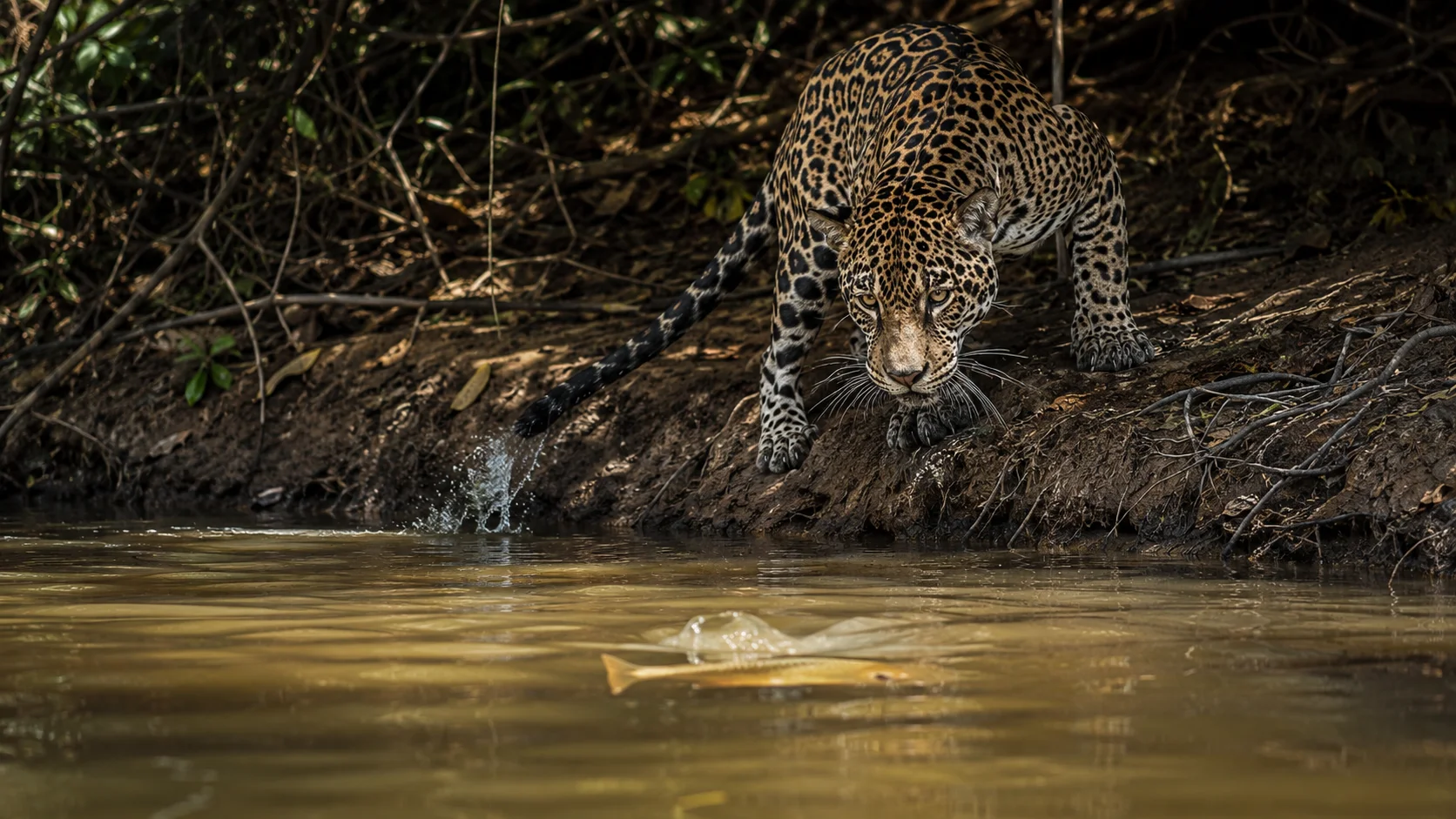
When hunting fish, jaguars use a remarkably clever tactic. They will occasionally tap the surface of the water with their tails to mimic the movement of dropping fruit or struggling insects. This lures curious fish right to the surface, allowing the cat to quickly snatch a meal from the riverbank.
13. Born Completely Blind
When female jaguars give birth, the litters typically consist of two to four cubs. These cubs are born completely blind, deaf, and helpless, relying entirely on their mother for survival. They do not open their eyes until they are about two weeks old and will stay with their mother for up to two years to learn how to hunt.
14. They Still Roam the United States
While their primary stronghold is the dense Amazon basin in South America, the jaguar’s historical range once extended far up into the southwestern United States. Today, incredibly rare but verified sightings of lone male jaguars occasionally still occur in the rugged mountainous regions of southern Arizona and New Mexico.
15. A Crucial Keystone Species
Jaguars are considered a “keystone species,” meaning their presence is absolutely vital to the health of their ecosystem. By keeping the populations of other grazing animals in check, they prevent the overconsumption of vegetation, ensuring the entire rainforest environment remains balanced and healthy.