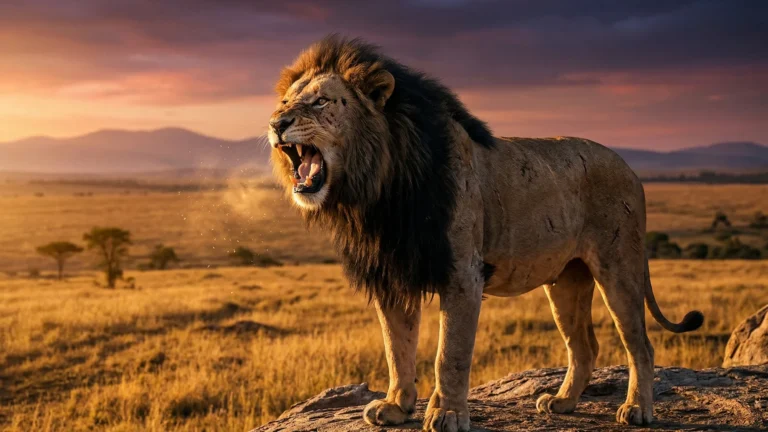
The legendary title of the king of the jungle is based on a complete geographical falsehood. In reality, lions physically cannot hunt effectively in dense, overgrown tropical rainforests, choosing instead to exclusively inhabit vast savannas, scrublands, and open plains where their tawny coats provide perfect visual camouflage against the dry brush.
The social structure of a pride operates with the ruthless efficiency of an organized mafia syndicate. Female lionesses form the permanent core of the group, performing over ninety percent of the exhausting hunting and child-rearing duties, while the dominant males simply patrol the territorial borders, fight off rival coalitions, and invariably demand to eat the freshly caught prey first.
The transition of power within a pride involves a staggering display of biological brutality. When a new coalition of males successfully overthrows the resident rulers, their very first act is systematic infanticide, killing all existing cubs in the pride to instantly force the females back into estrus and ensure that only their own genetic lineage survives.
Their fearsome reputation masks a lifestyle defined by extreme energy conservation. Because hunting massive prey in the blistering African heat burns an astronomical amount of calories, lions have evolved to be incredibly lethargic, routinely resting or sleeping in the shade for up to twenty hours a single day just to preserve their metabolic reserves for short, explosive sprints.
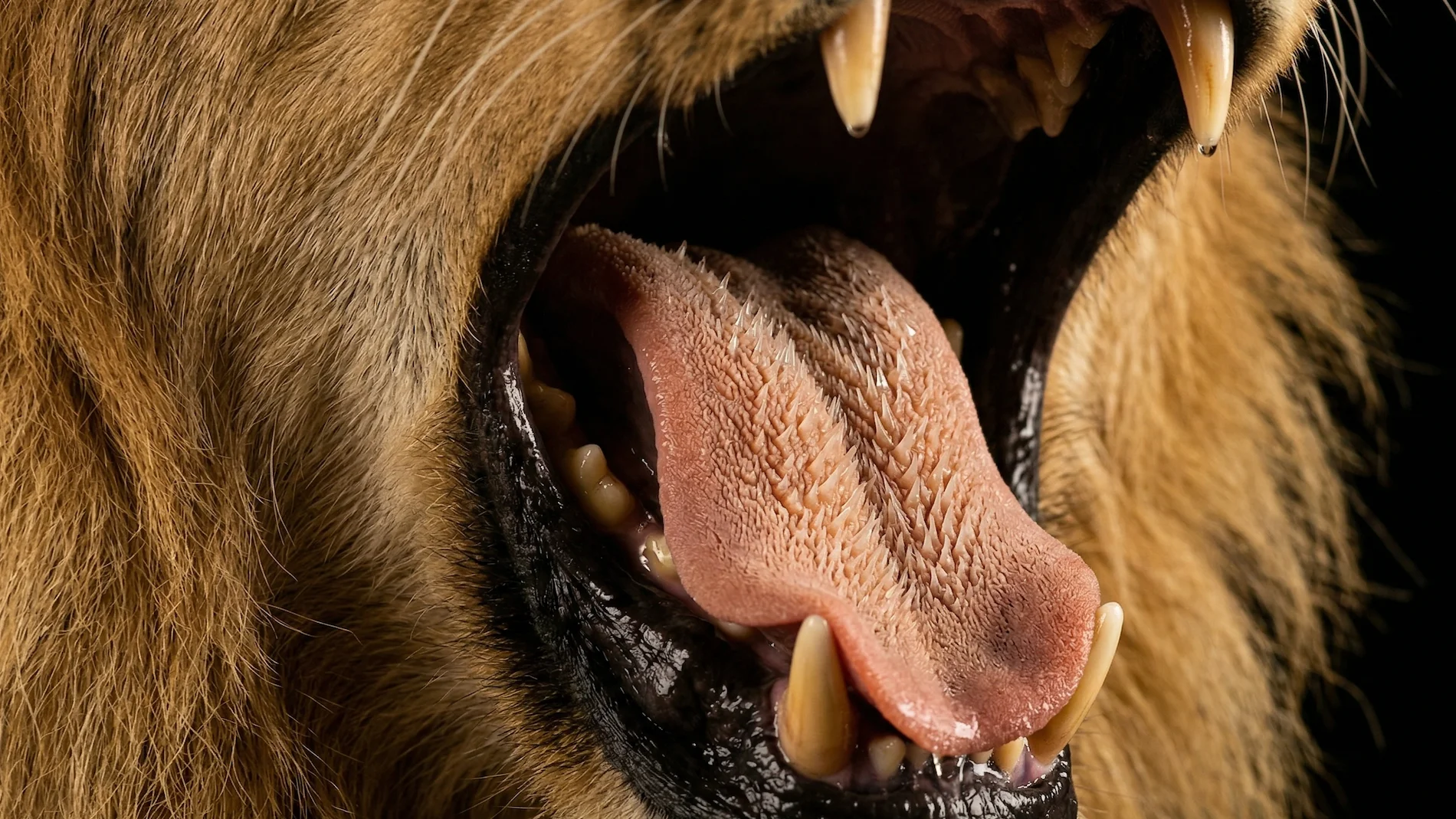
A lion possesses a terrifying biological weapon hidden entirely within its mouth. Their tongues are densely covered in tiny, incredibly sharp, backward-facing spines called papillae, which physically act like heavy-grade industrial sandpaper, allowing the cat to effortlessly strip flesh, skin, and fur directly off the bones of a carcass with just a few concentrated licks.
The acoustic power of a roaring lion represents a masterpiece of anatomical engineering. By possessing a specialized, square-shaped vocal fold rather than a standard triangular one, a male lion can project a terrifying roar that reaches one hundred and fourteen decibels, a sound so incredibly loud that it can be physically felt and heard up to eight kilometers away to establish absolute territorial dominance.
The iconic mane of a male is completely unrelated to aesthetic beauty or simply protecting his neck in a fight. Modern scientific research has definitively proven that the mane acts as a biological billboard, where a dark, excessively thick mane is a direct physiological indicator of high testosterone, excellent nutrition, and robust genetic health, making him highly attractive to females and deeply intimidating to rival males.
The females within a pride utilize an incredibly complex system of synchronized cooperative nursing. Because the lionesses are almost always closely related sisters, aunts, and mothers, they will often synchronize their reproductive cycles to give birth at the exact same time, allowing them to pool their cubs into a communal crèche where any mother will freely nurse any hungry cub.
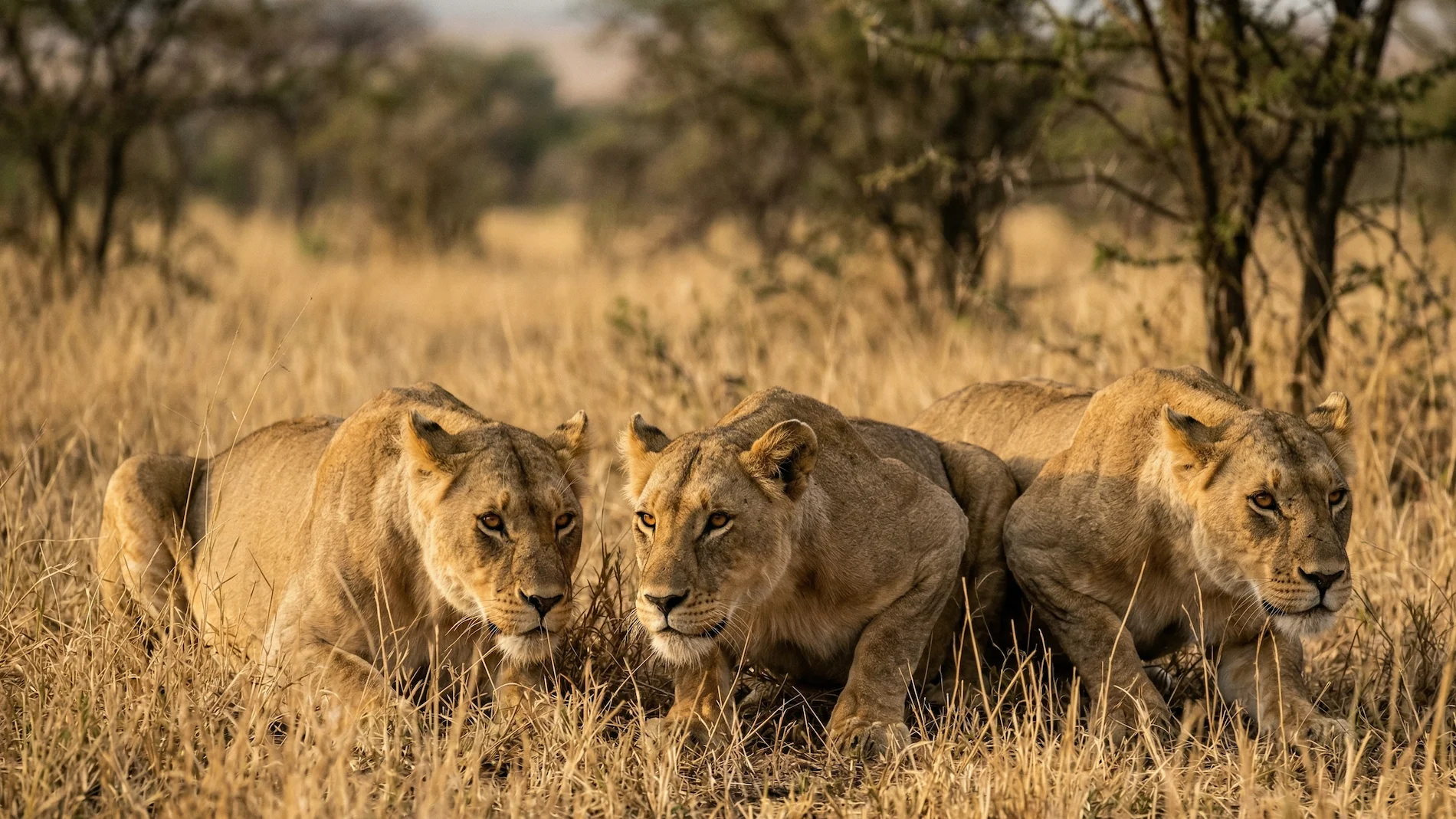
The physical endurance of a lion is surprisingly abysmal compared to the grazing animals they hunt. The heart of a mature lion makes up only about one-half of one percent of its total body weight, an incredibly tiny cardiovascular engine that means they completely lack the stamina for long, drawn-out chases, forcing them to rely entirely on stealth and sudden, high-speed ambush tactics.
Their terrifying claws are meticulously protected by a specialized anatomical sheath. Unlike canine predators whose claws are constantly blunted by scraping against the earth as they walk, a lion keeps its primary weapons fully retracted inside the toes, ensuring the thick keratin remains razor-sharp specifically for sinking deeply into the flesh of a struggling buffalo or zebra.
A loose flap of skin hanging from their stomach is not a sign of obesity or old age. This anatomical feature is known as a primordial pouch, serving as a vital layer of extra padding to protect their internal organs from the vicious, bone-breaking kicks of fleeing prey, while also providing extreme skin elasticity to accommodate massive, gorging meals that can exceed eighty pounds of meat in a single sitting.
They possess a remarkable biological independence from drinking standing water. While they will readily drink from rivers and watering holes when available, lions are uniquely adapted to survive in brutal drought conditions for several days at a time, extracting almost all the moisture they need directly from the blood of their prey and from eating water-dense plants like the tsamma melon in the Kalahari Desert.
Their eyes contain a specialized biological mirror that turns them into perfect nocturnal assassins. A reflective layer of tissue located directly behind the retina, called the tapetum lucidum, bounces moonlight back through the optic cells a second time, granting the lion night vision that is at least six times more powerful than a human, giving them a massive tactical advantage after the sun sets.
The historical territory of the lion was once vastly larger than the continent of Africa. Ancient historical records and fossil evidence prove that massive prides of lions used to roam freely across Greece, the Middle East, and the entire Indian subcontinent, though centuries of human expansion and hunting have restricted their modern survival almost entirely to Sub-Saharan Africa and one tiny, highly protected forest sanctuary in India.
Despite their legendary status as apex predators, a solitary lion is a surprisingly unsuccessful hunter. When hunting completely alone, a lion will fail to catch its targeted prey almost eighty percent of the time, proving that their true evolutionary strength lies entirely in their complex, coordinated pack hunting strategies which dramatically double their success rates and allow them to take down animals many times their own size.
Sources and References:
San Diego Zoo Wildlife Alliance: https://animals.sandiegozoo.org/animals/lion
University of Minnesota College of Biological Sciences: https://cbs.umn.edu/directory/craig-packer
WWF United Kingdom: https://www.wwf.org.uk/learn/quizzes/lion-quiz