You likely remember the handshake between Arnold Schwarzenegger and Carl Weathers as a legendary internet meme. However, Predator is far more than just muscle and machismo in the Mexican jungle. This sci-fi classic suffered through brutal heat, dangerous stunt work, and a chaotic creature design process that almost ruined the film. Furthermore, the cast included two future governors and a wrestling star. Prepare to enter the hunting ground and learn what truly happened behind the scenes.
Predator
Originally, Jean-Claude Van Damme played the alien creature. However, the “Muscles from Brussels” hated the heavy, red lobster-like suit. He eventually quit the production because the costume was too hot and clumsy for his martial arts style.
Surprising everyone, the studio hired bodyguards to protect the cast from Sonny Landham. The insurance company feared the actor, who played Billy, would start fights with the crew. Therefore, the guards followed him everywhere to keep the other actors safe.
The movie concept started as a joke about Rocky Balboa. After Rocky IV, people joked that the boxer had defeated everyone on Earth and must fight an alien next. Consequently, screenwriters Thomas and John Thomas wrote a script called Hunter based on this idea.
Technically, the Predator blood was a mix of KY Jelly and glow stick fluid. The special effects team snapped chem-lights and mixed the glowing liquid with the lubricant. Thus, the alien’s blood glowed brightly without any post-production CGI effects.
Arnold Schwarzenegger suffered immensely for the mud camouflage scenes. The clay cooled his body down dangerously, and he shivered uncontrollably between takes. As a result, the crew pumped warm lamps on him constantly to prevent hypothermia.
James Cameron actually suggested the iconic mandibles. During a flight, he told creature designer Stan Winston that he always wanted to see a monster with insect parts. Immediately, Winston sketched the famous face that we see in the final Predator film.
Director John McTiernan broke the wrist of the actor inside the suit. In a scene where the monster smashes a wall, the stuntman hit the prop too hard. Unfortunately, the alien hand was so heavy that the impact snapped his real bone.
Shane Black was cast solely to fix the script on set. The producers knew the writer of Lethal Weapon would be useful for rewrites. So, they gave him the role of Hawkins to keep him close during the difficult shoot.
Surprisingly, the famous minigun had to be slowed down. The gun fired so fast that the spinning barrels looked invisible on camera. Therefore, the armorers reduced the firing rate so the audience could actually see the weapon rotating.
The voice of Optimus Prime created the Predator’s clicking sounds. Voice actor Peter Cullen looked at the creature’s messy face and remembered a dying horseshoe crab. He used that memory to create the terrifying, clicking purr.
Most of the cast suffered from severe diarrhea. The hotel in Mexico had issues with water filtration, which made the actors sick for weeks. Reportedly, only Arnold Schwarzenegger and director John McTiernan avoided the illness by eating their own food.
The thermal vision scenes were a logistical nightmare. The Mexican jungle was so hot that the heat-sensing camera could not distinguish the actors from the trees. Consequently, they had to spray the trees with ice water to create contrast.
Jesse Ventura was delighted to have larger biceps than Arnold. The costume department measured his arms as one inch bigger than the star’s arms. Later, he found out that Arnold had pranked him by telling the wardrobe team to lie.
Originally, the movie was titled Hunter. The studio only changed the name to Predator late in the production process. They felt the new title sounded much more menacing and marketable for a sci-fi action film.
Finally, the massive actor inside the final suit was Kevin Peter Hall. Standing over seven feet tall, he towered over the bodybuilders in the cast. Tragically, he passed away just a few years later, but his performance remains legendary.
How useful was this post?
Click on a star to rate it!
This AI-assisted post was rigorously curated and fact-checked for accuracy by:
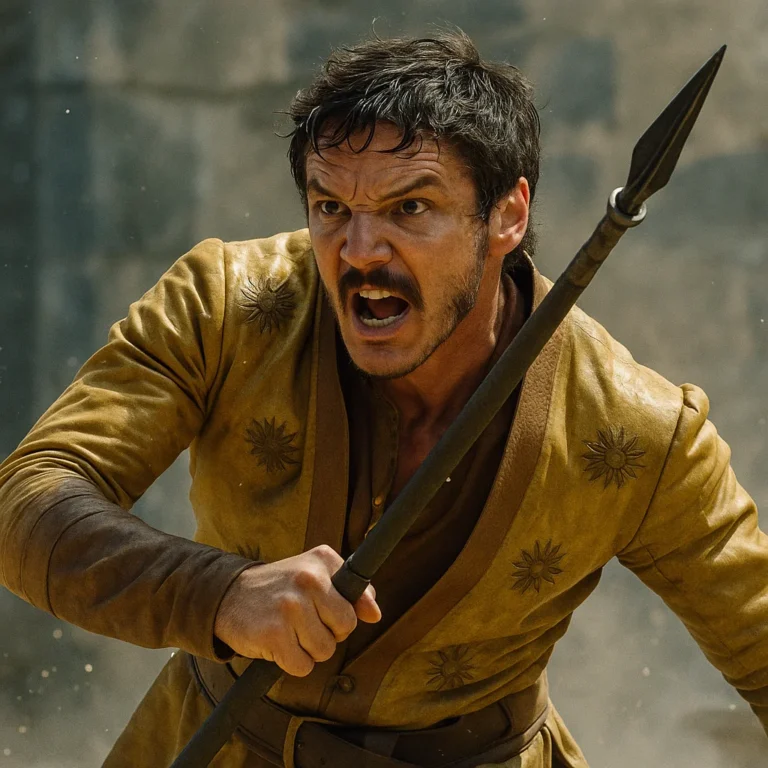
Pedro Pascal captured the hearts of the world with his roles as the protectve father figure in The Mandalorian and The Last of Us. While fans call him the "Daddy of the Internet," his journey to stardom was long and filled with rejection. In fact, he struggled for decades as an unknown actor, relying on the kindness of famous friends just to eat. Furthermore, his life began with a dramatic escape from a dictatorship, making his personal story just as intense as his movies. Prepare to unmask the man behind the helmet.
Pedro Pascal
Pedro Pascal was a competitive swimmer as a child. He participated in the state championships in Texas when he was eleven years old. However, he quit the sport immediately after discovering his passion for drama class.
He fled Chile as a baby due to political persecution. His parents were supporters of Salvador Allende and opposed the dictatorship of Augusto Pinochet. Consequently, the family sought political asylum in Denmark before eventually moving to the United States.
Sarah Paulson used to feed him when he was a starving artist. The two actors have been best friends since the early nineties. During his years of unemployment, she often gave him her daily food allowance so he would not go hungry.
He forgot he landed the role of Joel in The Last of Us because of a sleeping pill. He received the call late at night in London and took an Ambien immediately after to sleep. When he woke up the next morning, he had zero memory of the conversation and thought he was still waiting for the news.
He worked as a go-go dancer in Madrid in the nineties. After graduating from college, he moved to Spain and found work dancing in nightclubs. He wore silver hair and danced on platforms to earn a living.
His casting in Game of Thrones happened because of his friend Amanda Peet. He recorded his audition on an iPhone and sent it to Sarah Paulson, who showed it to Peet. Peet then forced her husband, showrunner David Benioff, to watch the tape.
He cannot see anything when wearing the Mandalorian helmet. He described the experience as “going blind” because his breath fogs up the narrow visor instantly. Furthermore, he has no peripheral vision and often trips over objects on set.
Oscar Isaac convinced him to take the Mandalorian role. His longtime friend and fellow Star Wars actor encouraged him to join the franchise. The two have been close friends since they performed in a play together in 2005.
He appeared in Buffy the Vampire Slayer as a college student named Eddie. Unfortunately, his character was turned into a vampire and killed by Buffy almost immediately. This remains one of his most famous early roles.
He changed his last name to honor his mother. Born José Pedro Balmaceda, he adopted his mother’s maiden name, Pascal, after she passed away. Additionally, he felt that Americans found “Pascal” easier to pronounce than “Balmaceda.”
He based his Wonder Woman 1984 character on Nicolas Cage. He channeled the eccentric acting style of Cage to play the villain Max Lord. Later, he got to star alongside his idol in The Unbearable Weight of Massive Talent.
The sequin pillow scene with Nicolas Cage was completely improvised. In the movie, his character shows off a pillow with Cage’s face on it. The awkward and hilarious interaction that followed was not in the script but made the final cut.
He was fired from over ten waiting jobs. Before he found success, he worked in various New York City restaurants to pay the bills. However, he admitted he was a terrible waiter and could not hold down a job.
He appeared in a music video with Heidi Klum. He played the supermodel’s love interest in the video for Sia’s song “Fire Meet Gasoline.” The video features the two of them in a dramatic, burning house.
Finally, he is a voracious reader. He often lists classics like Jane Eyre and Crime and Punishment as his favorite books. He has stated that reading was a major part of his upbringing and remains a way for him to relax.
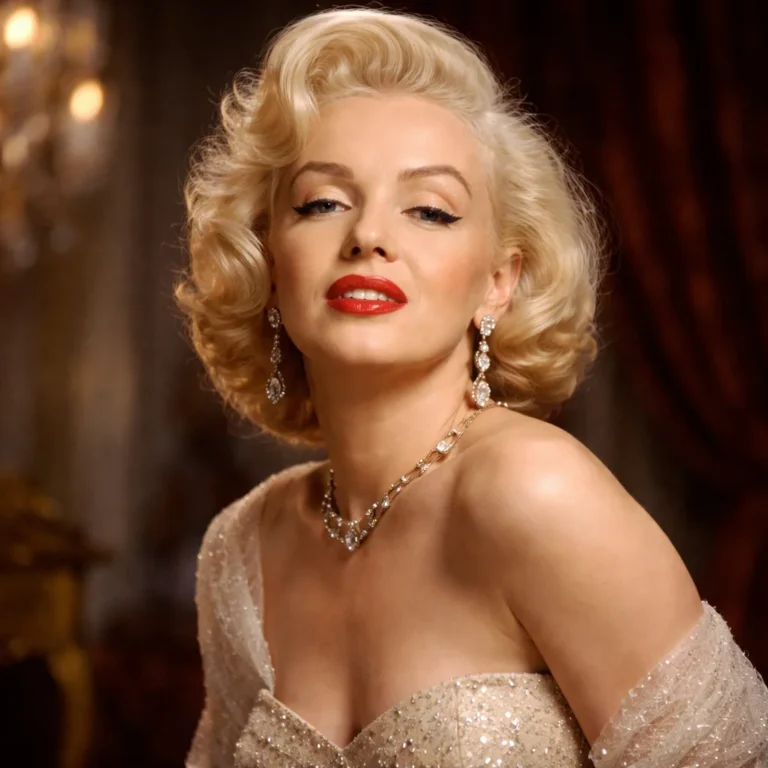
Marilyn Monroe remains the ultimate symbol of Hollywood glamour. You likely recognize her platinum hair and flying white dress instantly. However, the woman behind the smile was complex and incredibly intelligent. She fought for equal pay in a male-dominated industry and started her own company. Furthermore, she used her fame to break down racial barriers in music. Her life was a mix of dazzling lights and deep shadows. Let’s explore the life of Norma Jeane.
Marilyn Monroe
Marilyn Monroe was actually a natural brunette. However, she bleached her hair to achieve that iconic platinum look. Consequently, she had to treat her hair constantly to maintain the bright color.
She owned a personal library containing over 400 books. Surprisingly, she loved reading complex authors like James Joyce and Dostoyevsky. Therefore, she was far more intellectual than her movie roles suggested.
She formed her own production company to fight powerful studios. Marilyn Monroe Productions allowed her to control her own career. Thus, she became one of the first women in Hollywood to manage her own business.
Joe DiMaggio sent fresh roses to her grave three times a week. He kept this promise for twenty years after she died. Sadly, he never remarried because he loved her until the end.
The dress she wore to sing for President Kennedy was incredibly tight. In fact, seamstresses had to sew the fabric directly onto her body. As a result, she wore absolutely nothing underneath the sparkling gown.
Her famous breathy voice was actually a tactic to stop stuttering. A speech therapist taught her to breathe rhythmically to control the speech impediment. Eventually, this coping mechanism became her signature sound.
Studios paid Marilyn Monroe much less than her co-stars. For example, Jane Russell earned ten times more for Gentlemen Prefer Blondes. Nevertheless, Marilyn remained the bigger star of the film.
She was an early adopter of yoga in the United States. She practiced poses to stay fit long before it became a trend. Furthermore, she openly discussed her fitness routine in interviews.
Truman Capote wanted her to play Holly Golightly in Breakfast at Tiffany’s. He wrote the story with her specifically in mind. However, the studio cast Audrey Hepburn, which disappointed the author significantly.
She helped Ella Fitzgerald break racial barriers at a popular nightclub. Marilyn promised to sit in the front row every night if the owner booked Ella. Consequently, the press went wild, and Ella’s career skyrocketed.
Frank Sinatra gave her a maltese terrier named Mafia. She affectionately called the little dog “Maf” for short. It lived a life of luxury with her during her final years.+1
Medical records prove she underwent secret plastic surgery. A doctor inserted a cartilage implant into her chin early in her career. Additionally, she slightly altered the tip of her nose.+2
She mastered the art of makeup to reshape her face. She applied five different shades of red lipstick to create depth. Thus, her lips looked fuller without any injections.
The FBI kept a detailed file on Marilyn Monroe. They monitored her because of her marriage to playwright Arthur Miller. Officials worried about her potential ties to communism during the Cold War.
She found it impossible to memorize lines for her movies. Sometimes, it took her 60 takes to deliver a simple sentence. This habit frustrated her directors and co-stars immensely.