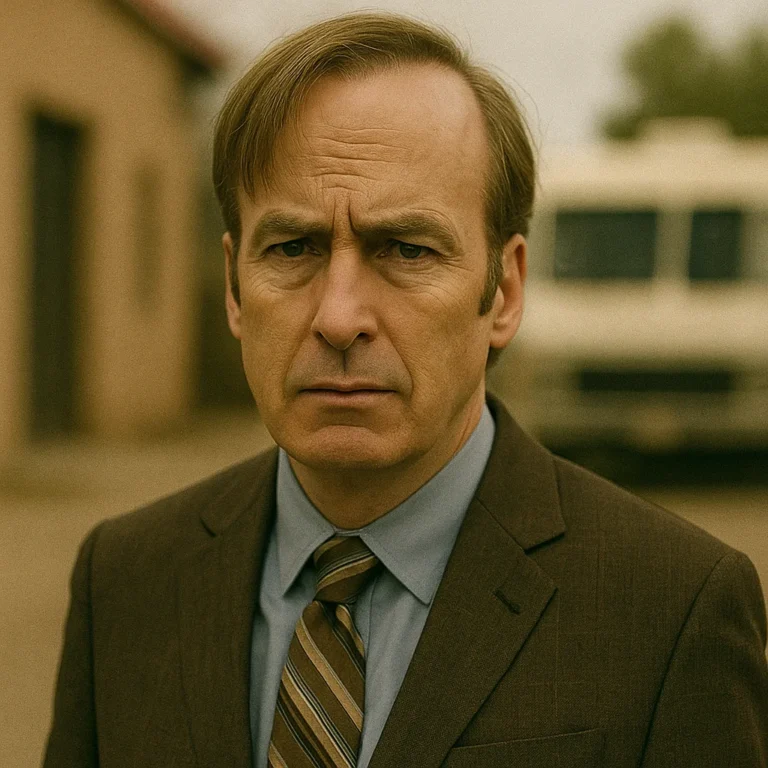
Bob Odenkirk successfully pulled off one of the rarest career pivots in Hollywood history, transforming from a cult comedy writer into a critically acclaimed dramatic actor and action hero. For decades, he worked behind the scenes writing for legends, creating the alternative comedy scene in the nineties. However, his role as the morally flexible lawyer Saul Goodman introduced him to a global audience and earned him multiple award nominations. Furthermore, his recent turn as an action star proves that it is never too late to reinvent yourself. Prepare to call Saul with the man who brings him to life.
Bob OdenkirkBob Odenkirk
He wrote the legendary “Matt Foley: Van Down by the River” sketch for Chris Farley. While working at The Second City in Chicago, Bob Odenkirk created the character of the frantic motivational speaker specifically for Farley. He later brought the sketch to Saturday Night Live, where it became one of the most famous segments in the show’s history.
He almost played Michael Scott on The Office. The producers considered him the top choice for the role if Steve Carell declined the offer. He eventually appeared in the final season of the show as a manager who acts suspiciously like Michael Scott, giving fans a glimpse of what could have been.
He trained for two years to become an action star for the movie Nobody. At the age of fifty-eight, he underwent brutal physical training to perform his own fight choreography. He wanted to do his own stunts to show the audience that an ordinary dad could truly experience that level of exhaustion and pain.
He suffered a major heart attack on the set of Better Call Saul. During the filming of the final season, he collapsed. His heart stopped beating for nearly twenty minutes. Fortunately, the on-set health safety supervisor performed CPR immediately. He saves hislife and allowing him to finish the series after recovery.
He originally had not seen Breaking Bad when he accepted the role of Saul Goodman. When the producers offered him the part, he had to call a friend to ask if the show was actually any good. He accepted the job primarily because he needed the money, unaware he was joining one of the biggest shows on television.
He discovered the comedy duo Tim & Eric. Bob Odenkirk saw a DVD they sent him and immediately recognized their bizarre genius. He helped them get their first show on Adult Swim, effectively launching their careers and the specific style of cringe comedy they popularized.
He won two Emmy Awards for writing before he became famous for acting. He earned trophies for his writing work on Saturday Night Live and The Ben Stiller Show. Despite his massive success as an actor later in life, the Emmys surprisingly never awarded him a statue for his performance as Saul Goodman.
He appeared in Seinfeld as Elaine’s boyfriend. In the episode “The Abstinence,” he played Ben, a doctor who technically hadn’t passed his licensing exam. Elaine eventually breaks up with him because he isn’t a “real” doctor, a classic Seinfeldian conflict.
He shared an office with Conan O’Brien at Saturday Night Live. The two future legends worked together as writers in the late eighties and remained close friends. They often spent their time doing silly bits to make each other laugh rather than working on actual sketches for the show.
He created the cult classic sketch show Mr. Show with Bob and David. Along with David Cross, he pioneered a style of sketch comedy where every scene transitioned seamlessly into the next. Although it wasn’t a ratings hit at the time, comedians today cite it as a major influence on modern humor.
Saul Goodman was only supposed to appear in three episodes. The writers intended for the lawyer to be a temporary character to help Walt and Jesse out of a jam. However, Odenkirk’s performance was so electric that they kept bringing him back, eventually giving him his own spinoff series.
He voiced a major character in The Incredibles 2. He provided the voice for Winston Deavor, the wealthy businessman who wants to bring superheroes back into the spotlight. He noted that he channeled his inner enthusiastic salesman to bring the character to life.
He wrote a memoir titled Comedy Comedy Comedy Drama. The book chronicles his journey from sketch comedy writer to dramatic actor. In it, he speaks candidly about his career struggles and the “cynicism” he had to let go of to find happiness.
The hairpiece he wore as Saul Goodman was a deliberate character choice. Bob Odenkirk and the stylists designed a mullet-comb-over hybrid to show that the character was trying to look younger and “cool.” He jokingly referred to the hairpiece as his main acting partner.
Finally, Bob Odenkirk played the father in Greta Gerwig’s Little Women. In a departure from his usual sleazy or comedic roles, he played the kind and gentle Mr. March. This role showcased his range and ability to play warm, sincere characters just as effectively as con men.
How useful was this post?
Click on a star to rate it!
This AI-assisted post was rigorously curated and fact-checked for accuracy by:
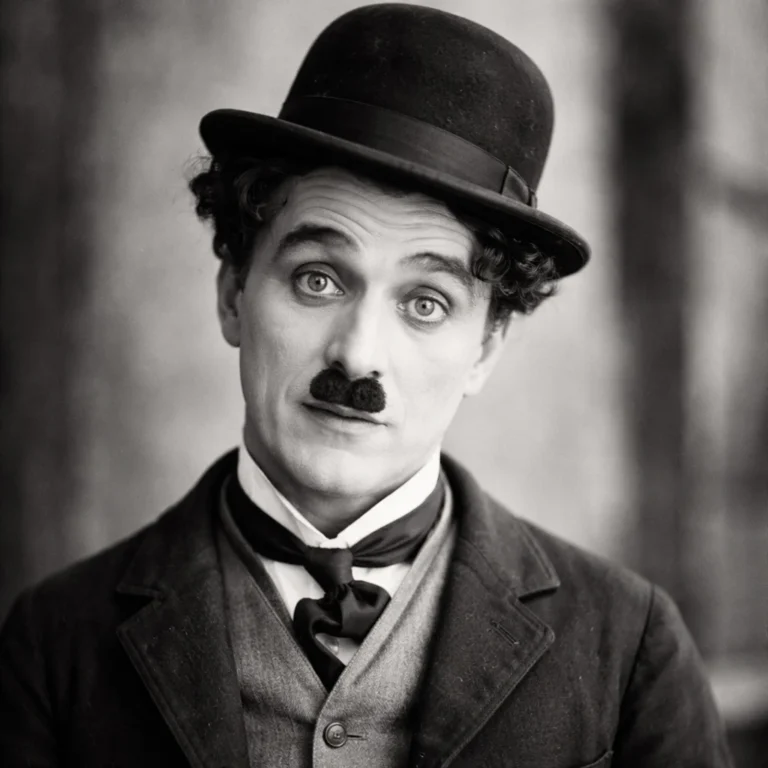
Charlie Chaplin remains the most famous face of the silent film era. His character, "The Tramp," made the entire world laugh without saying a single word. However, his real life contained enough tragedy and scandal for a dramatic movie script. Furthermore, political enemies pursued him relentlessly during his later years. Consequently, he spent decades in exile away from Hollywood. Explore the wild details about the comedy genius who changed cinema.
Charlie Chaplin
Amazingly, Charlie Chaplin once entered a look-alike contest as himself and lost. He did not even make the finals, finishing in a disappointing third place.
Thieves dug up his grave and stole his coffin shortly after he died. They held the body for ransom, but the police eventually recovered it in a cornfield.
Most fans only know him in black and white, so they miss a key detail. In reality, Charlie Chaplin possessed piercing blue eyes that surprised visitors constantly.
He did not just act; he also composed the music for many of his films. In fact, he wrote the famous song “Smile,” which became a pop standard years later.
He became the very first actor to ever appear on the cover of Time magazine. This 1925 milestone cemented his status as a global superstar.
Adolf Hitler grew a similar mustache specifically to associate himself with the beloved comedian. Consequently, Chaplin mocked the dictator mercilessly in his film The Great Dictator.
The FBI kept a massive, 2,000-page file on Charlie Chaplin for decades. J. Edgar Hoover considered him a dangerous communist and desperately wanted to deport him.
While visiting London for a movie premiere, the US government revoked his re-entry permit. Therefore, he settled in Switzerland and did not return to America for twenty years.
He was a notorious perfectionist who often filmed scenes hundreds of times. For one scene in City Lights, he forced the actress to repeat a simple action 342 times.
Interestingly, he kept his Romani heritage a secret for most of his life. He only received a letter confirming his birth in a caravan shortly before his death.
Before they were famous, Stan Laurel worked as Chaplin’s understudy in a touring troupe. Thus, the future star of Laurel and Hardy mastered comedy by watching the master.
He received an honorary Oscar in 1972 after returning from his long exile. The audience gave him a 12-minute standing ovation, the longest in Academy Awards history.
Critics and the public often judged him for marrying much younger women. His last wife, Oona O’Neill, was only 18 when she married the 54-year-old star.
He signed the first million-dollar contract in the history of Hollywood. This deal in 1918 made him one of the wealthiest people in the entire world.
Finally, Charlie Chaplin never became an official US citizen despite living there for decades. He proudly kept his British citizenship until the very end of his life.
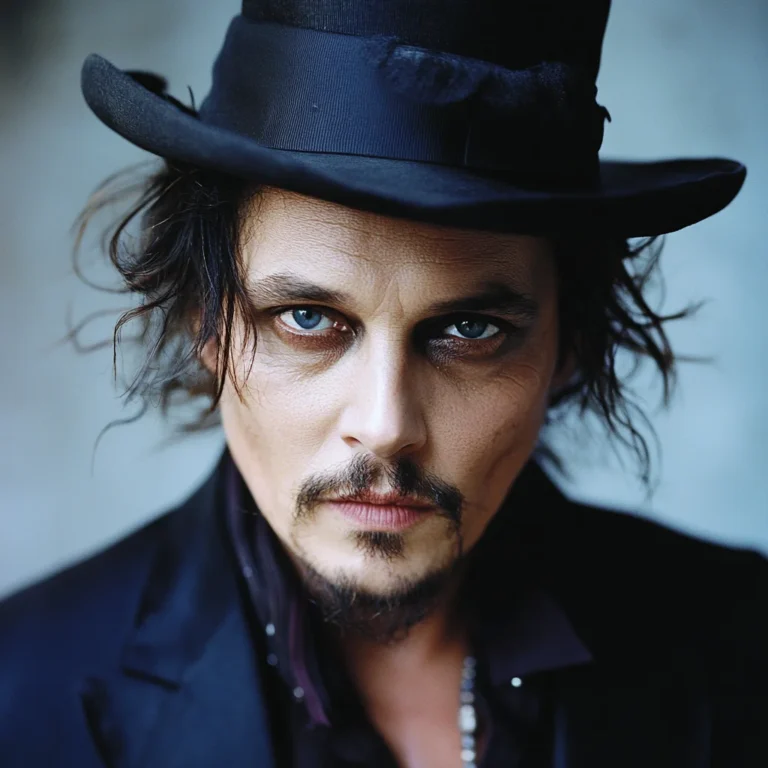
Johnny Depp built his career on playing the strangest characters in cinema history. He started as a teen idol but quickly pivoted to darker, eccentric roles like Edward Scissorhands and Captain Jack Sparrow. Moreover, his real life is just as bizarre as his movies, filled with private islands and rock music. However, he faced intense public scrutiny during recent legal battles. Prepare to sail with the Hollywood pirate.
Johnny Depp
Nicolas Cage actually advised him to try acting. Specifically, they played Monopoly together, and Cage sent him to his agent. Consequently, Johnny Depp landed his first role in A Nightmare on Elm Street.
Surprisingly, he dropped out of high school to become a rock musician. However, when he tried to return two weeks later, the principal refused. He told Johnny Depp to follow his musical dream instead.
Ironically, he suffered from a chocolate allergy as a child. This made filming the movie Chocolat very difficult for him. Therefore, he struggled through the sweet scenes.
Tenderly, he adopted the one-eyed horse from the movie Sleepy Hollow. He heard the owners planned to put the animal down after production. Thus, Johnny Depp stepped in to save Goldeneye.
Generously, he travels with his Captain Jack Sparrow costume everywhere. He visits children’s hospitals unexpectedly to surprise sick kids. Therefore, he stays in character for hours to make them smile.
Scientifically, a paleontologist named an ancient creature after him. The fossil Kooteninchela deppi possesses scissor-like claws. Naturally, the scientist thought of Edward Scissorhands immediately.
Terrifyingly, the engines on his private jet failed mid-flight. He was flying with director Bruce Robinson when the plane went silent. Fortunately, the engines restarted just before they crashed.
He spent millions to blast Hunter S. Thompson’s ashes into the sky. The writer wanted a funeral involving a cannon and fireworks.
Strangely, he almost never watches his own movies. He believes that once he finishes the job, the character is gone. Consequently, he avoids premieres or screenings whenever possible.
He owns a massive private island in the Bahamas. He bought the tropical paradise to escape from the paparazzi. Reportedly, Johnny Depp named the beaches after his family members.
Musically, he formed a supergroup called Hollywood Vampires. He plays guitar alongside Alice Cooper and Joe Perry. Thus, he finally achieved his teenage dream of being a rock star.
Physically, he is nearly blind in his left eye. He claims he has been “blind as a bat” since birth. Therefore, Johnny Depp relies heavily on prescription tinted glasses.
He based his Willy Wonka performance on a stoned George W. Bush. He imagined how the President would act while high. Thus, he created a weirdly disconnected version of the character.
Amazingly, he played slide guitar on an Oasis song. He played on the track “Fade In-Out” in 1997. Noel Gallagher was too drunk to play, so Johnny Depp stepped in.
Finally, he has “winona forever” tattooed on his arm. After they broke up, he changed the ink to read “wino forever.” Thus, he turned a heartbreak into a funny joke.