1. His Birth Name Was Michael
The man synonymous with the civil rights movement was originally named Michael King Jr. He was born on January 15, 1929, in Atlanta, Georgia. In 1934, his father, a prominent Baptist pastor, traveled to Germany for a Baptist World Alliance meeting. While there, the elder King was deeply inspired by the history of Martin Luther, the leader of the Protestant Reformation. Upon returning to the United States, he officially changed both his own name and his five-year-old son’s name to Martin Luther King.
2. He Started College at Age 15
King was recognized as a highly gifted student from an early age. He attended Booker T. Washington High School in Atlanta, where his academic excellence allowed him to completely skip both the ninth and twelfth grades. In 1944, at the incredibly young age of 15, he passed the entrance examinations and enrolled at Morehouse College, a historically Black college in Atlanta, eventually earning a degree in sociology.
3. He Was Arrested 29 Times
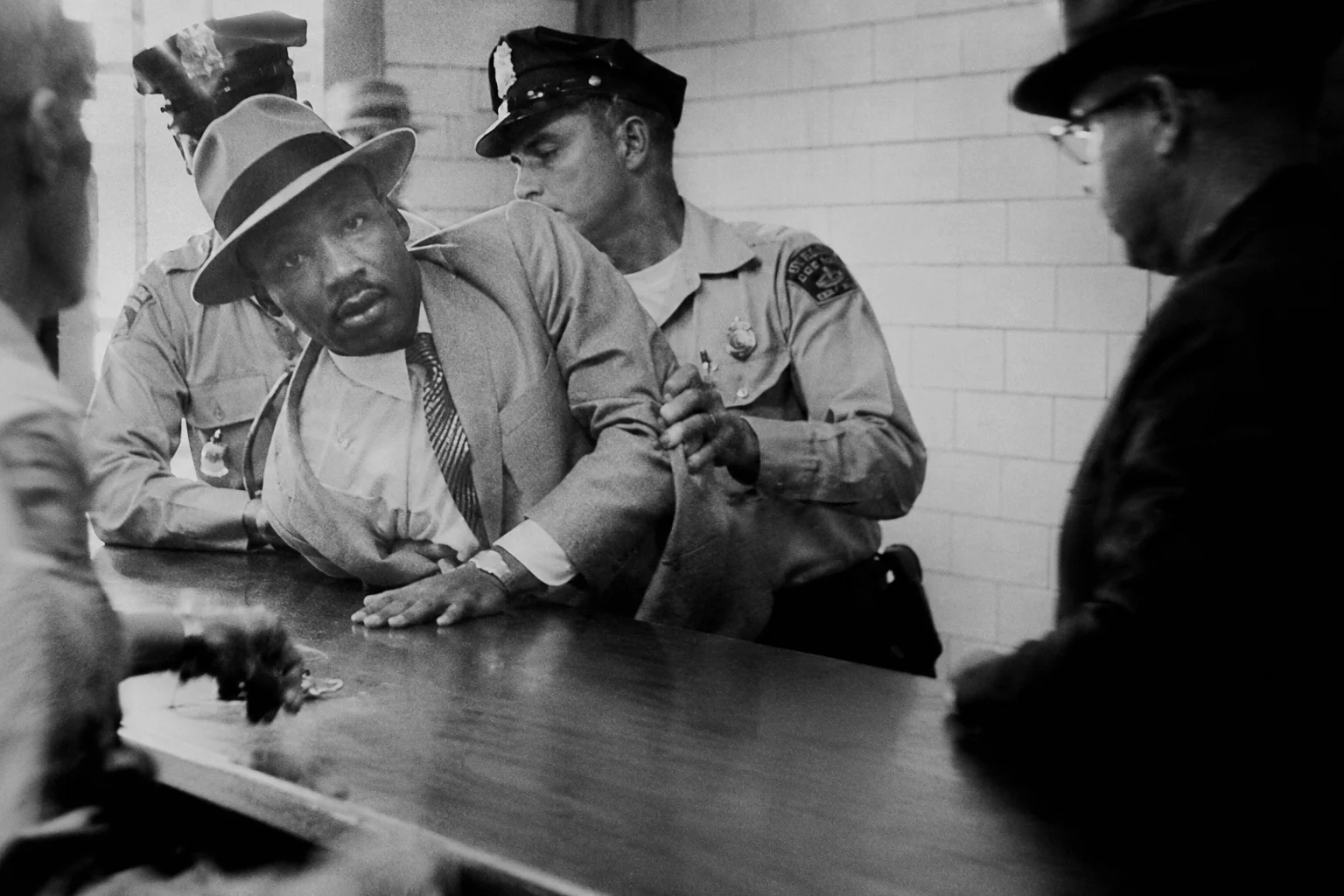
King’s commitment to civil disobedience meant that he willingly broke unjust laws to highlight systemic racism. Over the course of his 13 years of leadership in the civil rights movement, he was arrested a staggering 29 times. While many of these arrests were for “civil disobedience” during protests, local Southern police also frequently targeted him with petty, trumped-up charges, such as being arrested and jailed in Montgomery for allegedly driving 30 mph in a 25 mph zone.
4. He Survived a Near-Fatal Stabbing in 1958
A full decade before his assassination, King nearly died in Harlem, New York. In September 1958, while signing copies of his first book, Stride Toward Freedom, a mentally ill woman named Izola Ware Curry approached his desk and plunged a seven-inch steel letter opener into his chest. The blade lodged so close to his aorta that doctors later told him if he had so much as sneezed, he would have died instantly.
5. He Improvised the “I Have a Dream” Climax
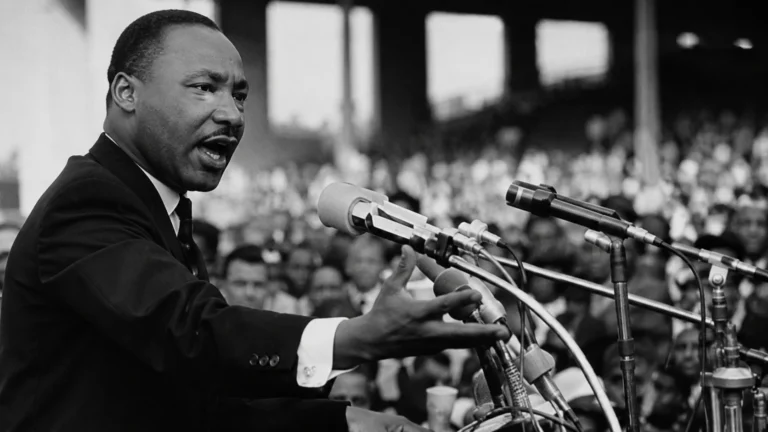
The defining moment of the 1963 March on Washington was largely improvised. As King was delivering his prepared, written speech, legendary gospel singer Mahalia Jackson shouted from the crowd behind him, “Tell them about the dream, Martin!” Hearing her, King pushed his notes aside, grasped the podium, and launched into the extemporaneous, soaring “I have a dream” sequence that cemented the speech as one of the greatest in human history.
6. The FBI Tried to Coerce Him Into Suicide
Under the direction of J. Edgar Hoover, the FBI viewed King as a dangerous radical and targeted him with their covert COINTELPRO operations. The agency extensively wiretapped his home, offices, and hotel rooms. In 1964, the FBI sent King a threatening, anonymous “suicide package.” It contained an audio tape of his alleged extramarital affairs and a letter urging him to kill himself before the Nobel Prize ceremony, or risk having his personal life exposed to the nation.
7. He Traveled to India to Study Gandhi’s Methods
King was profoundly influenced by the teachings of Mahatma Gandhi. In 1959, he embarked on a month-long trip to India to walk in Gandhi’s footsteps and study the mechanics of nonviolent resistance. King later credited this trip with deepening his understanding of nonviolence, noting that it transformed in his mind from a mere political tactic into a deeply held moral and spiritual philosophy.
8. He Won a Posthumous Grammy Award
While universally known for his Nobel Peace Prize, King is also a Grammy winner. In 1971, three years after his death, he was posthumously awarded the Grammy for Best Spoken Word Album for the recording of his speech, “Why I Oppose the War in Vietnam.”
9. He Was the Youngest Nobel Peace Prize Winner of His Era
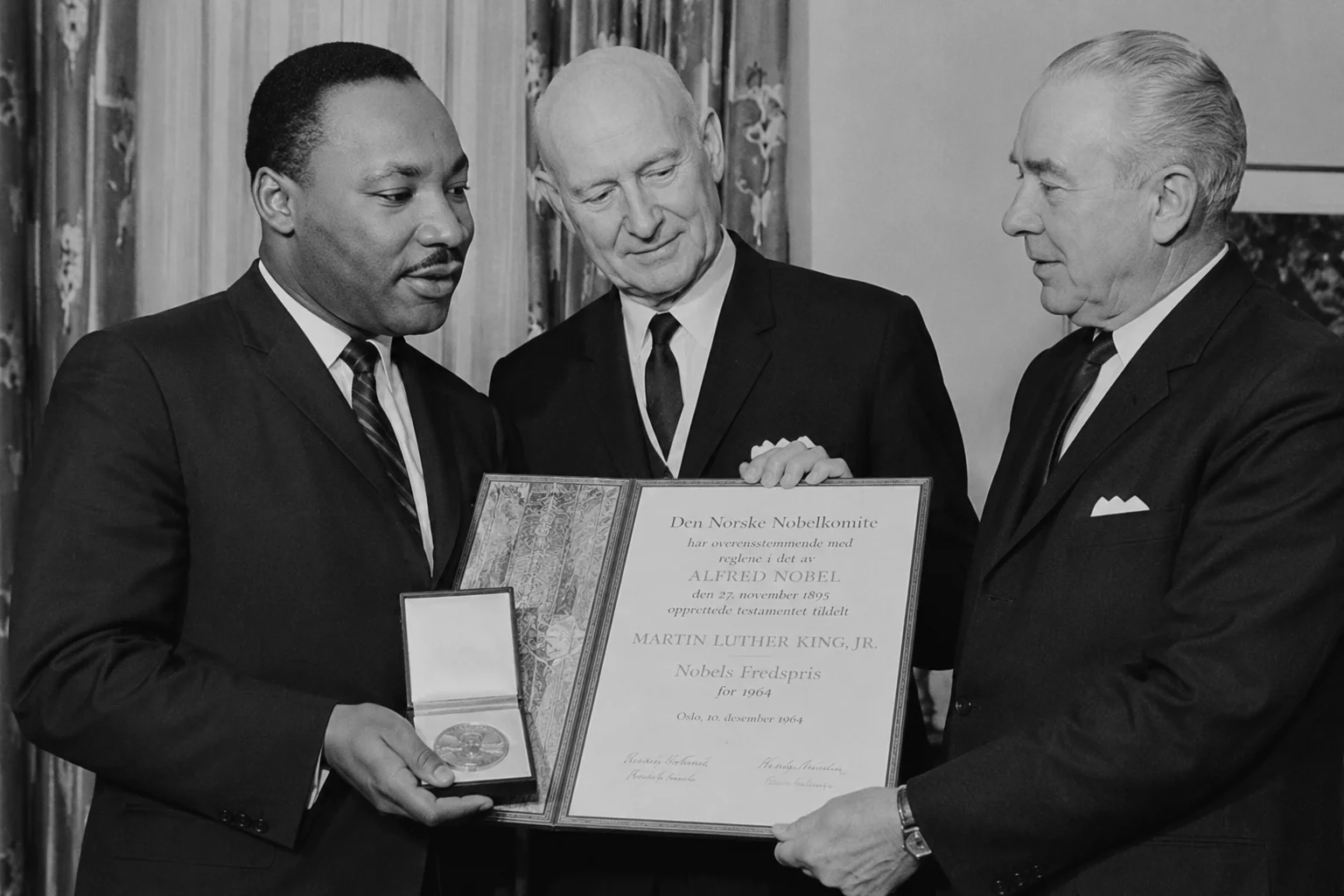
In October 1964, at the age of 35, King was awarded the Nobel Peace Prize for his nonviolent campaign against racism in the United States. At the time, he was the youngest man ever to receive the award. True to his principles, King did not keep a penny of the $54,123 prize money (equivalent to roughly $500,000 today), instead donating the entirety of the funds to further the work of the civil rights movement.
10. He Was a “Secret” Heavy Smoker
The intense, unrelenting stress of leading a national movement took a severe toll on King’s nerves. He was a frequent, heavy cigarette smoker, but he went to great lengths to hide this habit from the public. He did not want to set a bad example for his children or his followers, and photographers rarely captured him with a cigarette. Following his assassination, the autopsy revealed that the 39-year-old leader had the heart condition of a 60-year-old man.
11. He Opposed the Vietnam War at Great Political Cost
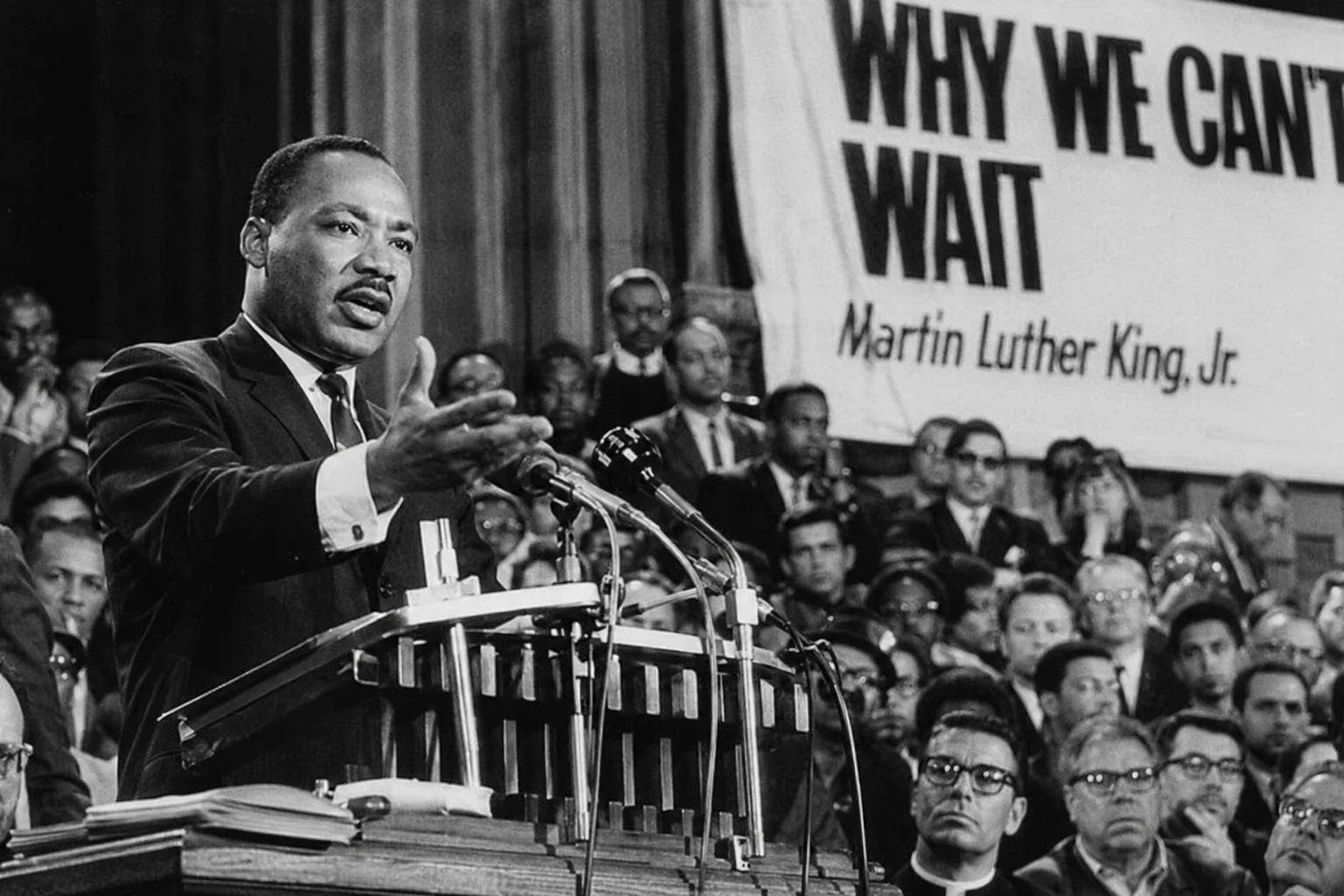
In exactly one year before his death, on April 4, 1967, King delivered his “Beyond Vietnam” speech at Riverside Church in New York. He explicitly condemned American involvement in the Vietnam War, calling the U.S. government the “greatest purveyor of violence in the world today.” This stance heavily alienated President Lyndon B. Johnson, severed ties with many moderate political allies, and drew severe criticism from the mainstream press.
12. He Spoke at the Lincoln Memorial Six Years Before His Famous Speech
The 1963 March on Washington was not King’s first time addressing a massive crowd at the Lincoln Memorial. In May 1957, six years earlier, King delivered his first major national address there during the Prayer Pilgrimage for Freedom. His speech, known as “Give Us the Ballot,” urged the federal government to secure voting rights for African Americans and established him as a national political figure.
13. He Practically Predicted His Death the Night Before
On April 3, 1968, the night before he was murdered, King delivered his final, eerily prophetic speech to striking sanitation workers in Memphis, Tennessee. Known as the “I’ve Been to the Mountaintop” speech, he acknowledged the numerous death threats against him. He passionately declared that while he would like to live a long life, he was not afraid of any man, stating: “I may not get there with you. But I want you to know tonight, that we, as a people, will get to the promised land!”
14. His Mother Was Also Tragically Assassinated
The tragedy of the King family did not end in Memphis. On June 30, 1974, King’s mother, Alberta Williams King, was playing the organ during a Sunday morning service at Ebenezer Baptist Church in Atlanta. A 23-year-old deranged gunman, who falsely claimed that Black ministers were a menace to Black people, stood up in the front pew and shot her to death in front of the congregation.
15. He Is the Only Non-President with a National Holiday
In 1983, President Ronald Reagan signed a bill creating a U.S. federal holiday in honor of King. Observed on the third Monday of January, Martin Luther King Jr. Day is incredibly unique. He is the only non-president in United States history to have a federal holiday dedicated in his honor, and the only non-president to be memorialized with a major monument on the National Mall in Washington, D.C.