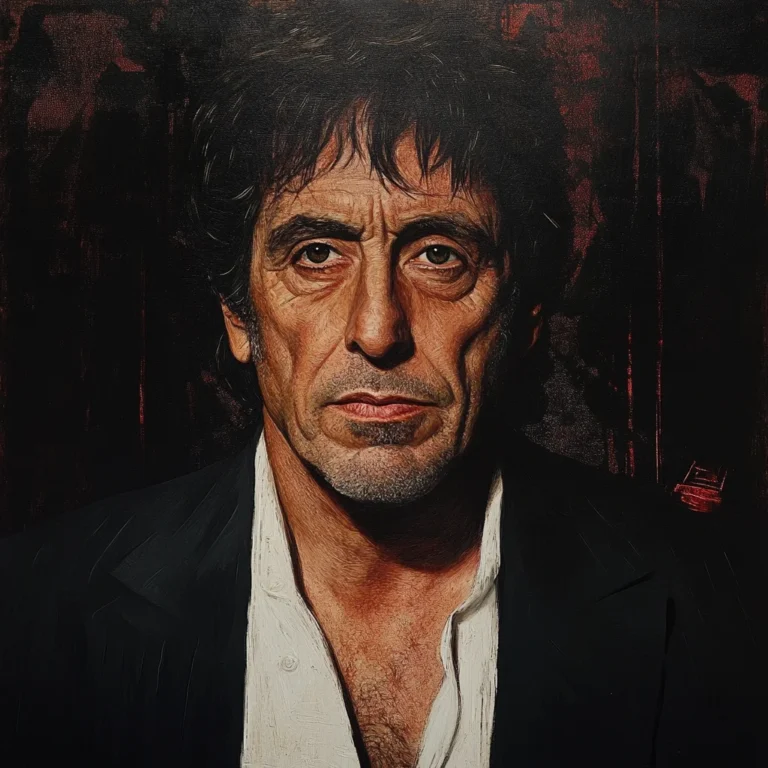
Al Pacino, a legendary icon of stage and screen, continues to captivate audiences worldwide. With his intense performances, unique voice, and remarkable dedication, Al Pacino has made his mark in Hollywood and beyond. Discover the vibrant stories, special talents, and little-known moments that shape Al Pacino’s extraordinary career.
Al Pacino
Al Pacino was born in New York City in 1940, which shaped his strong connection to urban life and the arts.
Growing up in the Bronx, he discovered acting early, attending the famed High School of Performing Arts.
Even though many struggle for roles, Pacino landed his first major film part in “The Panic in Needle Park” through relentless auditioning.
Naturally, he became famous after playing Michael Corleone in “The Godfather,” impressing audiences everywhere.
While he is now a screen legend, Pacino has always loved theater. Throughout his career, he continuously returned to live performances.
Pacino holds a rare Triple Crown of Acting: Oscar, Emmy, and Tony Award, a feat that underscores his versatility.
Interestingly, he once worked as a theater usher before achieving stardom, which kept him close to his dream environment.
Over the years, directors admired his commitment. For example, he memorized the entire “Scarface” script for his role as Tony Montana.
Al Pacino’s raspy voice, instantly recognizable, resulted from a childhood illness, which gave it a distinct character.
Because he loves method acting, Pacino often immerses himself in characters, spending weeks preparing for major roles.
Movie fans might be surprised to learn he turned down roles in classics such as “Star Wars” and “Pretty Woman.”
Beyond film, Pacino directed the intriguing documentary “Looking for Richard,” exploring Shakespeare’s “Richard III.”
True to his roots, Pacino stays humble and frequently participates in community theater and acting workshops.
He has one daughter, Julie, and twins, Olivia and Anton, demonstrating he values family alongside fame.
Even now, Al Pacino continues to inspire new generations. His work remains a gold standard in acting.
How useful was this post?
Click on a star to rate it!
This AI-assisted post was rigorously curated and fact-checked for accuracy by:
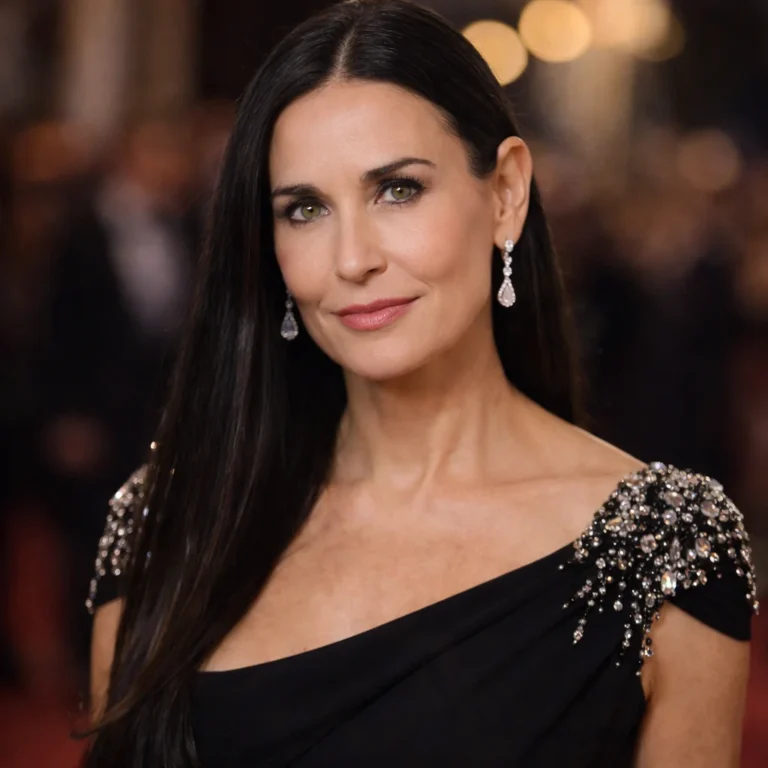
Demi Moore defined a generation of Hollywood stardom with her husky voice and fearless role choices. Initially, she rose from a difficult childhood in New Mexico to become the highest-paid actress in the world. Furthermore, her life off-screen has been just as fascinating, filled with unique health habits and high-profile relationships. Consequently, she remains a powerful figure in the industry with a story of incredible resilience. Explore these fascinating details about the star of Ghost.
Demi Moore
She owns a massive collection of dolls. Unusually, she possesses thousands of vintage dolls and keeps them in a separate house dedicated solely to storing them. In fact, her ex-husband Bruce Willis originally started the collection for her, and it is now insured for over two million dollars.
Leeches are part of her beauty routine. Shockingly, she traveled to Austria to undergo a detox therapy that involved trained medical leeches sucking her blood. She claimed that the enzyme released by the leeches helped detoxify her system and left her feeling revitalized.
She lost her two front teeth due to stress. Candidly, she revealed on The Tonight Show that she sheared off her front teeth because she was clenching her jaw so hard. She shared the photo publicly to highlight the physical dangers of severe stress.
Demi Moore broke salary records with Striptease. In 1996, she became the highest-paid actress in film history by negotiating a 12.5 million dollar paycheck for the role. Although the movie received mixed reviews, the deal shattered the glass ceiling for women’s pay in Hollywood.
She still has the clay pots from Ghost. Sentimental about her most famous role, she kept the small, misshapen clay pots she made during the iconic pottery wheel scene with Patrick Swayze. Today, they serve as a cherished reminder of the romantic blockbuster.
Her name comes from her first husband. Born Demetria Guynes, she took the last name of musician Freddy Moore when she married him at age 17. Even though they divorced just a few years later, she kept the name professionally for her entire career.
Demi Moore voiced Esmeralda in The Hunchback of Notre Dame. Uniquely, Disney cast her because they wanted a speaking voice that sounded different from the typical “princess” soprano. However, the singing voice for the character was provided by a different performer, Heidi Mollenhauer.
Childhood eye surgeries defined her early years. As a young girl, she suffered from severe strabismus, or crossed eyes, which required two operations to correct. Consequently, she had to wear an eye patch over her “good” eye to strengthen the weaker one.
She was born in Roswell, New Mexico. Although the town is famous for alien conspiracies, it is simply the place where the actress spent her early, humble years. She lived in a trailer park before eventually moving to California to pursue her dreams.
A raw vegan diet fuels her ageless look. For years, she has followed a strict diet where she does not eat food cooked above 118 degrees Fahrenheit. She believes this preserves the vital nutrients and enzymes in the vegetables.
She co-wrote songs with her first husband. Before she fully committed to acting, she dabbled in songwriting and even appeared in the music video for the song “It’s Not a Rumor.” She is listed as a co-writer on several tracks from that period of her life.
Obsessive cycling helped her prepare for roles. While filming Indecent Proposal, she would wake up at 4:00 AM to cycle 60 miles a day to stay in shape. She later admitted that this extreme workout routine was driven by an unhealthy obsession with her body image.
Demi Moore started her career on General Hospital. Long before she was a movie star, she played the character Jackie Templeton on the popular daytime soap opera. This role gave her the steady income and exposure she needed to break into film.
Her Vanity Fair cover changed maternity fashion forever. Bravely, she posed nude while seven months pregnant for the August 1991 issue. This controversial image sparked a cultural conversation and made pregnancy photoshoots a glamorous trend.
Finally, she returned to horror with The Substance. Decades after her peak stardom, she took on a grueling role in this body horror film that required hours of prosthetic makeup. Critics praised her performance as a brave and vulnerable look at aging in Hollywood.
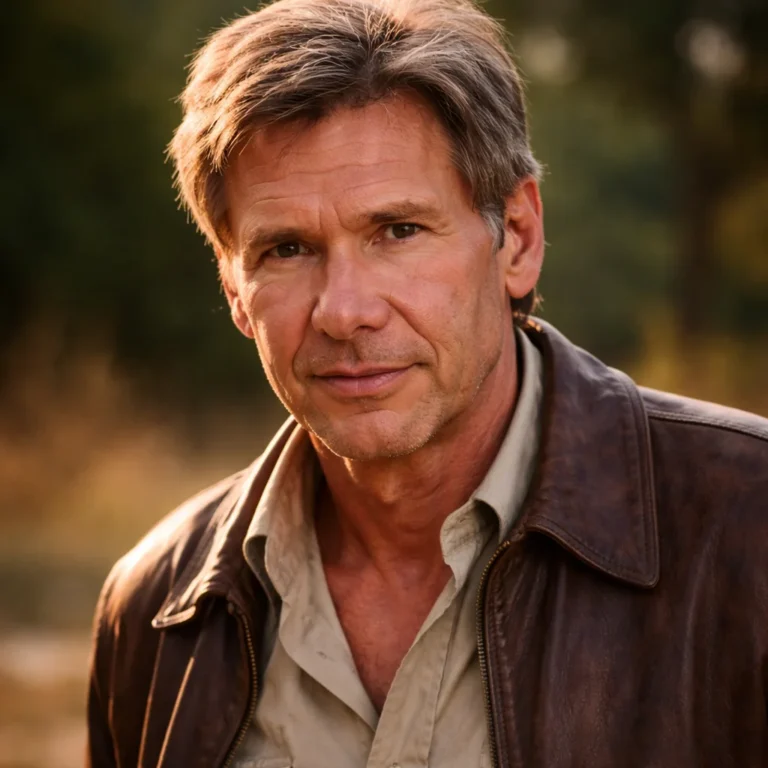
Harrison Ford is one of the highest-grossing actors in cinema history. However, the man who played Han Solo and Indiana Jones lived a very normal life before Hollywood called. For instance, he worked as a professional carpenter to support his family for years. Furthermore, he is a licensed pilot who actively rescues lost hikers in the wild. Consequently, his real life is often just as heroic as his movies. Therefore, punch it to hyperdrive and explore the secrets of this screen legend.
Harrison Ford
Harrison Ford worked as a carpenter for the stars. Before he became famous, George Lucas hired him to build cabinets. Eventually, this connection led to his casting in Star Wars.
He rescues people with his personal helicopter. On several occasions, he flew his chopper to save stranded hikers in Wyoming. Unlike in movies, he never charges for these rescue missions.
The famous “I know” line was his idea. When Princess Leia confesses her love in The Empire Strikes Back, Ford changed the scripted response to suit his character better.
A car accident caused the scar on his chin. While driving to work in the 1960s, he crashed into a telephone pole while trying to buckle his seatbelt.
He improvised the gunshot scene in Raiders of the Lost Ark. Because he suffered from severe dysentery that day, he suggested shooting the swordsman instead of fighting him to end the scene quickly.
Steven Spielberg cut him from E.T. the Extra-Terrestrial. Originally, Ford filmed a cameo as the school principal, but the director removed the scene to keep the focus on the children.
Scientists named a spider and an ant after him. specifically, the spider Calponia harrisonfordi and the ant Pheidole harrisonfordi honor his conservation work.
He once worked as a roadie for The Doors. Briefly, he operated a camera for the legendary rock band during their tours in the late 1960s.
He earned only $10,000 for the first Star Wars movie. Although the film became a massive hit, his initial salary was surprisingly low.
He survived a serious plane crash in 2015. After his vintage WWII plane suffered engine failure, he successfully crash-landed on a golf course in Los Angeles.
Harrison Ford pierced his ear at age 55. After he had lunch with Jimmy Buffett, the singer’s lifestyle inspired him to get the piercing immediately.
He has no Academy Awards for acting. Despite his legendary career, the Academy only nominated him once for his role in Witness.
He rejected the lead role in Jurassic Park. Consequently, Sam Neill took the part of Dr. Alan Grant after Ford turned it down.
He serves as Vice Chair of Conservation International. passionately, he dedicates significant time and money to protecting biodiversity around the globe.
Finally, he got his role in Star Wars by accident. George Lucas asked him to simply read lines with other actors during auditions, but Ford performed so well that Lucas cast him instead.