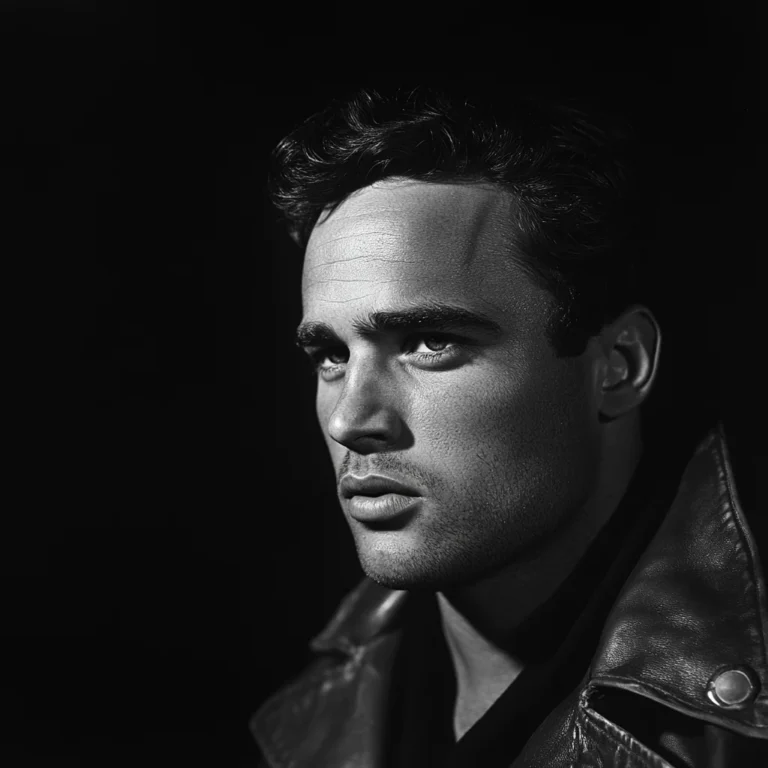
Marlon Brando remains a legendary icon who forever changed Hollywood. Known for his method acting and unpredictable personality, Brando astonished the world with memorable performances, groundbreaking choices, and a life packed with drama, making him a true titan of film and culture.
Marlon Brando
Born in Omaha in 1924, Marlon Brando quickly developed an independent streak that set him apart from peers.
While a teenager, Brando was expelled from both military academy and high school for rebellious behavior.
After moving to New York, he learned method acting from Stella Adler. He soon transformed his approach and inspired countless actors.
Brando’s career started on the Broadway stage, but he soared to fame as Stanley Kowalski in A Streetcar Named Desire.
Hollywood soon took notice, as Brando’s film debut in The Men showcased his impressive dedication. He even lived among wounded veterans to prepare.
He won his first Oscar for On the Waterfront and delivered unforgettable performances in The Wild One and Viva Zapata!.
For The Godfather, Brando created Don Vito Corleone and achieved a legendary Oscar win, but he famously refused the award in protest of Hollywood’s treatment of Native Americans.
Brando’s acting style changed cinema by bringing Stanislavski’s method to mainstream audiences, blending raw emotion with improvisation.
Ever the risk-taker, Brando directed and starred in One-Eyed Jacks—although critics didn’t love it, the film still became a cult classic.
He bought a private island in French Polynesia, naming it Tetiaroa, which remains a luxury resort today.
Brando was known for both genius and chaos on set; stories about his improvisation, pranks, and late-night antics still circulate in Hollywood.
Throughout his life, he married three times and fathered at least eleven children, keeping his family life as dramatic as his movies.
In the late 1970s, he played Superman’s father and Colonel Kurtz in Apocalypse Now, earning massive paychecks for his selective roles.
Surprisingly, Brando held a patent for a drum tuning device, revealing creative pursuits beyond acting.
Despite controversy and setbacks, Marlon Brando’s influence continues. His method, roles, and passion remain unmatched in film history.
How useful was this post?
Click on a star to rate it!
This AI-assisted post was rigorously curated and fact-checked for accuracy by:
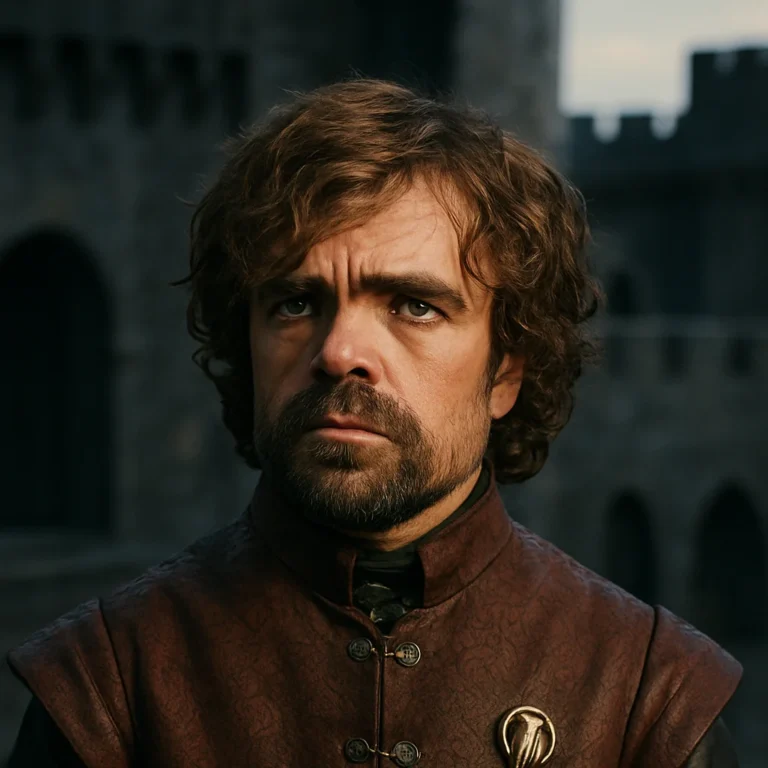
Peter Dinklage has become one of the most celebrated actors of his generation through his nuanced performances and groundbreaking portrayals. Best known for "Game of Thrones," his career spans film, theater, and voice work, marked by award-winning roles and advocacy.
Peter Dinklage
Peter Dinklage was born on June 11, 1969, in Morristown, New Jersey.
He has a form of dwarfism called achondroplasia and stands 4 ft 5 in (1.35 m) tall.
Dinklage broke into the film industry with the 1995 indie black comedy “Living in Oblivion.”
His breakout role came in 2003 with the critically acclaimed film “The Station Agent,” earning him widespread praise.
He is best known globally for playing Tyrion Lannister on the HBO fantasy series “Game of Thrones” (2011–2019).
For his role as Tyrion, Dinklage won four Primetime Emmy Awards for Outstanding Supporting Actor in a Drama Series.
He also took home a Golden Globe Award and a Screen Actors Guild Award for the same role.
Peter Dinklage is the only “Game of Thrones” cast member to receive an Emmy nomination for every season of the show.
Outside Game of Thrones, he has appeared in films such as “Elf,” “X-Men: Days of Future Past,” and “Three Billboards Outside Ebbing, Missouri.”
He voiced characters in video games, including “Destiny” and “Transformers: Rise of the Beasts.”
Peter Dinklage has a strong theater background, starring in plays like Shakespeare’s “Richard III” and Chekhov’s “Uncle Vanya.”
Known for his wit and intelligence, Dinklage often chooses roles that challenge stereotypes about people with dwarfism.
He is married to Erica Schmidt, a theater director, and they have two children.
Peter Dinklage is an outspoken advocate for diversity and inclusion in Hollywood, especially regarding roles for actors with disabilities.
Despite his fame, he maintains a private personal life and is respected for his humility and grounded personality.
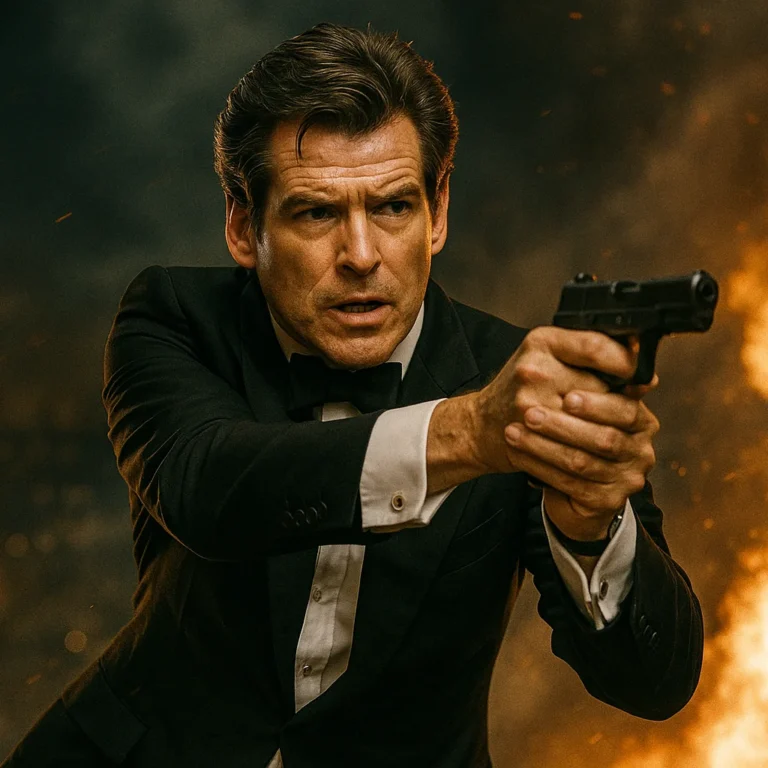
Pierce Brosnan redefined James Bond for the ‘90s and 2000s with charm, daring stunts, and lasting appeal. Explore fascinating insights into his career and life beyond 007.
Pierce Brosnan
Pierce Brosnan’s grandparents raised him after his mother left to work in England and his father left the household shortly after his birth.
Before becoming James Bond, Brosnan was a trained commercial illustrator and studied at the Drama Centre in London.
He rose to fame playing the title role in the TV series Remington Steele (1982–1987), which made him a household name in the United States.
Producers initially cast Brosnan as James Bond in the late 1980s, but he had to postpone because his contract with Remington Steele prevented him, so Timothy Dalton took the role instead.
He officially became James Bond in 1994, debuting with GoldenEye in 1995, which was the highest-grossing Bond film at that time.
Brosnan played James Bond in four films: GoldenEye, Tomorrow Never Dies, The World Is Not Enough, and Die Another Day.
He brought a suave and charming yet tough edge to Bond, revitalizing the character for a new generation.
Brosnan’s Bond used more gadgets than his predecessors, including a pen that could helicopter and an invisible car.
He gained a reputation for performing many of his own stunts during Bond films, enhancing the action scenes’ realism.
After the Bond series, Brosnan starred in diverse films such as Mamma Mia!, Percy Jackson & the Olympians, and The November Man.
He is an avid environmentalist and has campaigned for ocean conservation efforts globally.
Brosnan is also a painter, with his artworks exhibited in galleries.
He became a U.S. citizen in 2004, though he retains his Irish citizenship.
In 2003, Pierce Brosnan was appointed an Honorary Officer of the Order of the British Empire (OBE) for his contributions to film.
Brosnan remains one of the most beloved and recognizable James Bonds, helping keep the franchise thriving into the 21st century.