The sprawling metropolis sits directly on top of massive, active oil fields, and the city continues to operate dozens of active drilling rigs in plain sight. To keep the industrial machinery hidden from residents, these massive oil derricks are completely disguised as windowless office buildings, beautifully landscaped concrete towers, and even tall church steeples located right next to high schools and residential homes.
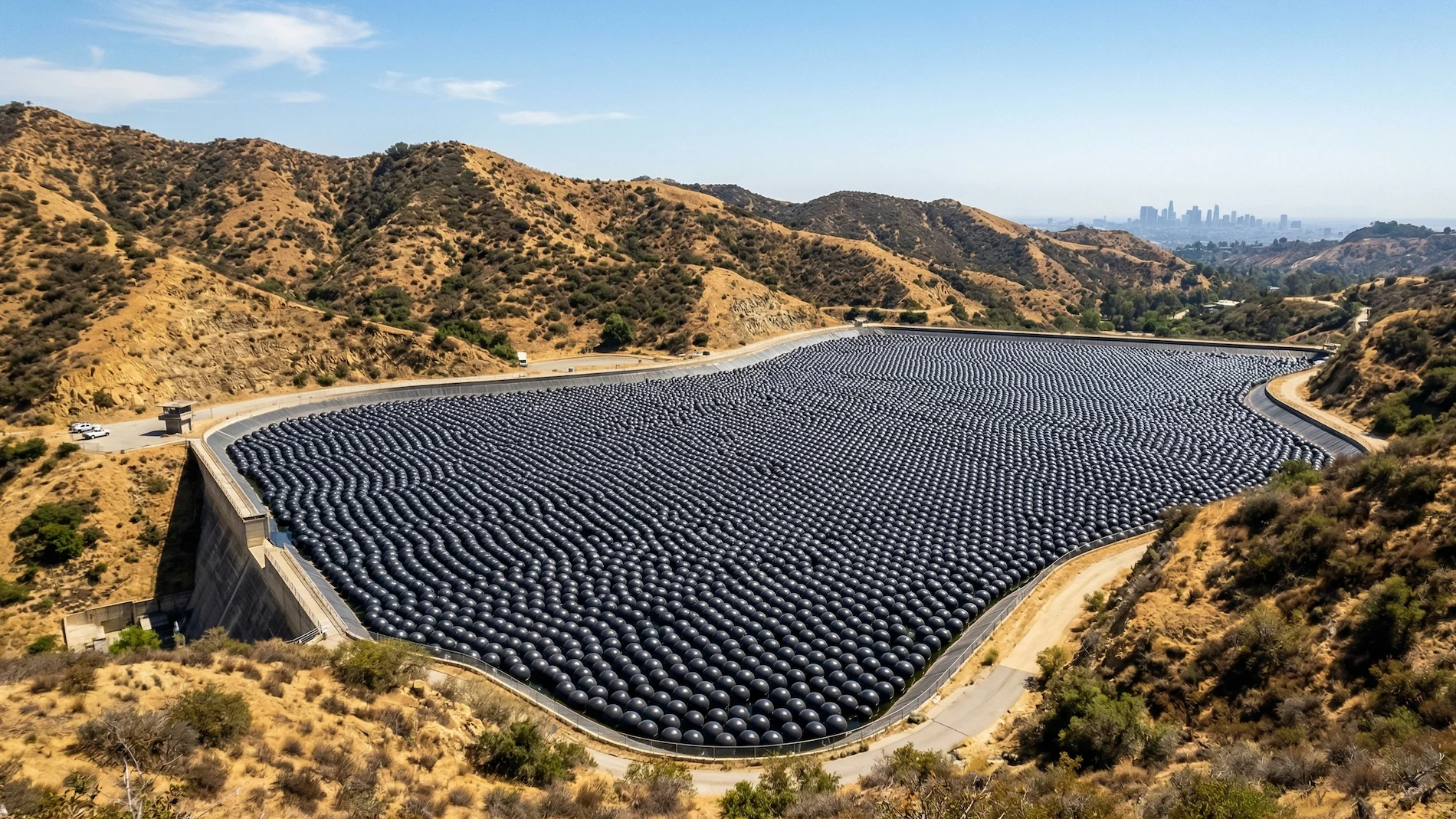
The local government famously dumped ninety-six million black plastic shade balls directly into the Los Angeles Reservoir. This bizarre, highly visual environmental engineering feat was not primarily to stop evaporation during the drought, but rather to physically block sunlight from reacting with chlorine and natural bromide in the water, successfully preventing a chemical reaction that creates a dangerous, carcinogenic byproduct in the drinking water.
The world-famous neighborhood of Hollywood was originally founded by strict religious prohibitionists. Long before it became the capital of global entertainment and wild celebrity parties, a married couple named Harvey and Daeida Wilcox established Hollywood in 1887 strictly as a deeply conservative, utopian temperance community where the sale and consumption of alcohol were completely illegal.
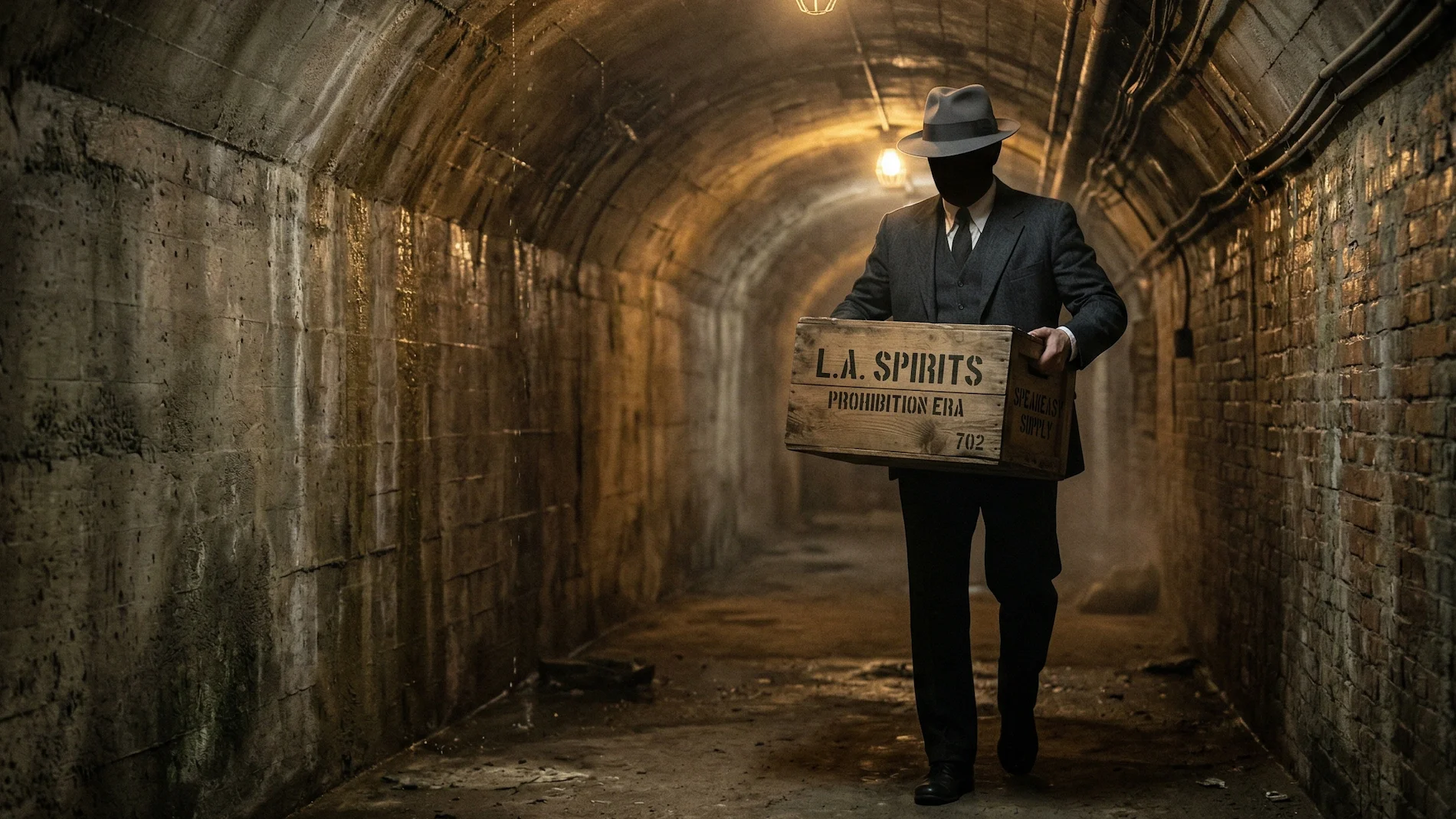
A massive, forgotten eleven-mile network of underground tunnels quietly exists directly beneath the bustling streets of downtown Los Angeles. Originally built as service passages and equestrian trails, these tunnels were heavily utilized during the Prohibition era by corrupt politicians and organized crime syndicates to secretly move uncounted tons of illegal liquor into heavily guarded subterranean speakeasies completely unseen by the public above.
The most iconic landmark in the entire city was never meant to be permanent. The world-famous Hollywood sign originally read HOLLYWOODLAND when it was erected in 1923, and it was nothing more than a temporary, flashing billboard designed to advertise a new, upscale housing development, intended to be torn down after just eighteen months before it eventually became a permanent cultural monument.
The famous, heavily filmed Los Angeles River is completely encased in millions of tons of concrete. For decades, the river flowed naturally, but after a series of catastrophic, deadly floods completely destroyed large sections of the growing city in the 1930s, the Army Corps of Engineers took the extreme ecological step of entirely paving over fifty miles of the riverbed to force floodwaters directly into the ocean.
The city features a bubbling, prehistoric death trap operating right in the middle of a modern urban neighborhood. The La Brea Tar Pits located on the Miracle Mile are not a museum exhibit, but rather a completely active, natural asphalt seep where raw oil continuously pushes up from deep underground, creating sticky puddles that are still actively trapping and killing local birds and insects right next to modern skyscrapers.
A bizarre, hyper-specific building code completely dictated the shape of the downtown skyline for forty years. Between 1974 and 2014, city regulations legally mandated that every single newly constructed skyscraper had to feature a completely flat roof equipped with a massive emergency helicopter pad, preventing architects from building towers with decorative spires and resulting in a completely flat-topped skyline for decades.
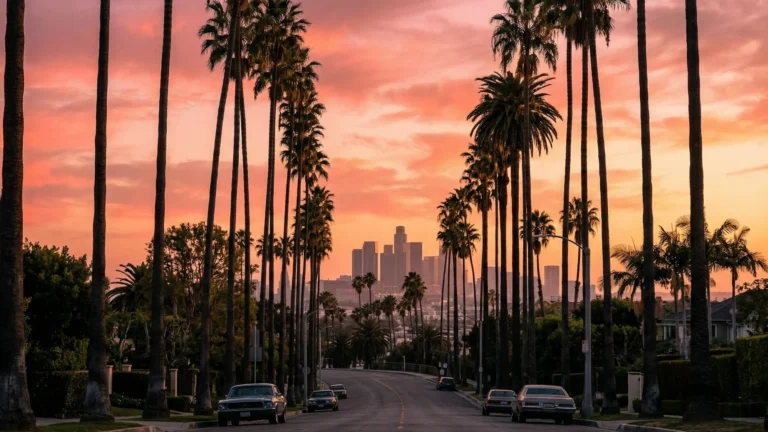
The towering, iconic palm trees that define the visual aesthetic of the city are entirely non-native and are currently dying out. Aside from the California fan palm, almost all the massive trees were artificially imported and planted as a massive civic beautification project just before the 1932 Olympic Games to make the desert basin look like a tropical oasis, and the city has officially decided not to replace them as they die of old age.
A massive herd of wild, roaming bison lives on a remote island just off the coast of the city. During the filming of a silent Western movie in 1924, a Hollywood film crew transported over a dozen American bison to Catalina Island to use as background extras, and when the production wrapped, they simply abandoned the massive animals, allowing them to breed and establish a thriving wild population that still exists today.
The iconic Griffith Observatory, which offers the greatest views of the cosmos in the city, was entirely funded by a convicted attempted murderer. The wealthy industrialist Griffith J. Griffith donated the massive parkland and the funds for the observatory, but the city initially refused to build the project because Griffith had notoriously shot his own wife in the face in a paranoid rage and subsequently served time in San Quentin State Prison.
The coastal mountains hide the decaying ruins of a massive, heavily fortified Nazi sympathizer compound. Deep in the Pacific Palisades, a secretive group of American fascists built the Murphy Ranch in the 1930s, spending millions to construct a self-sustaining, heavily armed utopian bunker designed to support Hitler’s ideology, before federal agents finally raided the property and shut it down the day after Pearl Harbor.
The city is tectonically migrating toward Northern California at a remarkably steady biological pace. Because Los Angeles sits on the Pacific tectonic plate while San Francisco sits on the North American plate, the slow, grinding movement of the San Andreas Fault literally pushes the City of Angels northwest by roughly two and a half inches every single year, approximately the same speed at which human fingernails grow.
The upscale coastal neighborhood of Venice once featured sixteen miles of fully functioning, flooded canals. In 1905, the eccentric developer Abbot Kinney attempted to create a cultural replica of Venice, Italy in Southern California, importing authentic Italian gondolas and gondoliers to navigate his massive canal network, though the vast majority of the waterways were unceremoniously filled in and paved over for automobiles by 1929.
It is the only major metropolis in the world physically bisected by a massive, wild mountain range. The Santa Monica Mountains cut directly through the geographic center of Los Angeles, completely separating the dense urban basin from the sprawling San Fernando Valley, creating a bizarre geographical reality where residents routinely commute over rugged, coyote-filled mountain passes simply to get to work.
Sources and References:
PBS NewsHour: https://www.pbs.org/newshour/science/why-96-million-plastic-shade-balls-dumped-into-the-la-reservoir-may-not-save-water
Smithsonian Magazine: https://www.smithsonianmag.com/science-nature/la-brea-tar-pits-sucking-visitors-millennia-paleontologits-still-finding-out-what-lies-within-ooze-180988404/
Atlas Obscura: https://www.atlasobscura.com/places/underground-tunnels-los-angeles
Atlas Obscura: https://www.atlasobscura.com/places/murphy-ranch
Smithsonian Magazine: https://www.smithsonianmag.com/science-nature/the-isle-where-buffalo-roam-122300908/