1. Australia Once Lost a War Against Emus
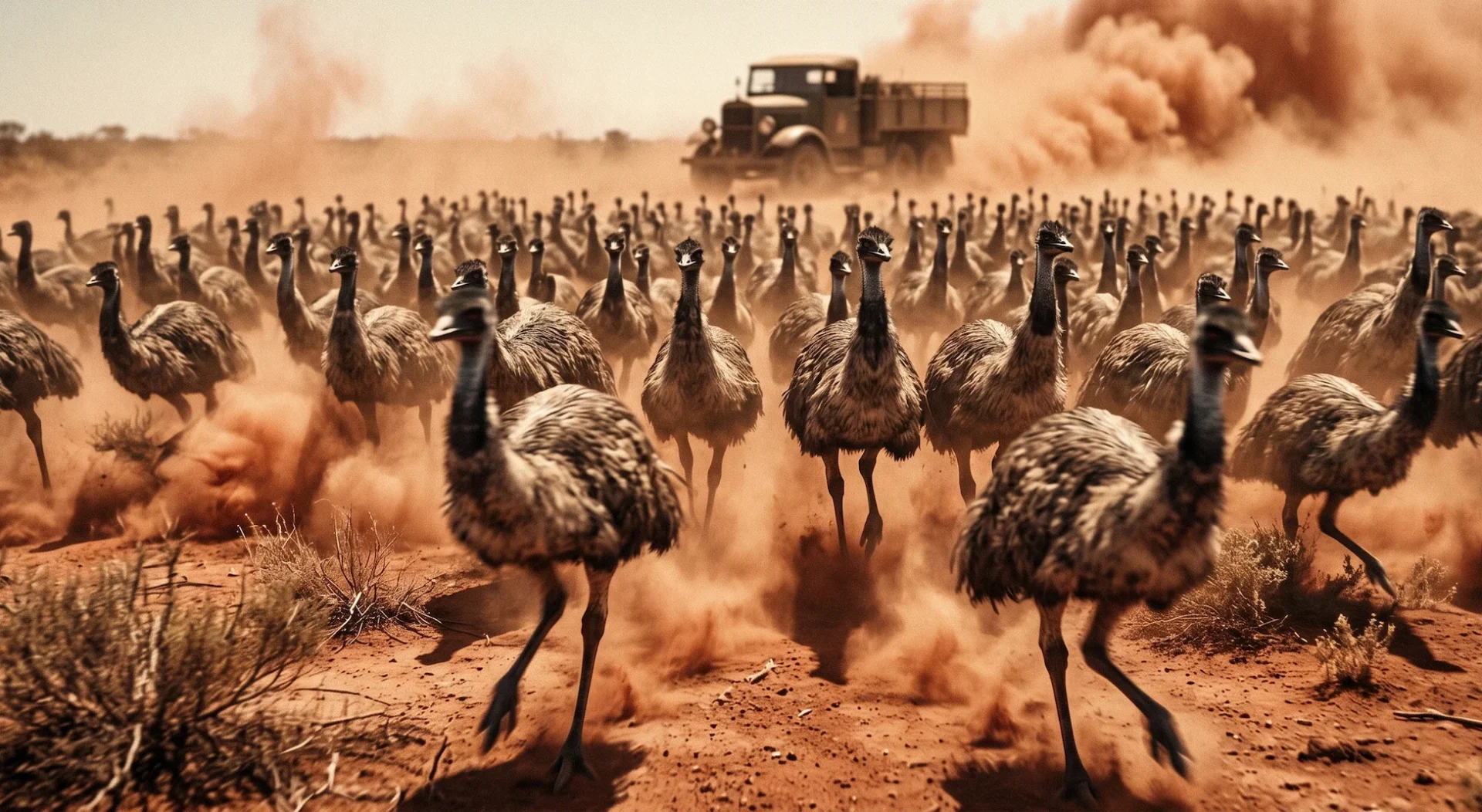
In 1932, the Australian military deployed soldiers armed with Lewis machine guns to western Australia to combat a massive plague of emus destroying local crop fields. Hilariously, the giant, flightless birds proved exceptionally evasive, absorbing bullets, scattering in unpredictable directions, and completely outmaneuvering the troops. After wasting thousands of rounds of ammunition with minimal success, the military formally withdrew, meaning the nation essentially lost a war to a flock of birds.
2. Lake Hillier is a Mysterious Neon Pink Wonder
Located off the southern coast of Western Australia, Lake Hillier is a stunning, bubblegum-pink body of water that looks like it belongs on an alien planet. Unlike other pink lakes around the world that fluctuate with the temperature, this neon marvel maintains its vibrant hue year-round, even when the water is scooped into a glass. While scientists debate the exact mechanism, the coloring is largely attributed to a unique combination of extreme salinity, specific microalgae, and pink halobacteria thriving in the water.
3. There Are More Kangaroos Than Humans in Australia
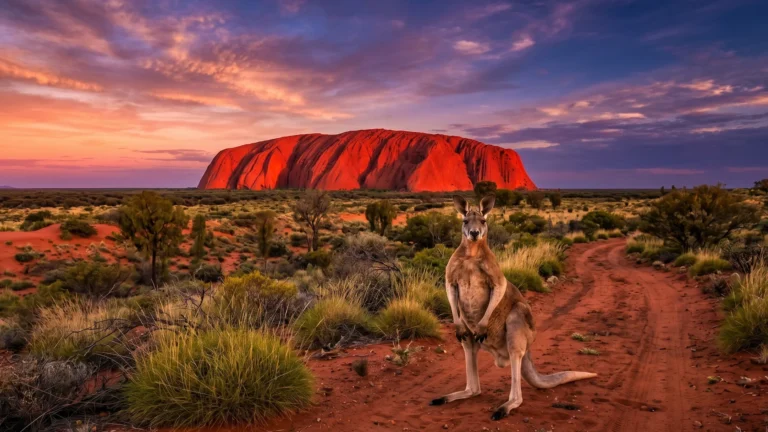
It might sound like an exaggerated stereotype, but there are actually significantly more kangaroos living in Australia than human beings. The most recent government estimates suggest that over 40 to 50 million kangaroos are currently bounding across the outback, easily outnumbering the human population of roughly 26 million. Because they have very few natural predators left and benefit greatly from agricultural water sources, the roo population is constantly booming, making them both a beloved national icon and a controversial agricultural pest.
4. Wombat Poop is Uniquely Cube-Shaped
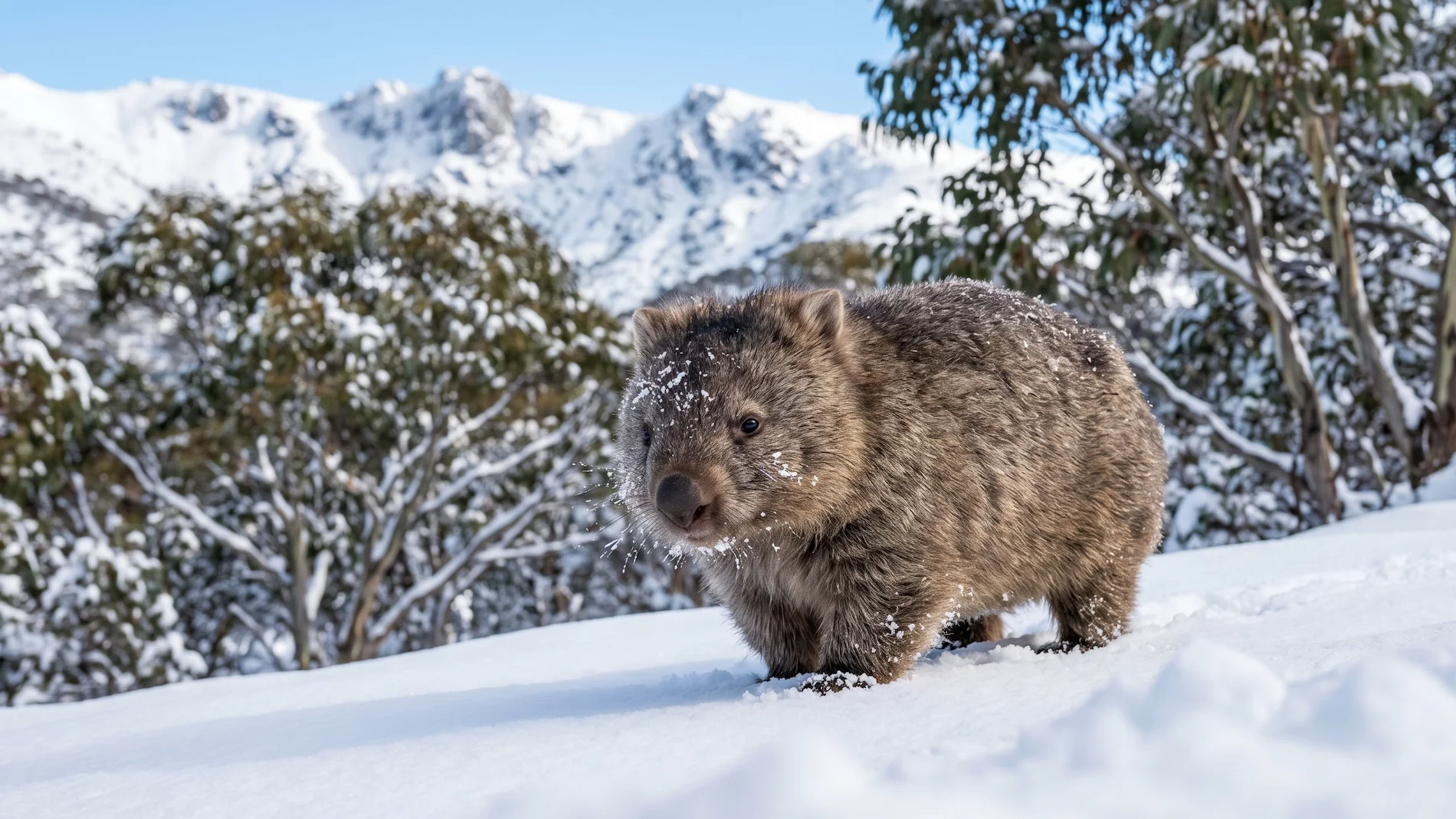
One of the most bizarre biological anomalies in the entire animal kingdom belongs to the adorable, burrowing wombat and its uniquely cube-shaped feces. Because wombats use their droppings to mark territory on rocks and logs, evolutionary biology engineered a way to stop the poop from rolling away. Their incredibly slow digestive process and uniquely shaped, highly elastic intestines compact the waste into distinct, geometric cubes before it finally exits the body.
5. The Dingo Fence is Longer Than the Great Wall of China
Stretching across the harsh outback, the famous Dingo Fence was constructed in the 1880s to keep predatory wild dogs away from fertile sheep-grazing lands in the southeast. Measuring an astonishing 5,600 kilometers (3,480 miles), it is frequently noted that the Dingo Fence is longer than the Great Wall of China. While the entire historical, highly fragmented network of the Great Wall is technically longer in total, the Dingo Fence easily beats the Great Wall’s longest continuous section, making it the longest unbroken fence on the planet.
6. It is the Only Continent Without an Active Volcano
Australia holds a highly unique geological distinction: it is the absolute only continent on Earth that does not possess a single active volcano. Because the massive landmass sits securely in the middle of the Indo-Australian tectonic plate, rather than on the volatile edges like the Pacific “Ring of Fire,” it experiences almost no major geothermal or volcanic activity. While there are plenty of extinct, ancient volcanic craters scattered across the outback, the land has remained geologically quiet for thousands of years.
7. The Australian Alps Get More Snow Than the Swiss Alps
When most people picture Australia, they envision scorching deserts, tropical reefs, and sun-baked beaches, but the continent also boasts a massive winter wonderland. The sprawling Australian Alps, stretching across New South Wales and Victoria, actually receive more annual snowfall than the world-famous Swiss Alps. Because this mountainous region is so incredibly vast, the sheer total area covered in deep winter snow easily dwarfs the ski slopes of Switzerland, offering surprisingly world-class skiing and snowboarding conditions.
8. The Platypus Does Not Have a Stomach
The platypus is already famous for being a venomous, egg-laying mammal with a duck bill, but its internal anatomy is just as wonderfully absurd. This bizarre creature completely lacks a stomach, meaning its esophagus connects directly to its intestines without any acidic digestion chamber in between. Evolutionary biologists believe that because their diet consists of easily digestible bottom-dwelling invertebrates, the platypus simply evolved away the need for a complex, energy-consuming stomach over millions of years.
9. Australia Has the Largest Population of Wild Camels
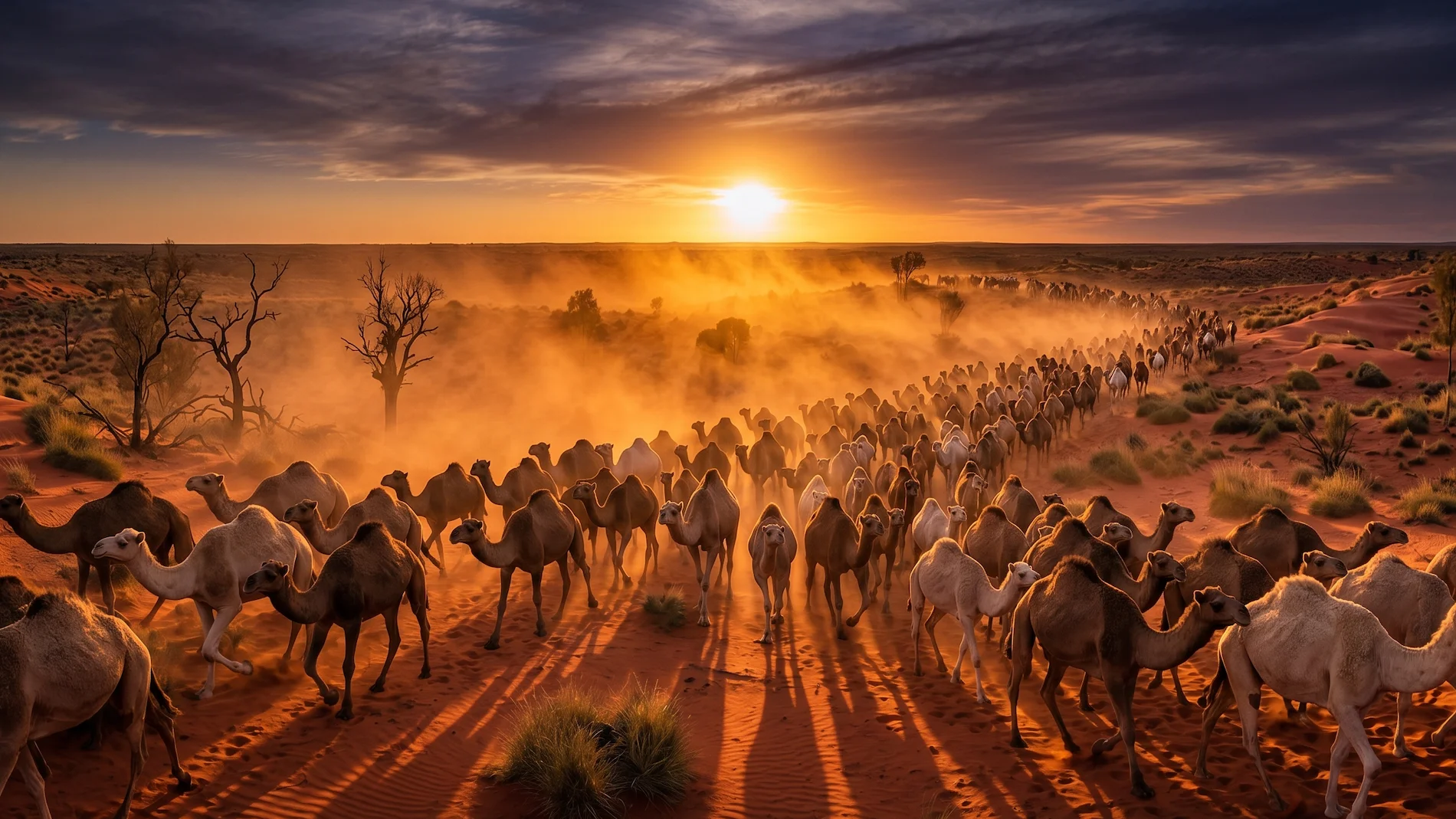
In a twist of ecological irony, the largest population of wild, free-roaming camels on Earth is not in the Middle East, but roaming the Australian outback. Brought over by British colonists in the 19th century to help explore the vast, arid interior, the camels were released into the wild once motorized transport took over. Today, over a million of these feral dromedaries thrive in the harsh desert environment, completely dominating the landscape and occasionally terrorizing remote outback communities in search of water.
10. Highway 1 is the Longest National Highway in the World
If you love epic road trips, Australia offers the ultimate driving challenge with Highway 1, which seamlessly circles the entire perimeter of the massive island continent. Measuring an awe-inspiring 14,500 kilometers (9,000 miles), it officially holds the record as the longest national highway in the entire world. Taking at least a month to complete, this epic coastal route guides drivers through bustling megacities, lush rainforests, desolate desert stretches, and some of the most dramatic ocean cliffs on the planet.
11. Fraser Island is the Largest Sand Island on Earth
Off the eastern coast of Queensland lies K’gari, formerly known as Fraser Island, which currently holds the title of the largest sand island in the entire world. Stretching for 122 kilometers, this entire landmass is constructed completely of shifting sand dunes, yet it miraculously supports towering, lush rainforests and crystal-clear freshwater lakes. It is a wildly unique ecological marvel where wild dingoes roam the beaches and massive trees manage to grow directly out of nutrient-poor, pure silica sand.
12. The Continent is Almost as Large as the United States
It is incredibly difficult for outsiders to grasp just how unfathomably massive the Australian continent truly is until they look at a superimposed map. Covering about 7.69 million square kilometers, Australia is almost exactly the same size as the contiguous United States. Despite this staggering geographical footprint, the vast majority of the harsh, arid interior is completely uninhabitable, forcing over 85 percent of the entire population to live strictly within 50 kilometers of the coastline.
13. Nobody Has Died From a Spider Bite Since 1979
Australia is internationally notorious for being crawling with deadly, venomous creatures, particularly massive spiders that look like they belong in horror movies. However, the terrifying reputation is largely blown out of proportion, as nobody has actually died from a confirmed spider bite in Australia since 1979. Thanks to the widespread availability of highly effective antivenom and modern medical care, surviving an encounter with a notoriously lethal Sydney Funnel-web spider is practically guaranteed today.
14. You Could Visit a New Beach Daily for 27 Years
With an endless, sprawling coastline wrapping around the entire continent, Australia is the undisputed beach capital of the world. The country boasts an astonishing 10,685 perfectly pristine, sandy beaches scattered along its shores. If you made it your ultimate life goal to visit one new Australian beach every single day, it would take you more than 27 years to finally see them all.
15. The Sydney Opera House Was Inspired by an Orange
The iconic, sail-like roof of the Sydney Opera House is one of the most instantly recognizable architectural triumphs of the 20th century. However, Danish architect Jørn Utzon did not base his masterpiece on nautical sails, but rather on the simple geometry of a peeled orange. If you take all fourteen individual “shells” from the roof of the massive building and combine them, they form a perfect, continuous sphere.
Sources and References