Because they evolved to constantly graze and flee from predators rather than ruminate, horses physically cannot vomit or even burp. Their esophagus contains an incredibly powerful, one-way muscular valve called the cardiac sphincter that allows food to enter the stomach but completely locks shut, making it anatomically impossible for the contents to ever come back up.
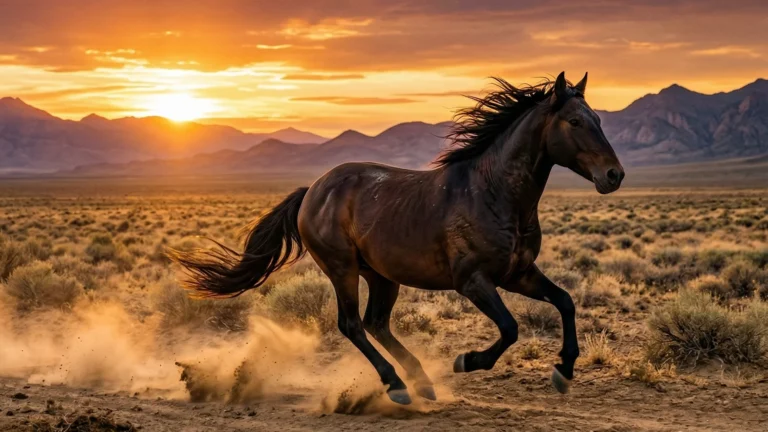
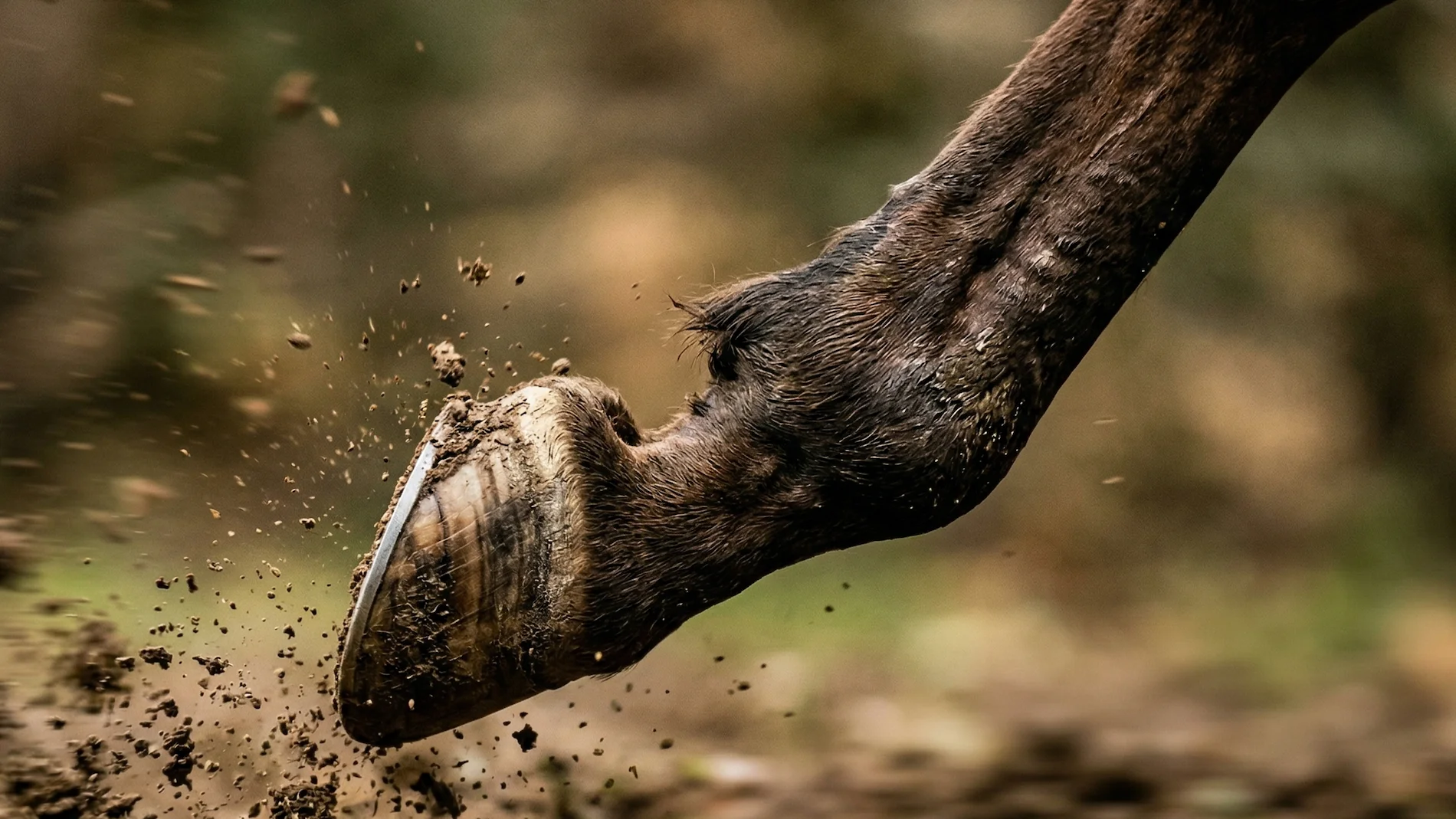
When you watch a massive stallion galloping across a field, you are essentially watching an animal running exclusively on its middle toenails. Through millions of years of evolution, the prehistoric ancestors of the horse lost their other digits to maximize running speed, leaving them with one single, massive toe encased in a thick keratin shell that we now call the hoof.
The lower legs of a horse contain absolutely no muscle tissue, operating entirely through an intricate system of tendons and ligaments. Because their legs are so incredibly long, the heart struggles to pull blood back up to the body, so the animal relies on a fleshy structure inside the hoof called the digital cushion, which physically acts as a secondary heart, compressing with every single step to forcefully pump blood back up the leg.
Unlike humans and most other mammals, horses completely lack a collarbone to attach their front limbs to their skeleton. Instead, their massive front legs are suspended purely by a complex, heavy sling of muscles and ligaments called the thoracic sling, a brilliant evolutionary adaptation that acts as a giant biological shock absorber to protect their internal organs when landing from a massive jump.
When a horse curls its upper lip and completely exposes its teeth, it is not actually laughing or smiling at you. This behavior is called the Flehmen response, and it allows the animal to actively trap specific scents and forcefully push pheromones directly into the vomeronasal organ, a specialized olfactory gland located under the nasal cavity that heavily processes reproductive and social chemical signals.
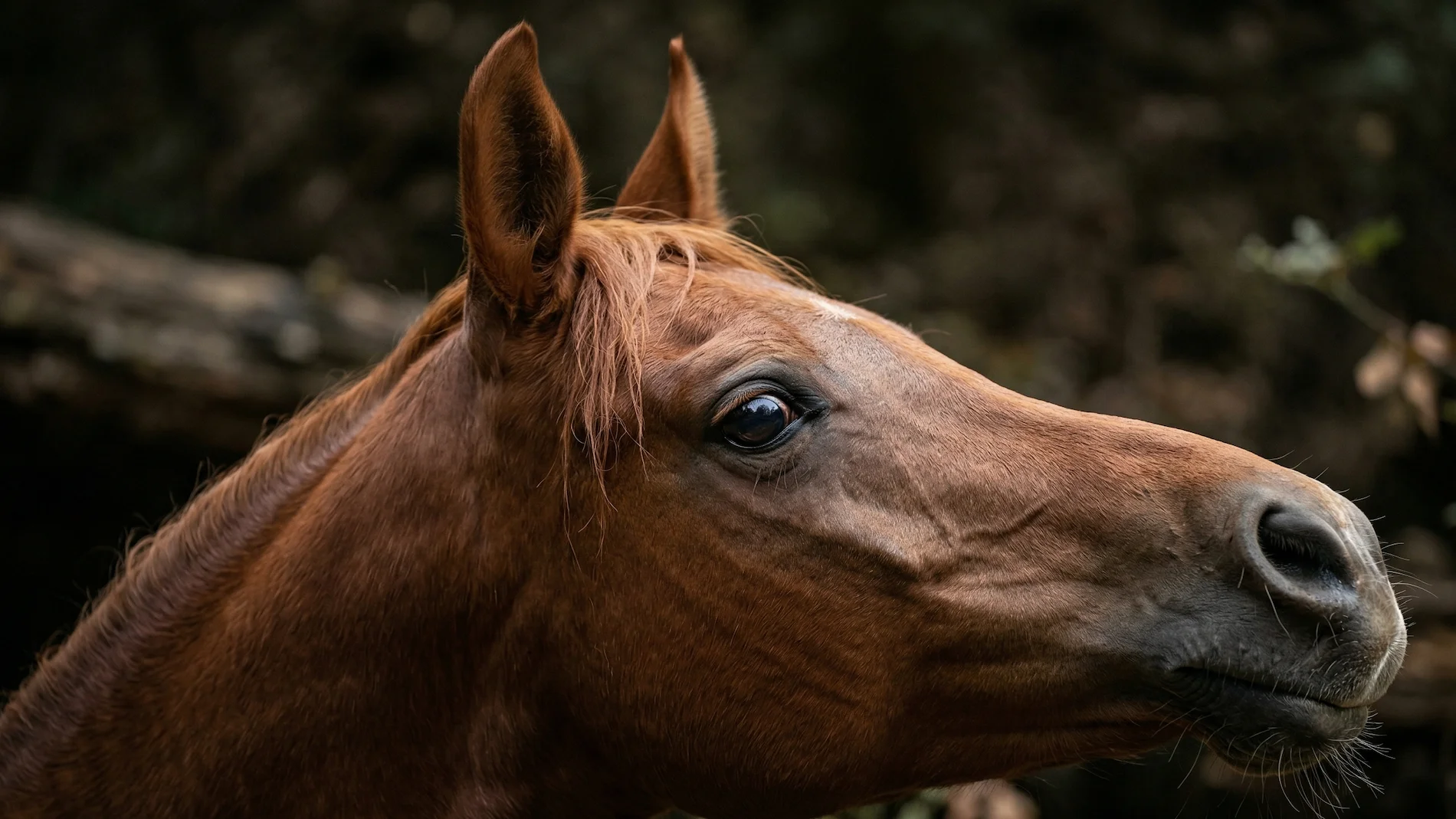
Their massive eyes are positioned entirely on the sides of their head, granting them an incredible panoramic field of vision to easily spot approaching predators. However, this extreme monocular positioning ironically leaves them with two massive, permanent blind spots, meaning they physically cannot see anything located directly in front of their nose or directly behind their tail.
While almost all equine breeds possess identical skeletal blueprints, the ancient and highly prized Arabian horse features a deeply unique anatomical structure. Due to centuries of isolated desert breeding, purebred Arabians possess one fewer pair of ribs and only five lumbar vertebrae instead of the standard six, giving them their famously shortened, compact backs and incredibly high tail carriage.
Because lying down requires massive amounts of energy and makes a heavy prey animal highly vulnerable to predators, horses developed the ability to sleep completely standing up. They utilize a complex system of locking tendons and ligaments known as the stay apparatus, which literally locks the patella bone of their hind legs in place, allowing their massive muscles to completely relax without the animal collapsing to the ground.
The evolutionary demand for constant, relentless chewing has drastically shaped the proportions of the equine skull. Because they survive on incredibly tough, fibrous grasses, the teeth of an adult horse are so massive and physically deeply rooted into their skull that they actually occupy significantly more physical space inside the animal’s head than their entire brain cavity.
Due to the specific positioning of the soft palate in the back of their throat, which completely blocks the airway to the mouth, horses are obligate nasal breathers. This means that unlike dogs or humans, it is completely anatomically impossible for a horse to breathe through its mouth, forcing them to draw massive amounts of oxygen entirely through their flared nostrils even while running at top speed.
The ears of a horse function like highly advanced, independent satellite dishes designed to constantly scan the horizon for danger. Each individual ear is controlled by ten separate, highly specialized muscles, allowing the animal to effortlessly rotate its ears a full one hundred and eighty degrees in entirely opposite directions to precisely pinpoint the exact location of a snapping twig without ever turning its head.
In human biology, the gallbladder stores concentrated bile to help digest large, infrequent meals. Because horses evolved to be continuous, trickle-feed grazers that eat small amounts of grass constantly throughout the entire day, they completely lack a gallbladder entirely, relying instead on a steady, continuous drip of bile flowing directly from the liver into their digestive tract.
Maintaining such a massive, constant flow of dry forage through their complex digestive system requires an unbelievable amount of daily hydration. A healthy adult horse will easily consume between five to ten gallons of fresh water every single day just to keep their digestive tract properly lubricated, a volume that drastically increases during hot summer months or intense athletic performance.
The moment a baby horse is born, a biological clock immediately begins ticking. As a prey species that must constantly migrate with the herd to avoid apex predators, an equine foal is biologically programmed to stand, walk, and even run at significant speeds within just two hours of taking its very first breath, a remarkable survival mechanism practically unseen in major predatory mammals.
Equine behavioral scientists have definitively proven that horses possess an extraordinary capacity for long-term memory. Not only can they perfectly map and remember specific grazing locations and water sources for years, but they also remember human faces, retaining deeply ingrained positive or negative emotional associations with specific handlers for the entire duration of their lives.
Sources and References:
Cornell University College of Veterinary Medicine: https://www.vet.cornell.edu/about-us/news/20230515/assessment-vision-and-common-eye-problems-horses
University of Minnesota Extension: https://extension.umn.edu/horse-health/caring-underweight-horse
Utah State University Extension: https://extension.usu.edu/weber/files/HORSE-PROGRAM-STUDY-MATERIAL-VERSION3.pdf