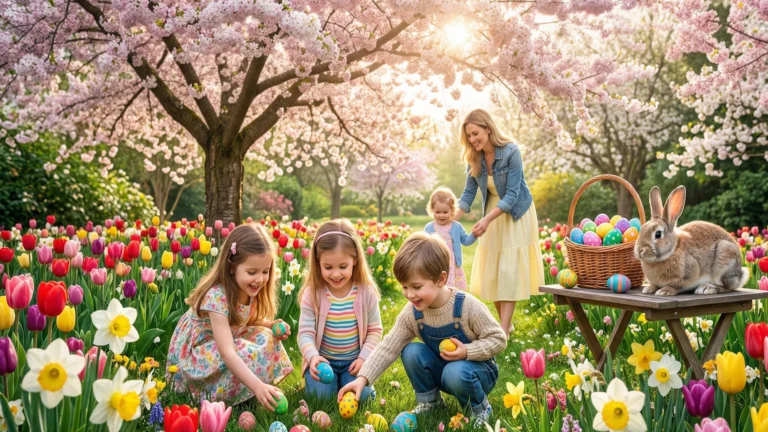
The very name of the holiday has surprisingly pagan roots. According to the eighth-century English monk and historian Bede, the word Easter is derived from Eostre, an ancient Anglo-Saxon goddess of the dawn and springtime, whose joyous festivals of renewal were eventually absorbed by early Christians to name their celebration of the resurrection.
The original Easter Bunny was a strict judge of children’s behavior. Originating in German Lutheran folklore, the Osterhase, or Easter Hare, was not just a delivery animal but a magical creature who evaluated whether children had been good or disobedient at the start of the season, serving a role almost identical to Santa Claus and his naughty list.
The date of the holiday is governed by an incredibly complex astronomical algorithm. Because Easter is a movable feast, its exact date is determined by a calculation known as the computus, which dictates that the holiday must fall on the first Sunday after the first ecclesiastical full moon occurring on or after the March equinox, a mathematical headache that historically required the brightest minds in astronomy to constantly reconcile the solar and lunar calendars.
The sheer volume of marshmallow candy produced for the season is astronomically large. The Just Born candy company manufactures approximately two billion marshmallow Peeps every single year, producing about five and a half million of the sugary treats every day in a highly mechanized process that can create a fully formed chick in just six minutes.
An entire Scandinavian nation is completely obsessed with Easter crime. In Norway, the holiday is dominated by a cultural phenomenon known as Paskekrim, or Easter Crime, a tradition sparked in 1923 when a publisher placed a hyper-realistic fake news ad about a train robbery on the front page of a newspaper to sell a thriller novel. Today, Norwegians retreat to snowy mountain cabins for a five-day weekend specifically to read murder mysteries and watch true-crime television.
Traditional Ukrainian eggs are deeply symbolic talismans meant to protect the world. The intricate art of Pysanky uses a wax-resist stylus called a kystka to write ancient geometric patterns onto raw eggs. According to ancient folklore, as long as these intricate eggs are made, the beautiful designs add links to a mystical chain that binds a great evil dragon, keeping the world safe from chaos.
An explosive, pyrotechnic cart dominates the Easter Sunday skyline in Florence. Dating back to the First Crusade, the Scoppio del Carro involves a thirty-foot-tall antique cart packed with fireworks being hauled into the Piazza del Duomo by white oxen. During the mass, the archbishop lights a mechanical dove called the colombina, which rockets down a wire to ignite the cart in a massive explosion to guarantee a good harvest.
There is a precise, structural reason why we bite the ears off chocolate bunnies first. While medical journals like The Laryngoscope have published tongue-in-cheek studies referring to this as confectionary rabbit auricular amputation, physicists and surveyors note that nearly eighty percent of people start with the ears simply because they are the weakest structural points protruding from the hollow chocolate shell, making them the easiest to snap off.
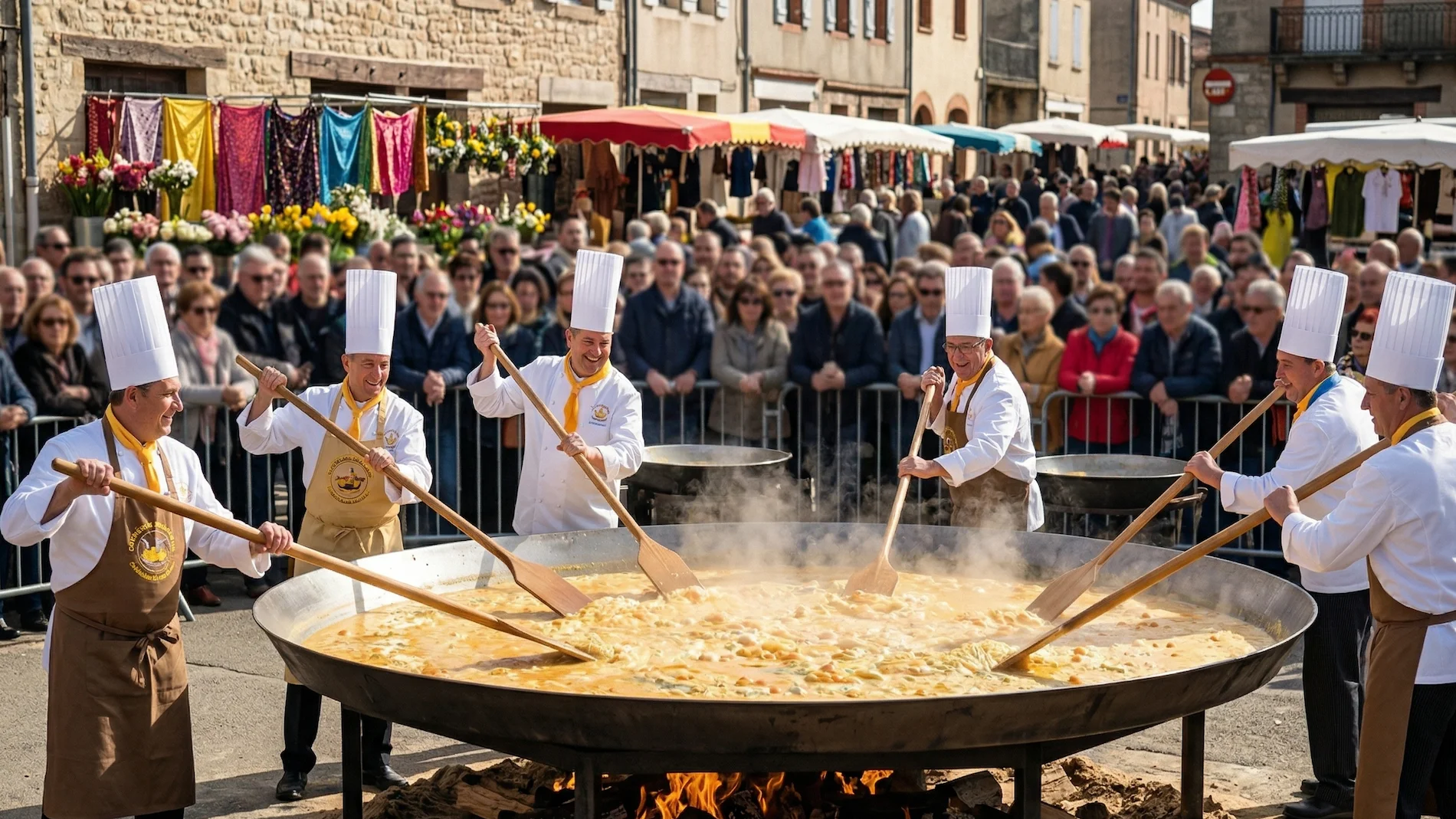
A tiny French village makes a colossal omelet to honor an old military legend. Every Easter Monday, the town of Bessieres gathers in the main square to cook a massive omelet made of fifteen thousand eggs. Local lore claims the tradition began when Napoleon Bonaparte stayed in the town, enjoyed a local omelet so much, and ordered the townspeople to gather every egg in the village to feed his entire army the following morning.
The sale of hot cross buns was once strictly regulated by the English crown. Originating with a fourteenth-century monk who handed out spiced, cross-marked buns to the poor on Good Friday, the baked goods became so incredibly popular and heavily steeped in superstition that in 1592, Queen Elizabeth I issued a royal decree making it completely illegal to sell them on any day other than Good Friday, Christmas, or for burials.
While urban legends sometimes claim the largest Easter egg ever made was taller than a skyscraper, the reality is a bit more grounded, though still incredibly massive. The Guinness World Record for the largest decorated Easter egg belongs to a fifty-four-foot-tall structure in Pomerode, Brazil, while the largest chocolate egg was crafted in Italy in 2011, standing at thirty-four feet tall. Both are about the height of a multi-story building rather than a towering skyscraper, requiring complex internal scaffolding to prevent the sheer weight from collapsing.
A massive national water fight takes over the streets of Poland on Easter Monday. Known as Smigus-Dyngus, or Wet Monday, this ancient Slavic tradition involves people of all ages roaming the streets with buckets, water guns, and balloons to completely soak one another, a joyful chaotic ritual originally meant to symbolize the washing away of winter dirt and the welcoming of spring rains.

Australia has actively replaced the bunny with an endangered native marsupial. Because rabbits are an incredibly destructive invasive species that devastated the Australian ecosystem, local conservationists and confectioners successfully introduced the Easter Bilby in the 1990s, using chocolate sales to raise money to protect the native, long-eared desert creature from extinction.
The skies above Bermuda are filled with incredibly intricate, humming kites. On Good Friday, Bermudians head to the beaches to fly spectacular, handcrafted hexagonal kites made with wooden sticks and brightly colored tissue paper. The tradition supposedly began when a local teacher used a kite shaped like a cross to help explain the ascension of Christ to his Sunday school students.
The historic White House egg roll was born out of an act of political protest. In the 1870s, children used to roll their dyed eggs on the terraced grounds of the United States Capitol, but Congress grew so annoyed by the ruined grass that they passed a law banning the practice. In response, President Rutherford B. Hayes officially opened the White House South Lawn to the children in 1878, establishing a beloved national tradition that continues to this day.
Sources and References:
Mental Floss: https://www.mentalfloss.com/holidays/eostre-and-ostara-facts
Life in Norway: https://www.lifeinnorway.net/easter-crime/
Catholic Company: https://www.catholiccompany.com/blogs/magazine/the-meaning-message-of-pysanky-a-ukrainian-easter-tradition
Algorithm Archive: https://www.algorithm-archive.org/contents/computus/computus.html
Science Daily: https://www.sciencedaily.com/releases/2017/04/170404090032.htm
Guinness World Records: https://www.guinnessworldrecords.com/world-records/largest-chocolate-easter-egg