1. The Most Dangerous Bird on Earth
The cassowary has officially earned a highly terrifying global reputation. The Guinness Book of World Records officially lists the cassowary as the most dangerous bird in the world. While they are naturally highly reclusive and deeply prefer to avoid human contact entirely, a provoked or cornered cassowary is incredibly aggressive. They have been documented fatally wounding dogs, horses, and even humans who mistakenly approached them or their chicks.
2. They Possess a Lethal Dagger Claw
The massive, terrifying reputation of the cassowary is entirely due to a highly specialized biological weapon located on their feet. Like all ratites, they have three toes on each foot. However, the innermost toe of a cassowary is equipped with a massive, razor-sharp claw that can reach up to five inches in length. They use this deadly biological dagger to slash and completely disembowel predators with a single, lightning-fast forward kick.
3. The Bizarre Head Helmet
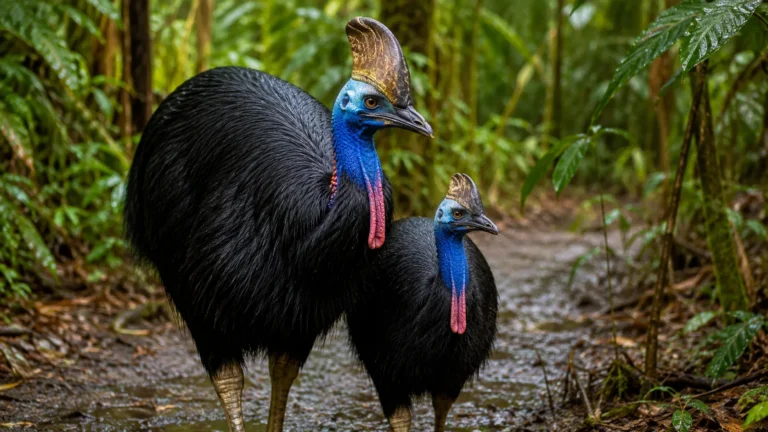
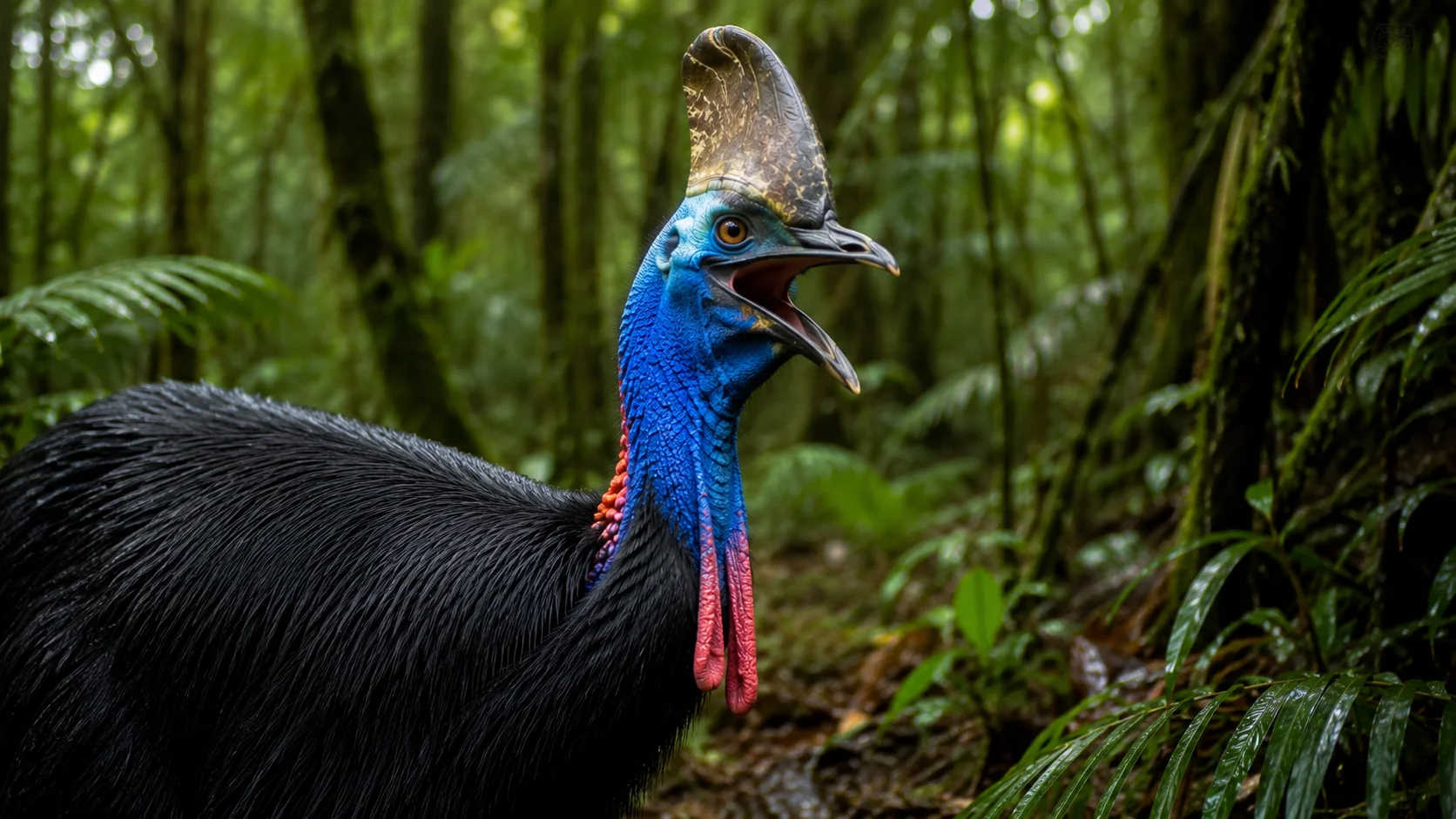
One of the most instantly recognizable features of a cassowary is the massive, hard crest sitting directly on top of its head, known biologically as a casque. This helmet is made of a spongy inner core entirely covered in a thick layer of keratin, the exact same protein that makes up human fingernails. For decades, scientists fiercely debated its purpose, finally discovering that the casque acts as a massive biological radiator, helping the bird release excess body heat in the sweltering jungle.
4. Brilliant Bright Green Eggs
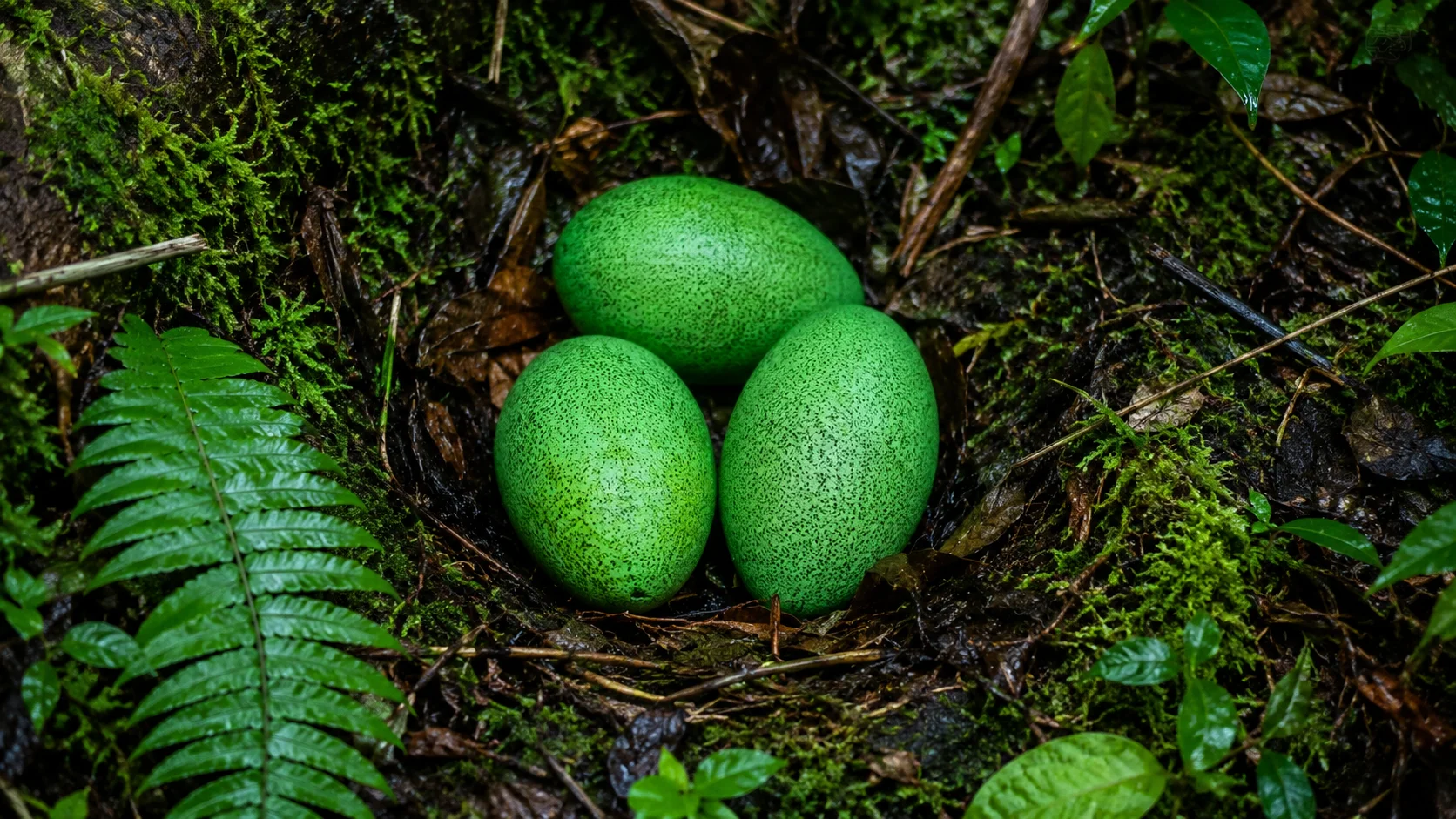
When it comes time to reproduce, the cassowary lays some of the most visually stunning eggs in the entire animal kingdom. Measuring nearly six inches long and weighing over a pound each, their massive eggs are a brilliant, highly vibrant shade of neon green. This intense coloration acts as a highly effective natural camouflage, perfectly blending in with the surrounding moss and dense jungle foliage on the forest floor to hide the eggs from hungry predators.
5. Dedicated Single Fathers
In a highly bizarre reversal of traditional biological gender roles, the female cassowary has absolutely nothing to do with raising her offspring. After she lays a clutch of massive green eggs in a shallow dirt scrape, she completely abandons the nest and wanders back into the jungle. The male cassowary is solely responsible for sitting on the eggs for fifty solid days, fiercely protecting the nest, and actively raising the striped chicks entirely by himself for up to nine months.
6. Females Are Nomadic and Polyandrous
Because the male handles all of the intense parenting duties, the female cassowary is completely free to roam the dense rainforest. During a single mating season, a healthy adult female will actively travel across massive distances, repeatedly mating with several different males and leaving a clutch of eggs with each of them. This highly unusual mating system is known biologically as sequential polyandry.
7. Feathers That Look Like Coarse Hair
If you look closely at the plumage of a cassowary, it does not look like normal bird feathers at all. Most flying birds possess feathers with tiny, interlocking barbules that zip together to create a smooth, aerodynamic surface. Cassowaries completely lack these microscopic hooks. As a result, their long, drooping black feathers look exactly like thick, coarse mammalian hair, which perfectly protects their skin from sharp thorns as they run through the dense jungle underbrush.
8. The Deepest Voice in the Bird Kingdom
Cassowaries possess a highly unique acoustic ability that perfectly matches their prehistoric appearance. They communicate using an incredibly low, pulsing boom that is officially the absolute lowest frequency call produced by any known bird species. The frequency is so incredibly low that it flirts with the absolute edge of human hearing. When standing near a vocalizing cassowary, you frequently do not even hear the noise; you simply feel a massive, deep vibration shaking your chest.
9. Incredible Sprinting Speeds
Looking at their massive, heavy bodies, it is incredibly easy to assume that a cassowary is sluggish and clumsy. This is a fatal misconception. Their thick, massively muscular legs allow them to navigate the incredibly dense, chaotic obstacle course of the rainforest floor with terrifying agility. When startled or actively pursuing a threat, a fully grown cassowary can easily reach blistering sprinting speeds of up to thirty miles per hour through the thick jungle.
10. They Are Surprisingly Great Swimmers
Despite lacking webbed feet or any aquatic adaptations, the cassowary is a highly proficient and frequent swimmer. The tropical rainforests they inhabit are completely intersected by wide, fast-moving rivers and massive estuaries. When a cassowary needs to cross a massive body of water to find food or escape a territorial dispute, it will completely submerge its heavy body and gracefully swim across the deep water, easily surviving powerful river currents.
11. Massive Vertical Jumpers
As if their deadly claws and sprinting speeds were not terrifying enough, the cassowary is also an absolute master of vertical leaping. If an obstacle blocks their path or they need to strike a predator higher up, they can effortlessly launch their entire one-hundred-and-thirty-pound body completely straight up into the air. A frightened or aggressive cassowary can easily clear fences and jump up to seven feet vertically from a complete standstill.
12. Three Distinct Remaining Species
When people refer to a cassowary, they are usually picturing the Southern cassowary, which is the absolute largest and most famous of the group. However, there are actually three entirely distinct species alive today. Alongside the massive Southern cassowary, the dense jungles of New Guinea are also home to the slightly smaller Northern cassowary and the highly elusive, significantly smaller Dwarf cassowary, which primarily inhabits highly elevated, remote mountain ranges.
13. Crucial Rainforest Gardeners
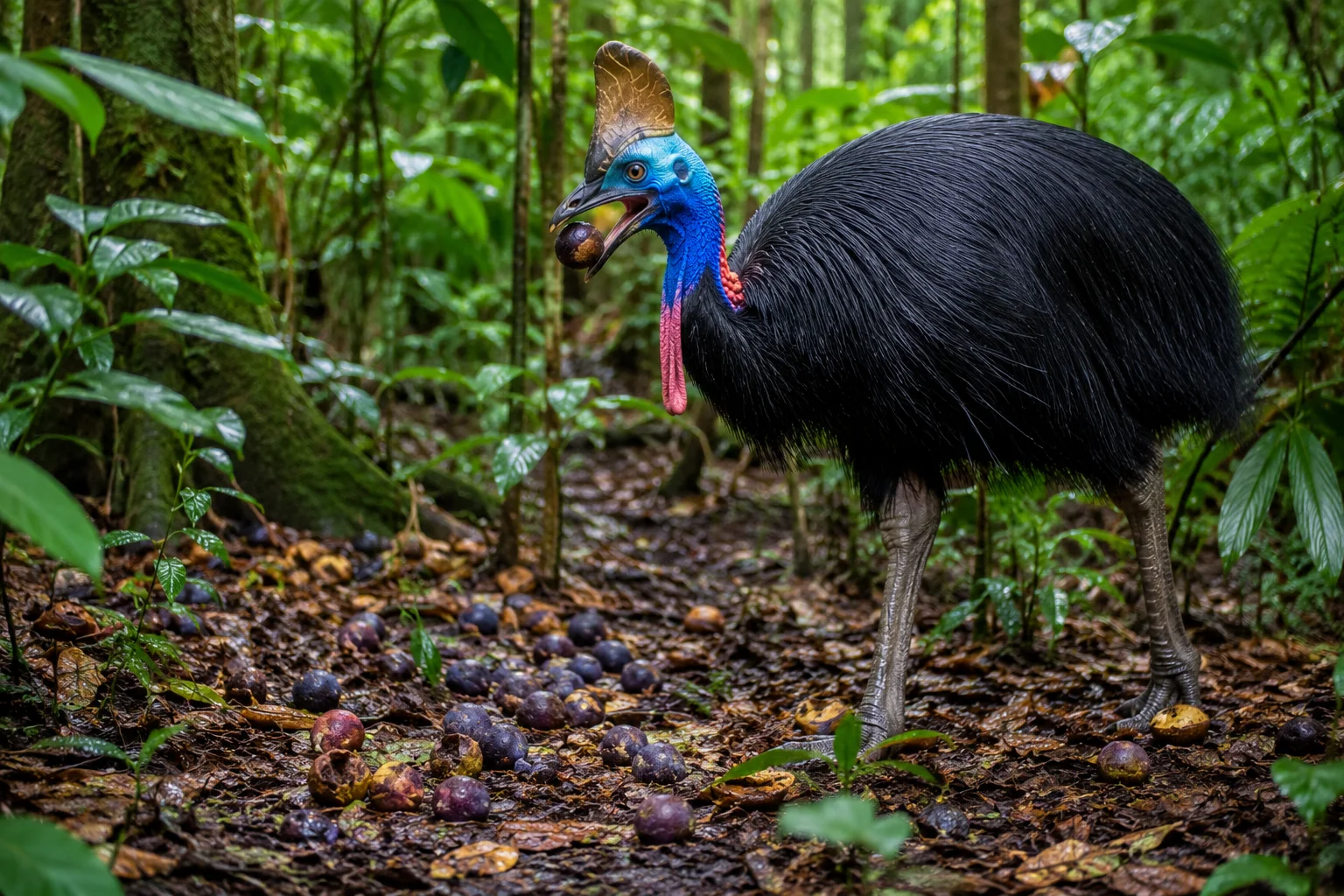
While they have a terrifying reputation, they are absolutely ecologically vital to the survival of the rainforest. Cassowaries are primarily frugivores, meaning they eat massive amounts of fallen fruit. Because their digestive systems are incredibly fast and relatively gentle, they completely swallow massive fruits entirely whole without destroying the massive seeds inside. As they roam the jungle, they continuously drop perfectly intact, fertilized seeds, essentially acting as the ultimate, highly efficient natural gardeners of the forest.
14. A Diet of Toxic Fruits
Because their digestive tracts process food at an incredibly rapid pace, cassowaries can safely consume highly dangerous food sources that would instantly kill humans or other animals. One of their absolute favorite meals is the cerbera floribunda, commonly known as the cassowary plum. The sap and seeds of this massive blue fruit contain deadly compounds highly toxic to most mammals, but the massive bird digests the fleshy outside and safely passes the poisonous seed entirely unharmed.
15. The Vivid Blue Face and Wattles
To completely contrast their heavy, jet-black plumage, the head and neck of a Southern cassowary are painted in incredibly vivid, neon colors. Their bare skin is an intense, glowing shade of electric blue. Additionally, two massive, fleshy red flaps of skin, known as wattles, hang directly from their necks. The intensity of these incredibly bright colors can actually physically change based on the specific mood of the bird, becoming vastly brighter when they are highly agitated or actively courting a mate.