1. Their Horns Are Made of Pure Keratin
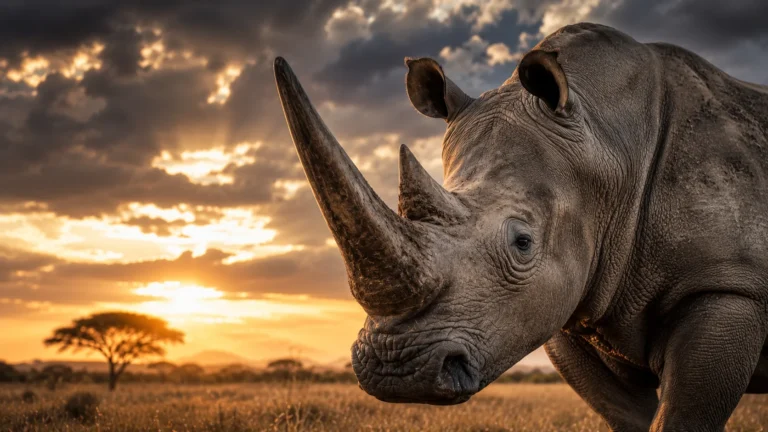
The most famous and highly sought-after feature of a rhinoceros is completely misunderstood. Unlike the bony antlers of deer or the horns of cattle, a rhino’s horn possesses absolutely no bone core. It is constructed entirely out of keratin—the exact same structural protein that makes up human fingernails, hair, and horse hooves. The horn is essentially a tightly compacted mass of fibrous hair-like structures held together by sticky sebaceous glands. Because it lacks a direct blood supply, if a rhino’s horn is safely trimmed off by conservationists, it will simply grow back over time like a giant fingernail.
2. The “White” Rhino Isn’t Actually White
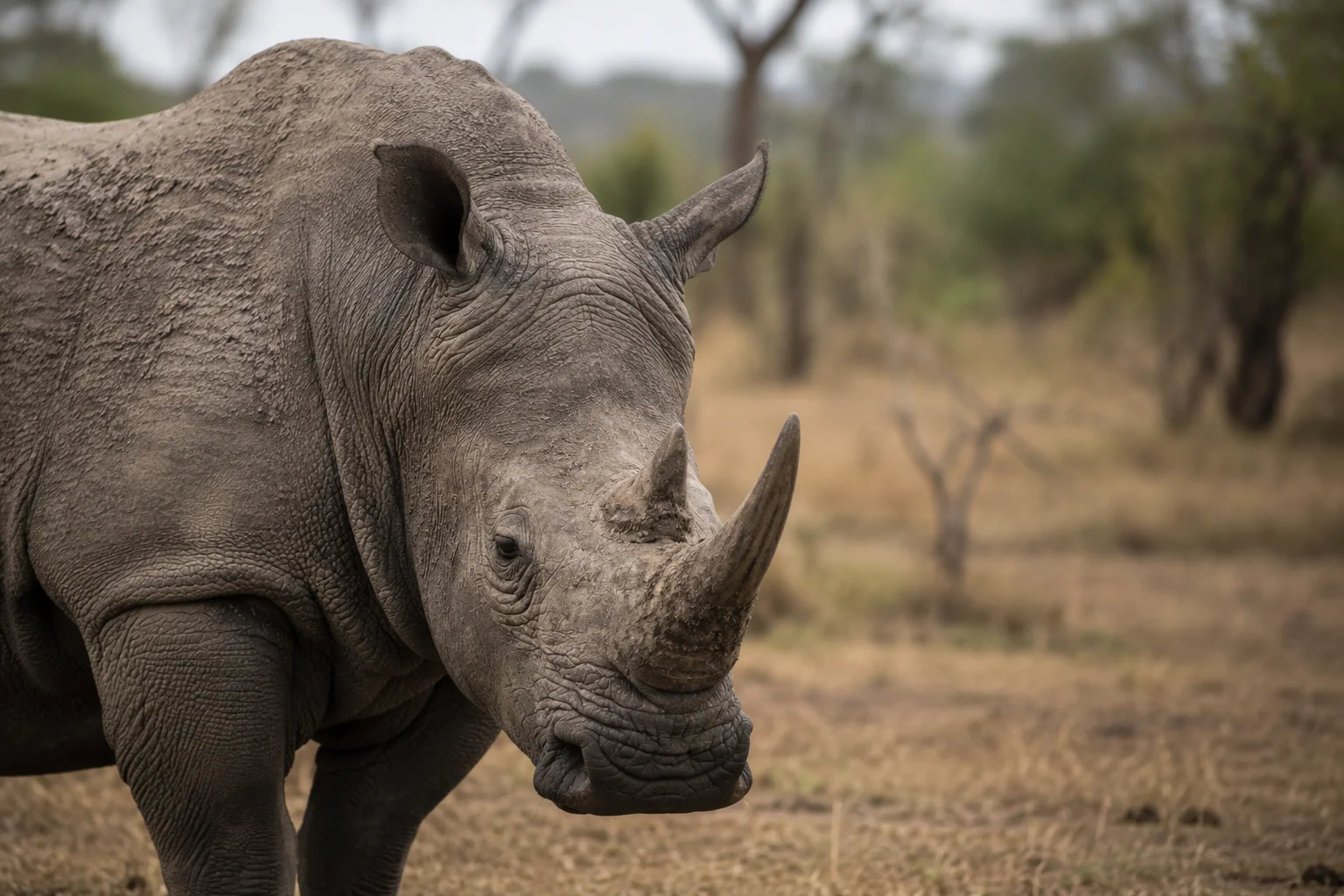
The name of the massive white rhino is actually the result of a massive historical linguistic misunderstanding. Both black and white rhinos are exactly the same dusty gray color. When early Dutch and Boer settlers in South Africa encountered the grazing species, they accurately described its mouth using the Middle Dutch word “wijd,” meaning “wide.” When English-speaking settlers arrived later, they completely misinterpreted the guttural pronunciation of “wijd” as the English color “white.” The inaccurate name stuck permanently, leading scientists to retroactively name the other species the “black” rhino just to differentiate them visually.
3. They Communicate Through Massive Dung Piles
Because rhinos are frequently solitary and possess terrible eyesight, they have developed a highly complex, chemical-based social network to communicate across vast distances. They utilize communal latrines, officially known as middens, which function exactly like a neighborhood message board. When a dominant male kicks and spreads his dung around a midden, he is leaving highly specific olfactory messages for other rhinos. By simply sniffing the pile, a passing rhino can instantly determine the exact age, sex, territorial status, and reproductive readiness of the individual who left the deposit.
4. The Sumatran Rhino Sings Like a Whale
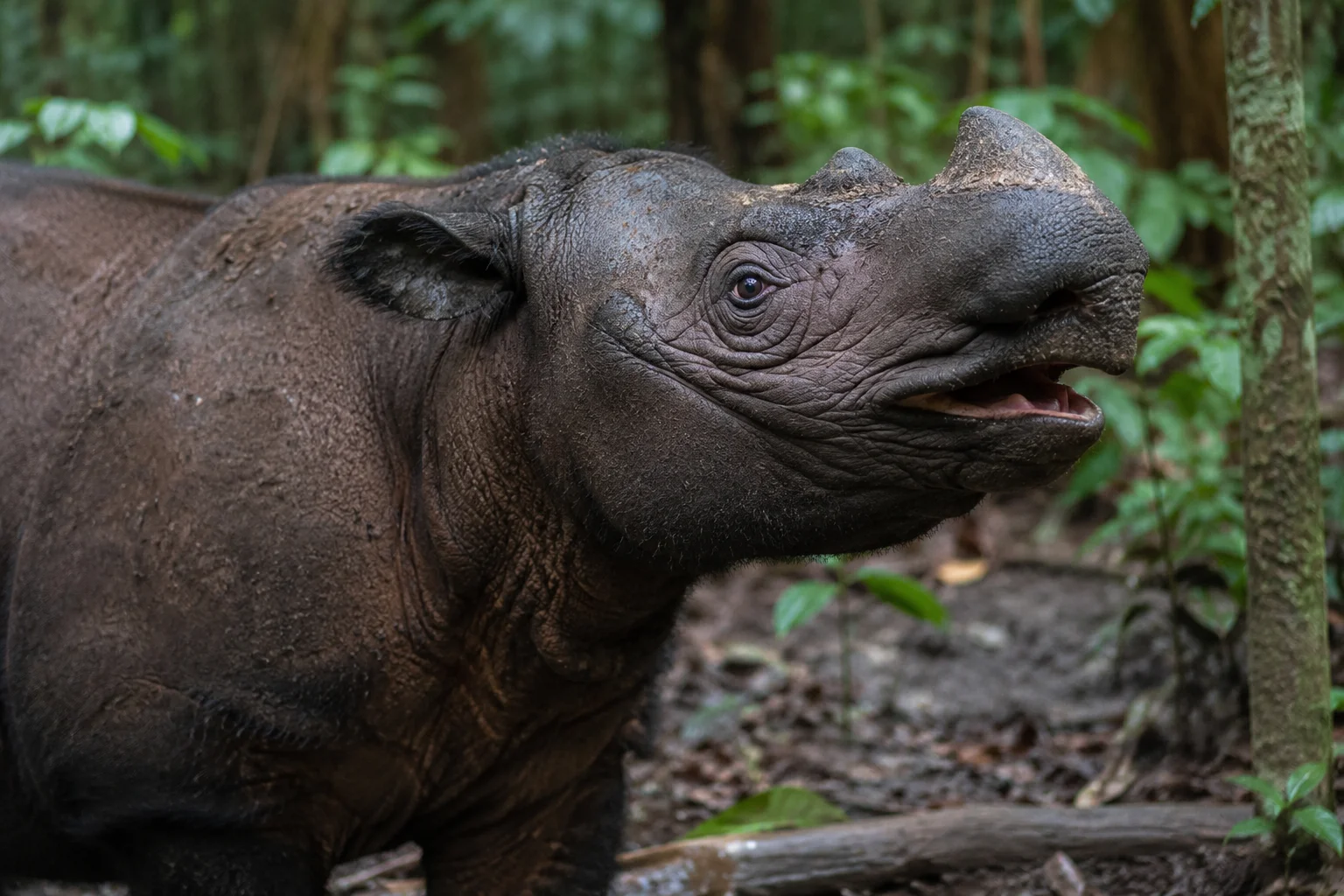
While most people assume rhinos only grunt or snort, the incredibly rare Sumatran rhino is actually a highly accomplished vocalist. To communicate through the incredibly dense, dark tropical rainforests of Indonesia, they produce a bizarre series of high-pitched noises. Their vocalizations include short “eeps,” loud whistle-blows, and a highly complex, resonant call that scientists explicitly describe as “whale song.” Bioacoustics researchers have confirmed that these haunting, rhythmic calls sound strikingly identical to the underwater vocalizations of a humpback whale.
5. They Are Closely Related to Horses
Looking at their massive, tank-like bodies, it is incredibly easy to assume that rhinos are closely related to elephants or hippos. In biological reality, rhinos belong to the mammalian order Perissodactyla, which exclusively contains odd-toed ungulates. This specific evolutionary lineage means the closest living biological relatives to the modern rhinoceros are actually horses, zebras, and tapirs. Much like a galloping horse, the incredibly heavy rhino does not walk flat-footed; it actually supports its entire massive body weight by walking entirely on the tips of its three heavily padded toes.
6. The Indian Rhino Wears Biological Armor
The greater one-horned rhino, native to India and Nepal, possesses the most visually dramatic skin in the entire animal kingdom. Their thick, gray-brown hide features massive, deep folds at the neck, shoulders, and hindquarters, giving the animal the striking appearance of wearing heavy, riveted steel armor plating. These deep folds are completely natural hinges that allow the thick skin to move flexibly as the massive animal walks. Furthermore, the skin is heavily studded with thick, raised bumps called tubercles, which look exactly like heavy iron rivets locking the plates together.
7. They Cannot See Beyond Thirty Meters
To compensate for their highly advanced senses of hearing and smell, rhinos have evolved incredibly terrible vision. Their eyes are very small and positioned directly on the sides of their massive heads, creating a massive visual blind spot directly in front of their horns. A rhino cannot clearly distinguish a motionless human or predator from a tree stump if it is standing more than thirty meters away. This severe visual impairment is exactly why rhinos have a highly aggressive, deeply paranoid reputation—they frequently charge blindly at strange noises or smells simply to protect themselves.
8. Oxpecker Birds Are Half Helper, Half Vampire
On the African savanna, rhinos are almost always accompanied by small, red-billed birds known as oxpeckers. For decades, scientists believed this relationship was a perfect, mutually beneficial symbiosis: the bird eats annoying blood-sucking ticks off the rhino, and the rhino gets a free medical cleaning. However, modern observations reveal a much darker reality. If the oxpecker cannot find enough ticks, it will actively peck open the rhino’s healing wounds to directly drink the fresh blood. While they do remove parasites and sound a loud alarm when predators approach, they are also highly opportunistic vampires.
9. A Group is Brilliantly Called a “Crash”
While many rhinos prefer to live highly solitary lives, females and their young frequently band together for safety and social interaction. When these massive, near-sighted animals gather into a herd, the collective noun used to describe them is absolutely perfect: a “crash” of rhinos. The term perfectly captures the terrifying, unstoppable kinetic energy and sheer physical destruction that occurs when multiple three-ton animals get spooked and begin sprinting blindly through the thick African brush.
10. Black Rhinos Have Highly Articulated, Prehensile Lips
While the white rhino grazes on short grasses with a wide, flat mouth, the black rhino is a highly specialized browser designed to eat leaves from tall bushes and trees. To accomplish this, they have evolved a highly distinct, pointed upper lip that functions exactly like a miniature elephant trunk. This prehensile lip is incredibly muscular and flexible, allowing the rhino to delicately reach into dense, thorny acacia bushes, tightly wrap its lip around the most nutritious leaves, and cleanly strip them from the branch without ever getting pricked.
11. They Must Actively Apply Mud as Sunscreen
Despite possessing skin that can be nearly two inches thick, a rhino’s hide is surprisingly sensitive to the brutal, blistering heat of the tropical sun. Because they completely lack hair to shade their skin and sweat glands to cool themselves, they frequently suffer from severe sunburns and painful bug bites. To combat this, they spend hours happily wallowing in deep, gooey mud pits. Once the thick mud dries into a hard crust, it acts as a flawless, all-natural sunblock and a highly effective physical barrier against biting horseflies and ticks.
12. Pregnancies Last for Over a Year
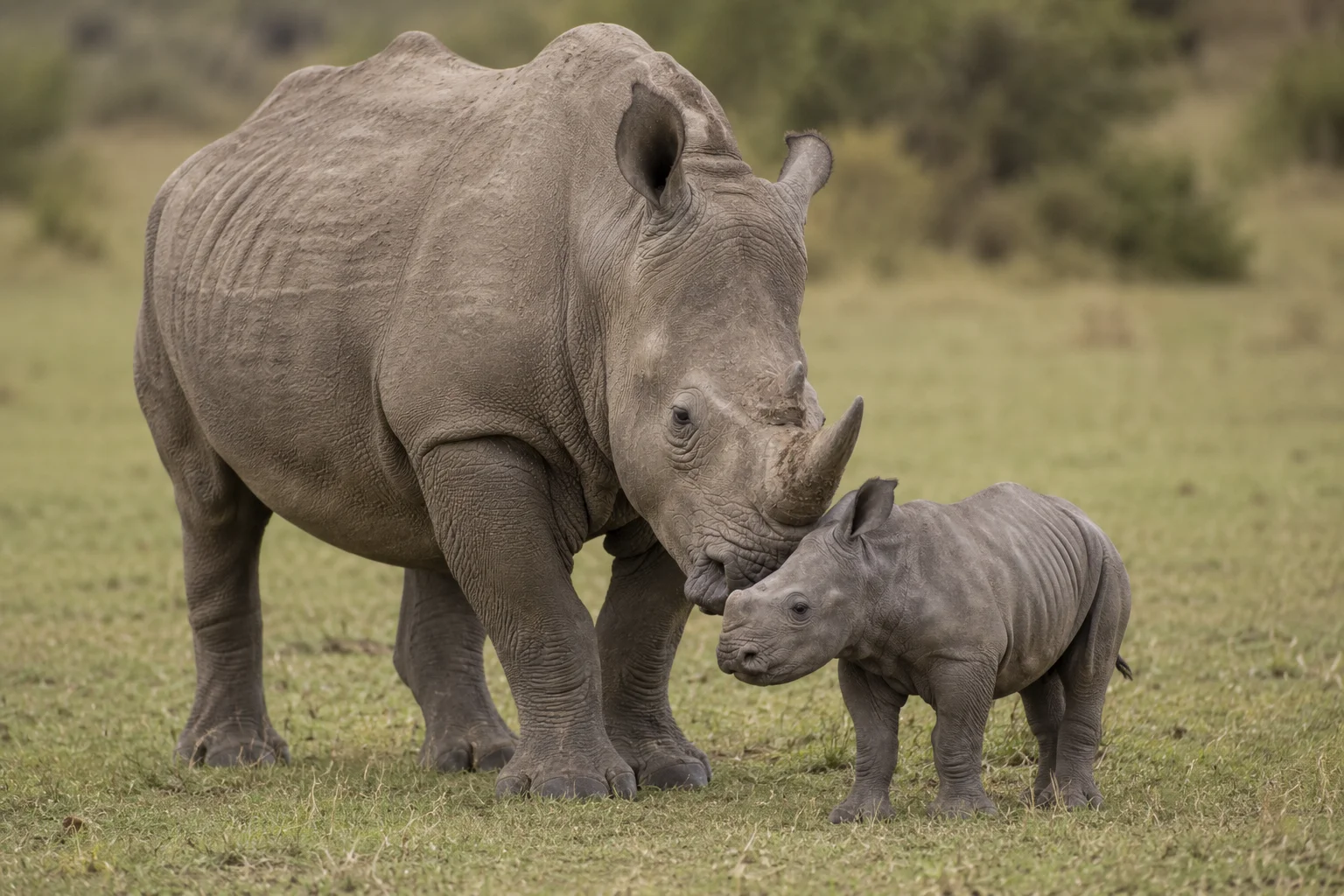
Female rhinos heavily invest an incredible amount of biological energy into producing a single calf, making their reproductive cycles some of the longest and slowest on the planet. The gestation period for a rhinoceros lasts an agonizing fifteen to sixteen months, completely dwarfing the nine-month pregnancy of a human. When the calf is finally born, it arrives weighing roughly one hundred and forty pounds and is completely dependent on its mother’s milk for over a year. This slow reproductive rate makes it incredibly difficult for wild populations to rapidly recover from intensive poaching.
13. The Sumatran Species is Covered in Dense Hair
When we picture a rhino, we almost universally imagine a completely bald, leathery animal. However, the critically endangered Sumatran rhinoceros completely shatters this expectation. They are the only living rhino species completely covered in a thick coat of coarse, reddish-brown hair. Because they live in high-altitude, mountainous rainforests where temperatures frequently drop, the hair provides vital thermal insulation. Genetic testing confirms that these small, furry creatures are the closest living biological relatives to the massive, extinct woolly rhinoceros that roamed the icy tundras during the last Ice Age.
14. Ancient Relatives Were the Largest Land Mammals Ever
While modern rhinos are incredibly massive, their ancient, prehistoric ancestors make them look like tiny household pets. Roughly thirty million years ago, a hornless rhinoceros species known as Paraceratherium roamed across Eurasia. Paleontologists officially recognize this colossal beast as the absolute largest land mammal to ever exist in the history of the Earth. It stood a staggering sixteen feet tall at the shoulder, possessed a long, giraffe-like neck, and weighed up to twenty tons—making it nearly five times heavier than a modern African elephant.
15. They Can Sprint Faster Than an Olympic Athlete
Despite looking incredibly slow, bulky, and biomechanically awkward, a threatened rhinoceros is a terrifyingly fast biological machine. When launching a charge or fleeing from danger, a fully grown, six-thousand-pound white rhino can reach an explosive top speed of thirty-four miles per hour. This massive burst of acceleration means they can easily outrun the fastest human Olympic sprinters on the planet. Their incredible speed, combined with their terrible eyesight and massive physical bulk, makes them one of the most dangerous and unpredictable animals to accidentally startle in the wild.
Sources and References