1. They Are Black with White Stripes
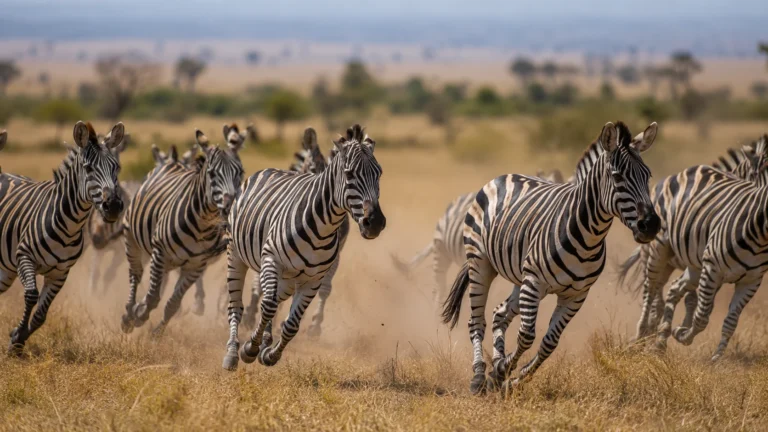
For generations, scientists vigorously debated whether zebras were white animals with black stripes or black animals with white stripes. Modern genetic and embryological research has definitively answered the question: zebras are fundamentally black. In the womb, the zebra embryo develops a completely solid black coat. The white stripes only appear later in the developmental process when specific genetic instructions tell certain hair follicles to completely stop producing melanin (pigment). Therefore, the white stripes are technically just areas of unpigmented hair.
2. Their Skin is Completely Black
If you were to completely shave the hair off a wild zebra, you would not find a striped pattern on their underlying hide. Beneath their dazzling black and white coats, the skin of a zebra is a solid, uniform, dark charcoal black. This heavy skin pigmentation acts as a highly effective, natural biological sunscreen, protecting the animals from severe sunburns and skin cancer while they spend their entire lives grazing under the blistering African sun.
3. The Stripes Repel Biting Flies
While many people assume a zebra’s stripes evolved as camouflage to confuse lions, extensive biological testing has revealed a much more bizarre primary function. The stark, alternating pattern of black and white stripes actively disrupts the polarized light vision of dangerous, disease-carrying horseflies and tsetse flies. When these parasitic insects attempt to land on a zebra, the harsh optical illusion completely scrambles their depth perception, causing them to clumsily crash into the animal or completely miss their landing entirely.
4. No Two Patterns Are Exactly Alike
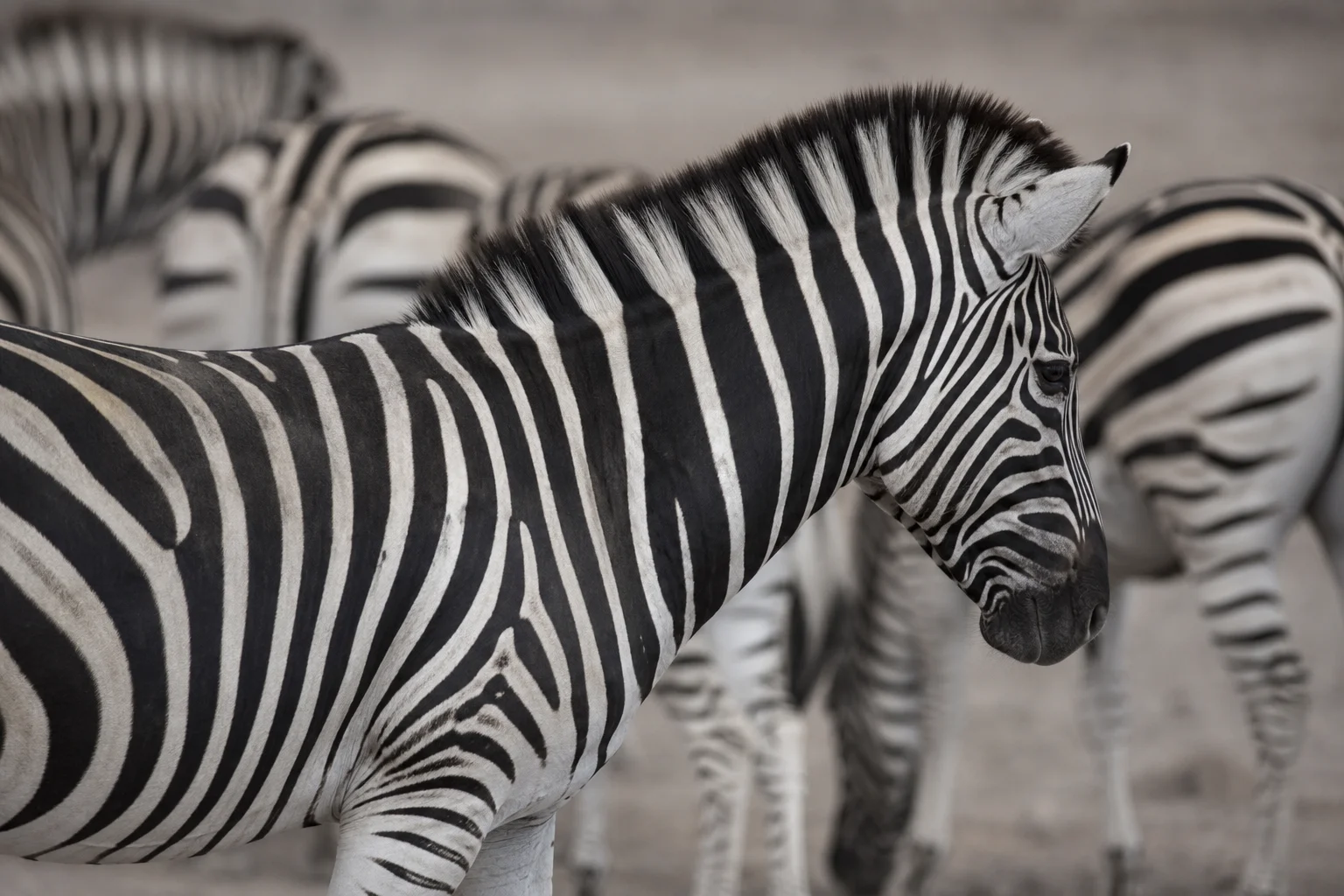
Much like the unique ridges of a human fingerprint or the distinct spots of a leopard, the exact stripe pattern of every single zebra is entirely unique to that specific individual. While the overall width and direction of the stripes adhere to general species guidelines, the precise branching, thickness, and spacing of the lines never repeat. Researchers heavily rely on these distinct barcode patterns to easily identify and track specific individuals in the wild over several years without needing to physically tag them.
5. They Were Never Successfully Domesticated
Despite sharing a massive amount of DNA and physical anatomy with horses and donkeys, zebras have never been successfully domesticated by humans. This is largely due to their incredibly volatile and aggressive psychological temperament. Evolving alongside massive, apex predators like lions, leopards, and hyenas forced the zebra to develop a highly unpredictable, fiercely defensive nature. They panic easily, possess a severely lethal kick, and aggressively duck their heads to avoid lassos, making them completely unsafe and unsuitable for riding or agricultural labor.
6. A Lethal, Jaw-Shattering Kick
When a zebra is cornered by a predator and cannot escape using its impressive sprinting speed, it does not surrender peacefully. A fully grown adult zebra possesses an incredibly powerful, violently explosive rear kick that is widely feared across the savanna. With the massive blunt force of their heavy, solid hooves, a perfectly aimed defensive kick from a panicked zebra can easily shatter the jaw of a lion or cave in the skull of an attacking hyena, frequently resulting in a fatal injury for the predator.
7. They Communicate Through Barks and Yips
If you expect a zebra to sound exactly like a domestic horse, you will be highly surprised by their actual vocalizations. While horses rely heavily on deep neighs and whinnies, zebras utilize a much higher-pitched, chaotic acoustic language. They frequently communicate across the grassy plains using a series of sharp, dog-like barks, high-pitched yips, and loud, repetitive braying sounds. These distinct vocalizations allow them to sound alarms, locate lost herd members, and establish aggressive dominance during mating season.
8. Mothers Hide from the Herd to Imprint
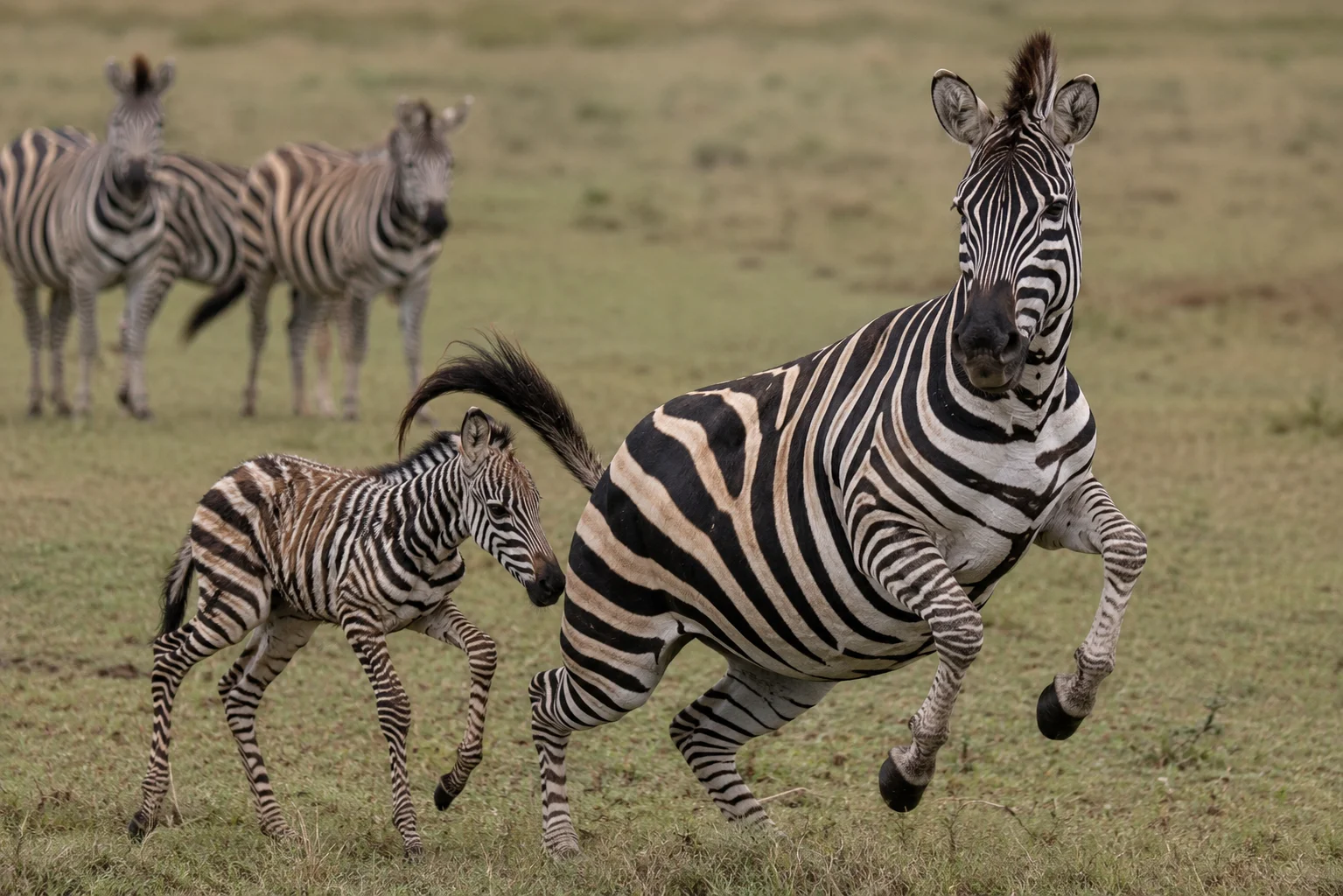
When a female zebra gives birth to a foal, she engages in a highly unusual and strictly enforced social behavior. For the first two to three days of the foal’s life, the mother will aggressively chase away all other zebras, refusing to let anyone in the herd come near her baby. This forced isolation period is absolutely critical for survival. It forces the newborn foal to memorize its mother’s exact, unique stripe pattern, specific scent, and distinct vocalizations without being visually confused by the hundreds of other striped bodies in the herd.
9. They Undertake Africa’s Longest Mammal Migration
While the massive wildebeest migration in the Serengeti is globally famous, plains zebras actually hold the record for the absolute longest overland mammal migration in Africa. Discovered by researchers using GPS collars in 2014, a massive herd of thousands of zebras travels back and forth across Botswana and Namibia every single year. Seeking fresh water and nutritious grazing grass, these incredibly resilient equines traverse a staggering round-trip distance of over three hundred miles across completely harsh, unforgiving terrain.
10. There Are Three Distinct Species
While they all share the iconic striped aesthetic, there are actually three entirely distinct, biologically separate species of zebra living in Africa today. The plains zebra is the most common and widespread. The mountain zebra features a distinct, dewlap of extra skin on its throat and lives entirely in rugged, high-altitude terrain. Finally, the highly endangered Grévy’s zebra is the largest of the three, easily identifiable by its incredibly thin, tightly packed stripes and massive, rounded, Mickey Mouse-like ears.
11. They Sleep Standing Up
Like their domestic horse cousins, zebras possess a brilliant anatomical adaptation that allows them to safely sleep while remaining fully upright. Their legs feature a highly specialized system of locked tendons and ligaments known biologically as a stay apparatus. This system effectively locks the joints in their legs in place, completely supporting the animal’s massive weight without requiring any active muscle exertion. This allows the zebra to immediately sprint away from an ambush predator the exact second it wakes up, without wasting time struggling to stand.
12. Mutual Grooming Lowers Their Heart Rates
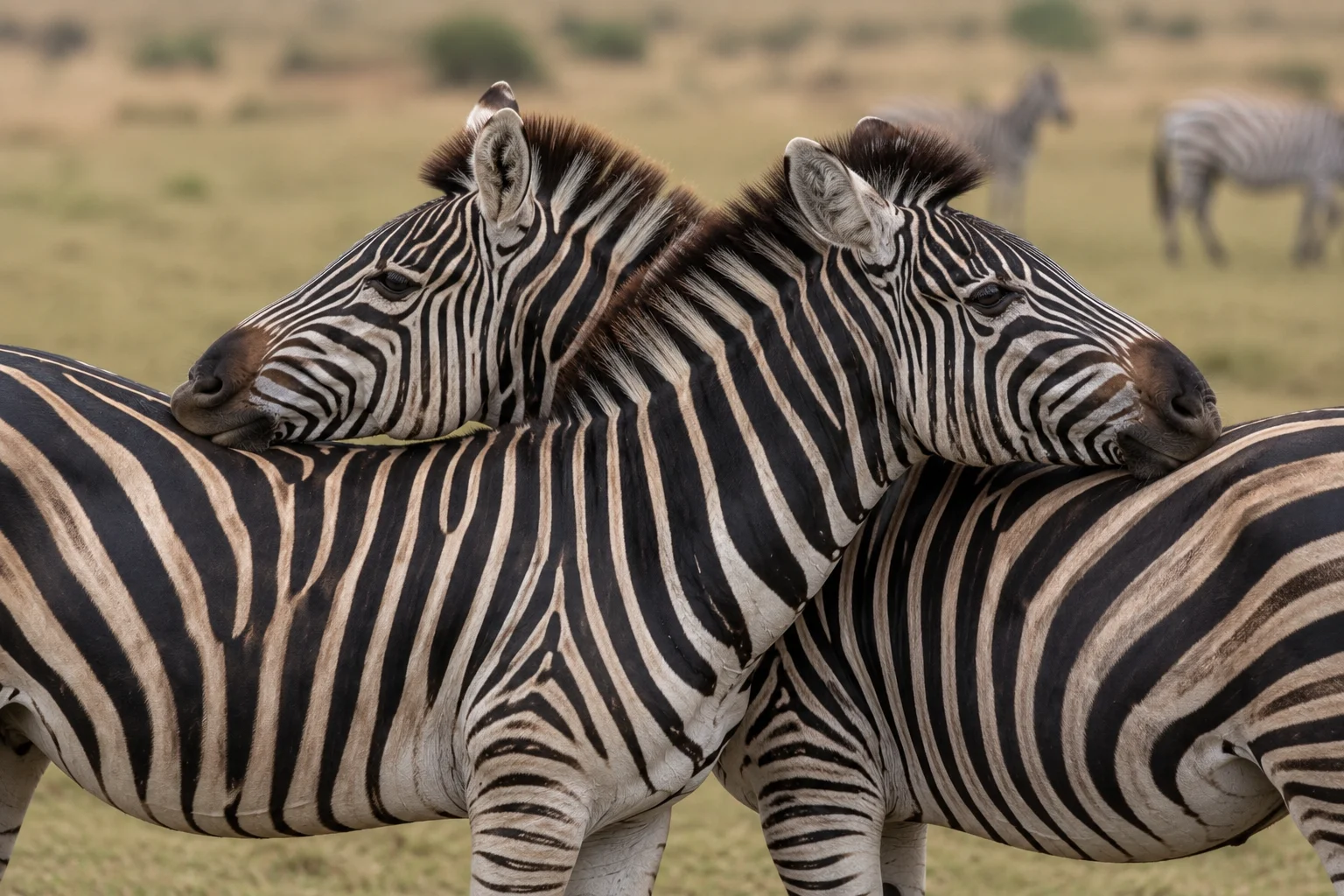
Zebras are highly social animals that rely on tight-knit bonds to maintain harmony within their complex herds. To solidify these relationships, they frequently engage in mutual grooming. Two zebras will stand side-by-side, facing opposite directions, and use their incisor teeth to gently nibble along each other’s necks, manes, and backs. Biological studies have shown that this specific, repetitive social grooming actually physically lowers their heart rates, significantly reducing stress and naturally cementing deeply rooted friendships.
13. They Form Multispecies Security Alliances
Because the African savanna is teeming with deadly predators, zebras frequently form massive, temporary security alliances with other grazing species, most notably wildebeests and ostriches. This is a highly calculated, mutually beneficial biological strategy. Ostriches possess incredible eyesight and massive height to spot danger from afar, while zebras have exceptional hearing and a powerful sense of smell. By traveling together, these different species combine their highly specialized sensory strengths to create a nearly impenetrable, early-warning alarm system against stalking lions.
14. Males Will Fight Viciously for Harems
The social structure of the plains zebra revolves entirely around a small family group known as a harem, typically consisting of one dominant stallion and up to six mares. To win and maintain absolute control over a harem, male zebras must engage in incredibly violent, brutal physical combat. Rival stallions will viciously bite each other’s necks, aggressively kick, and wrestle one another to the ground in bloody, exhausting battles. The victor claims exclusive breeding rights, while the loser is banished to wander with other single males in a bachelor herd.
15. They Can Successfully Crossbreed
Because they belong to the exact same biological genus (Equus) as horses and donkeys, zebras can successfully crossbreed with them in captivity, creating bizarre, hybrid offspring known collectively as zebroids. A cross between a zebra and a horse is called a zorse, while a cross with a donkey is known as a zonkey. These unique hybrids typically possess the body shape of a horse or donkey, but feature distinct, faded zebra striping entirely across their legs and hindquarters. Like most hybrid animals, such as mules, zebroids are almost always born completely sterile.
Sources and References