1. They Were Sacred in Ancient Egypt
The African Sacred Ibis holds a very special place in human history. In ancient Egypt, the bird was deeply revered and directly associated with Thoth, the god of wisdom, writing, and magic, who was frequently depicted with the body of a man and the head of an ibis. Because of this divine connection, ancient Egyptians often mummified these birds by the millions as offerings, leaving behind massive catacombs entirely dedicated to the sacred ibis.
2. Their Beaks Are Specialized Probes
The most defining feature of any ibis is its long, downward-curving beak. This distinct shape is not for cracking seeds or tearing meat; it is a highly specialized tool designed for tactile foraging. As an ibis walks slowly through shallow water or soft mud, it constantly sweeps its slightly open beak back and forth. The beak is packed with sensitive nerve endings that allow the bird to instantly feel hidden crabs, worms, and insects hiding in the dark mud.
3. They Can Breathe While Buried in Mud
When an animal spends all day sticking its face deep into thick mud and water to find food, breathing can become a serious challenge. To solve this problem, the ibis evolved a highly useful physical trait. Unlike many other birds that have their nostrils located further down the beak, an ibis’s nostrils are positioned at the very base of the bill, right next to the head. This allows them to submerge almost their entire beak while still breathing comfortably.
4. Spoonbills Are Their Closest Relatives
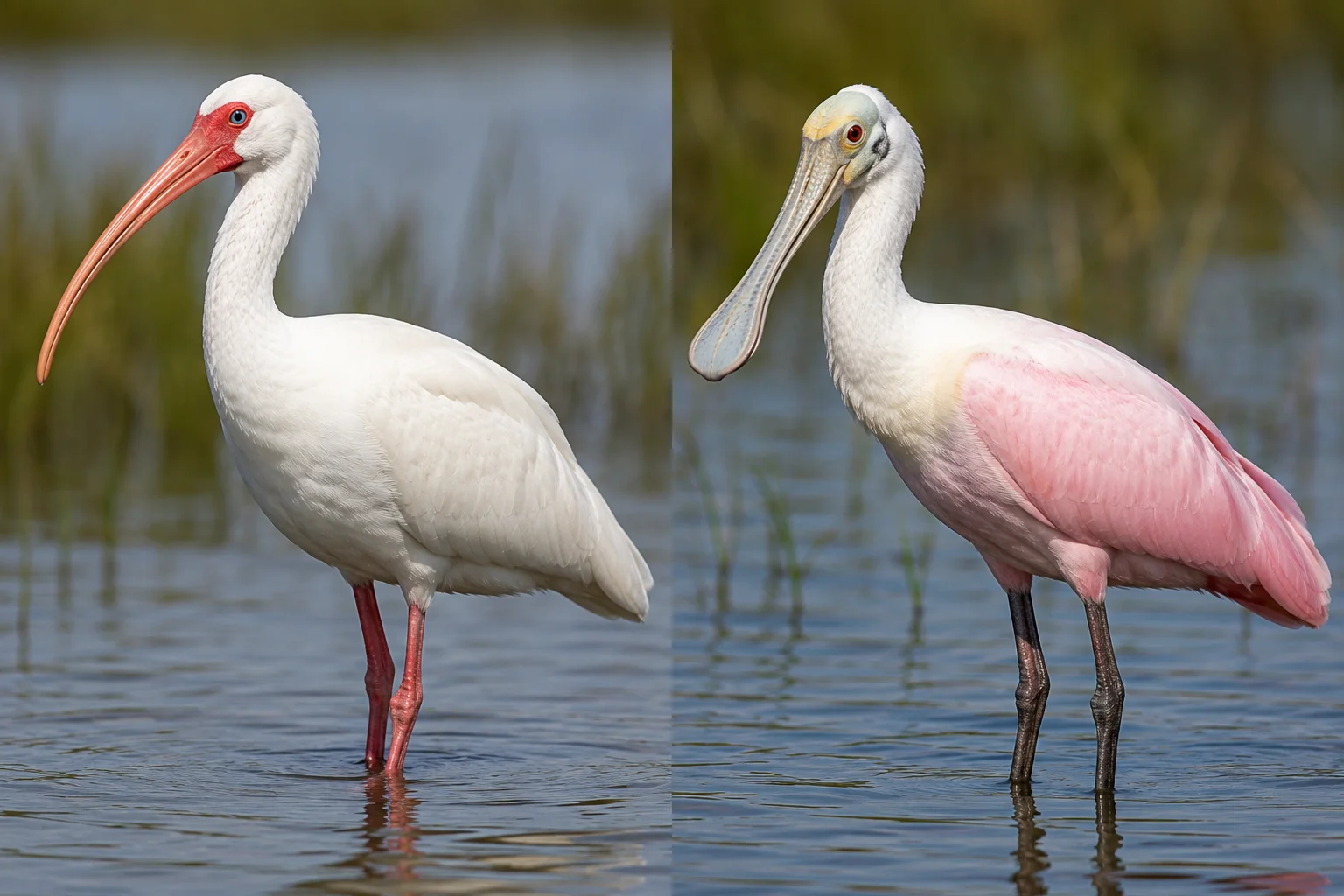
If you look closely at the biological family tree of the ibis, their closest cousins look quite different at first glance. Ibises share the family Threskiornithidae with spoonbills. While ibises have long, thin, curved beaks, spoonbills have wide, flat beaks that look exactly like large wooden spoons. Despite this drastic difference in beak shape, the two types of birds share very similar body structures, flocking behaviors, and wetland habitats.
5. Some Turn Red From Their Diet
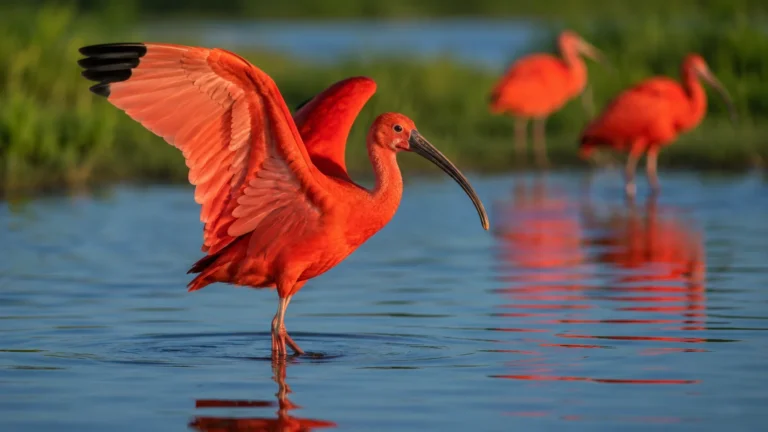
The Scarlet Ibis, native to South America and the Caribbean, is famous for its shocking, vibrant red plumage. However, they are not born with these bright colors. Just like flamingos, the Scarlet Ibis gets its vivid pigmentation entirely from its diet. They eat huge amounts of red crustaceans, such as shrimp and small crabs, which contain chemical compounds called astaxanthins. Over time, these pigments build up in the bird’s system and turn their feathers a brilliant red.
6. They Are Australia’s Famous “Bin Chickens”
While most ibises stick to natural wetlands, the Australian White Ibis has taken a completely different path. As their natural habitats shrank, these clever birds moved into major cities like Sydney and Brisbane. They quickly learned how to scavenge for human food, earning them the widespread, slightly affectionate nickname “bin chickens.” They are frequently seen casually strolling through public parks and raiding open trash cans for discarded sandwiches and fries.
7. They Fly With Outstretched Necks
If you see a large wading bird flying high overhead, you can easily tell if it is an ibis or a heron just by looking at its neck. When herons and egrets take flight, they fold their long necks backward into a tight, compact “S” shape. Ibises, on the other hand, fly with their necks stretched completely straight out in front of them. Combined with their long legs trailing straight behind, they form a distinct, aerodynamic line in the sky.
8. They Prefer Large Flocks
Ibises are highly gregarious birds, meaning they strongly prefer the company of others over a solitary life. Whether they are feeding in a marsh, flying to a new location, or settling down for the night, they are almost always found in large groups. Flocking together provides significant safety in numbers, as hundreds of eyes can easily watch out for predators like eagles, alligators, or wildcats while the rest of the flock focuses on foraging in the mud.

9. Many Have Bald Faces
While some birds have brightly colored feathers on their heads to attract mates, many species of ibis take the opposite approach. Several types, including the Sacred Ibis and the White Ibis, feature completely bare, featherless faces and heads. This baldness is actually a highly practical adaptation. Because they constantly plunge their heads into messy, bacteria-filled mud and swamp water, having no feathers on their faces helps keep them clean and prevents disease.
10. They Are Very Quiet Birds
Unlike parrots, songbirds, or even loud seagulls, ibises are generally very quiet animals. They do not have complex songs or loud, booming calls. During regular feeding or resting, a flock of ibises will remain almost entirely silent. When they do make noise, it is usually only during the breeding season or when they are feeling threatened, and the sounds they produce are limited to low, guttural croaks, grunts, or heavy breathing noises.
11. They Protect Their Plumage With Oil
Living in muddy, wet environments means an ibis must take special care to keep its feathers waterproof and clean. To do this, they spend a significant portion of their day preening. They use their long beaks to collect a special waterproofing oil produced by a gland near the base of their tail. They then carefully spread this oil over every single feather on their body, which keeps them dry and helps them regulate their body temperature in cold water.
12. They Use the V-Formation to Save Energy
When ibises need to travel long distances, especially during seasonal migrations, they fly together in a large “V” formation. This is not just for visual organization; it is a highly efficient aerodynamic strategy. As the lead bird flaps its wings, it creates a small updraft of air behind it. The birds following close behind can ride this upward current, saving a massive amount of physical energy. They frequently take turns leading the flock to prevent exhaustion.

13. One Species is Highly Endangered
While many ibis populations are healthy and expanding, the Northern Bald Ibis (also known as the Waldrapp) is one of the most endangered birds in the world. Once common across Europe, the Middle East, and North Africa, centuries of hunting and habitat loss pushed them to the brink of extinction. Today, dedicated conservationists are slowly reintroducing them to the wild, even using ultralight aircraft to teach captive-bred flocks their forgotten migration routes.
14. They Build Nests in Massive Colonies
When the breeding season arrives, ibises gather in enormous numbers to build their nests. These nesting grounds, called rookeries, can sometimes contain tens of thousands of birds closely packed together in the trees or thick reeds. By nesting so tightly together, they create a chaotic, noisy environment that makes it very difficult for predators like raccoons or snakes to single out and steal individual eggs.
15. Males and Females Share Parenting Duties
Raising a young ibis requires a lot of hard work, and both parents are equally involved in the process. After building a nest of sticks together, the male and female will take turns sitting on the eggs to keep them warm. Once the chicks hatch, both parents share the responsibility of flying out to find food, bringing it back, and regurgitating it into the mouths of the hungry babies until they are old enough to leave the nest.