1. There is No Such Thing as a Seagull
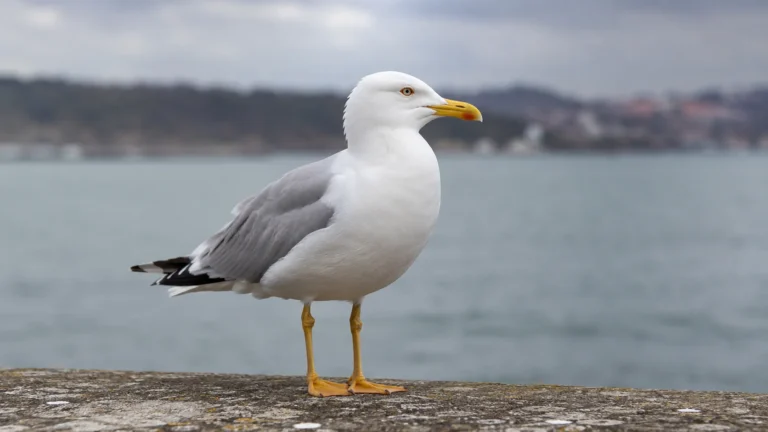
In the scientific community of ornithology, the term seagull does not actually exist. The proper biological term is simply gull. There are over fifty distinct species of gulls scattered across the planet, ranging from the massive Great Black-backed Gull to the tiny Little Gull. The prefix sea was colloquially attached by humans because these highly adaptable birds are frequently observed swarming around coastal beaches and ocean harbors.
2. They Drink Straight Ocean Water
While most land animals and birds would quickly die from severe dehydration and kidney failure after drinking heavy saltwater, gulls possess a brilliant evolutionary adaptation. They have highly specialized supraorbital glands located directly above their eyes. These complex biological filters completely extract the toxic sodium from their bloodstream, allowing the bird to safely drink pure ocean water while foraging far out at sea.
3. They Sneeze Out Solid Salt
Because those supraorbital glands are constantly filtering out massive amounts of heavy sodium from their bloodstream, the gull needs a highly efficient way to expel it from their body. The highly concentrated salt solution slowly drips down into the nasal cavity of their beak. The gull will frequently execute a sharp, highly forceful sneeze, physically projecting clear, salty droplets back into the ocean to completely clear their respiratory airways.
4. They Execute Brilliant Rain Dances
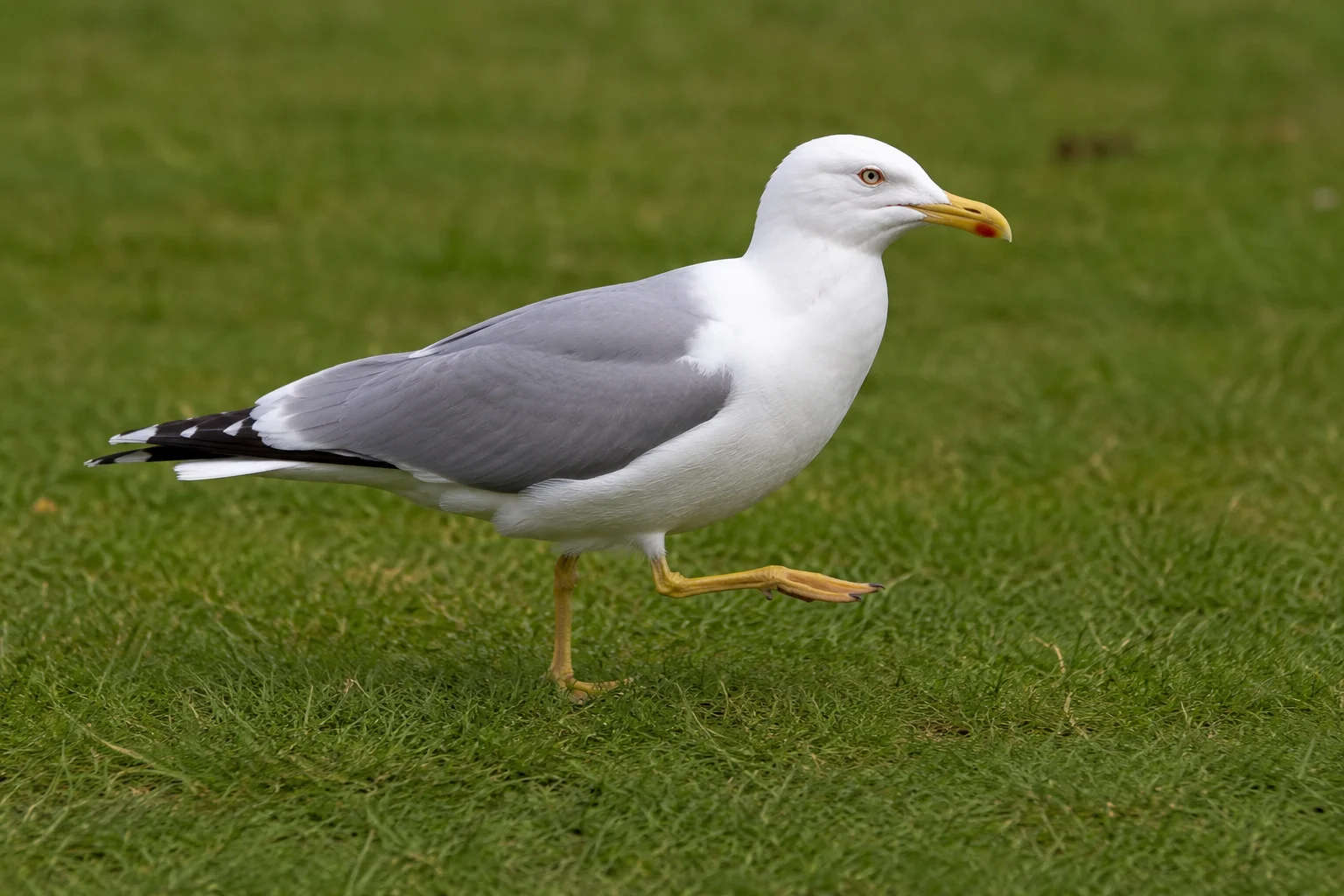
Gulls have developed an incredibly clever, highly deceptive hunting technique to force earthworms out of the ground. Standing on a patch of soft grass, the gull will rapidly stomp its webbed feet up and down in a highly rhythmic, drumming motion. This continuous, heavy vibration perfectly mimics the acoustic sound of approaching heavy rainfall, tricking the terrified worms into rushing completely up to the surface where they are instantly eaten.
5. They Are Highly Monogamous
Despite their chaotic, seemingly ruthless scavenging behavior, gulls take their romantic partnerships incredibly seriously. The vast majority of gull species are strictly monogamous and frequently mate for life. A bonded pair will actively return to the exact same nesting colony every single year, continuously working together to aggressively defend their tiny territory and equally share the exhausting duties of incubating eggs and feeding their demanding chicks.
6. They Can Easily Outlive a Pet Dog
When observing a loud, chaotic flock of gulls swarming a crowded beach, it is easy to assume they live short, highly precarious lives. In reality, they are incredibly resilient and boast astonishingly long lifespans for wild birds. A healthy gull that successfully navigates the dangerous first year of life can easily live for twenty to thirty years. The absolute oldest recorded wild European Herring Gull lived to be an astonishing forty-nine years old.
7. They Possess Brilliant Ultraviolet Vision
Like many advanced avian species, the eyes of a gull are completely superior to those of a human being. They possess specialized retinal cones that allow them to see completely into the ultraviolet light spectrum. This highly advanced visual adaptation allows them to easily track the glowing, ultraviolet trails of urine left by small rodents in the grass, or spot the highly reflective scales of fish swimming deep below the ocean surface.
8. They Drop Shells to Smash Them
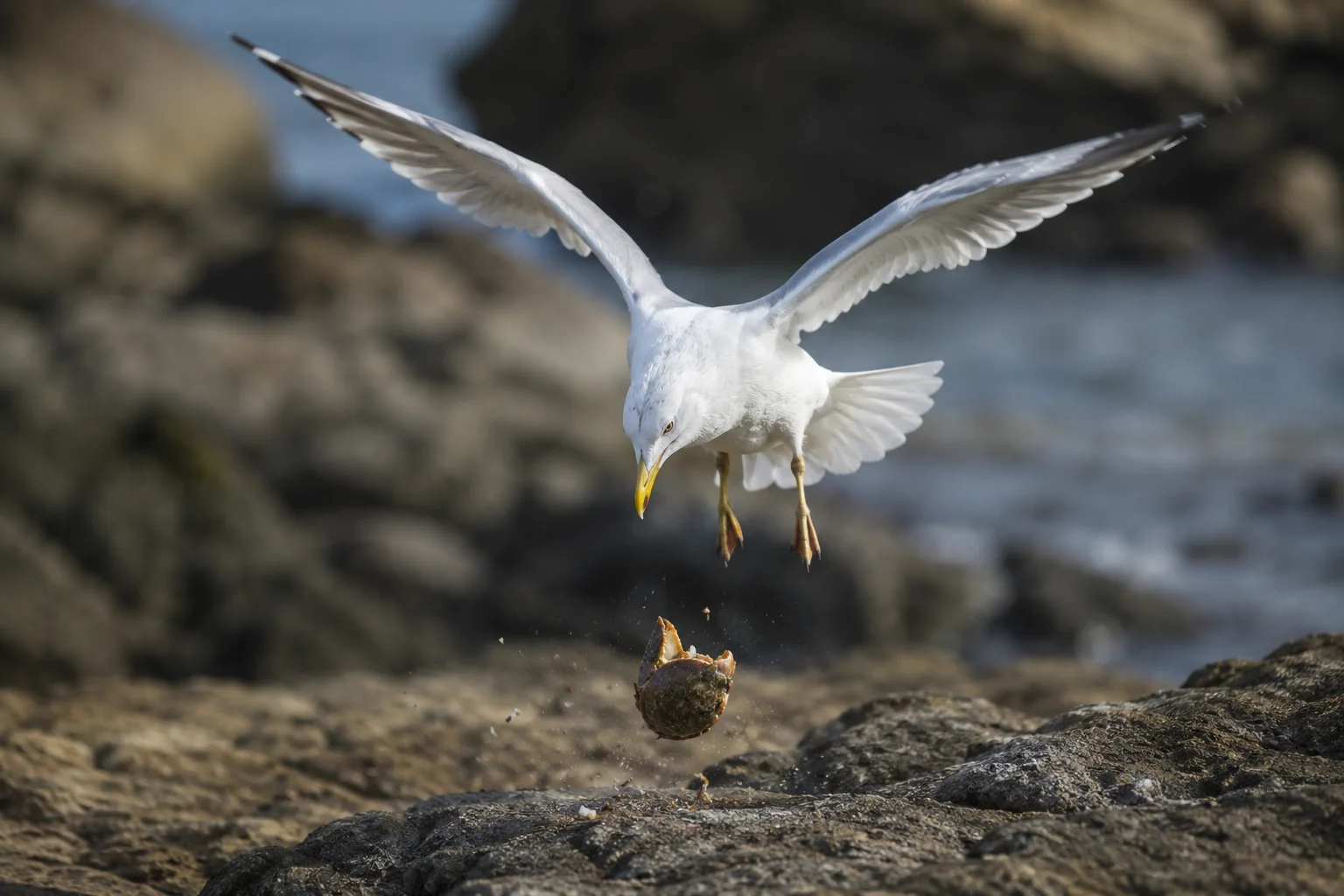
Gulls are incredibly intelligent problem solvers that heavily utilize their environment as a biological tool. When a gull catches a hard-shelled crab, clam, or massive mussel, they know their beak is simply not strong enough to crack it open. They will deliberately fly high up into the air and strategically drop the heavy shell onto jagged coastal rocks or paved concrete parking lots, completely smashing the armor to access the soft meat inside.
9. They Are Masters of Kleptoparasitism
Gulls are highly opportunistic survivors that frequently prefer to let other animals do all the hard work. They are absolute masters of a biological strategy known as kleptoparasitism, which literally translates to parasitism by theft. A gull will aggressively and relentlessly dive-bomb, harass, and physically attack other seabirds, like pelicans or terns, until the terrified victim completely regurgitates their freshly caught fish, which the gull instantly steals.
10. They Can Unhinge Their Jaws
Looking at a standard gull, their beak appears relatively narrow and highly rigid. However, they are physically capable of swallowing unimaginably massive prey entirely whole. Their lower jaws feature a highly flexible biological hinge that can completely stretch open to astonishing widths. Urban gulls have been frequently documented swallowing entire massive starfish, whole pigeons, and even fully grown rabbits in a single, terrifying gulp.
11. They Can Comfortably Sleep on the Ocean
Gulls do not always need to return to solid land to rest or sleep. When they are exhausted from traveling massive distances or hunting far offshore, they simply land directly on the open ocean waves. They possess incredibly dense, highly waterproof plumage completely coated in preen oil, which allows them to float completely effortlessly on the turbulent water while catching a few hours of highly necessary sleep.
12. They Perform Complex Mobbing Behavior
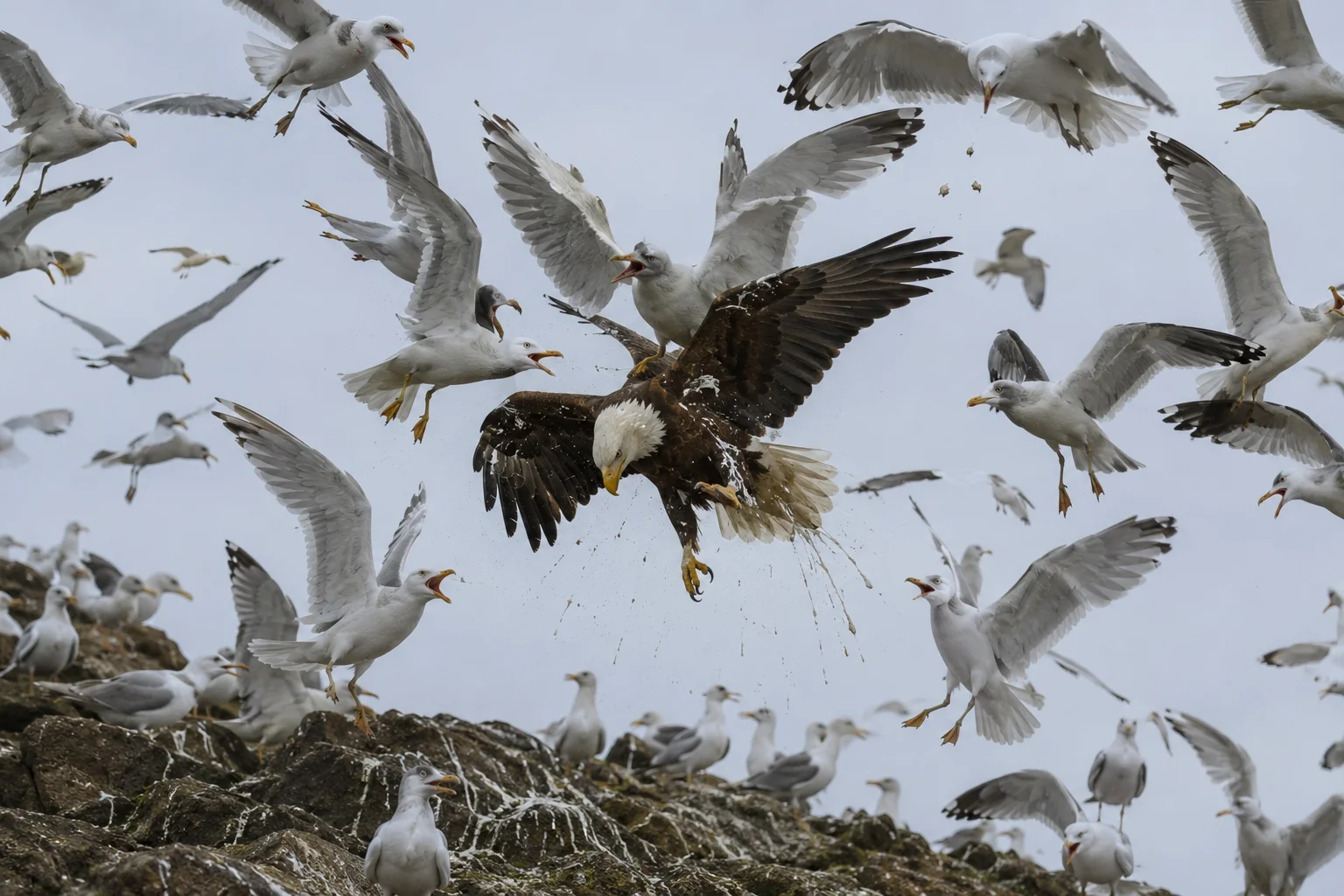
When a massive predator, like a bald eagle, a fox, or an aggressive human, approaches a crowded gull nesting colony, the birds do not simply scatter and run away. Instead, they execute a highly organized, deeply terrifying military defense tactic known as mobbing. Dozens or even hundreds of adult gulls will launch into the air together, continuously dive-bombing the predator, screaming deafeningly, and actively defecating on them until the massive threat completely retreats.
13. They Are Completely Omnivorous Garbage Disposals
The absolute key to the incredible global success of the gull family is their completely indiscriminate, highly adaptable digestive system. While they naturally prefer to hunt fresh fish, crabs, and insects, they will happily consume literally anything they can physically swallow. This massive dietary flexibility is exactly why they have so perfectly adapted to human urbanization, thriving entirely on discarded human food, massive landfills, and unattended beach picnics.
14. They Use Bread as Bait
Not only are gulls intelligent enough to steal food from humans, but they also completely understand how to actively use our garbage to catch better meals. In several highly documented cases, gulls in urban parks have been observed picking up large, discarded pieces of human bread. Instead of eating the bread, they carefully drop it onto the surface of a pond, patiently waiting for a large fish to swim up to eat the crumb before instantly snatching the fish directly out of the water.
15. They Live on Every Single Continent
The gull family is one of the most geographically successful avian groups on the entire planet. They completely dominate the coastal borders of North America, Europe, and Asia, and frequently thrive far inland on massive freshwater lakes. Incredibly, highly resilient species like the Kelp Gull even inhabit the freezing, barren shores of the Antarctic Peninsula, proving that there is almost no climate on Earth where a gull cannot survive.