15 Interesting Facts About Glass Frogs
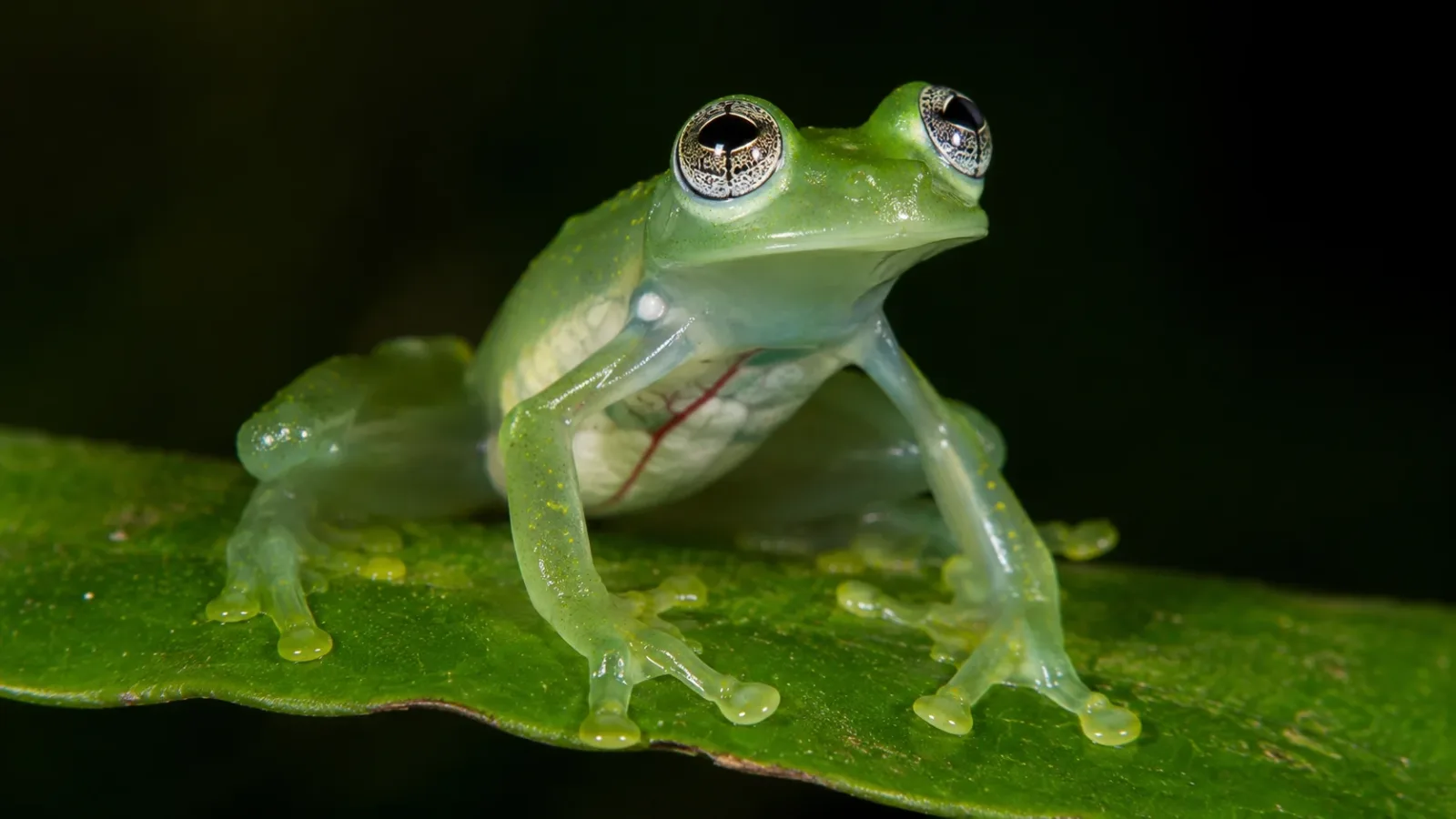
Glass frogs are tiny, delicate amphibians that make their homes high in the humid cloud forests and rainforests of Central and South America. Famous for their incredible see-through underbellies, they are a true marvel of evolutionary camouflage. While they might look as fragile as spun glass, these tiny tree dwellers are surprisingly fierce parents and hold biological secrets that are completely unique in the animal kingdom. Discover the trusted, amazing truths behind these nearly invisible jungle acrobats.
1. You Can See Their Beating Hearts
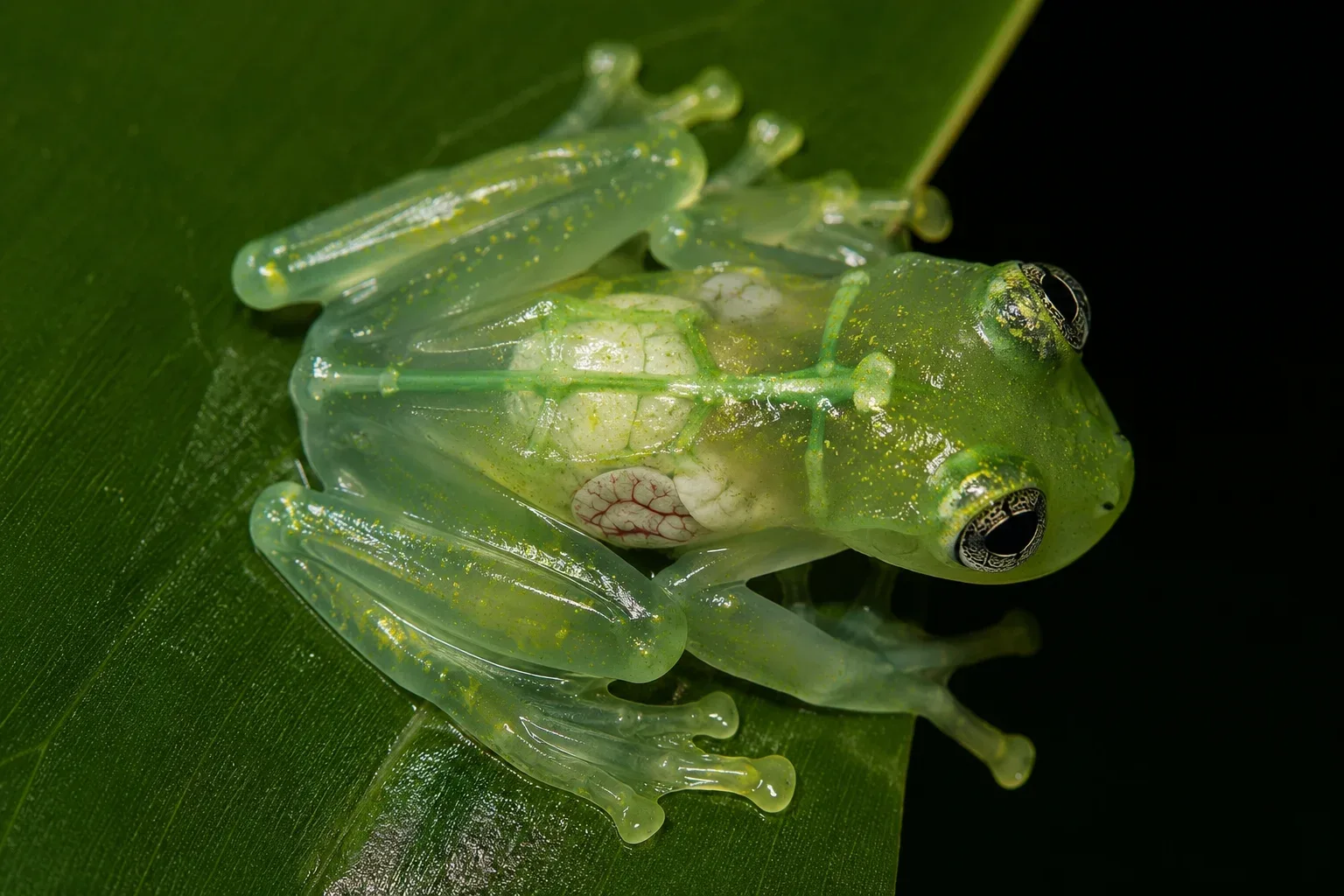
The defining feature of the glass frog is its completely translucent belly. If you look at the underside of one of these frogs, you do not see skin or muscle; instead, you see a perfectly clear window into their internal anatomy. Without any dissection, you can clearly watch their tiny red hearts beating, see their squiggly coils of intestines digesting food, and even spot unlaid eggs resting inside the females.
2. They Hide Their Blood While Sleeping
In 2022, scientists solved a massive mystery about how glass frogs become so invisible. Red blood cells strongly absorb light and normally make an animal’s tissues visible. However, researchers discovered that when glass frogs go to sleep, they actually siphon off nearly 90 percent of their red blood cells and pack them tightly into crystal-lined sacs inside their liver. By removing the red blood from circulation, they make themselves two to three times more transparent.
3. They Might Hold the Key to Blood Clots
The glass frog’s ability to pack its red blood cells into its liver is baffling to medical researchers. In humans and most other vertebrates, gathering a massive amount of red blood cells in one place instantly triggers a massive, potentially fatal blood clot. Yet, glass frogs can seemingly condense and expand their blood cells every single day with zero negative effects. Scientists are studying this “Holy Grail of hematology” to better understand and prevent blood clots in humans.
4. They Master “Edge Diffusion”
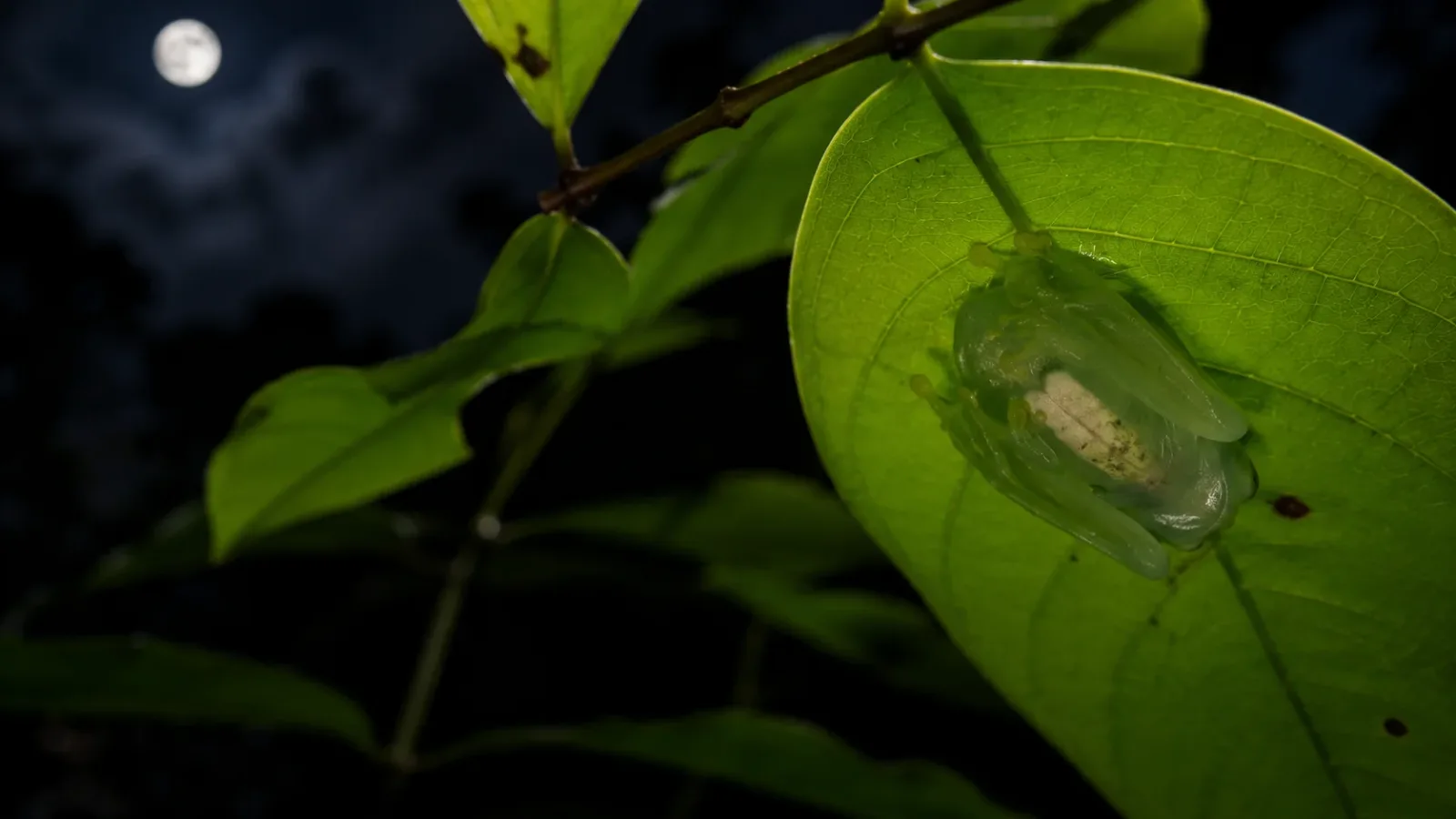
Having a clear belly is not just a party trick; it is a highly advanced form of camouflage. When a glass frog sleeps flat against the underside of a bright green leaf, sunlight shines down from above. Because their edges are translucent, the harsh shadow of their body is drastically softened and blurred against the leaf. This optical trick, known as “edge diffusion,” makes their silhouette nearly invisible to hungry birds flying below.
5. Their Bones Are Bright Green
Along with having clear skin, the internal skeleton of many glass frog species is just as colorful as their surroundings. Instead of having standard white or yellow bones like most animals, many glass frogs have bright green bones. This is caused by a high concentration of a specific green bile pigment called biliverdin inside their skeletal structure, which further helps them blend into their leafy environments.
6. Fathers Are Fiercely Dedicated
In the amphibian world, it is very common for parents to lay their eggs and immediately abandon them. Glass frogs completely break this rule. In many species, the males are incredibly dedicated single fathers. Once the female lays a clutch of eggs, the tiny father will sit directly on top of or right next to the eggs for weeks at a time, keeping them hydrated and guarding them around the clock until they hatch.
7. They Use “Ninja Kicks” for Defense
Despite being the size of a small coin, male glass frogs are fearless when protecting their young. The biggest threat to their developing eggs are predatory wasps that try to snatch the embryos off the leaf. If a wasp lands near the clutch, the tiny father will aggressively charge at the insect and use his powerful back legs to deliver rapid, brutal kicks, literally booting the dangerous wasp completely off the leaf.
8. They Lay Eggs Over Empty Air
Glass frogs have a very specific, high-risk strategy for laying their eggs. Instead of laying them safely in a puddle or pond, females stick their gelatinous egg clusters to the undersides of leaves that hang directly over fast-moving forest streams. When the eggs finally hatch, the tiny tadpoles simply wiggle free and drop through the empty air, plummeting directly into the rushing water below to begin the next stage of their lives.
9. They Have Forward-Facing Eyes
If you look at a standard tree frog, its eyes are positioned on the sides of its head to give it a wide field of vision to watch for predators. Glass frogs, however, have eyes that point directly forward. This gives them excellent binocular vision and depth perception, which is crucial for accurately judging distances when leaping through the dark canopy to hunt for fast-moving insects and spiders.
10. They Only Come Out at Night
Glass frogs are strictly nocturnal animals. During the hot, bright daylight hours, they remain completely motionless and asleep on the undersides of high canopy leaves, relying entirely on their transparent camouflage to keep them safe. As soon as the sun sets and the jungle gets dark, their blood rushes back into their bodies and they become highly active, hunting for soft-bodied insects and calling out for mates.
11. They Drink Through Their Bellies
Because they live high up in the trees and rarely venture down to the forest floor, glass frogs do not drink water from ponds or streams like regular frogs. Instead, they rely on the heavy humidity and frequent rain of the cloud forest. They have highly vascularized patches of skin on their bellies and thighs that act like sponges, allowing them to absorb dew and moisture directly from the wet leaves they sit on.
12. Some Wear Decoy “Eggs”
To further protect their young, some species of glass frog have evolved incredible visual decoys. The Fleischmann’s glass frog has small, pale yellow spots dotting the green skin on its back. When a father sits perfectly still next to his clutch of pale, yellowish eggs, his spotted back looks almost exactly like the egg mass itself, which helps confuse predators trying to locate the actual nest.
13. Males Wrestle for Territory
During the breeding season, prime real estate—specifically, a perfect leaf hanging directly over a stream—is in high demand. If a rival male tries to take over a claimed leaf, the two tiny frogs will engage in intense grappling matches. They stand up on their back legs, lock their arms around each other, and aggressively wrestle, trying to flip or push the intruder completely off the edge of the leaf.
14. They Are Tiny Marvels
When people see zoomed-in photos of glass frogs, they often assume they are the size of a standard bullfrog. In reality, they are incredibly miniature creatures. The vast majority of the 150-plus known species of glass frogs measure between 0.8 and 3 inches long. Many fully grown adults can easily sit perfectly comfortably on the surface of a human thumbnail.
15. They Are Crucial “Thermometers” of the Forest
Because they breathe and drink directly through their highly porous skin, glass frogs are incredibly sensitive to any changes in their environment. They are considered “bioindicators” by scientists. If the temperature of the cloud forest rises slightly, or if the water becomes polluted by mining or agriculture, glass frogs are usually the very first animals to disappear, warning biologists that the entire ecosystem is in danger.
Sources & References
This AI-assisted post was rigorously curated and fact-checked for accuracy by:
 Martin Roháček
How fun was this article? 🤔
Tap a star to rate it
🧠 Quiz: How closely were you paying attention?
10 questions — all answers are in the article above!
Enjoyed these facts? There's more! 💌
Fresh fun facts in your inbox. No spam, ever.