The Tenacious Survivor: 15 Fascinating Facts About Kangaroo Rats
When you hear the name kangaroo rat, you might picture a bizarre, genetically modified hybrid or a common urban pest that simply happens to jump, but these remarkable creatures are neither kangaroos n…
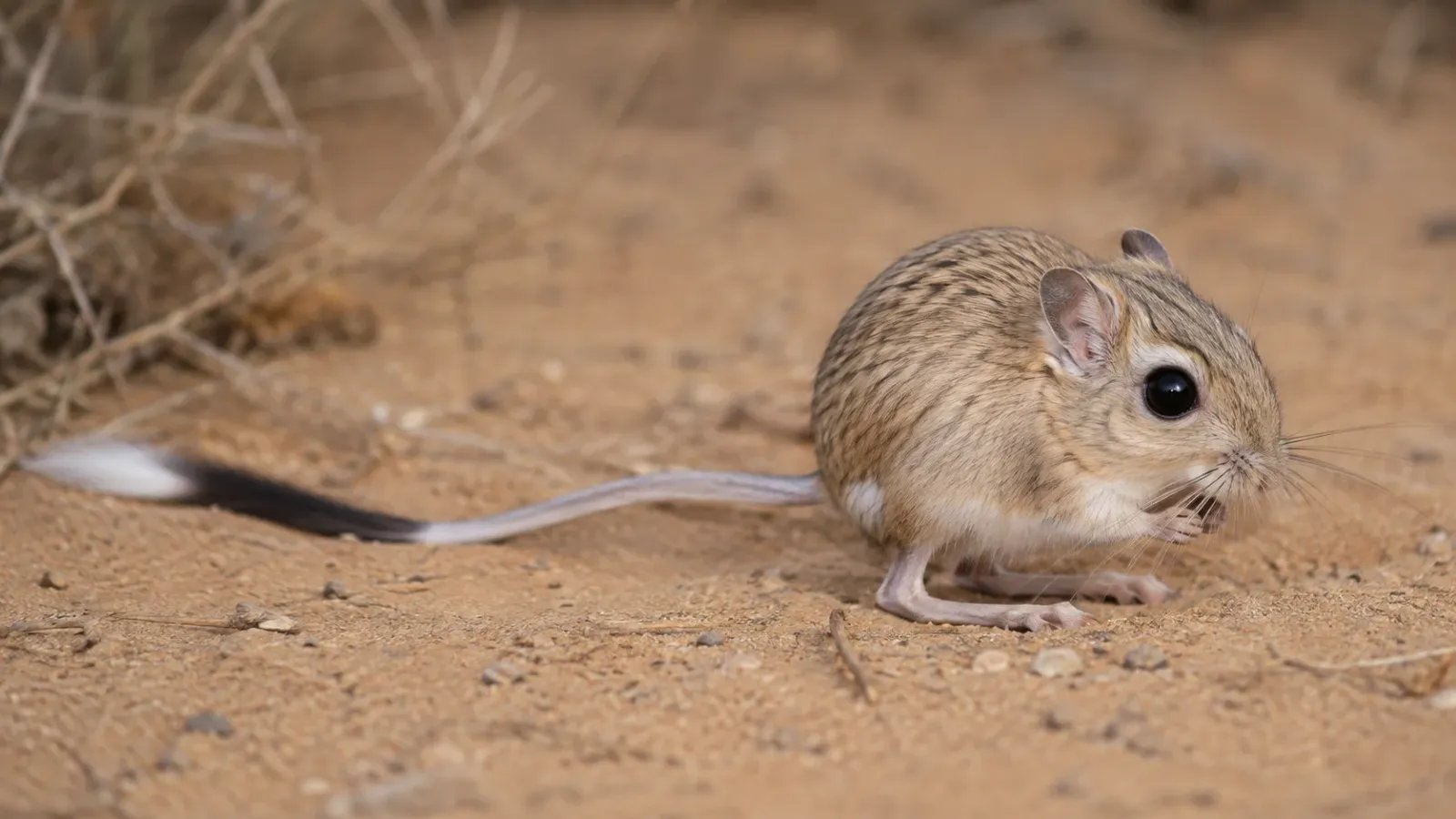
When you hear the name kangaroo rat, you might picture a bizarre, genetically modified hybrid or a common urban pest that simply happens to jump, but these remarkable creatures are neither kangaroos nor actual rats. Belonging to the specialized family Heteromyidae, these bipedal marvels are evolutionary masterpieces perfectly calibrated for the harshest, most unforgiving desert landscapes in North America. Forget the persistent misconception that all desert animals must constantly seek out hidden watering holes or succulent cacti; the kangaroo rat has entirely rewritten the biological rules of hydration, mastering a level of physiological efficiency that continues to baffle modern biologists. From their astonishing, snake-dodging martial arts reflexes to their hidden architectural empires beneath the scorching sand, these tiny titans are far more complex than their pop-culture caricature suggests. In the following exploration, we will dive into the obscure biology and secret lives of kangaroo rats, revealing how they conquer the merciless desert without ever taking a single sip of water.
1. They Extract Water From Dry Seeds
Contrary to the myth that all mammals must routinely drink liquid water to survive, the kangaroo rat can go its entire life without taking a single sip. Instead, this desert specialist derives nearly all of its necessary hydration through a chemical process called metabolic oxidation. When the kangaroo rat digests dry seeds, its unique metabolism breaks down the carbohydrates to produce water internally as a byproduct. This metabolic water, combined with whatever trace amounts of moisture are present in the seeds themselves, perfectly sustains the animal even during years-long droughts. It is a biological magic trick that allows them to thrive in environments where most other mammals would quickly perish.
2. Kidneys Designed for Extreme Conservation
To maintain their delicate internal water balance, kangaroo rats possess some of the most phenomenally efficient kidneys in the entire animal kingdom. Their kidneys feature exceptionally long loops of Henle, the microscopic anatomical structures responsible for extracting water from waste before it is excreted. As a result, kangaroo rats produce urine that is up to five times more concentrated than that of humans, often taking on the consistency of a thick, dry paste. This hyper-efficient filtration system ensures that absolutely no vital moisture is wasted in the routine process of eliminating toxins. By essentially squeezing every possible drop of water back into their bloodstream, they minimize fluid loss to an absolute biological minimum.
3. External Fur-Lined Cheek Pouches
Like many rodents, kangaroo rats gather massive amounts of food in their cheek pouches, but theirs feature a fascinating evolutionary twist designed specifically for arid survival. Instead of being located inside the mouth, their pouches are located on the outside of their cheeks and are heavily lined with dense fur. If the pouches were situated inside the mouth, the dry seeds they collect would absorb the animal's precious saliva, wasting vital internal moisture. By keeping the storage compartments completely external and dry, the kangaroo rat can transport huge quantities of seeds back to its burrow without sacrificing a single drop of hydration. Once safely underground, they simply use their tiny front paws to push the seeds out of these specialized pockets.
4. Mid-Air Martial Arts Against Predators
One of the most spectacular, yet obscure, behaviors of the kangaroo rat is its ability to perform high-speed, mid-air defensive maneuvers to thwart deadly predators. When ambushed by a rattlesnake, the kangaroo rat's reaction time is roughly seventy milliseconds, allowing it to launch itself upward just as the snake strikes. If the jump alone is not enough to clear the danger, the rodent will literally kick the snake in the face while airborne, using its powerful hind legs to violently deflect the venomous fangs. Slow-motion cameras have captured these incredible ninja-like kicks, which often send the snake flying backward and grant the rat ample time to escape. This dynamic reflex proves they are far from helpless prey, operating instead as fierce combatants perfectly adapted to evade apex predators.
5. Auditory Bullae Function as Acoustic Amplifiers
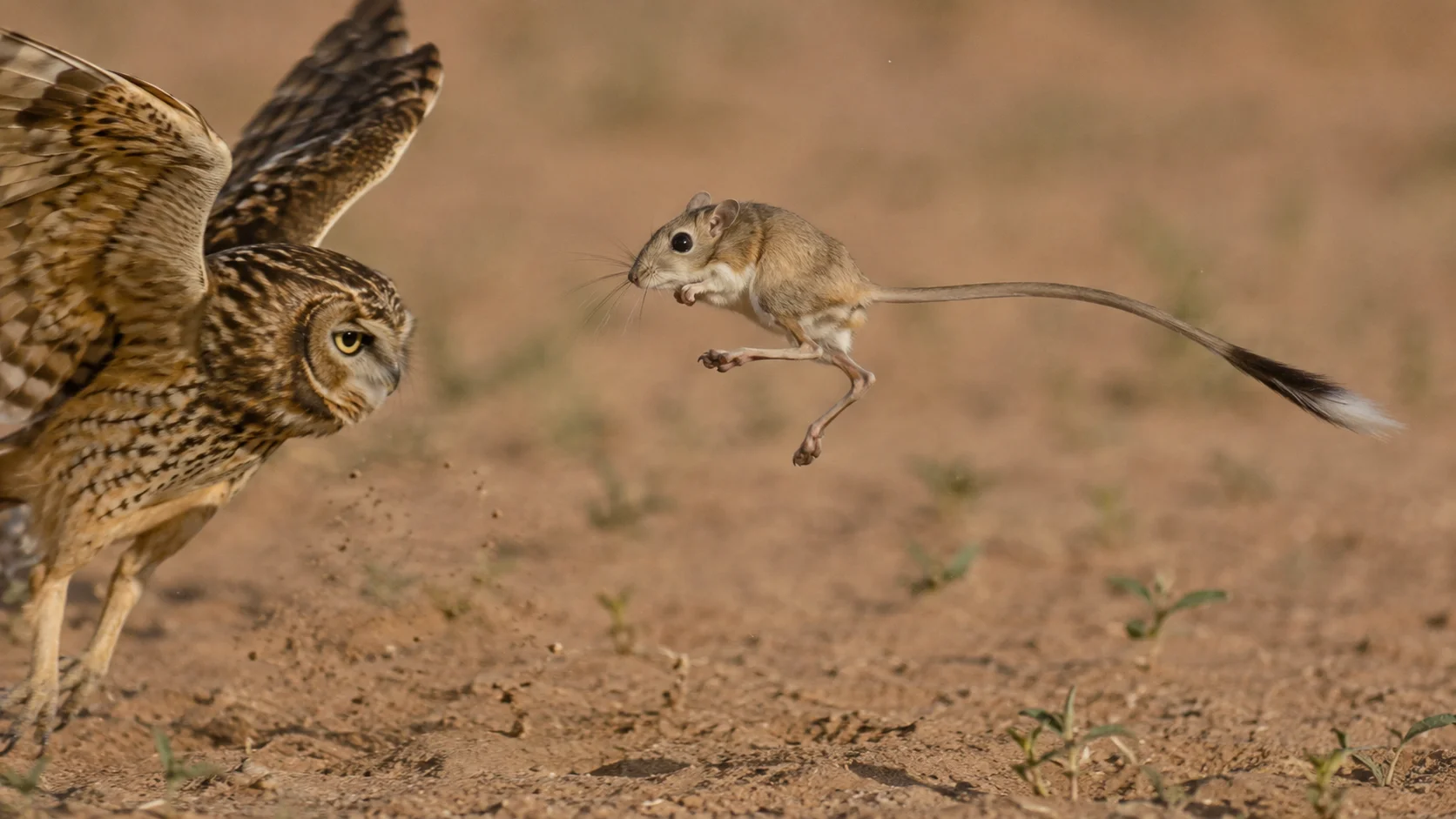
The kangaroo rat possesses an incredibly specialized skull structure featuring enormously inflated auditory bullae, which are hollow, bony chambers enclosing the middle ear. These oversized skull chambers act as natural resonance amplifiers, allowing the animal to detect the lowest frequency sounds in their harsh environment. Because of this adaptation, a kangaroo rat can actually hear the near-silent whoosh of an owl's wing cutting through the night air or the faint, subtle slither of a snake moving across the sand. The sensitivity of their hearing is so acute that they can pinpoint the exact direction of an approaching predator in complete darkness, granting them a crucial head start. This extraordinary acoustic radar is widely considered one of their most vital tools for surviving the perilous desert night.
6. They Use Their Noses to Harvest Breath
Breathing in a hyper-arid environment usually results in rapid, fatal moisture loss, but the kangaroo rat has developed a nasal cavity that functions as a built-in water recycler. As the animal exhales warm, moist air from its lungs, the intricate, highly convoluted passages in its snout rapidly cool the breath before it leaves the nose. This sudden temperature drop causes the internal water vapor to condense on the mucous membranes, where it is instantly reabsorbed into the body. Consequently, the air they finally exhale out into the desert is exceptionally dry and cool, meaning they lose virtually no water to regular respiration. This sophisticated internal dehumidifier is a major physiological reason why they can survive entirely on dry forage.
7. Giant Leaps From Tiny Legs
While their bipedal hopping has earned them the kangaroo moniker, their leaping abilities proportionally dwarf those of their famous Australian namesakes. Utilizing highly elongated hind legs and large, specialized feet, a terrified kangaroo rat can vault up to nine feet in a single, explosive bound. Given that the animal itself only measures a few inches in length, this leap is the equivalent of a human jumping over a multi-story building from a complete standstill. Their long, tufted tails serve as vital counterweights and aerodynamic rudders, allowing them to change direction abruptly in mid-air to confuse pursuing predators. This erratic locomotion makes it nearly impossible for coyotes, foxes, or snakes to accurately predict where the rodent will land.
8. Seismic Communication Through Foot Drumming
Kangaroo rats do not rely heavily on vocalizations to interact; instead, they have mastered a complex system of seismic communication by drumming their powerful hind feet against the hard desert floor. This rapid tapping sends low-frequency vibrations rippling through the ground, which can be easily detected by other kangaroo rats at considerable distances. They use these percussive signals to claim territory, attract mates, and even communicate directly with hunting predators like snakes. By drumming near a hidden snake, the kangaroo rat effectively signals to the predator that its ambush has been blown, often prompting the snake to abandon the hunt entirely. It is a highly sophisticated form of subterranean Morse code that keeps the entire desert ecosystem quietly connected.
9. Cultivating Underground Microclimates
The intense heat of the desert surface would rapidly dehydrate and kill a kangaroo rat, so they construct intricate, multi-chambered burrows that serve as subterranean sanctuaries. These burrows are engineered with specific architectures that trap humidity and maintain a cool, stable temperature, regardless of the scorching sun burning above. The kangaroo rat spends its days sleeping in these damp chambers, where the ambient moisture helps prevent the passive loss of water through their skin. Furthermore, they store their dry seeds in these humid rooms, allowing the food to naturally absorb moisture from the air before it is eaten. In this way, the burrow acts not just as a protective home, but as an active, critical component of their hydration strategy.
10. They Must Bathe in Dust to Survive
It might seem highly counterintuitive to bathe in dirt to stay clean, but regular dust baths are an absolute matter of life and death for the kangaroo rat. Their bodies constantly secrete natural oils to keep their skin healthy, but without regular grooming, these oils quickly build up and cause their fine fur to mat together. Matted fur immediately loses its insulating properties, rendering the animal highly vulnerable to the freezing temperatures that sweep across the desert during the night. By vigorously rolling around in fine volcanic dust or sand, they absorb and strip away the excess oil, keeping their coats fluffy, clean, and thermally efficient. Denied access to a proper dust bath, a kangaroo rat can quickly succumb to the harsh extremes of the desert climate.
11. Neither Kangaroo Nor Rat
The misleading pop-culture name suggests a bizarre genetic crossover, but scientifically, these creatures are completely unrelated to either of their namesakes. They do not belong to the Muridae family of true rats and mice, nor are they marsupials like actual kangaroos from the Australian outback. Instead, they belong to the distinct family Heteromyidae, sharing a much closer evolutionary lineage with pocket gophers and pocket mice. Their physical resemblance to kangaroos is purely a result of convergent evolution, where two completely unrelated species independently develop similar physical traits to solve the same environmental challenges. Thus, they are uniquely North American rodents that carved out their own brilliant evolutionary path.
12. Fiercely Territorial Loners
Despite their adorable, wide-eyed appearance, kangaroo rats are notoriously aggressive and fiercely solitary creatures that simply do not tolerate company. Outside of a very brief mating window, they live entirely alone and will violently defend their burrows and seed caches from any intruders, especially other kangaroo rats. Conflicts over territory can quickly devolve into brutal, high-kicking brawls that sometimes end fatally, as a stolen seed cache in the desert practically guarantees starvation. Because their survival margins are so razor-thin, they cannot afford the biological luxury of sharing resources or socializing. This extreme territoriality ensures that the desert's limited food supply remains evenly distributed across the harsh landscape.
13. Meticulous Seed Farming Strategies
Kangaroo rats are not just casual, opportunistic foragers; they are meticulous agriculturalists that carefully manage and curate their harvested resources. They utilize a strategy called larder hoarding, where they gather thousands of seeds and organize them into specialized subterranean pantries based on seed type and moisture content. If a gathered seed is too moist, the rat will intentionally bury it in a shallow, dry surface pit to cure in the baking sun before moving it into the deep, humid burrow. This brilliant preventive measure stops their precious food stores from developing toxic mold in the underground dampness. Their ability to deliberately cure and cultivate their food supply showcases a remarkable level of cognitive planning and environmental awareness.
14. They Are Desert Keystone Species
The vast, arid landscapes of western North America would look drastically different, and perhaps collapse entirely, without the tireless labor of the kangaroo rat. Recognized by ecologists as a keystone species, their extensive burrowing heavily aerates the compacted desert soil, allowing rare rainwater to penetrate deeply and support fragile plant life. Additionally, the seeds they bury in shallow caches and subsequently forget about become the primary mechanism for plant dispersal and germination across the ecosystem. Without kangaroo rats constantly moving, burying, and cultivating seeds, many species of desert grasses and shrubs would struggle to reproduce at all. Consequently, the survival of entire desert habitats is fundamentally tethered to the daily, unseen activities of these tiny rodents.
15. They Tolerate No Free Water
One of the most obscure and baffling facts about kangaroo rats is that offering them a bowl of fresh, free-standing liquid water can actually be detrimental to their health. Because their physiology is so rigidly adapted to conserving every micro-drop of moisture, introducing large amounts of liquid water severely disrupts their delicate internal homeostasis. In captivity, if kangaroo rats drink liquid water, their hyper-efficient kidneys struggle to process the sudden influx, and the water can literally wash away their essential bodily electrolytes. They have evolved so perfectly to conquer extreme drought that liquid abundance has ironically become a biological hazard. It is the ultimate testament to an animal entirely defined by and completely bound to the harshness of its arid home.
Sources & References
This AI-assisted post was rigorously curated and fact-checked for accuracy by:
 Martin Roháček
How fun was this article? 🤔
Tap a star to rate it
🧠 Quiz: How closely were you paying attention?
10 questions — all answers are in the article above!
Enjoyed these facts? There's more! 💌
Fresh fun facts in your inbox. No spam, ever.