The Deadliest Animal on Earth: 15 Fascinating Facts About Mosquitoes
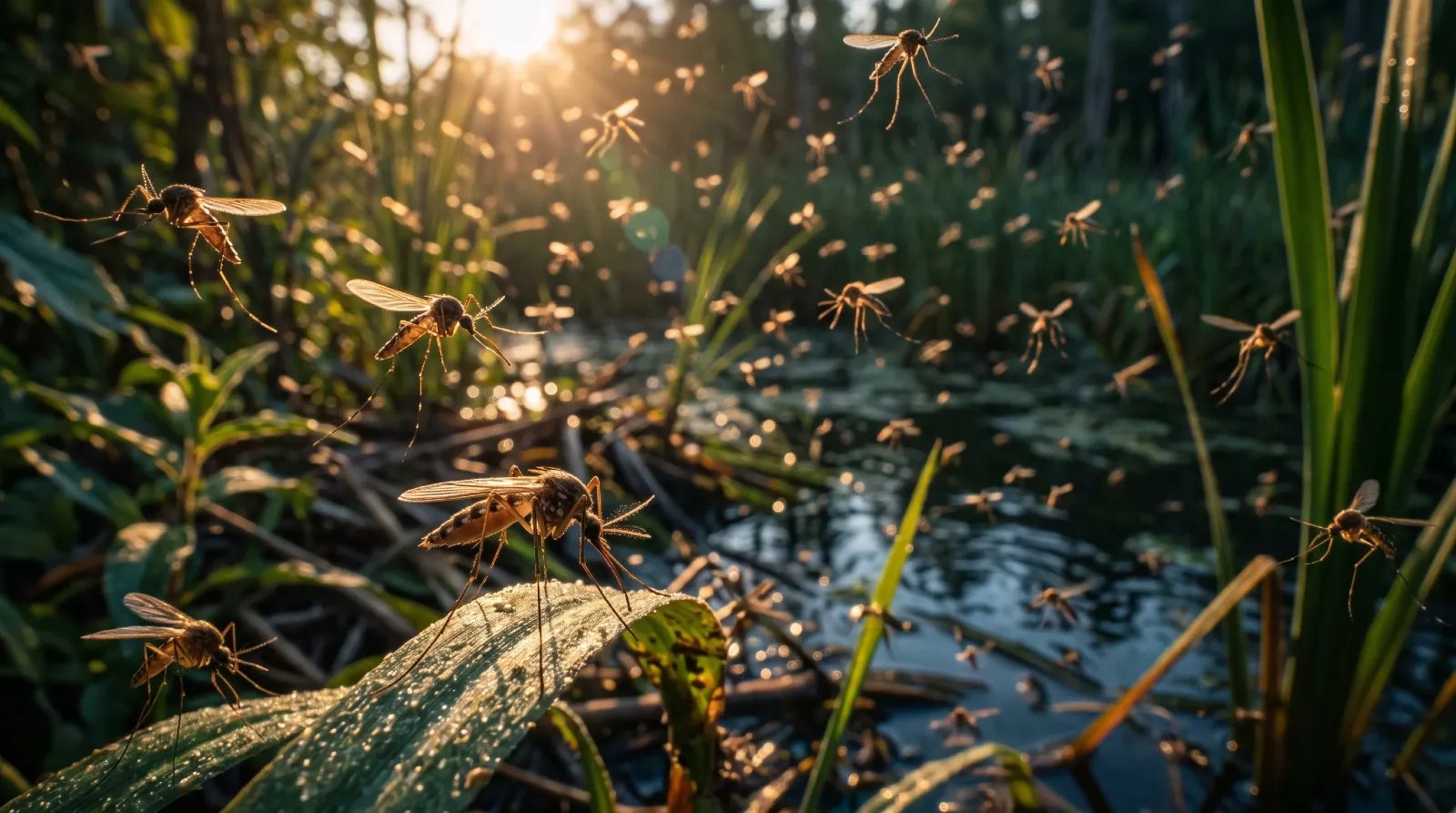
Mosquitoes are tiny, fragile and easy to swat, yet by spreading diseases they kill more people than any other animal. Only the females bite, their mouths contain six separate needles, and some people really are more attractive to them than others. Here are the surprising facts about the insect everyone loves to hate.
1. Mosquitoes are the deadliest animals on Earth.
Sharks, snakes and lions may seem more frightening, but no animal kills more humans than the mosquito. By spreading diseases such as malaria, dengue fever, yellow fever and Zika, mosquitoes cause the deaths of more than a million people every year. Malaria alone kills hundreds of thousands, most of them young children in Africa.
2. Only female mosquitoes bite.
Both male and female mosquitoes feed on nectar and plant juices for energy. Only the females of blood-feeding species bite, because they need the protein in blood to produce their eggs. Males have simpler mouthparts and cannot pierce skin at all.
3. A mosquito's mouth contains six needles.
What looks like a single needle is actually a sheath containing six thin mouthparts called stylets. Two have tiny saw-like teeth that cut through the skin, two hold the tissue apart, one injects saliva and another sucks up blood. The insertion is so delicate that it requires only a tiny fraction of the force needed to push a needle through skin.
4. Their saliva is what makes bites itch.
When a mosquito bites, it injects saliva containing chemicals that stop blood from clotting and help it flow. Our immune system reacts to these proteins, which causes the red bump and itch. The bite itself is usually so gentle that we do not feel it until it is too late.
5. They can smell your breath from a distance.
Female mosquitoes find people by detecting the carbon dioxide in their breath, often from many metres away. As they get closer, they follow body heat, moisture and the chemicals in human skin odour. Once they are near, they also use their eyes to home in on a target.
6. Some people really are "mosquito magnets".
If you always get bitten more than your friends, it may not be your imagination. A 2022 study found that people who produce higher levels of certain fatty acids on their skin are far more attractive to mosquitoes. Remarkably, these "mosquito magnets" stayed attractive over several years, regardless of what they ate or which soap they used.
 You might also like
The Sunshine State: 15 Fascinating Facts About Florida
7. There are around 3,600 species.
Scientists have described about 3,600 species of mosquito, and most of them never bite humans. Many feed on birds, frogs or other animals, and some do not bite at all. Only a few dozen species are responsible for spreading most human diseases.
8. Mosquitoes hum to flirt.
The familiar whining sound of a mosquito comes from its wings, which beat hundreds of times per second. Males and females beat their wings at slightly different frequencies. When they court, they adjust their wingbeats until their tones harmonise, effectively singing a duet before mating.
9. They begin life in water.
Female mosquitoes lay their eggs on or near still water, such as ponds, puddles, old tyres or even a forgotten bucket. The larvae, sometimes called wrigglers, live in the water and breathe through tubes at the surface. Removing standing water from gardens is one of the simplest ways to reduce mosquito numbers.
10. Some mosquito eggs can survive drought.
Eggs of certain species, such as the yellow fever mosquito and the Asian tiger mosquito, can survive dried out for months. When rain finally fills their container or puddle, they hatch within hours. This ability has helped these species spread around the world in shipments of tyres and plants.
11. Iceland was free of mosquitoes until recently.
For a long time, Iceland was famous as one of the very few inhabited places in the world with no mosquitoes. In 2025, however, several mosquitoes of the species Culiseta annulata were found in the country for the first time. Scientists are watching closely to see whether the insects can establish a permanent population.
12. Climate change is helping them spread.
Warmer temperatures are allowing disease-carrying mosquitoes to move into new areas. The Asian tiger mosquito, which can spread dengue fever, has become established across much of southern Europe and as far north as parts of France, Belgium, the Netherlands and England. Scientists warn that diseases once limited to the tropics could become more common in Europe.
🤔 Quick guess
Which bacterium has been used to stop mosquitoes spreading dengue fever?
13. Bacteria can stop mosquitoes spreading disease.
One promising way to fight dengue fever involves Wolbachia, a natural bacterium that blocks the dengue virus inside mosquitoes. In a large trial in Yogyakarta, Indonesia, releasing Wolbachia-carrying mosquitoes reduced dengue cases by 77 percent. Similar programmes have since been launched in many other countries.
14. A fossil mosquito was found full of blood.
In 2013, scientists described a 46-million-year-old fossil mosquito from Montana that still contained traces of iron-rich molecules from a blood meal in its abdomen. It was the first proven fossil of a blood-engorged mosquito. Unfortunately for "Jurassic Park" fans, the DNA inside had long since broken down.
15. Their name means "little fly".
The word "mosquito" comes from Spanish and Portuguese, where it means "little fly". Mosquitoes are indeed true flies, related to houseflies and fruit flies. Despite their fragile appearance, they have existed since at least the age of the dinosaurs.
How did these facts land?
Know someone who'd love these facts? Share them 👇
🧠 Quiz: How closely were you paying attention?
Think you remember the facts? 10 questions, tap an answer.