The Sunshine State: 15 Fascinating Facts About Florida
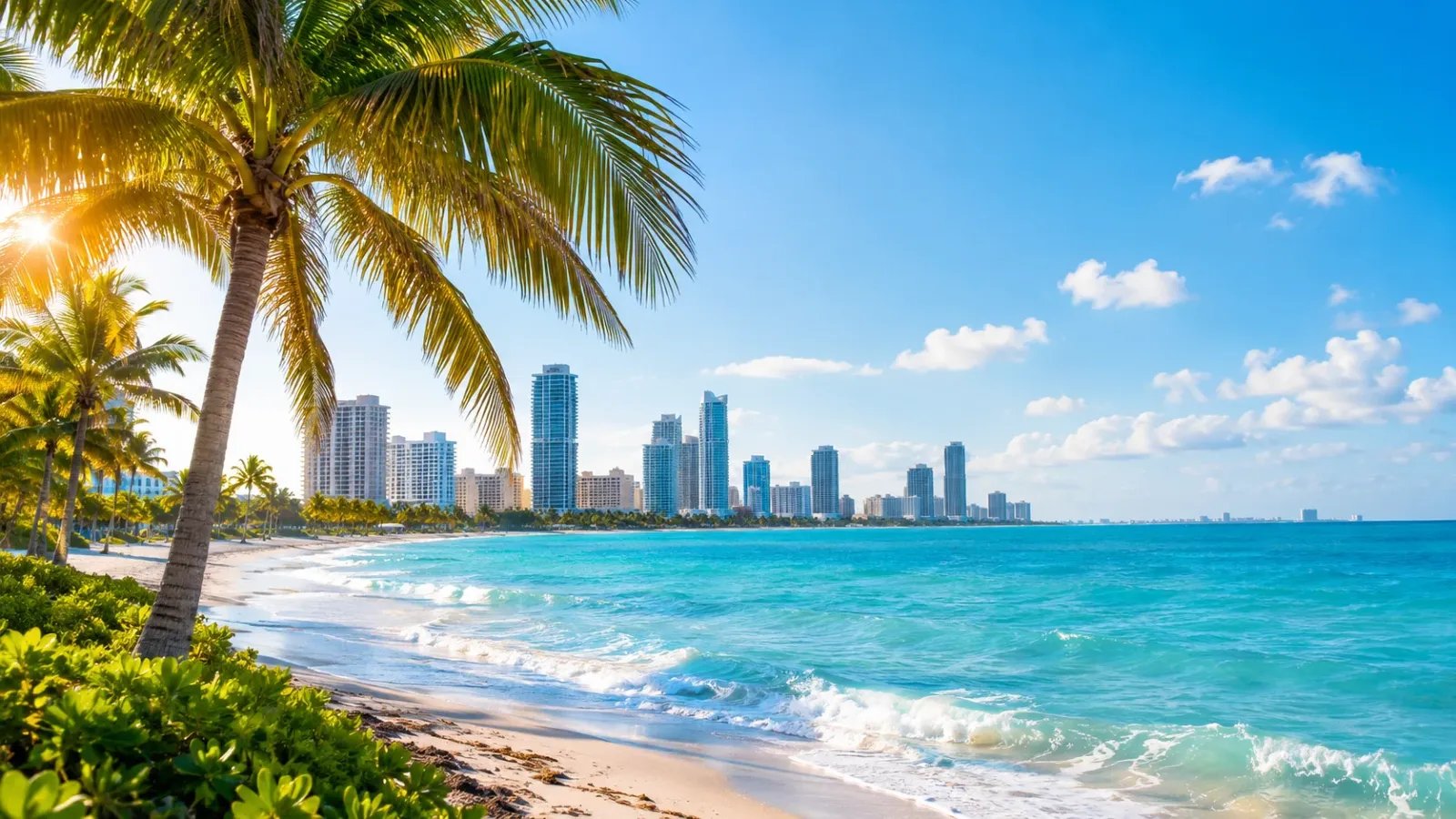
Forget the theme parks and eccentric news headlines; Florida is a complex ecological and historical marvel. Far from just a modern retiree haven, this peninsula boasts ancient coral reefs, the oldest continuously occupied European settlement in the US, and a unique limestone aquifer system. Discover the wild science and untamed nature behind America's most misunderstood state.
1. St. Augustine is the oldest continuously occupied European-established settlement within the borders of the continental United States.
Founded by Spanish admiral Pedro Menéndez de Avilés in 1565, this coastal city predates the English colony at Jamestown by forty-two years and the Pilgrims at Plymouth Rock by fifty-five years. While American history often centers on British colonization, Florida was a crucial Spanish stronghold designed to protect treasure fleets sailing back to Europe. The city's surviving architecture, particularly the star-shaped Castillo de San Marcos, reflects its turbulent history of pirate raids and imperial clashes. This ancient fortress is uniquely constructed from coquina, a sedimentary rock made of compressed shells that effectively absorbed enemy cannonballs rather than shattering under impact.
2. The Everglades is not a static swamp but a massive, slow-moving river of grass flowing from Lake Okeechobee to Florida Bay.
Often mistakenly characterized as a stagnant wetland, this unique ecosystem is actually a shallow sheet of water that can be up to fifty miles wide but only a few inches deep. It moves at a glacial pace of about one hundred feet per day, nourishing a complex web of sawgrass marshes, cypress swamps, and mangrove forests. This hydrological marvel supports incredible biodiversity, acting as the only place on Earth where American alligators and American crocodiles naturally coexist in the wild. Decades of intensive drainage and agricultural development severely disrupted this natural flow, though massive restoration projects are now underway to revive the ancient water cycle.
3. The entire state sits atop a massive subterranean plateau of porous limestone holding one of the most productive aquifers in the world.
Millions of years ago, Florida was submerged under a shallow sea, allowing the calcium carbonate shells of countless marine organisms to accumulate and form a thick limestone bedrock. Over time, fluctuating sea levels continuously exposed and reshaped this massive geological platform. Today, the Floridan Aquifer stores trillions of gallons of fresh water within its spongy, cave-filled structure. This underground reservoir surfaces as thousands of brilliant blue freshwater springs, discharging more groundwater than any other state in the nation. The same porous geology that provides abundant drinking water also makes the peninsula highly susceptible to sinkholes, as acidic rainwater slowly dissolves the limestone from the inside out.
4. The Florida panther is an isolated subspecies of puma that survived near-extinction through a controversial genetic rescue program.
By the 1990s, the only breeding population of pumas in the eastern United States had dwindled to fewer than thirty individuals trapped in the swamps of South Florida. Rampant inbreeding caused severe health issues in the remaining cats, including heart defects and kinked tails, threatening an imminent collapse of the population. In a desperate conservation gamble, wildlife biologists introduced eight female Texas cougars to the region to restore genetic diversity. The intervention successfully rejuvenated the bloodline, pushing the population to over two hundred individuals, though habitat loss and vehicle collisions remain critical threats to their long-term survival.
5. Cape Canaveral was chosen as America's primary spaceport because its proximity to the equator provides rockets with a natural velocity boost.
Launching spacecraft from a location closer to the equator allows rockets to take advantage of the Earth's rotational speed, which is fastest at its widest point. This geographical advantage provides a natural slingshot effect, significantly reducing the amount of fuel required to reach orbit. Furthermore, the launchpads on the eastern coast of the Florida peninsula ensure that rockets ascend over the open expanse of the Atlantic Ocean. If a catastrophic failure occurs during the initial ascent, the dangerous debris will fall harmlessly into the water rather than onto populated landmasses.
6. Florida experiences more lightning strikes per square mile than any other state in the country due to colliding sea breezes.
The state's unique geography as a narrow peninsula surrounded by warm waters creates the perfect atmospheric engine for intense, predictable thunderstorms. During the summer, the sun rapidly heats the landmass, causing hot air to rise and draw in cooler, moisture-laden sea breezes from both the Gulf of Mexico and the Atlantic Ocean. When these two opposing fronts collide over the middle of the state, they force immense amounts of humid air rapidly upward into the freezing upper atmosphere. This violent atmospheric friction generates massive electrical charges, resulting in Florida's notorious and frequently deadly daily lightning storms.
7. In 1982, the city of Key West briefly seceded from the United States to form the micro-nation known as the Conch Republic.
The secession was a satirical yet highly effective protest against a United States Border Patrol blockade set up on the only highway connecting the Florida Keys to the mainland. The checkpoint was ostensibly established to search for narcotics and undocumented immigrants, but it created a massive traffic jam that devastated the local tourism-dependent economy. In response, Key West's mayor declared independence, formally declared war on the United States, surrendered exactly one minute later, and then demanded one billion dollars in foreign aid. The brilliant publicity stunt forced the federal government to dismantle the roadblock and permanently enshrined a rebellious, tongue-in-cheek identity into the culture of the Keys.
8. Florida possesses the longest continuous coastline in the contiguous United States, spanning nearly one thousand and two hundred miles.
Only Alaska has a longer oceanic coastline than this southeastern peninsula, which is bordered by the Atlantic Ocean, the Straits of Florida, and the Gulf of Mexico. This extensive marine border means that no single point within the state is more than sixty miles away from saltwater. The diverse coastline transitions dramatically from the quartz sand beaches of the panhandle to the dense mangrove estuaries of the south, playing a critical role in global marine ecology. This immense coastal footprint also leaves the state uniquely vulnerable to rising sea levels and the destructive storm surges of Atlantic hurricanes.
9. Despite its historic association with oranges, Florida is currently battling a devastating bacterial disease that has collapsed its citrus industry.
For over a century, the state was the undisputed king of American citrus production, famously supplying the vast majority of the nation's breakfast juice. However, the introduction of Huanglongbing, commonly known as citrus greening disease, has fundamentally altered the state's agricultural landscape over the last two decades. The disease is spread by a tiny invasive insect called the Asian citrus psyllid, which infects the trees and causes them to produce bitter, misshapen fruit before ultimately dying. With no known cure available, Florida's citrus yield has plummeted by over seventy percent, forcing many generational farmers to abandon their groves entirely.
10. The rivers of Florida contain some of the richest deposits of ice age megafauna fossils in North America.
During the Pleistocene epoch, lower sea levels doubled the width of the Floridian peninsula, creating a sprawling savanna that supported immense prehistoric beasts. Mastodons, giant ground sloths, saber-toothed cats, and enormous armadillo-like glyptodonts roamed this ancient landscape in staggering numbers. As the climate warmed and sea levels rose, the remains of these creatures were preserved in the sediment of the state's dark, slow-moving rivers. Today, scuba divers frequently recover perfectly preserved teeth, tusks, and bones from the bottoms of waterways like the Peace and the Aucilla, providing paleontologists with crucial data about prehistoric extinction events.
11. The Florida Reef is the only living coral barrier reef in the continental United States and the third largest in the world.
Stretching roughly three hundred and fifty miles from the St. Lucie Inlet down past the Dry Tortugas, this massive biological structure is a critical marine sanctuary. It provides a home to thousands of species of fish, invertebrates, and sea turtles while acting as a vital natural breakwater that absorbs the devastating energy of incoming hurricane waves. Unfortunately, this ancient ecosystem is currently facing an existential threat from unprecedented ocean heat waves and a mysterious, fast-spreading pathogen known as stony coral tissue loss disease. Marine biologists are currently engaged in frantic, large-scale coral propagation and out-planting efforts in a desperate bid to save the reef from total collapse.
12. Britton Hill is the highest natural point in Florida, but it holds the record for being the lowest high point of any state in the nation.
Situated in the state's panhandle near the Alabama border, Britton Hill stands at a mere three hundred and forty-five feet above sea level. This elevation is so remarkably low that the highest point in Florida is actually lower than the lowest geographic points in sixteen other American states. The extreme flatness of the peninsula is a direct result of its geological origins as a submerged carbonate platform built by marine sediment rather than tectonic uplift or volcanic activity. This dramatic lack of topographical relief is a major factor in the state's complex hydrology, causing rainwater to spread out into vast wetlands rather than flowing swiftly through deep river valleys.
13. The city of Tarpon Springs was built on the natural sponge trade and boasts the highest percentage of Greek Americans in the country.
In the late nineteenth century, the discovery of massive natural sponge beds in the Gulf of Mexico transformed a small Florida coastal town into the sponge capital of the world. To efficiently harvest this lucrative resource, local businessmen recruited expert deep-sea sponge divers directly from the Dodecanese islands of Greece. These immigrants brought their families, rich culture, and traditional boat-building techniques, fundamentally shaping the unique identity of Tarpon Springs. Today, despite the advent of synthetic sponges, the town maintains a thriving traditional sponge industry and remains a fascinating enclave of authentic Mediterranean culture right on the Florida coast.
14. Florida manatees heavily rely on the warm water discharges of modern power plants to survive sudden winter cold snaps.
Despite their thick, blubbery appearance, these massive marine mammals possess very little body fat and cannot survive in water temperatures dropping below sixty-eight degrees Fahrenheit. Historically, manatees would migrate to the state's constant-temperature natural freshwater springs during the winter months to avoid fatal cold stress. As coastal development blocked access to many of these natural springs, the manatees adapted by congregating in the artificially warmed outflow canals of industrial power plants. This modern dependency creates a complex conservation dilemma, as the eventual decommissioning of these aging fossil fuel plants threatens to eliminate the unnatural thermal refuges the species now relies upon.
15. The Overseas Railroad was an engineering marvel that connected the isolated Florida Keys to the mainland before being destroyed by a hurricane.
Conceived by wealthy industrialist Henry Flagler in the early twentieth century, this ambitious extension of the Florida East Coast Railway spanned over one hundred miles of open water and coral islands. Constructed at immense financial and human cost, the "Eighth Wonder of the World" required workers to battle mosquitos, stifling heat, and deadly tropical storms to build massive concrete viaducts right across the ocean. The railway successfully integrated Key West into the national economy from 1912 until 1935, when the most intense hurricane to ever strike the United States obliterated miles of the track. Rather than rebuilding the railroad, the surviving bridges were retrofitted for automobiles, forming the concrete foundation for the spectacular Overseas Highway that drivers still use today.
Sources & References
This AI-assisted post was rigorously curated and fact-checked for accuracy by:
 Martin Roháček
How fun was this article? 🤔
Tap a star to rate it
🧠 Quiz: How closely were you paying attention?
10 questions — all answers are in the article above!
Enjoyed these facts? There's more! 💌
Fresh fun facts in your inbox. No spam, ever.