The Last Frontier: 15 Fascinating Facts About Alaska
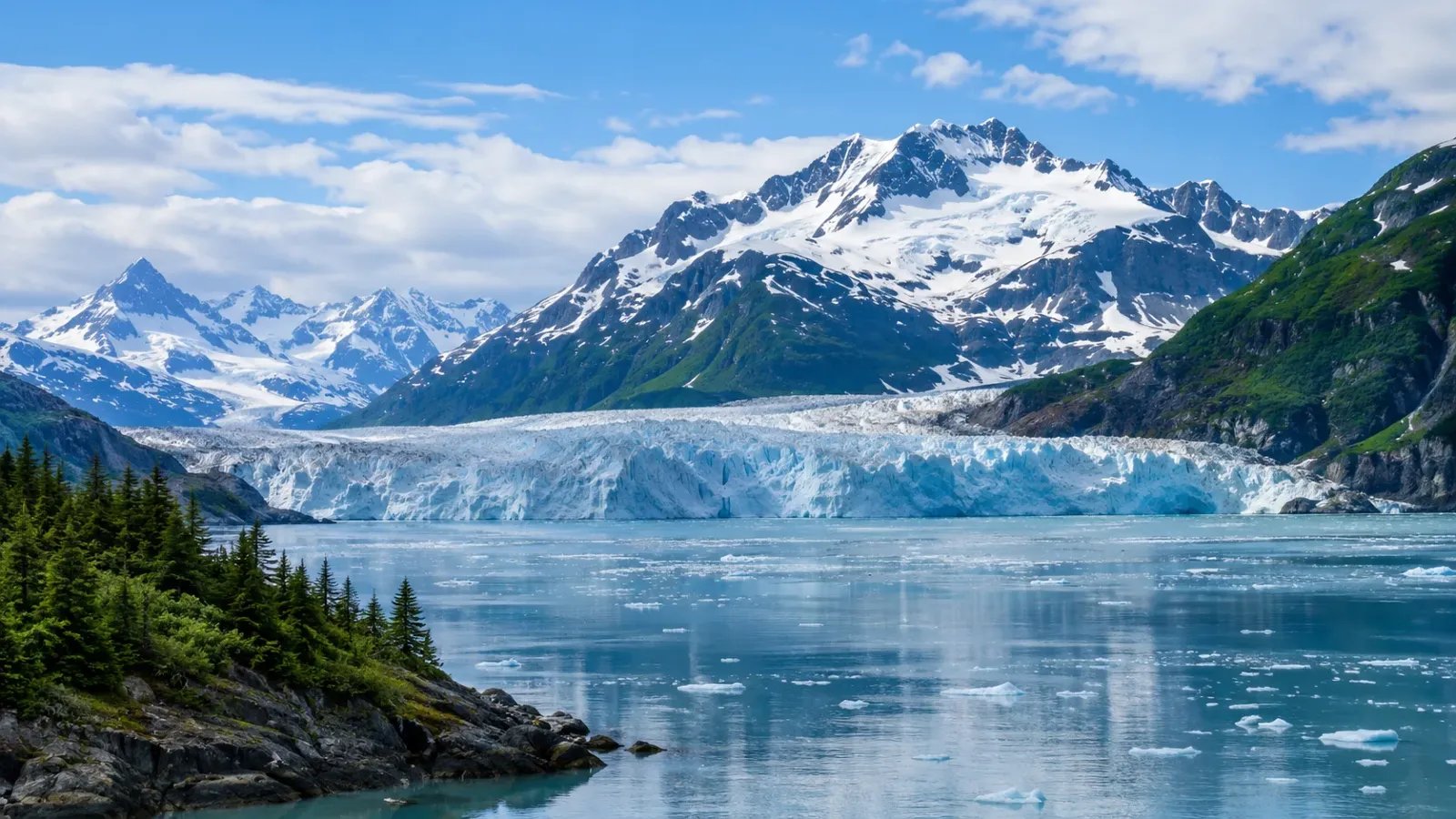
Forget the myth of a barren, frozen wasteland populated only by igloos and polar bears. Alaska is a dynamic, ecologically diverse behemoth boasting temperate rainforests, explosive volcanic activity, and deep indigenous history. Beyond the gold rushes and reality shows, discover a complex land where geography bends time and wildlife defies the brutal elements.
1. If you split Alaska in half, Texas would become the third-largest state in the country.
The sheer scale of Alaska is often misunderstood due to map projections that distort its massive footprint. Spanning over 660,000 square miles, it is larger than the combined area of the next three largest states: Texas, California, and Montana. Its coastline alone is longer than the coastlines of all other contiguous U.S. states combined. This colossal landmass houses entire mountain ranges, countless unmapped rivers, and stretches across a geographic area so vast it originally spanned four separate time zones before being consolidated.
2. Alaska is simultaneously the westernmost and easternmost state in the United States.
While it is obviously the westernmost state, the Aleutian Island chain stretches so far into the Pacific Ocean that it actually crosses the 180th meridian into the Eastern Hemisphere. This geographic quirk makes Pochnoi Point on Semisopochnoi Island the easternmost point of the United States by longitude. Most world maps fail to capture this bizarre reality, often cutting the Aleutians off or moving them to an inset. It is a stunning cartographic paradox that places a single American state in two distinct hemispheres.
3. The only North American territory occupied by Japanese forces during World War II was in Alaska.
In a largely forgotten theater of the Second World War, the Japanese military invaded and occupied the remote Aleutian islands of Attu and Kiska in 1942. The U.S. government initially suppressed news of the invasion to prevent widespread panic across the mainland. What followed was a brutal, weather-beaten campaign where American and Canadian troops fought to reclaim the islands in freezing, fog-drenched conditions. The Battle of Attu remains the only land battle of WWII fought on incorporated U.S. soil, resulting in thousands of casualties.
4. The Alaskan wood frog survives the freezing winter by intentionally turning itself into a block of solid ice.
Contrary to the belief that warm-blooded animals are the only ones capable of surviving Arctic extremes, this remarkable amphibian halts its own heartbeat and breathing completely. As temperatures plummet, the frog produces special cryoprotectants, pumping glucose into its cells to prevent lethal ice crystals from shredding its tissue. Up to two-thirds of the water in its body freezes solid, leaving the creature in a state of suspended animation for up to seven months. Once the spring thaw arrives, the frog simply thaws out, reboots its vital organs, and hops away unharmed.
5. Alaska officially recognizes 20 distinct indigenous languages alongside English.
Long before Russian fur traders or American prospectors arrived, the region was populated by a highly diverse array of Native peoples. In 2014, the state passed a historic bill elevating these ancestral tongues, including Inupiaq, Yupik, Tlingit, and Aleut, to official status. This debunked the monolithic stereotype of native Alaskans, highlighting a linguistic diversity that mirrors the state's vast ecological differences. Although many of these languages are currently endangered, intensive revitalization programs are working to ensure they survive for future generations.
6. The largest national forest in the United States is a temperate rainforest located in southeast Alaska.
Far from being entirely covered in tundra and glaciers, the Tongass National Forest is a lush, vibrant ecosystem covering nearly 17 million acres. It is the largest intact temperate rainforest on Earth, functioning as a massive carbon sink that regulates global climate patterns. Towering Sitka spruce, western hemlock, and red cedar dominate a landscape dripping with moss and constant rainfall. This incredibly productive habitat supports dense populations of brown bears, bald eagles, and spawning salmon, entirely shattering the icy stereotype of the state.
7. The United States purchased Alaska from the Russian Empire for an incredibly low rate of about two cents per acre.
In 1867, Secretary of State William H. Seward negotiated the acquisition of the territory for 7.2 million dollars, a move widely ridiculed by the press as Seward's Folly. Critics believed it was a useless expanse of ice, unaware of the immense geopolitical and economic value hidden beneath the permafrost. The subsequent discoveries of gold, copper, and eventually vast oil reserves turned it into one of the most lucrative real estate transactions in human history. Today, the economic output of its natural resources pays for the purchase price many times over every single day.
8. Alaska experiences more earthquakes than any other region in the United States, including California.
Situated along the hyperactive Pacific Ring of Fire, the state is a seismological hotspot where the Pacific Plate aggressively subducts beneath the North American Plate. It averages over 40,000 recorded earthquakes a year, some of which are among the most powerful ever documented by modern science. The Good Friday Earthquake of 1964 registered an apocalyptic magnitude of 9.2, literally altering the state's coastline and liquefying the ground beneath Anchorage. The immense tectonic forces constantly at work continue to push the state's mountain ranges higher into the sky.
9. Deep within the Arctic Circle lies an unexpected landscape featuring enormous, rolling sand dunes.
The Great Kobuk Sand Dunes are located in a remote valley north of the Arctic Circle, challenging every preconception about polar environments. Created by the grinding action of ancient glaciers that pulverized rocks into fine sand, these dunes are continually shaped by strong easterly winds. Summer temperatures here can soar to a sweltering 100 degrees Fahrenheit, creating a surreal, desert-like oasis surrounded by boreal forest and tundra. It represents an ecological anomaly where you can find arctic vegetation fighting for survival in shifting, golden sand.
10. There are an estimated 100,000 individual glaciers in Alaska, covering about five percent of the state.
This concentration of glacial ice is unmatched anywhere in the world outside of Greenland and Antarctica. The massive Malaspina Glacier alone is larger than the entire state of Rhode Island, spreading out like a giant pancake of ice as it spills from the St. Elias Mountains toward the ocean. These rivers of ice are incredibly active, constantly carving out fjords, grinding bedrock into glacial flour, and radically altering the local geography. They also act as critical environmental barometers, with their rapid retreat providing some of the starkest evidence of modern climate change.
11. Juneau is the only state capital in the United States that cannot be reached by roads connecting to the rest of the state.
Tucked into the steep, rugged coastline of the southeastern panhandle, Juneau is completely isolated by impassable terrain, including the massive Juneau Icefield. Visitors and politicians alike must rely on airplanes or the intricate Alaska Marine Highway ferry system to access the city. This isolation creates a unique political and cultural atmosphere, completely detached from the typical interstate infrastructure of the lower 48 states. Despite numerous expensive proposals to blast a road through the treacherous mountains, the capital remains a proudly secluded maritime enclave.
12. The midnight sun phenomenon causes Alaskan farms to produce some of the largest vegetables in the world.
While the state has a notoriously short growing season, the Matanuska-Susitna Valley compensates with up to 20 hours of continuous summer sunlight. This extended daily photosynthesis allows crops to grow continuously, resulting in freakishly oversized produce that regularly breaks world records. Farmers here have harvested 138-pound cabbages, 65-pound cantaloupes, and radishes the size of bowling balls. The phenomenon defies the assumption that northern agriculture is barren, proving that extreme light conditions can yield extraordinary agricultural anomalies.
13. Alaska has the highest number of private pilots per capita of any state in the nation.
Due to the extreme lack of road infrastructure across the vast wilderness, small aircraft are the primary mode of transportation for many residents. Bush flying is an essential part of daily life, utilized for everything from medical emergencies and grocery deliveries to commuting between remote villages. The state's rugged topography forces pilots to master difficult landings on gravel bars, glaciers, and water, cultivating a unique and daring aviation culture. In many rural communities, the local airstrip is the only tether to the outside world, making a pilot's license more practical than a driver's license.
14. The Porcupine caribou herd undertakes the longest land migration of any terrestrial mammal on Earth.
Every year, this massive herd of over 200,000 animals travels up to 3,000 miles from their wintering grounds in the boreal forests to their calving grounds on the Beaufort Sea coastal plain. This grueling journey requires them to navigate treacherous rivers, evade packs of hungry wolves, and cross jagged mountain passes. The migration is a critical component of the Arctic ecosystem, serving as a primary food source for indigenous Gwich'in communities who have synchronized their culture with the herd's movements for millennia. It is a stunning display of biological endurance that dwarfs the famous migrations of the African Serengeti.
15. The official state flag of Alaska was designed by a 13-year-old orphaned indigenous boy.
In 1927, the Alaska Department of the American Legion held a contest for territorial children to design a flag for the future state. Benny Benson, an Aleut teenager living in a territorial orphanage, submitted a simple but brilliant design featuring the Big Dipper and the North Star on a field of deep blue. He explained that the blue represented the Alaskan sky and the forget-me-not flower, while the North Star symbolized the future state's extreme northern location. His iconic design won over hundreds of other entries and remains the official state flag today, standing as a beautiful tribute to the territory's youth and native heritage.
Sources & References
This AI-assisted post was rigorously curated and fact-checked for accuracy by:
 Martin Roháček
How fun was this article? 🤔
Tap a star to rate it
🧠 Quiz: How closely were you paying attention?
10 questions — all answers are in the article above!
Enjoyed these facts? There's more! 💌
Fresh fun facts in your inbox. No spam, ever.