The Aloha State: 15 Fascinating Facts About Hawaii
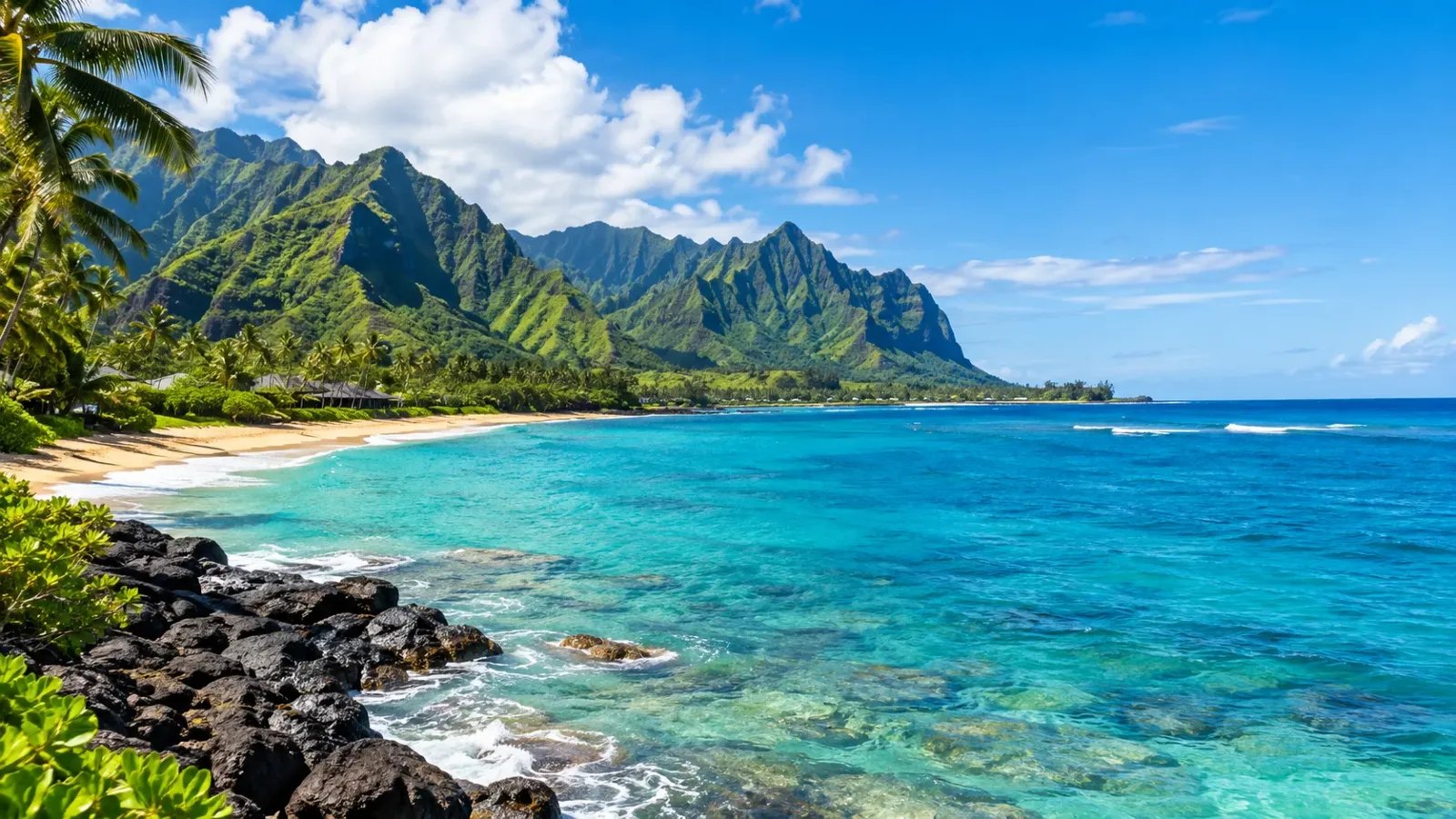
Far from just a tropical playground, Hawaii is a geological anomaly and the most isolated population center on Earth. Once a globally recognized independent kingdom, it boasts a complex history that shatters mainland misconceptions. Prepare to discover the bizarre biology, royal sovereignty, and scientific wonders hidden within America’s unique archipelago.
1. The Hawaiian Islands are the exposed peaks of the most massive mountain range on Earth, entirely submerged beneath the Pacific Ocean.
Most people view Mount Everest as the planet's ultimate peak, but Mauna Kea on the Big Island shatters this misconception. When measured from its true base on the seafloor to its summit, Mauna Kea stands over thirty-three thousand feet tall, dwarfing Everest by more than a mile. This incredible topography is the result of millions of years of volcanic activity erupting from a stationary hotspot beneath the Pacific tectonic plate. As the plate slowly drifted northwest, it left behind a trail of submerged mountains and the current islands we see today. The visible state of Hawaii is merely the latest volcanic tip of this colossal, ancient underwater ridge.
2. Hawaii is the only U.S. state to have ever been ruled by a monarchy and feature a royal palace on its soil.
Contrary to the belief that the United States was entirely forged by democratic revolutions and pioneer expansion, Hawaii brings a rich history of royal sovereignty to the nation. King Kamehameha I unified the islands into a singular, globally recognized sovereign kingdom in 1810. For decades, the Hawaiian Kingdom maintained diplomatic treaties with major world powers, including Great Britain and France, long before it was illegally overthrown in 1893 by American business interests. Today, Iolani Palace in Honolulu stands as the only official royal residence in the United States. It was entirely electrified before the White House, showcasing the progressive and modern nature of the Hawaiian monarchy.
3. Because of its extreme geographic isolation, Hawaii lacks naturally occurring land snakes.
Many tropical destinations are synonymous with venomous reptiles, but Hawaii’s evolutionary history took a completely different path. Lying more than two thousand miles from the nearest continental landmass, the islands were formed via volcanic eruption, meaning no animals existed there initially. Wildlife could only arrive by flying, swimming, or floating on ocean debris, an impossible journey for terrestrial snakes. Today, the state strictly enforces this biological quirk by making it illegal to own or transport snakes to the islands, fearing that an introduced predator would decimate native bird populations. The only snake you might encounter is the tiny, harmless Brahminy blind snake, which was accidentally introduced through imported soil and is frequently mistaken for an earthworm.
4. The Hawaiian alphabet consists of only thirteen letters, representing one of the most concise writing systems in the world.
Before Western contact, the Hawaiian language, or Olelo Hawai'i, was entirely oral, relying on rich chants and storytelling to preserve history. When American missionaries arrived in the early nineteenth century, they worked with native speakers to develop a written phonetic system. They stripped the alphabet down to five vowels and eight consonants, which include the 'okina, a glottal stop that is officially recognized as a consonant. This minimalist linguistic structure does not mean the language lacks complexity; rather, the subtle use of vowel lengths and glottal stops completely changes the meaning of identical letter groupings. Despite being nearly eradicated in the twentieth century, the language is experiencing a robust revival in schools and daily public life.
5. Hawaii is expanding in physical size every single day due to the continuous eruptions of the Kilauea volcano.
Rather than shrinking from coastal erosion like many mainland states, the Big Island of Hawaii is actively adding real estate to its borders. Kilauea, one of the world’s most active volcanoes, constantly spews molten lava that travels through subterranean tubes and spills directly into the Pacific Ocean. When the two-thousand-degree lava meets the cool seawater, it rapidly hardens into new basaltic rock, continually expanding the island's coastline. Over the last few decades alone, these relentless eruptions have added hundreds of acres of brand-new land to the southeastern shore. Because this newly formed land belongs exclusively to the state government, no private citizen or corporation can lay claim to Hawaii's freshly forged geography.
6. The islands host ten of the world’s fourteen distinct climate zones, offering an unparalleled ecological diversity within a tiny geographical footprint.
A common myth dictates that Hawaii is simply a monolithic, humid tropical rainforest from coast to coast. In reality, a short drive on the Big Island can take you through an astonishing variety of climates, ranging from sun-baked desert landscapes to frozen, snow-capped alpine tundras. This climatic compression occurs because massive volcanic peaks force moisture-laden trade winds upward, creating extreme rainfall on the windward sides and arid shadows on the leeward sides. Consequently, researchers can study arid ecosystems, tropical monsoons, and periglacial climates without ever leaving the state. It is entirely possible to get a sunburn on a dry, sandy beach and suffer from hypothermia in a blizzard on the exact same afternoon.
7. Hawaii possesses its own time zone and completely ignores Daylight Saving Time.
The chaotic biannual tradition of changing clocks is virtually nonexistent in the Hawaiian Islands. Because of its tropical latitude near the equator, the state experiences very little variation in daylight hours between the summer and winter months. Implementing Daylight Saving Time would offer no practical energy savings or lifestyle benefits, so the state opted out entirely in 1967. They operate on Hawaii-Aleutian Standard Time year-round, which requires mainland businesses to constantly recalculate time differences depending on the season. This temporal isolation further cements the islands' distinct separation from the daily operational rhythms of the contiguous United States.
8. More than ninety percent of the native flora and fauna found in Hawaii exist nowhere else on the planet.
The Hawaiian archipelago is essentially a masterclass in extreme evolutionary biology, often compared to the Galapagos Islands but on a much grander scale. When a pioneer species miraculously survived the trans-oceanic journey to the islands, it found an environment entirely devoid of natural predators or competing species. This empty ecological canvas triggered massive adaptive radiation, allowing single species to evolve into dozens of specialized forms over millennia. Tragically, this high rate of endemism also makes the ecosystem incredibly fragile; Hawaii is now heavily impacted by invasive species and currently holds the grim title of the endangered species capital of the world. Conservationists are fighting a desperate, uphill battle to preserve these irreplaceable biological marvels before they vanish completely.
9. Mount Waialeale on the island of Kauai is scientifically recognized as one of the wettest spots on Earth.
While tourists flock to Hawaii for guaranteed sunshine, the interior peaks of the islands capture monumental, historic levels of precipitation. Mount Waialeale translates to rippling water in Hawaiian, a perfectly fitting name for a peak that receives an average of over four hundred and fifty inches of rain per year. The mountain's steep, conical shape acts like a massive wall that intercepts heavily saturated trade winds, forcing the air up until it cools and relentlessly drops its water load. This perpetual deluge feeds countless cascading waterfalls and supports a vibrant, impenetrable rainforest that is often permanently shrouded in mist. The sheer volume of water has eroded the ancient volcanic rock into dramatic, razor-sharp ridges that define Kauai's stunning landscape.
10. The official state fish has a name so famously long it is often cited as a linguistic joke, but it reflects deep cultural meaning.
The humuhumunukunukuapua'a is widely known as one of the longest words in the Hawaiian language and serves as the state’s official aquatic mascot. Despite the playful pop-culture fascination with its pronunciation, the name is highly descriptive and literally translates to triggerfish with a snout like a pig. This nomenclature is scientifically astute, as the fish possesses a unique, pig-like snout used to aggressively blow water into sandy seabeds to uncover hidden invertebrates. Furthermore, when the fish is pulled from the water or feels threatened, it genuinely makes a grunting noise remarkably similar to a swine. The complex name exemplifies how native Hawaiians meticulously observed and categorized the behavioral traits of their surrounding wildlife.
11. Hawaii is the only state in America where coffee is commercially cultivated on a large scale.
The mainland United States does not possess the specific tropical climate required to grow coffee, making Hawaii an exclusive agricultural powerhouse in this sector. The volcanic soil, particularly in the Kona district of the Big Island, is exceptionally porous and rich in minerals, creating the perfect drainage conditions for coffee trees. Furthermore, the region's unique weather pattern, featuring sunny mornings, protective afternoon cloud cover, and gentle rainfall, shields the delicate coffee cherries from intense heat. These precise microclimatic factors produce a highly sought-after, exceptionally smooth bean that commands premium prices on the global market. While California has recently attempted small-scale experimental coffee farming, Hawaii remains the undisputed king of American coffee production.
12. A unique genetic mutation makes native Hawaiian feral chickens virtually immune to the diseases that ravage domestic poultry.
Visitors to the island of Kauai are instantly struck by the massive, ubiquitous population of wild roosters and chickens roaming everywhere from pristine beaches to grocery store parking lots. These birds are a fascinating genetic hybrid of the original red junglefowl brought by ancient Polynesian voyagers and modern domestic breeds liberated during devastating hurricanes in the late twentieth century. Through rapid natural selection, these feral populations have developed robust immunity to avian pox and other common poultry diseases that typically decimate confined flocks. Biologists actively study these birds to understand their rapid evolutionary resistance, hoping to apply the findings to global agricultural practices. In the meantime, they remain a chaotic, noisy, and fully protected staple of the island's daily life.
13. The Hawaiian island of Niihau is strictly off-limits to outsiders, preserving a way of life entirely insulated from modern tourism.
Known as the Forbidden Isle, Niihau offers a sharp contrast to the bustling, heavily commercialized tourist centers of Oahu and Maui. In 1864, the island was purchased by the Sinclair family from King Kamehameha IV under the strict condition that they protect the native culture and language from outside influences. To this day, the descendants of the original owners honor this pledge by completely banning uninvited visitors, tourists, and commercial development from the island. The small population of indigenous residents still speaks Hawaiian as their primary language and lives without paved roads, indoor plumbing, or grid electricity. It stands as a unique, deeply guarded time capsule of traditional Hawaiian subsistence living in the modern era.
14. Astronauts trained in Hawaii's volcanic craters to prepare for the Apollo moon landings.
The bizarre, barren landscapes of Hawaii's highest peaks serve as some of the most accurate analogs for extraterrestrial environments available on Earth. In the 1960s, NASA brought Apollo crews to the Big Island to study geology, hoping to teach test pilots how to identify important rock samples while navigating a lunar-like surface. The hardened lava flows of Mauna Loa and Kilauea perfectly mimicked the jagged, pumice-strewn expanses the astronauts were destined to encounter in space. To this day, international space agencies utilize the isolated, high-altitude slopes of Hawaiian volcanoes for simulated Mars missions, isolating researchers in habitats for months at a time. The state's fiery geology continues to be a crucial stepping stone in humanity's quest to explore the broader solar system.
15. Ancient Hawaiians invented the sport of surfing, treating it not just as recreation but as a profound spiritual and social practice.
Long before it was commodified by modern beach culture, the act of wave sliding, known as he'e nalu, was a deeply ingrained pillar of native Hawaiian society. Surfing was intertwined with the kapu system of laws and religion, wherein the ocean was viewed as a sacred space and crafting a surfboard involved complex rituals and prayers to the gods. Social hierarchy heavily dictated the sport, with the most premium beaches and finest surfboards carved from elite wood reserved strictly for the ruling class. When European missionaries arrived, they viewed the sport as frivolous and nearly eradicated the practice in their push for westernization. Fortunately, pioneering figures like Duke Kahanamoku revived surfing in the early twentieth century, successfully sharing this sacred Hawaiian invention with the entire world.
Sources & References
This AI-assisted post was rigorously curated and fact-checked for accuracy by:
 Martin Roháček
How fun was this article? 🤔
Tap a star to rate it
🧠 Quiz: How closely were you paying attention?
10 questions — all answers are in the article above!
Enjoyed these facts? There's more! 💌
Fresh fun facts in your inbox. No spam, ever.