The Harmonist of the Cosmos: 15 Fascinating Facts About John Coltrane
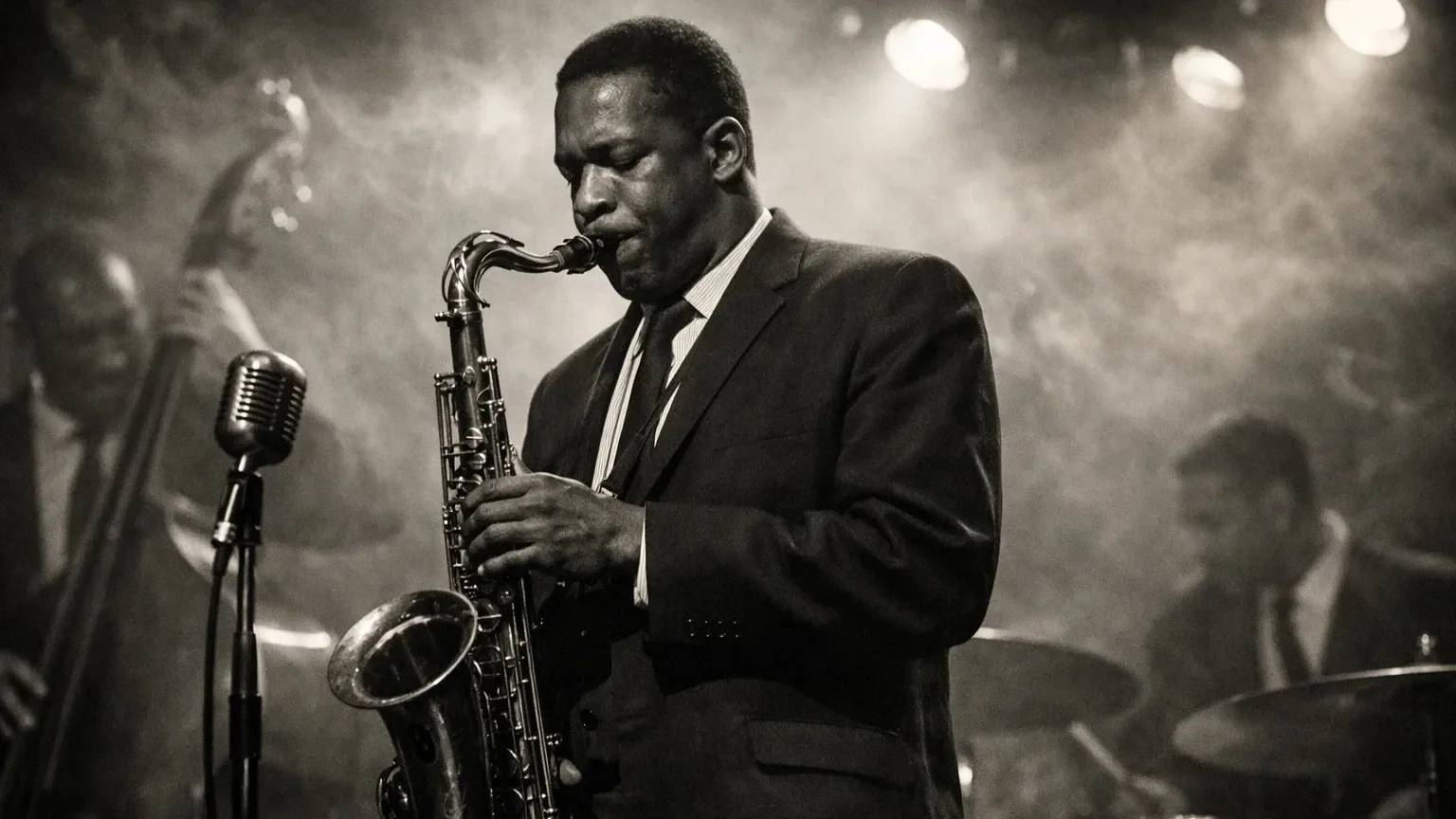
John Coltrane was a titan of modern jazz whose relentless practice habits and radical approach to musical harmony reshaped American music forever. From his early military recordings in Hawaii to his spiritual masterpieces like A Love Supreme, his life was a relentless pursuit of artistic and divine truth. Behind the virtuosic 'sheets of sound' lay a complex man who conquered severe addiction, invented revolutionary music theory, and inspired a church that worships him as an official saint. Here are 15 fascinating facts about the legendary saxophonist known simply as 'Trane'.
1. Started on Clarinet and Alto Saxophone Before Choosing Tenor
Before becoming the defining tenor saxophonist of his era, John Coltrane actually began his musical journey playing the clarinet and the alto horn in his school band in High Point, North Carolina. Influenced heavily by alto virtuosos like Johnny Hodges and Charlie Parker, he spent his formative years mastering the smaller saxophones. It was only after serving in the military and playing in various rhythm and blues touring groups that Coltrane permanently made the transition to tenor. This switch allowed him to develop the deeper, more authoritative tone that ultimately changed the trajectory of modern jazz. Even after achieving world fame on tenor, Coltrane occasionally revisited his roots by experimenting with various reed instruments throughout his prolific career.
2. Made His First Professional Recordings in the U.S. Navy
During the final year of World War II, Coltrane was drafted into the United States Navy and deployed to Oahu, Hawaii. While stationed there as a seaman first class, he joined a military jazz band named the Melody Makers to avoid manual labor duties. Because military bands were officially segregated at the time, Coltrane was one of the few Black sailors playing in an otherwise white ensemble, performing off-duty gigs for fellow servicemen. On July 13, 1946, he recorded his very first professional tracks with this Navy band, laying down improvisations on jazz standards like "Topsy." These rare Hawaiian recordings captured the earliest surviving audio evidence of Coltrane's budding genius long before he ever signed a commercial record deal.
3. Practiced So Obsessively His Fingers Bled and He Fell Asleep Horn in Hand
Coltrane was infamous among fellow musicians for his superhuman, almost unnatural obsession with practicing his instrument. He would spend up to twelve hours a day running scales, dissecting chord inversions, and experimenting with obscure fingerings until his lips bled and his fingers became raw. Bandmates frequently recalled walking into hotel rooms or backstage dressing rooms to find Coltrane fast asleep in bed with his saxophone still resting across his chest. If he woke up in the middle of the night, he would immediately resume playing right where he had left off without missing a beat. This relentless work ethic allowed him to achieve a level of technical facility that few saxophonists in history have ever matched.
4. A Severe Sweet Tooth and Addiction Destroyed His Dental Health
Throughout his entire life, Coltrane harbored an intense addiction to sweets, particularly sweet potato pie, ice cream, and sugary pastries. In his twenties, this relentless sugar consumption—combined with poor oral hygiene and a grueling touring lifestyle—caused catastrophic dental decay. He lost several teeth and suffered from constant, agonizing toothaches that made pressing a saxophone mouthpiece against his lips excruciatingly painful. To compensate for his missing teeth and altered embouchure, Coltrane had to completely re-learn how to shape his mouth around the reed. His constant struggle with dental pain directly influenced his search for custom mouthpieces and contributed to his uniquely sharp, piercing tone.
5. Being Fired by Miles Davis Triggered His Life-Changing Sobriety
In early 1957, legendary trumpeter Miles Davis made the painful decision to fire Coltrane from his famous First Great Quintet due to the saxophonist's crippling heroin and alcohol addictions. Coltrane often showed up to high-profile gigs disheveled, unwashed, and musically unresponsive, which Davis refused to tolerate any longer. Rather than letting this firing ruin him, Coltrane viewed the humiliating expulsion as a vital wake-up call to clean up his life. He returned home to Philadelphia, locked himself in a bedroom, and endured a painful cold-turkey detoxification to break his substance abuse permanently. This pivotal moment not only saved his life but also set the stage for the most creative and transcendent period of his musical career.
6. His Intensive Collaboration with Thelonious Monk Was His Musical Turning Point
Immediately following his recovery from addiction in 1957, Coltrane joined forces with visionary pianist and composer Thelonious Monk for a legendary residency at New York's Five Spot Cafe. Playing with Monk proved to be a profound apprenticeship that completely transformed Coltrane's understanding of musical structure and chord harmony. Monk taught Coltrane how to extract multiple notes simultaneously through extended technique and forced him to navigate exceptionally challenging chord progressions. Coltrane later credited Monk with teaching him how to navigate complex musical geometry and expand his improvisational palette. Their brief six-month collaboration produced some of the most intricate and celebrated small-group jazz recordings ever made.
7. Critic Ira Gitler Coined "Sheets of Sound" to Describe His Rapid Soloing
In 1958, prominent jazz critic Ira Gitler coined the immortal phrase "sheets of sound" to describe Coltrane's unbelievably rapid and dense improvisational style. During this period, Coltrane was trying to squeeze dozens of cascading notes into a single beat, creating a terrifying wall of musical texture that overwhelmed listeners. Instead of playing traditional linear melodies, he arpeggiated chords with such lightning speed that individual notes blurred together into seamless waves of sound. Critics and casual fans alike were initially baffled by this dizzying volume of notes per second, but it quickly became Coltrane's signature hallmark. This relentless technique pushed the physical and theoretical boundaries of what was possible on a saxophone.
8. "Coltrane Changes" Revolutionized Jazz Harmony in Giant Steps
Coltrane revolutionized music theory by developing a hyper-complex harmonic progression that musicians today simply refer to as "Coltrane changes." This theoretical breakthrough involved substituting standard chord progressions with rapidly shifting major thirds, creating a dizzying, geometric framework. He showcased this terrifyingly fast musical math on the title track of his landmark 1960 album Giant Steps, which became an ultimate proving ground for jazz solos. Pianist Tommy Flanagan famously struggled to keep up during the recording session due to the overwhelming speed and difficulty of the harmonic shifts. Today, mastering the "Coltrane changes" remains a fundamental rite of passage for jazz conservatory students around the world.
9. Single-Handedly Resurrected and Popularized the Soprano Saxophone
In 1960, Miles Davis gifted Coltrane a soprano saxophone, an instrument that had largely been forgotten in jazz since the era of Sidney Bechet. Coltrane instantly fell in love with its higher, nasal pitch and used it to record his iconic 1961 arrangement of Richard Rodgers's "My Favorite Things." By reimagining the cheerful Broadway tune into a hypnotic, modal masterpiece, he scored an unexpected commercial radio hit that brought him mainstream stardom. His pioneering work single-handedly revived the soprano saxophone, inspiring generations of modern woodwind players to adopt the instrument. He continued using the soprano throughout the 1960s to introduce exotic, hypnotic textures into his modal compositions.
10. His Masterpiece A Love Supreme Was Born from a Deep Spiritual Awakening
In late 1957, during his intense period of cold-turkey rehabilitation, Coltrane experienced a profound spiritual epiphany that fundamentally shifted his purpose as an artist. He began viewing his music not merely as entertainment or artistic expression, but as a direct vessel for divine praise and universal love. This spiritual evolution culminated in his four-movement 1965 masterpiece suite, A Love Supreme, which featured a written devotional poem recited directly through his saxophone. The album went on to sell over half a million copies, earning a gold certification—a rare commercial feat for avant-garde jazz. It remains widely recognized as one of the most spiritual, emotionally resonant, and culturally significant albums ever recorded.
11. He Was Obsessed with Indian Classical Music and Named His Son After Ravi Shankar
During the early 1960s, Coltrane developed an intense fascination with non-Western musical traditions, particularly the complex ragas and rhythmic cycles of Indian classical music. He studied Indian philosophy, practiced meditation, and spent hours listening to records of sitar maestro Ravi Shankar to understand modal improvisation. His admiration for the sitarist was so profound that Coltrane named his second son, Ravi Coltrane, after the Indian musician in 1965. Coltrane even arranged to study under Shankar personally, though his untimely death prevented their planned formal lessons from taking place. This cross-cultural exploration heavily influenced Coltrane's late-period works, infusing them with hypnotic drone structures and eastern scales.
12. He Maintained a Refusal to Speak Between Songs During Live Performances
Unlike many of his charismatic contemporaries who entertained audiences with witty banter and jokes between songs, Coltrane was famously quiet on stage. During live concerts, he rarely spoke a single word to the crowd, preferring instead to step up to the microphone, play intensely, and step back. He believed that speaking interrupted the spiritual flow and emotional intensity of the performance, choosing to let his horn express everything. On the rare occasions he did speak, it was usually just a brief introduction of his band members before diving back into relentless music-making. This quiet, dignified stage demeanor only enhanced his aura of mystery and sacred devotion among his dedicated fanbase.
13. He Assembled One of the Most Iconic Bands in History: The Classic Quartet
In the early 1960s, Coltrane assembled what jazz historians now refer to as his "Classic Quartet," featuring pianist McCoy Tyner, bassist Jimmy Garrison, and drummer Elvin Jones. This legendary rhythm section provided the explosive power and harmonic freedom Coltrane needed to push his improvisations into uncharted territory. Tyner's powerful quartal voicings and Jones's polyrhythmic drumming created a thunderous, rolling backdrop that matched Coltrane's intensity. Together, this quartet transformed jazz rhythm from simple timekeeping into an interactive, explosive conversation that redefined group improvisation. Their collective synergy on stage and in the studio created some of the most dynamic live performances in music history.
14. A San Francisco Church Canonized Him as an Official African Orthodox Saint
Following Coltrane's death, a religious movement emerged in San Francisco that officially canonized the saxophonist as a patron saint. Founded in 1967 as the One Mind Temple, the congregation eventually incorporated into the Saint John Coltrane African Orthodox Church. The church holds weekly liturgical services where priests and congregants play Coltrane's music, particularly A Love Supreme, as sacred hymns and prayer jams. Visitors and worshippers view Coltrane not as God, but as an anointed saint who used his music to lead souls back to the divine. Today, the church remains an active community center, combining spiritual worship with social justice activism and musical preservation.
15. He Died Tragically at Age 40, Leaving Behind a Posthumous Pulitzer Legacy
On July 17, 1967, John Coltrane died suddenly from liver cancer at Huntington Hospital on Long Island at the young age of forty. His rapid decline shocked the music world, as he had kept his terminal diagnosis completely hidden from the public and even close friends. Despite his short life, Coltrane left behind an immense discography comprising over fifty albums as a bandleader and hundreds of guest appearances. In 1992, he was posthumously awarded the Grammy Lifetime Achievement Award, followed by a special Pulitzer Prize citation in 2007 for his masterful improvisation and supreme musicianship. His radical musical innovations continue to serve as a foundational pillar for modern jazz, rock, and experimental music worldwide.
Sources & References
This AI-assisted post was rigorously curated and fact-checked for accuracy by:
 Martin Roháček
How fun was this article? 🤔
Tap a star to rate it
🧠 Quiz: How closely were you paying attention?
10 questions — all answers are in the article above!
Enjoyed these facts? There's more! 💌
Fresh fun facts in your inbox. No spam, ever.