The Surprising Galliform: 15 Fascinating Facts About Chickens
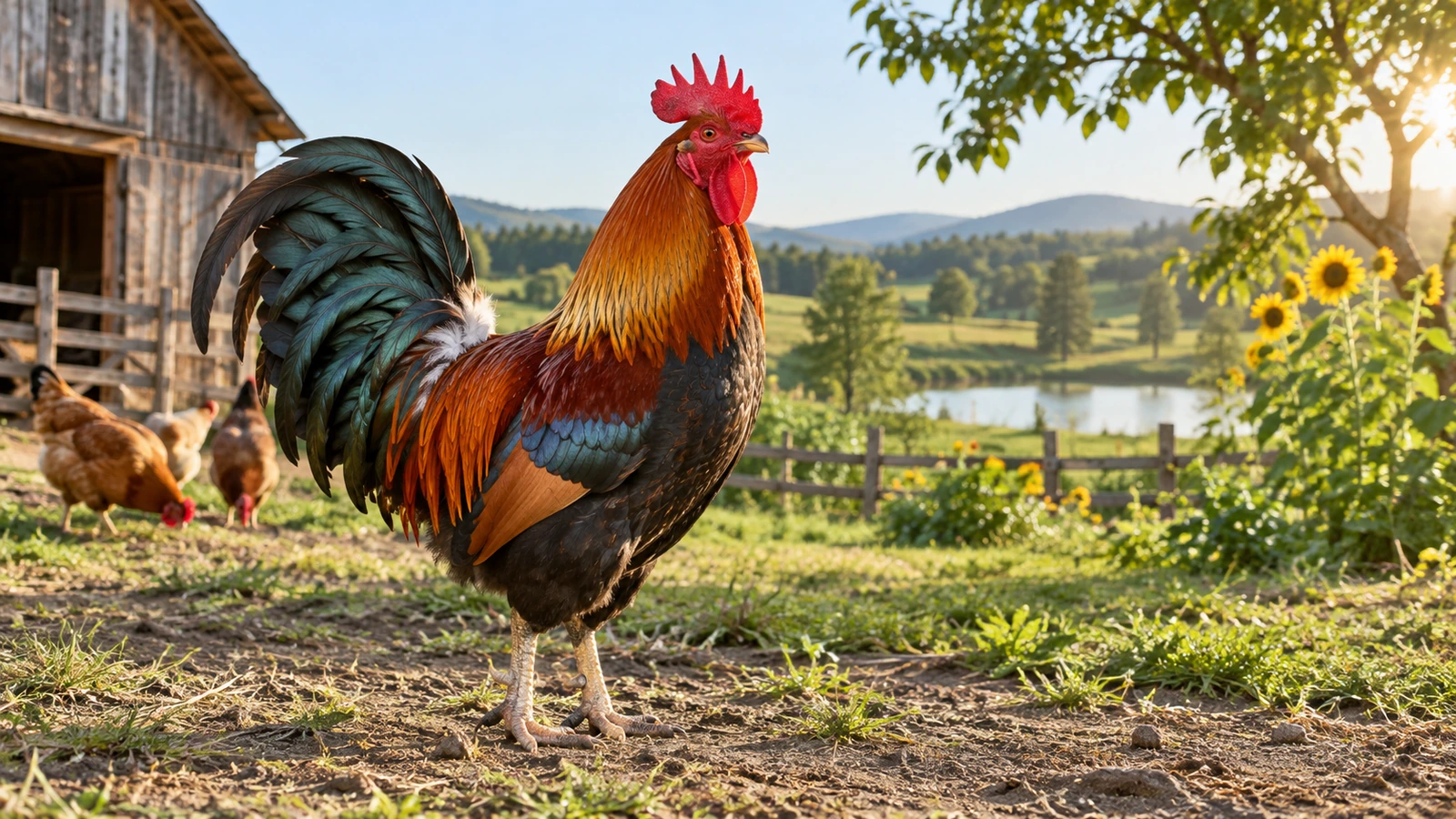
Despite their ubiquitous presence on farms around the world, chickens are far more complex and remarkable creatures than most people realize. From their direct evolutionary connection to apex predatory dinosaurs to their capability for complex visual recognition and unihemispheric sleep, these birds possess extraordinary adaptations. They communicate before even hatching, navigate intricate social structures, and have inspired both modern technology and peculiar local laws. Explore these 15 fascinating facts that will completely change how you view the humble chicken.
1. Molecular Science Proves Their Link to the Tyrannosaurus Rex
In 2007, researchers analyzing a 68-million-year-old Tyrannosaurus rex fossil recovered intact collagen proteins, which were then compared to modern animal genomes. The molecular tests revealed that chickens are among the closest living relatives of the iconic predatory dinosaur. This evolutionary relationship highlights how modern birds evolved directly from avian theropod dinosaurs over millions of years. When looking at a chicken, you are essentially observing a heavily scaled-down, feathered descendant of prehistoric apex predators.
2. Chickens Can Recognize over 100 Individual Faces
Far from being simple-minded farm animals, chickens possess impressive visual memory and social cognition. Studies show they can distinguish and remember at least 100 distinct faces, including individual humans, dogs, and fellow flock members. They maintain these memories across long periods, showing different behavioral responses to friendly caretakers compared to unfamiliar strangers. Furthermore, they use visual cues like comb size and facial structure to navigate their social hierarchies.
3. Their Superior Eyesight Can Detect Ultraviolet Light
While humans possess trichromatic vision using three visual color receptors, chickens are tetrachromatic and have four distinct color receptors. This extra cone type allows them to see ultraviolet light, revealing patterns and details completely invisible to the human eye. They also possess a specialized light-sensing structure called a pineal gland in their brains, which helps process day length and seasonal changes even through their skulls. Their advanced vision helps them forage efficiently and identify hidden insects or seeds in dense grass.
4. Unhatched Chicks Communicate with Their Mothers from Inside the Egg
Days before hatching, a chick enters a phase of vocalization known as internal pipping inside the eggshell. The mother hen clucks softly to her unhatched eggs, and the unborn chicks respond with subtle peeping noises through the shell. This vocal dialogue establishes an immediate bond and allows the mother to calm her chicks or teach them recognized calls before they ever break out. Research suggests this early communication helps synchronize the hatching process across the entire nest.
5. They Experience REM Sleep and Can Dream with One Eye Open
Chickens experience rapid eye movement (REM) sleep, indicating that they actively dream while resting. Interestingly, they also practice unihemispheric slow-wave sleep, allowing one half of their brain to sleep while the other half remains awake. This trait enables them to keep one eye open to watch for predators while simultaneously resting the opposite brain hemisphere. When roosting in groups, chickens on the outer edges will often keep their outer-facing eye open to guard the flock.
6. Their Necks Function Like an Advanced Biological Gimbal
Chickens possess a remarkable vestibular-ocular reflex that keeps their heads perfectly locked in place while their bodies move underneath. This natural stabilization system allows them to maintain a steady image on their retinas while walking, running, or navigating uneven ground. Engineers and camera manufacturers have even studied chicken head movement to design modern electronic camera gimbals and stabilization technology. Without this reflex, their rapid bodily movements would blur their vision and make hunting for small insects nearly impossible.
 Pets and Farm Animals
The animals we keep closest to home are often the ones we understand the least. From pets that navigate by ultrasonic song to livestock with internal compasses, uncover the astonishing biological secrets behind our most familiar animal companions.
See All Facts
Pets and Farm Animals
The animals we keep closest to home are often the ones we understand the least. From pets that navigate by ultrasonic song to livestock with internal compasses, uncover the astonishing biological secrets behind our most familiar animal companions.
See All Facts
7. Earlobe Color Is a Reliable Predictor of Shell Shade
A chicken's earlobe color provides a surprisingly accurate clue about the shade of eggs the hen will lay. Generally, chicken breeds with white earlobes produce white-shelled eggs, whereas those with red or dark earlobes produce brown eggs. While exceptions exist—such as breeds that lay blue, green, or speckled eggs—the correlation holds true for most standard farm breeds. The pigment of the shell is deposited during the final hours of the egg-formation process inside the oviduct.
8. The Term "Pecking Order" Originated from Real Flock Dynamics
The phrase "pecking order" is not just a popular metaphor; it was coined by Norwegian biologist Thorleif Schjelderup-Ebbe in 1921 while studying farm chickens. Every flock establishes a strict social hierarchy where dominant individuals assert authority using physical pecks to secure prime roosting spots and first access to food. Once established, the order reduces intra-flock violence because every bird understands its specific rank. Top-ranking chickens enjoy privileges, while lower-ranked birds must wait patiently for resources.
9. They Clean Themselves by Taking Thorough Dust Baths
Rather than using water, chickens maintain feather health and skin hygiene by taking elaborate dust baths. They dig shallow pits in dry dirt or soil, wallow inside, and vigorously throw dust over their bodies. The fine particles absorb excess skin oils, unclog feather pores, and smother parasitic pests like mites and lice. Afterward, they shake off the excess dust and meticulously preen their feathers using oil from their uropygial gland.
10. It Is Technically Illegal to Eat Fried Chicken with a Fork in Gainesville, Georgia
In 1961, the city of Gainesville, Georgia—self-proclaimed "Poultry Capital of the World"—passed a humorous ordinance making it illegal to eat fried chicken with a fork. The law was originally enacted as a publicity stunt to promote the local poultry industry and emphasize that fried chicken is a finger food. In 2009, a 91-year-old visitor was lightheartedly "arrested" by the local police chief for violating the law, though she was immediately pardoned.
11. A Third Transparent Eyelid Protects Their Eyes While Scratching
Chickens possess a specialized third eyelid called a nictitating membrane that moves horizontally across the eye. This translucent membrane acts like a pair of protective safety goggles, keeping dirt, dust, and debris out while allowing the bird to retain partial vision. It sweeps across the eyeball to lubricate and clean the surface whenever the chicken scratches vigorously through dirt for seeds and insects. It also closes automatically when the chicken flies or encounters high winds.
12. They Can Run up to Nine Miles per Hour on the Ground
Although domestic chickens are poor fliers due to selective breeding for heavier body mass, they are surprisingly quick foot soldiers. A healthy chicken can reach top running speeds of around nine miles per hour in short bursts. This terrestrial agility evolved as a primary defense mechanism to dodge fast-moving ground predators in dense vegetation. Combined with sharp instincts and quick direction changes, their speed makes them elusive targets on the ground.
13. Mother Hens Use Specific Calls and Actions to Teach Chicks
Mother hens display active teaching behaviors to instruct their chicks on proper foraging techniques and safe diet choices. A hen uses a distinct, rhythmic "food call" to gather her brood whenever she finds a nutritious morsel. She then picks up the food item and repeatedly drops it in front of the chicks, demonstrating that it is edible and safe. Studies show hens actively adjust their teaching intensity based on how quickly their chicks learn to identify valid food sources.
14. Crossing the Road Is Expressly Forbidden for Chickens in Quitman, Georgia
The legendary riddle asks why the chicken crossed the road, but in Quitman, Georgia, doing so breaks municipal law. The town passed a specific ordinance requiring poultry owners to keep their birds strictly contained on their own property at all times. The law explicitly forbids chickens, ducks, and other farm fowl from wandering freely across roads or public sidewalks. It was created to prevent traffic hazards and ensure owners maintain proper control over their livestock.
15. Chicken Waste Is Burned to Generate Renewable Electricity
Manure and litter generated by commercial chicken farms are increasingly used as an eco-friendly source of bioenergy. Specialized power plants, such as those in the United Kingdom and Minnesota, incinerate poultry litter to heat boilers and drive electrical turbines. This process converts an organic waste product into megawatt-hours of electricity capable of powering tens of thousands of homes. Additionally, the ash byproduct left over from incineration is rich in nutrients and repurposed as high-grade fertilizer.
Sources & References
This AI-assisted post was rigorously curated and fact-checked for accuracy by:
 Martin Roháček
How fun was this article? 🤔
Tap a star to rate it
🧠 Quiz: How closely were you paying attention?
10 questions — all answers are in the article above!
Enjoyed these facts? There's more! 💌
Fresh fun facts in your inbox. No spam, ever.