The Resilient Giant: 15 Fascinating Facts About the American Bison
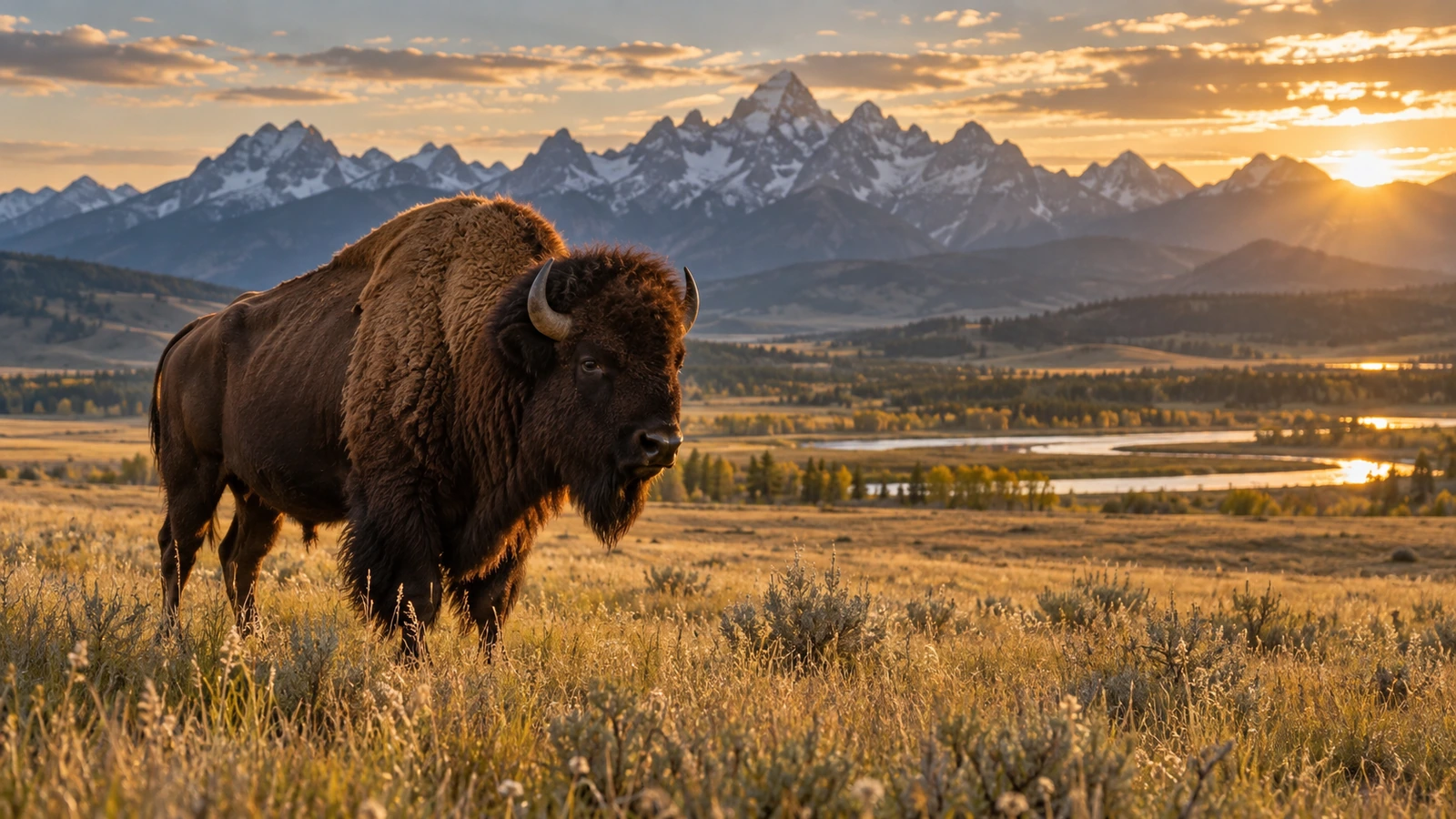
The American bison is a majestic symbol of power, resilience, and North American wildlife history. Once roaming the Great Plains in tens of millions, these massive herbivores shaped ecosystems, sustained Indigenous communities, and survived one of the most dramatic near-extinction events in recorded history. From their surprising speed to their matriarchal leadership, these iconic giants possess remarkable adaptations that continue to fascinate wildlife enthusiasts today. Discover the most extraordinary facts about America's official national mammal and its inspiring conservation journey.
1. The Official National Mammal of the United States
In May 2016, President Barack Obama signed the National Bison Legacy Act, officially designating the American bison as the national mammal of the United States. This historical designation placed the formidable herbivore alongside the bald eagle as an official symbol of American wildlife and heritage. The legislation recognized the bison's immense cultural, ecological, and historical significance across the North American continent. Today, living herds can be found in all fifty states within public national parks, wildlife refuges, tribal lands, and private ranches. This status highlights a triumphant conservation story for an animal that once stood on the absolute brink of total extinction.
2. Newborn Calves Are Nicknamed "Red Dogs"
When American bison calves are born, they look noticeably different from the dark brown adults in their herd. Newborns possess a vibrant reddish-orange coat that immediately earns them the affectionate nickname of "red dogs." This distinct bright coloration begins to darken around two to three months of age as their thick brown winter fur develops. At birth, calves weigh between forty and seventy pounds and can stand within just thirty minutes of entering the world. Within a few hours, the newborn red dog is already agile enough to keep pace with the migrating herd for protection against predators.
3. They Are Deceptively Fast Sprinters
Despite their lumbering appearance and massive frame, American bison are astonishingly fast and agile animals. A fully grown adult bison can reach sprinting speeds of up to thirty-five miles per hour in short bursts. This remarkable speed allows them to easily outrun human sprinters and even match the velocity of many racehorses. Furthermore, bison possess incredible endurance, capable of galloping at sustained high speeds across rugged prairie terrain for long distances. Their combination of speed, power, and unpredictable temper makes approaching a wild bison extremely dangerous for humans.
4. The Shoulder Hump Is a Massive Muscle Snowplow
The prominent hump towering over a bison's front shoulders is not made of fat, but rather solid muscle. This massive muscular structure is supported by unusually long vertebrae extending upward from the animal's spine. During brutal winter storms on the Great Plains, bison utilize this powerful hump to sweep their heads side to side like a heavy snowplow. This specialized sweeping motion pushes deep snowdrifts aside so the animal can forage for underlying grasses and vegetation. The hump also supplies the explosive force required to propel their heavy bodies forward when charging or jumping.
5. A Bison's Tail Serves as an Emotional Mood Ring
A bison's tail functions as a visible mood indicator that communicates the animal's emotional state to observers. When the tail hangs naturally or flicks casually to swat away flies, the bison is calm, relaxed, and undisturbed. If the tail begins to stand up at a half-mast angle, it signals that the animal is becoming nervous or agitated. A tail held completely straight up in the air indicates extreme distress or an imminent, violent charge. Park rangers strongly advise visitors to watch a bison's tail closely and back away immediately if it starts to rise.
6. These Heavyweight Giants Can Jump Six Feet High
It might seem impossible for a two-thousand-pound mammal to take flight, but bison are extraordinary jumpers. An adult bison can clear vertical obstacles up to six feet high from a standing or running start. In addition to high jumping, they are exceptionally broad jumpers and can leap across wide crevices and streams with ease. Ranchers and park managers often struggle to build fencing strong and high enough to contain roaming herds. Their agility also extends to aquatic environments, as bison are adept swimmers capable of crossing wide, fast-flowing rivers.
 North American Animals
Discover the bizarre adaptations and hidden complexities of North America's most iconic wildlife, from ecosystem-engineering predators to multi-generational migrants.
See All Facts
North American Animals
Discover the bizarre adaptations and hidden complexities of North America's most iconic wildlife, from ecosystem-engineering predators to multi-generational migrants.
See All Facts
7. True Buffalo Do Not Exist in the Americas
Although many people use the terms "bison" and "buffalo" interchangeably, true buffalo do not inhabit North America. Scientifically, true buffalo are native to Africa and Asia, including the Cape buffalo and the Asian water buffalo. Early European settlers in North America mistakenly called bison "buffalo," likely derived from the French word bœufs, meaning bull or ox. While both animals belong to the Bovidae family, bison possess massive shoulder humps and bearded heads that true buffalo lack. Today, scientific communities exclusively use Bison bison to designate the North American species.
8. Wallowing Creates Vital Ecosystem Ponds
Bison regularly roll around in dry dirt or mud in an essential behavioral routine known as wallowing. Wallowing serves multiple health purposes, including shedding itchy winter coats and cooling off during hot summer afternoons. The thick layer of dust or mud left on their skin acts as a natural shield against biting insects and parasites. Over time, this repetitive rolling carves out broad, shallow depressions in the prairie floor that collect rainwater. These rain-filled wallows become crucial water sources and breeding sites for prairie birds, amphibians, and native insects.
9. Matriarchal Herds are Led by Older Females
Bison herds operate under a matriarchal social structure where experienced females make the daily decisions. Older, wise cows lead the herd to optimal grazing spots, water sources, and sheltered winter grounds. Mature male bison typically live in separate bachelor groups or lead solitary lives for most of the year. Bulls only join the main matriarchal herds during the summer breeding season, known as the rut, to compete for mates. Once the rut concludes, the adult bulls depart, leaving the dominant females to guide the herd once again.
10. Near-Total Decimation and Historical Recovery
Before European settlement, an estimated thirty to sixty million bison freely roamed the vast landscapes of North America. During the nineteenth century, commercial hunting, habitat loss, and government eradication policies devastated the species. By the late 1800s, ruthless overhunting reduced the wild bison population to fewer than one thousand surviving individuals. Concerned conservationists, ranchers, and Indigenous leaders rallied together in the early 1900s to establish protected breeding reserves. Thanks to over a century of continuous restoration efforts, hundreds of thousands of bison thrive across North America today.
11. Genetics Are Threatened by Domestic Cattle Hybrids
During the late nineteenth century, some cattle ranchers attempted to crossbreed domestic cows with wild bison. The resulting hybrid offspring, commonly referred to as "beefalo" or cattalo, combined cold hardiness with docility. Unfortunately, these historic crossbreeding experiments left subtle traces of domestic cattle DNA within many public and private bison herds. Modern genetic testing reveals that only a small percentage of modern bison herds are completely free of cattle genes. Today, conservation geneticists work tirelessly to preserve pure bison lineages in isolated sanctuaries like Yellowstone National Park.
12. Poor Vision Is Offset by Extraordinary Olfactory Senses
Bison have surprisingly poor vision and struggle to distinguish stationary objects from a distance. To compensate for their weak eyesight, bison rely on an exceptional sense of hearing and an extraordinary sense of smell. Their keen olfactory receptors allow them to detect predators or fresh water sources from miles away across open plains. They can even smell green vegetation hidden under deep layers of packed snow during severe winter blizzards. By combining acute hearing with smell, a herd can detect impending danger long before a threat comes into visual range.
13. Dense Winter Hides Act as Natural Body Armor
The neck and shoulders of an adult bison are covered by exceptionally thick skin and dense, shaggy fur. This double-layered coat is so thick and insulating that snow can collect on top of it without melting from body heat. Furthermore, the tough hide around their throat and shoulders serves as a natural form of body armor against predators. Wolf packs attempting to hunt adult bison often struggle to pierce this heavy hide with their powerful jaws. During territorial fights between rival bulls, this protective barrier cushions severe blows from massive horns.
14. Bison Are Ecosystem Engineers of the Great Plains
Ecologists categorize the American bison as a keystone species essential to the health of grassland ecosystems. Their selective grazing habits encourage diverse plant growth by eating dominant grasses and leaving wildflowers untouched. As they move across the prairie, their heavy hooves churn up the soil, aerating it to allow seed germination and water absorption. Additionally, their nutrient-rich waste acts as a vital natural fertilizer across vast stretches of native grassland. Without bison actively shaping the environment, prairie biodiversity dramatically declines, affecting countless smaller species.
15. Deep Cultural and Spiritual Ties to Indigenous Peoples
For thousands of years, North American bison maintained a deeply sacred relationship with Plains Indigenous tribes. Native peoples utilized every single part of the animal, ensuring that nothing went to waste after a hunt. Bison meat provided vital nourishment, hides were crafted into tipis and clothing, and bones became essential tools. Beyond physical survival, bison occupied a central place in spiritual traditions, ceremonies, and tribal creation stories. Today, many Native tribes are leading groundbreaking buffalo restoration projects to bring wild herds back to ancestral lands.
Sources & References
This AI-assisted post was rigorously curated and fact-checked for accuracy by:
 Martin Roháček
How fun was this article? 🤔
Tap a star to rate it
🧠 Quiz: How closely were you paying attention?
10 questions — all answers are in the article above!
Enjoyed these facts? There's more! 💌
Fresh fun facts in your inbox. No spam, ever.