The Caucasian Jewel: 15 Fascinating Facts About Georgia
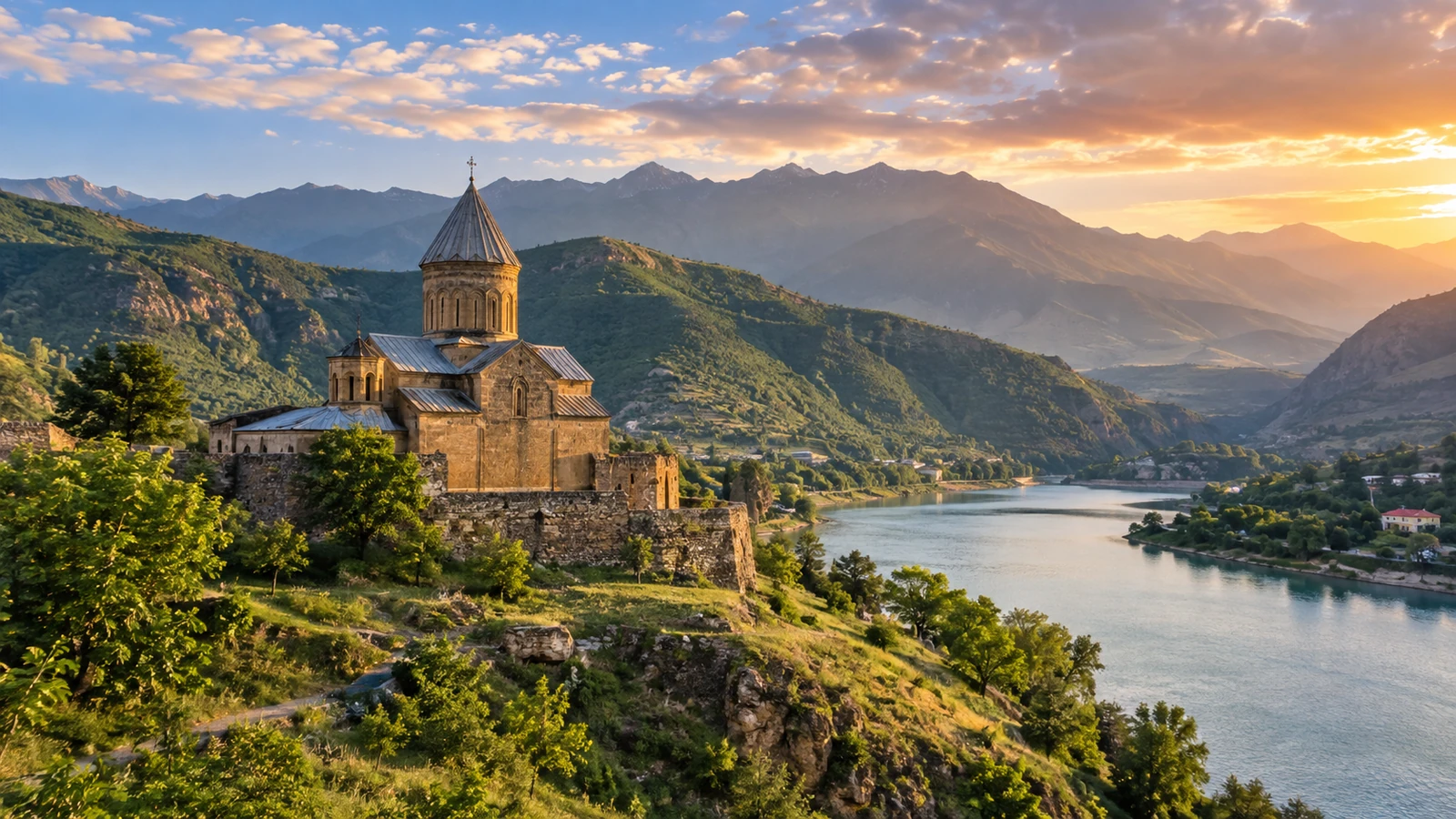
Nestled at the crossroads of Europe and Asia, Georgia is a country of staggering alpine beauty, ancient history, and some of the warmest hospitality on earth. Often overshadowed by its larger neighbors, this mountainous nation boasts the world's oldest winemaking tradition, Europe's highest villages, and a language that sounds like nothing else on the planet. From ancient Greek myths to underground hot springs, dive into these fascinating facts about one of the Caucasus' most captivating destinations.
1. It Is the True Cradle of Wine
While many associate fine wine with France or Italy, Georgia is actually the historic birthplace of viticulture. Archaeological evidence reveals that locals have been producing wine here for over 8,000 years. Their traditional method involves fermenting grape juice in giant, egg-shaped clay vessels called qvevri. These massive pots are buried underground to maintain a constant temperature during fermentation. This ancient winemaking process is so culturally significant that it has been recognized by UNESCO as part of humanity's intangible cultural heritage. If you visit, you will quickly learn that wine is practically a religion here.
2. Europe's First Humans Were Found Here
During excavations in the medieval town of Dmanisi, archaeologists stumbled upon something that completely rewrote human history. They unearthed 1.8-million-year-old skulls belonging to early humans, affectionately named Zezva and Mzia by researchers. These remains are the oldest undisputed hominin fossils ever discovered outside of Africa. The Dmanisi discoveries proved that ancient human ancestors migrated into the Caucasus region and Europe much earlier than previously believed. Today, these fascinating fossils offer a crucial missing link in the story of human evolution.
3. The Alphabet is Completely Unique
The Georgian language is a member of the Kartvelian language family, which is unrelated to any other major language group in the world. Even more remarkably, it boasts its own entirely unique alphabet called Mkhedruli, characterized by its beautiful, looping, and circular script. The alphabet contains exactly 33 letters and is completely phonetic, meaning every word is pronounced exactly as it is spelled. Interestingly, the language completely lacks grammatical gender and does not use capital letters at all. It is one of only 14 unique writing systems currently in use across the globe.
4. It Claims Europe's Highest Inhabited Settlement
Nestled deep in the breathtaking Greater Caucasus mountains lies Ushguli, a community consisting of four ancient villages. Situated at an elevation of roughly 2,100 meters (6,900 feet) above sea level, it is widely recognized as one of the highest continuously inhabited settlements in Europe. The villages are cut off by heavy snowfall for nearly six months of the year, preserving their ancient traditions and historical isolation. Ushguli is famous for its striking medieval defensive towers that jut out against the backdrop of snow-capped peaks. The rugged, jaw-dropping scenery makes it an absolute paradise for adventurous hikers.
5. The Country Has Twelve Climate Zones
Despite being roughly the size of Ireland, Georgia boasts an unbelievable level of ecological and geographical diversity. The country contains a staggering 12 distinct climate zones and an incredible 49 different soil types. You can wander through humid, subtropical rainforests on the Black Sea coast in the morning and hike up to frozen, snowcapped alpine peaks by the afternoon. This wildly varying landscape allows for an abundance of agricultural products, from citrus fruits and tea to hardy mountain grains. It also makes the country a haven for biodiversity, hosting hundreds of endemic plant and animal species.
6. The Supra is a Serious Ritual
In Georgia, dinner is never just a meal; it is a highly ritualized feast known as a supra. The entire event is orchestrated by a tamada, or toastmaster, who must be eloquent, charismatic, and capable of drinking vast quantities of wine without becoming visibly intoxicated. The tamada leads the table in a series of elaborate, poetic toasts dedicated to everything from ancestors and peace to love and friendship. Guests are expected to drain their glasses after each major toast, keeping the energy and stories flowing deep into the night. It is a cornerstone of national identity and a brilliant display of local hospitality.
7. Svaneti’s Towers Were Medieval Panic Rooms
If you travel to the remote, mountainous region of Svaneti, you will notice hundreds of imposing stone towers dominating the landscape. Built primarily between the 9th and 12th centuries, these unique structures served a dual purpose for ancient families. They were designed both as a defense mechanism against invading armies and local blood feuds, and as a safe refuge during deadly winter avalanches. Families would retreat into the higher levels of the tower, pulling up wooden ladders behind them to wait out any threat. Today, these iconic towers are proudly protected as a UNESCO World Heritage site.
8. It Is One of the World’s Oldest Christian Nations
Religion plays a massive role in Georgian culture, and its roots go back to the earliest days of the faith. In the early 4th century, roughly around 337 AD, Georgia officially adopted Christianity as its state religion. This makes it the second-oldest Christian nation on earth, following closely behind neighboring Armenia. The conversion is historically credited to Saint Nino, a woman who is said to have performed miracles and woven a cross out of grapevine and her own hair. Today, ancient, remarkably preserved monasteries dot almost every mountainside in the country.
9. The Golden Fleece Myth Originated Here
According to ancient Greek mythology, Jason and the Argonauts sailed to the kingdom of Colchis on a legendary quest to retrieve the Golden Fleece. Historians heavily agree that the ancient kingdom of Colchis was actually located in what is now western Georgia. The myth of the Golden Fleece is rooted in historical reality, as local mountain tribes traditionally used sheepskins to pan for gold dust in the fast-flowing river streams. The dense fleece would trap the heavy gold particles, literally creating a golden fleece that was then dried and beaten to extract the precious metal.
10. Guests Are Literally Considered a Gift from God
If there is one thing Georgians take more seriously than their wine, it is their exceptional hospitality. A famous local proverb states that a guest is a gift from God, and locals truly live by this belief. When invited into a Georgian home, visitors are treated with a level of warmth and generosity that borders on overwhelming. Hosts will continuously pile plates high with traditional dishes like khachapuri (cheese-filled bread) and khinkali (soup dumplings). It is considered a point of immense cultural pride to ensure that a guest's glass is never empty and their stomach is always full.
11. Their Polyphonic Singing Is in Outer Space
Traditional Georgian folk music features incredibly complex polyphonic singing, where multiple overlapping vocal melodies are sung simultaneously. This vocal tradition is so unique and musically significant that UNESCO recognized it as an Intangible Cultural Heritage of Humanity. More impressively, a recording of the traditional Georgian song Chakrulo was included on the Golden Record sent into space aboard the Voyager spacecraft in 1977. This means that if extraterrestrial life ever intercepts the probe, one of the primary examples of human culture they will hear is a Georgian choir.
12. Joseph Stalin Was Born in Georgia
While Joseph Stalin is inextricably linked to the Soviet Union and Russian history, he was actually born in the Georgian town of Gori in 1878. His birth name was Ioseb Besarionis dze Jughashvili, and he only adopted the alias Stalin, meaning Man of Steel, much later in his revolutionary career. Today, the town of Gori hosts the controversial Joseph Stalin Museum, which preserves his childhood home and his personal bulletproof train carriage. The museum's existence continues to spark debate among historians and locals, serving as a complex reminder of a dark historical legacy.
13. Half the Country Is Covered in Forest
Nature lovers are in for a treat when visiting this lush nation in the Caucasus. Despite centuries of development, nearly half of Georgia's entire landmass remains covered in dense, untamed forests. These vast wooded areas are incredibly pristine, with large portions officially designated as protected national parks and nature reserves. The deep forests provide critical habitats for a wide array of rare and endangered wildlife, including brown bears, wolves, lynx, and the elusive Caucasian leopard. Exploring these untouched wilderness areas remains one of the greatest draws for eco-tourists.
14. The Capital City’s Name Means "Warm"
The vibrant capital city of Tbilisi has a name deeply tied to its geographic foundation and local folklore. According to legend, King Vakhtang Gorgasali was hunting in the 5th century when his falcon caught a pheasant, and both birds fell into a natural hot spring where they boiled. Impressed by the steaming geothermal waters, the king decided to build a city on the site. He named it Tbilisi, derived from the Old Georgian word tbili, which translates directly to warm. Today, you can still bathe in these historic, sulfur-rich hot springs in the city's ancient Abanotubani district.
15. The Capital Blends Historic Charm and Modern Architecture
Tbilisi is a striking architectural melting pot where the ancient world brilliantly collides with daring modern designs. The city's famous Old Town enchants visitors with its narrow, winding streets and iconic, intricately carved wooden balconies painted in pastel hues. Right alongside these historic structures, you will find hyper-modern landmarks like the glass-and-steel Bridge of Peace spanning the Mtkvari River. This juxtaposition of ancient churches, Soviet-era brutalism, and futuristic public buildings gives Tbilisi a distinctly unique skyline that perfectly reflects the country's layered history.
Sources & References
This AI-assisted post was rigorously curated and fact-checked for accuracy by:
 Martin Roháček
How fun was this article? 🤔
Tap a star to rate it
🧠 Quiz: How closely were you paying attention?
10 questions — all answers are in the article above!
Enjoyed these facts? There's more! 💌
Fresh fun facts in your inbox. No spam, ever.