The Icebound Giant: 15 Fascinating Facts About Greenland
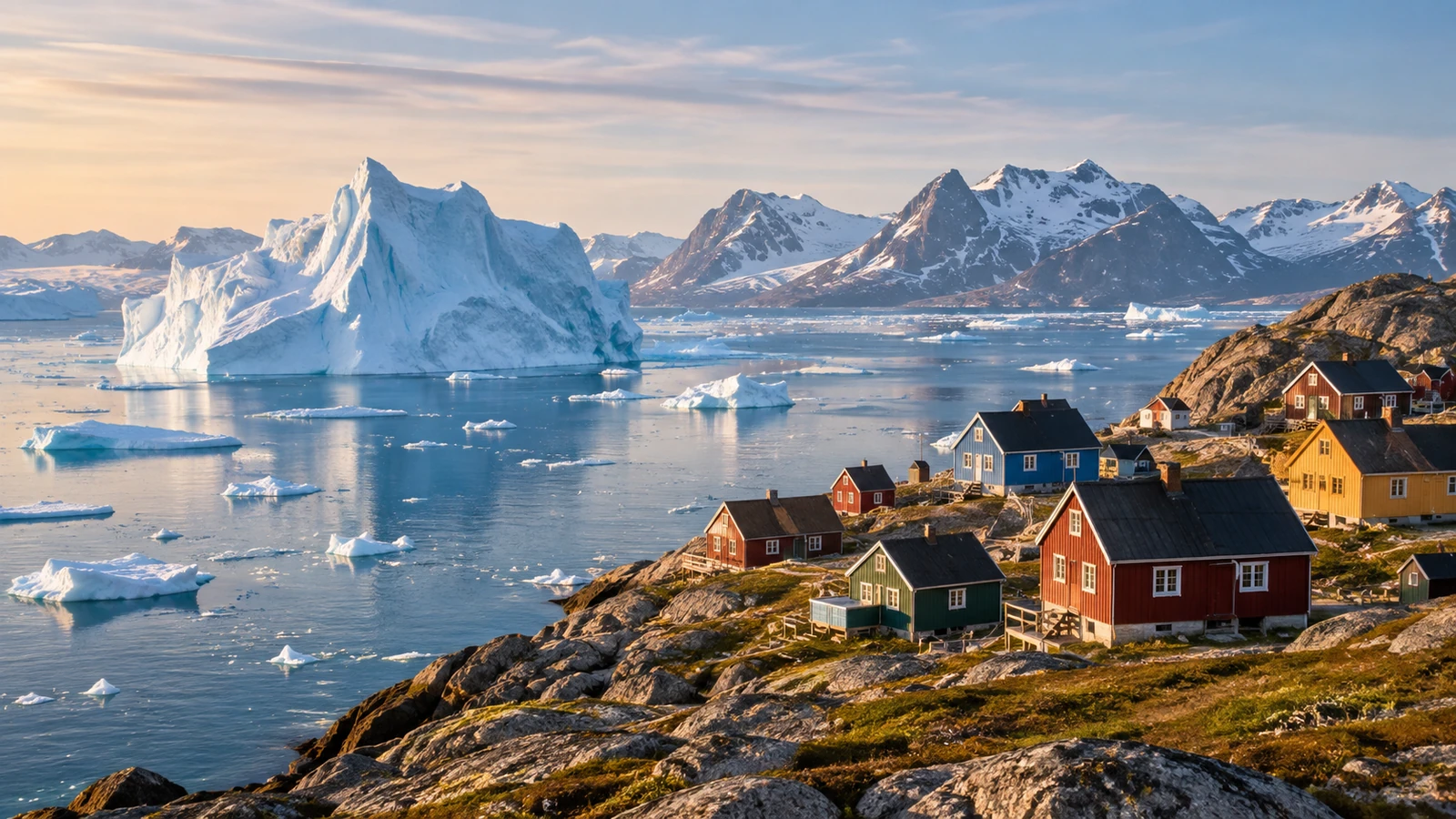
Greenland is a land of extreme polar wilderness, home to the world's largest national park, a hidden mega-canyon buried under miles of ice, and an ancient culture deeply tied to Arctic survival. Despite being the largest island on Earth, it features no interconnected highways between towns, requiring travelers to hop between coastal settlements via aircraft, boat, or dog sled. From Viking real estate hoaxes to unique culinary traditions involving toxic shark meat, this vast territory remains one of the most intriguing regions on the planet. Here are 15 fascinating facts about the icy giant of the far north.
1. Erik the Red’s Greenland Name Was a Clever Viking Marketing Campaign
In 982 CE, Norse explorer Erik the Red was exiled from Iceland for manslaughter and set sail west into uncharted Arctic waters. Upon discovering a massive island blanketed by rugged mountains and sea ice, he named it "Grœnland" (Greenland) in a deliberate attempt to attract potential settlers. He believed people would be far more willing to travel there if the land sounded warm and inviting rather than inhospitable. The strategy worked, prompting hundreds of Viking pioneers to set sail in 25 ships to establish the first European colonies on the island. While southern Greenland does feature lush green fjords during summer, the deceptive branding remains one of history's earliest real estate marketing campaigns.
2. No Roads Connect Any Towns or Settlements Across the Entire Nation
Despite being the world's largest island, Greenland possesses no interconnected road network or highway system between its towns. The rugged topography, deeply carved fjords, and thick glacial cover make building long-distance roads economically and structurally impossible. Instead, locals and visitors rely entirely on boats during the summer, aircraft and helicopters year-round, and snowmobiles or dog sleds in the frozen winter months. Nuuk, the capital city, has paved streets within its municipal boundary, but those roads end abruptly at the outskirts of town. Traveling to a neighboring community just twenty miles away requires booking a flight or setting sail.
3. A Single Apartment Building Once Housed Roughly One Percent of the Population
During the 1960s, the Danish government constructed "Block P," a massive Soviet-style concrete residential building in the capital city of Nuuk. Standing five stories tall and stretching nearly 700 feet long, it contained 132 apartments and housed over 1% of Greenland's entire population at its peak. The building became a controversial symbol of modern forced urban renewal, as indigenous Inuit families were relocated from traditional coastal villages into modern European-style flats. Because the doorways were built narrow to Western standards, residents famously struggled to haul traditional hunting equipment and thick winter garments into their homes. Block P was ultimately demolished in 2012, and its footprint was transformed into an open-air communal art space.
4. Fresh Greenland Shark Meat Is Highly Toxic and Causes "Shark Drunkenness"
The Greenland shark is a deep-sea creature that can live for over 400 years, making it the longest-living vertebrate on Earth. However, consuming its fresh meat can cause severe neurotoxic effects due to high concentrations of trimethylamine oxide and urea. Eating raw flesh produces symptoms similar to extreme alcohol intoxication, a state known locally as being "shark drunk" or suffering from severe neurological distress. To make the meat edible, Greenlanders traditionally bury it in gravelly soil to ferment for several months before drying it in strips. The resulting delicacy, known locally as mikiak, remains an important cultural winter tradition despite its notoriously pungent ammonia aroma.
5. It Houses the Largest National Park on Earth, Surpassing France and Spain Combined
Northeast Greenland National Park spans roughly 375,000 square miles, making it the largest protected land area on the planet. It is nearly 100 times larger than Yellowstone National Park and covers more territory than France and Spain combined. The park has no permanent human residents aside from weather station staff and the Sirius Dog Sled Patrol, an elite military unit that patrols the remote border on dog sleds. Instead, this vast polar wilderness belongs entirely to wildlife, serving as a sanctuary for polar bears, walruses, arctic foxes, and thousands of muskoxen. Access to the park is strictly regulated, requiring official permits and specialized expedition equipment.
6. Greenland Holds the Record for the Lowest Human Population Density in the World
With a total population of around 56,000 spread across an area of over 836,000 square miles, Greenland is the least densely populated territory on Earth. Its density sits at roughly 0.07 people per square kilometer, compared to over 30 people per square kilometer in the United States or over 400 in the United Kingdom. Nearly 80% of the island is permanently covered by an ice sheet, forcing human settlements to cling exclusively to the rocky ice-free coastlines. As a result, it is entirely possible for backcountry hikers to trek across the wilderness for weeks without encountering another human soul. This staggering vastness gives the island an unmatched sense of remoteness and undisturbed isolation.
7. Golfers Compete in a World Championship Carved Directly Into the Ice Shelf
Every year, extreme athletes travel to the coastal town of Uummannaq to participate in the World Ice Golf Championship. Established in 1997, the tournament is played on a temporary nine-hole course sculpted directly out of frozen fjords and icebergs. Players must navigate conditions where temperatures drop far below freezing, causing golf balls to bounce unpredictable distances off hardened snow drift hazards. To ensure visibility against the blinding white backdrop, golfers use bright red balls instead of standard white ones. The course layout changes every year as the ice shelf shifts, cracks, and remelts, making each tournament a completely unique sporting challenge.
8. Months of Endless Midnight Sun Give Way to Weeks of Polar Night
Because a large portion of Greenland lies north of the Arctic Circle, it experiences extreme light fluctuations throughout the calendar year. From late May to late July, the sun never drops below the horizon, bathing the northern landscapes in continuous daylight known as the "Midnight Sun." Conversely, during mid-winter months, regions in the far north endure weeks of perpetual darkness called the "Polar Night." During this time, daylight disappears completely, illuminated only by moonlight, snow reflections, and dramatic displays of the Northern Lights. Locals adapt to these seasonal shifts by celebrating the return of the sun each January with traditional songs and community gatherings.
9. Nuuk Is One of the Most Remote and Smallest Capital Cities on the Planet
Nestled along the mouth of an expansive fjord system on the southwest coast, Nuuk serves as Greenland's political and cultural capital. With a population hovering around 19,000 residents, it ranks among the smallest capital cities in the world by population. Despite its modest size, Nuuk blends indigenous Greenlandic heritage with Scandinavian modernity, featuring boutique cafes, contemporary art museums, and university campuses. High-rise apartment buildings sit alongside colorful wood-frame houses against the backdrop of Mount Sermitsiaq. Its quiet streets feel more like a secluded mountain town than a national seat of government.
10. Everyday Words Like "Kayak" and "Igloo" Originate Directly from Greenlandic
The native Greenlandic language, Kalaallisut, belongs to the Inuit-Yupik-Unangan family and has given several iconic terms to the global vocabulary. The word "kayak" comes from the Greenlandic qajaq, describing the sleek, seal-skin hunting boats perfected by Inuit hunters over thousands of years. Similarly, "igloo" derives from illu, which simply means "house" or "building" in Greenlandic, rather than exclusively a snow dome structure. Kalaallisut is a highly polysynthetic language, meaning long, complex words are built by adding multiple suffixes to a single root word. Today, it stands as the official primary language of Greenland, spoken by over 80% of the population.
11. A Hidden Mega-Canyon Longer Than the Grand Canyon Lies Sealed Beneath the Ice Sheet
In 2013, radar data collected by NASA airborne missions revealed a colossal canyon system concealed under more than a mile of solid ice. Stretching over 460 miles long and reaching depths of up to 2,600 feet, this subterranean chasm is significantly longer than Arizona's Grand Canyon. Scientists believe the canyon formed before the ice sheet covered Greenland roughly 3.7 million years ago, carving a major river network across the continent. Today, it acts as a subglacial channel that conducts meltwater from the deep interior out toward the Arctic Ocean. The discovery fundamentally altered researchers' understanding of Greenland's prehistoric topography and subglacial hydrology.
12. The Capital City Nuuk Has the Only Set of Traffic Lights in the Entire Country
Automobile travel in Greenland is so localized that the entire country contains only a tiny handful of traffic intersections with electronic lights. All of these traffic lights are located within Nuuk, which contains around 10,000 registered motor vehicles. Outside the capital, towns are far too compact to justify traffic management systems, relying instead on simple stop signs or small roundabouts. Driving in Nuuk presents unique challenges, as heavy snowfall and icy roads require specialized studded tires throughout the winter months. For most residents living outside the capital, vehicle ownership is rare compared to owning a personal motorboat or snowmobile.
13. Greenland Is Geographically Part of North America but Politically Linked to Europe
Geologically speaking, Greenland rests entirely on the North American tectonic plate, sharing its continental shelf with Canada and the United States. However, its political and geopolitical trajectory has tied it firmly to Europe for over a millennium. Following early Norse settlement and subsequent Scandinavian colonization, Greenland became part of the Kingdom of Denmark. While it gained home rule in 1979 and expanded self-government in 2009, Denmark continues to oversee its foreign affairs, defense, and currency. This dual identity makes Greenland a unique geopolitical bridge between North American geography and Nordic European social welfare systems.
14. Strict Regulations Control Where Working Sled Dogs and Foreign Dog Breeds Can Live
To preserve the genetic purity and working stamina of the ancient Greenland Dog, strict municipal laws govern dog ownership across the territory. North of the Arctic Circle and on the east coast, non-working dog breeds are strictly prohibited to prevent cross-breeding with working sled dogs. Conversely, in the capital city of Nuuk and other southern regions, traditional working sled dogs are banned to prevent conflict with urban pet owners. The Greenland Dog has survived in these harsh conditions for over 4,000 years, bred specifically by Inuit ancestors for endurance, pulling heavy sleds, and hunting polar bears. These geographic quarantine zones ensure that both working sled dog traditions and domestic pets can exist safely.
15. The Ice Sheet Is Up to Three Kilometers Thick and Holds Enough Water to Raise Sea Levels
The Greenland Ice Sheet covers roughly 80% of the landmass and is the second-largest body of ice on Earth, behind only Antarctica. In its deepest central regions, the ice sheet measures over 3 kilometers (nearly 10,000 feet) thick, weighing so heavily that it depresses the bedrock below sea level. If the entire ice sheet were to melt completely, scientists estimate that global sea levels would rise by approximately 7 meters (23 feet). As global temperatures rise, satellite monitoring shows that Greenland loses hundreds of billions of tons of ice each year, making its conservation a critical focus of modern climate science.
Sources & References
This AI-assisted post was rigorously curated and fact-checked for accuracy by:
 Martin Roháček
How fun was this article? 🤔
Tap a star to rate it
🧠 Quiz: How closely were you paying attention?
10 questions — all answers are in the article above!
Enjoyed these facts? There's more! 💌
Fresh fun facts in your inbox. No spam, ever.