The Greatest Rock Band: 15 Fascinating Facts About The Rolling Stones
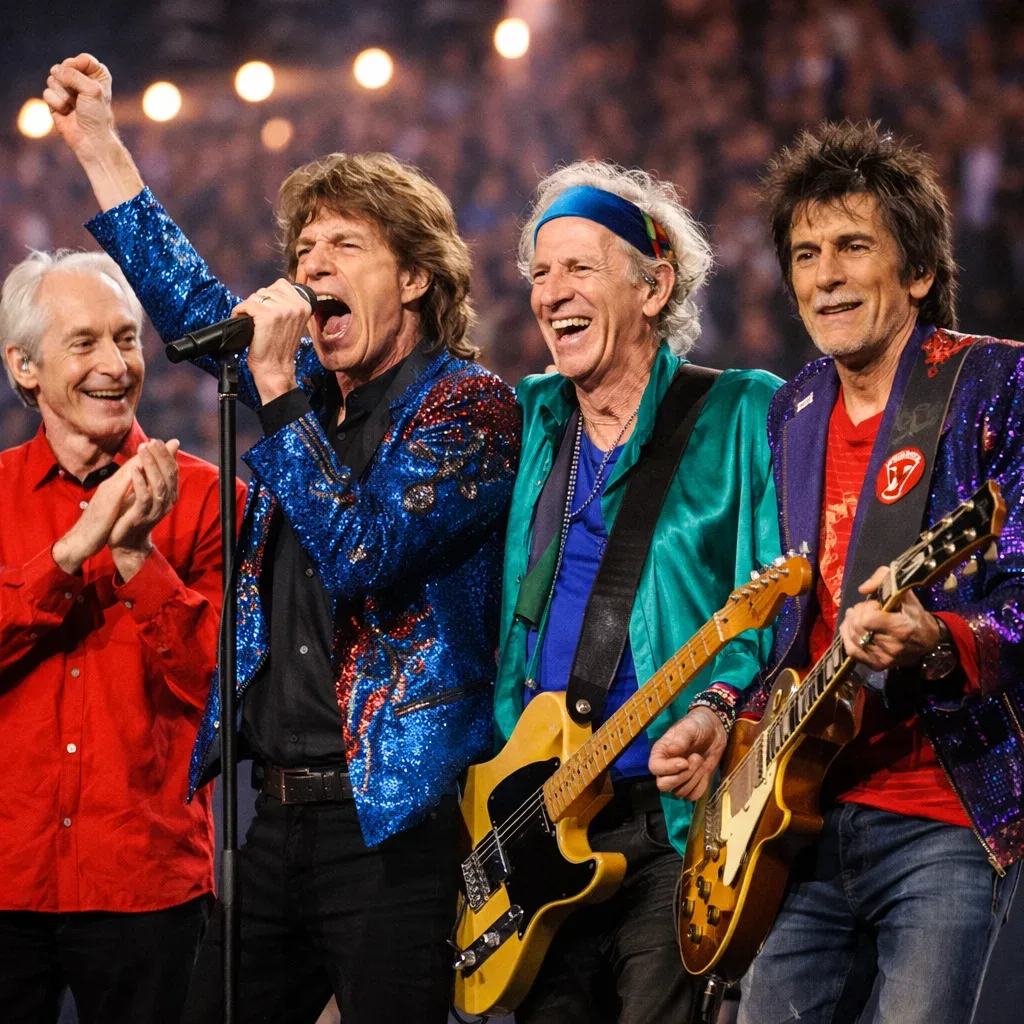
For over six decades, The Rolling Stones have defined the sound, swagger, and chaotic spirit of rock and roll. From humble beginnings in London blues clubs to record-breaking stadium tours, Mick Jagger, Keith Richards, and company built an unmatched musical empire. Along the way, they accumulated an astounding trail of bizarre stories, sleep-written mega-hits, illicit rumors, and unforgettable pop culture moments. Here are 15 fascinating facts about the World's Greatest Rock 'n' Roll Band.
1. Their Name Was Chosen in a Moment of Panic
In 1962, founding member and multi-instrumentalist Brian Jones was on the phone with a local newspaper journalist from Jazz News. When the promoter asked for the group's official name, the band was still unnamed and Jones panicked during the call. Spotting an LP by blues legend Muddy Waters lying on the floor, his eyes immediately fell upon one of the track titles, "Rollin' Stone." He blurted out the name on the spot, giving birth to one of the most recognizable monikers in music history. The group soon refined the title to "The Rolling Stones" and quickly built their reputation on raw, American-inspired blues.
2. "(I Can't Get No) Satisfaction" Was Written in a Dream
Keith Richards woke up in a Florida hotel room in May 1965 with a song riff replaying inside his head. He reached for his portable Philips cassette tape recorder on the bedside table, played three simple chords, and immediately drifted back to sleep. When he checked the tape the following morning, he found two minutes of acoustic guitar playing followed by forty minutes of his own snoring. He had absolutely no memory of waking up or pressing the record button during the night. That midnight inspiration became the iconic riff for "(I Can't Get No) Satisfaction," the band's breakout worldwide number-one single.
3. The Iconic Tongue Logo Cost Just £50
While many pop culture enthusiasts mistakenly attribute the legendary tongue and lips logo to pop art icon Andy Warhol, it was actually created by a British art student. In 1970, Mick Jagger visited the Royal College of Art in London to find a designer for their upcoming European tour artwork. He commissioned 25-year-old student John Pasche, who was paid a modest fee of just £50 for the original graphic design. Pasche drew inspiration directly from a visual image of the Hindu goddess Kali as well as Jagger's famous expression and pronounced lips. The resulting design became rock history's most famous band logo, though Pasche was later paid a £26,000 royalty bonus in 1984.
4. A Founding Member Was Fired for Looking "Too Normal"
Pianist Ian Stewart was a founding member of the band and played an integral role in shaping their early rhythm and blues sound. However, in May 1963, manager Andrew Loog Oldham decided that a six-member group was too large and that Stewart's clean-cut image did not fit the rebellious band aesthetic. Oldham removed Stewart from the official lineup because he thought the pianist looked far too square and understated for rock stardom. Remarkably, Stewart harbored no resentment and willingly accepted the role of the group's road manager and studio pianist. He remained a beloved, essential part of the Stones' inner circle until his death in 1985.
5. The Infamous Altamont Concert Cost $500 in Beer
In December 1969, the Stones organized the free Altamont Speedway Free Concert in Northern California to serve as the grand finale of their American tour. Seeking a cheap security force, the organizers hired the Hells Angels motorcycle gang for five hundred dollars' worth of free beer. The situation quickly turned violent as drunk gang members armed with pool cues clashed relentlessly with the audience throughout the day. The nightmare culminated during the Stones' performance when Hells Angel Alan Passaro fatally stabbed 18-year-old concertgoer Meredith Hunter in front of the stage. The tragic event became a defining cultural moment that effectively signaled the end of the peaceful 1960s hippie counterculture.
6. "Exile on Main St." Was Recorded in a Former Gestapo Base
In 1971, the band left the United Kingdom to escape a crushing 93 percent top rate of income tax levied on high earners. They relocated to the South of France, where Keith Richards rented Villa Nellcôte, a grand mansion in Villefranche-sur-Mer. Unknown to many at the time, the grand basement of the villa had previously served as a headquarters for the Nazi Gestapo during World War II. The band set up a makeshift recording studio in the sweltering, unventilated basement and recorded their double-album masterpiece, Exile on Main St. The humid, chaotic environment gave the record its famously raw, muddy, and authentic blues-rock atmosphere.
7. Charlie Watts Once Punched Mick Jagger Over an Insult
Soft-spoken drummer Charlie Watts was widely considered the most quiet and refined member of the group, but he had strict personal boundaries. During a late-night session in Amsterdam in 1984, an intoxicated Mick Jagger phoned Watts' hotel room and yelled, "Where's my drummer?" Watts calmly put down the receiver, took a shower, shaved, and put on a tailored three-piece suit and tie. He walked down the hallway to Jagger's room, knocked on the door, and delivered a solid punch straight to Jagger's jaw. As Jagger fell back onto a plate of smoked salmon, Watts sternly declared, "Don't ever call me your drummer again; you're my singer."
8. Keith Richards Completely Made Up His Blood Transfusion Rumor
For decades, urban legend claimed that Keith Richards traveled to a secret clinic in Switzerland to undergo a total blood exchange to detox before a tour. In reality, the guitarist simply made up the entire outrageous story off the top of his head to mock invasive journalists. In 1973, exhausted by press inquiries about his heavy drug addiction, Richards claimed doctors completely drained his tainted blood and replaced it with clean blood. He wanted to see if reporters were gullible enough to print the absurd medical story without verifying the facts. The international press printed the rumor as gospel, and Richards let the mythical tale circulate for years before admitting he was joking.
9. They Shelved Their Own Movie for 28 Years
In December 1968, the group filmed a lavish television special titled The Rolling Stones Rock and Roll Circus, featuring guests like John Lennon and Eric Clapton. However, after reviewing the raw footage, the Stones were deeply dissatisfied with their own headlining set. Exhausted after filming for over fifteen consecutive hours, their performance seemed sluggish and uninspired compared to the explosive set delivered by The Who. Fearing that their younger peers had totally upstaged them on their own special, the band locked the footage in a vault. The concert film remained hidden from the public for nearly three decades before finally receiving an official release in 1996.
10. The Original "Sticky Fingers" Cover Destroyed Its Own Vinyl
Pop artist Andy Warhol designed the iconic artwork for the band's 1971 album Sticky Fingers, which featured a close-up photograph of denim jeans with an actual working metal zipper. However, the innovative packaging caused major technical problems during mass production and shipping across the world. When stackable shipping crates of the LP were stacked tightly together, the pressure pushed the heavy metal zipper directly into the adjacent vinyl record. The metal zipper teeth regularly scratched and ruined side one tracks like "Brown Sugar" and "Sister Morphine" before customers even opened the album. Later shipments solved the issue by pulling the zipper down slightly so it pressed against the central paper label instead.
11. Keith Richards' Accidental Tribute to His Father
In a 2007 interview, Keith Richards shocked the music world by admitting he had snorted a portion of his late father Bert's cremated remains. He later clarified the sensationalized headlines, explaining that the bizarre moment occurred completely by accident while spreading his father's ashes around an oak tree. As he opened the urn, a fine layer of ash blew across the top of an outdoor table, mixing with a line of cocaine he was preparing. Rather than sweeping his father's remains onto the ground, Richards decided to snort the combined mixture as a final, intimate farewell. He famously remarked that his dad wouldn't have cared in the slightest about the unconventional tribute.
12. They Played to 1.5 Million People on a Brazilian Beach
On February 18, 2006, The Rolling Stones performed a legendary free concert on Copacabana Beach in Rio de Janeiro, Brazil. An estimated 1.5 million fans packed onto the white sands, making it one of the largest concert audiences in human history. To safely navigate the massive crowd, engineers constructed a temporary high-security bridge directly connecting the nearby Copacabana Palace Hotel to the massive stage. The show featured massive video screens, stunning fireworks, and an energy level that cemented their status as the ultimate stadium rock act. The historical event was broadcast worldwide and later released as a landmark live concert film.
13. Brian Jones Could Master New Instruments in Minutes
Multi-instrumentalist Brian Jones possessed an astonishing innate musical genius that defined the group's pioneering sound during the mid-1960s. He could reportedly pick up almost any unfamiliar musical instrument and master its basics in less than thirty minutes. Jones introduced revolutionary world-music textures into their blues-rock arrangements, playing the Indian sitar on "Paint It Black" and the wooden marimba on "Under My Thumb." He also played recorder on "Ruby Tuesday," dulcimer on "Lady Jane," and mellotron on "2000 Light Years from Home." His experimental musical versatility helped transform the Stones from a simple blues cover band into pop visionaries.
14. Bill Wyman's Marriage Caused a Bizarre Family Tree
In 1989, 52-year-old bassist Bill Wyman sparked intense public controversy when he married 18-year-old model Mandy Smith. The couple had started dating secretly when Smith was just 13 years old, leading to widespread condemnation in the British media. The marriage proved short-lived and ended in divorce after just two years, but the family dynamics soon took a bewildering turn. In 1993, Wyman's 30-year-old son Stephen married Mandy Smith's 46-year-old mother, Patsy Smith. This bizarre twist meant that Stephen became his own father's stepfather-in-law and his former stepmother's stepfather.
15. Angelina Jolie Starred in One of Their Music Videos
In 1997, a rising young actress named Angelina Jolie starred in the music video for the Stones' single "Anybody Seen My Baby?" Directed by Samuel Bayer, the video featured 22-year-old Jolie as a rebellious stripper who abruptly walks off stage to wander through the gritty streets of New York City. At the time, Jolie was an up-and-coming talent who had just completed her critically acclaimed role in the television movie Gia. Mick Jagger was so captivated by her performance during the shoot that he allegedly pursued her relentlessly with phone calls, though she resisted his advances. Shortly after the video's release, Jolie achieved massive Hollywood stardom and became an Oscar-winning actress.
Sources & References
This AI-assisted post was rigorously curated and fact-checked for accuracy by:
 Martin Roháček
How fun was this article? 🤔
Tap a star to rate it
🧠 Quiz: How closely were you paying attention?
10 questions — all answers are in the article above!
Enjoyed these facts? There's more! 💌
Fresh fun facts in your inbox. No spam, ever.